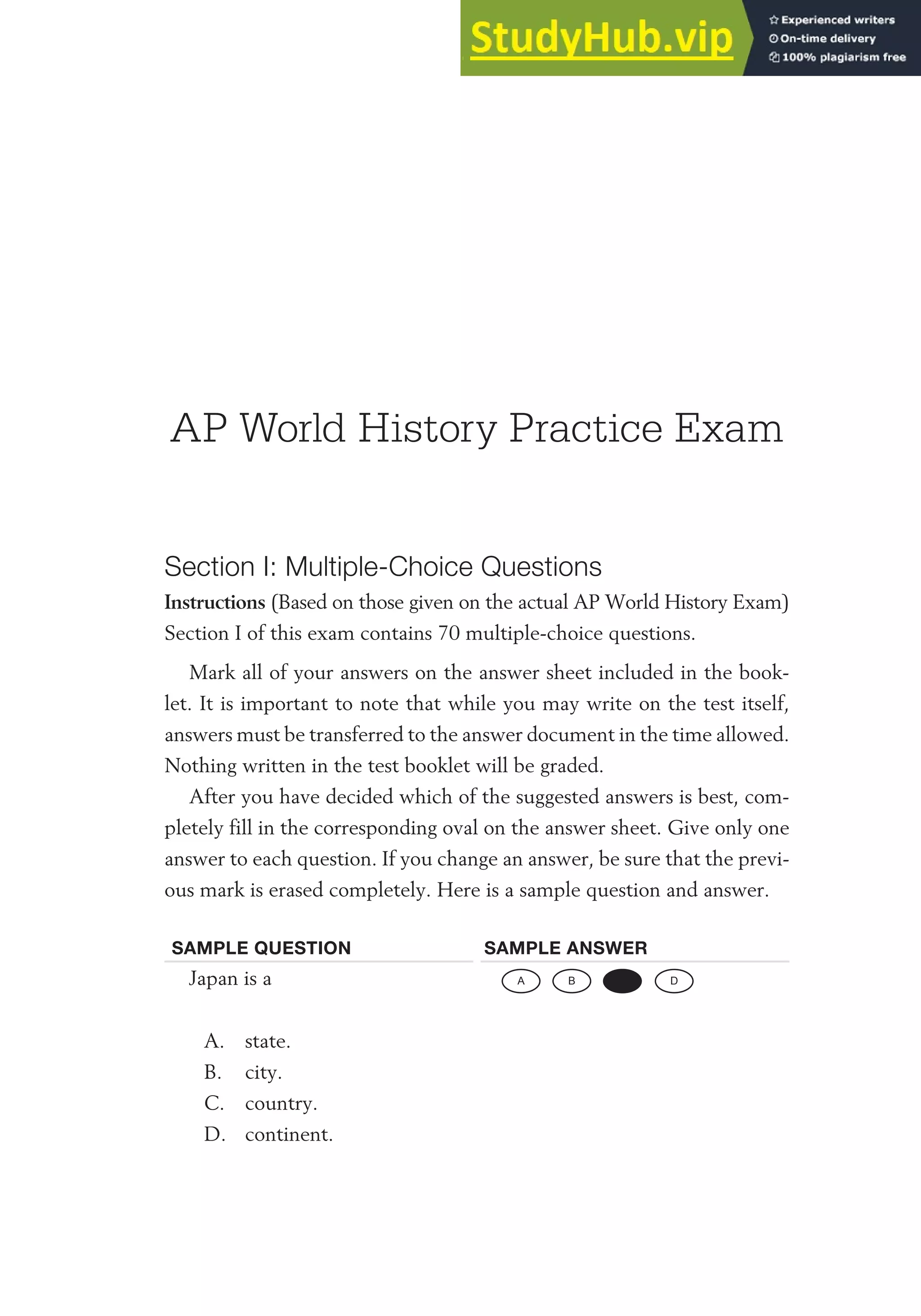
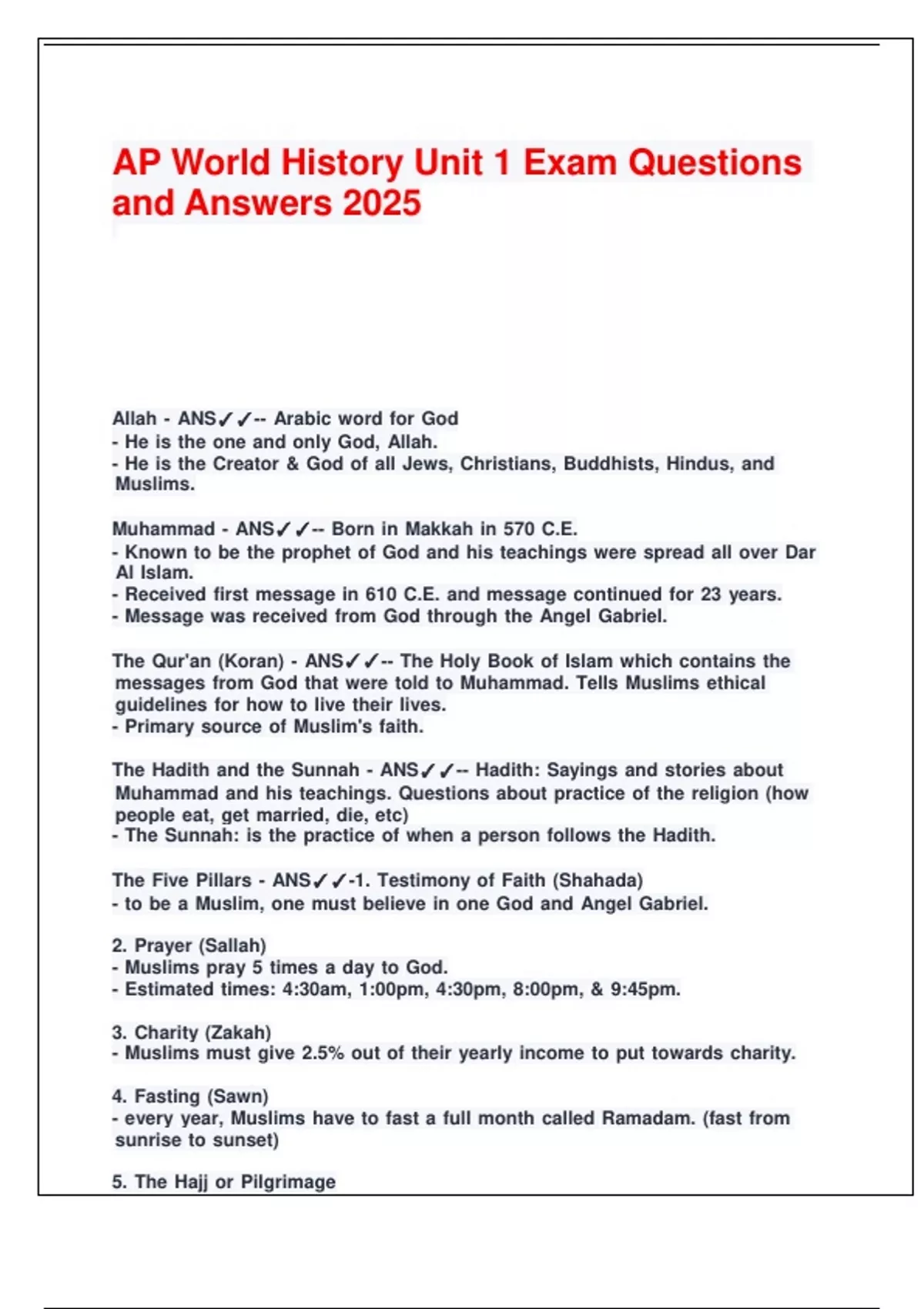
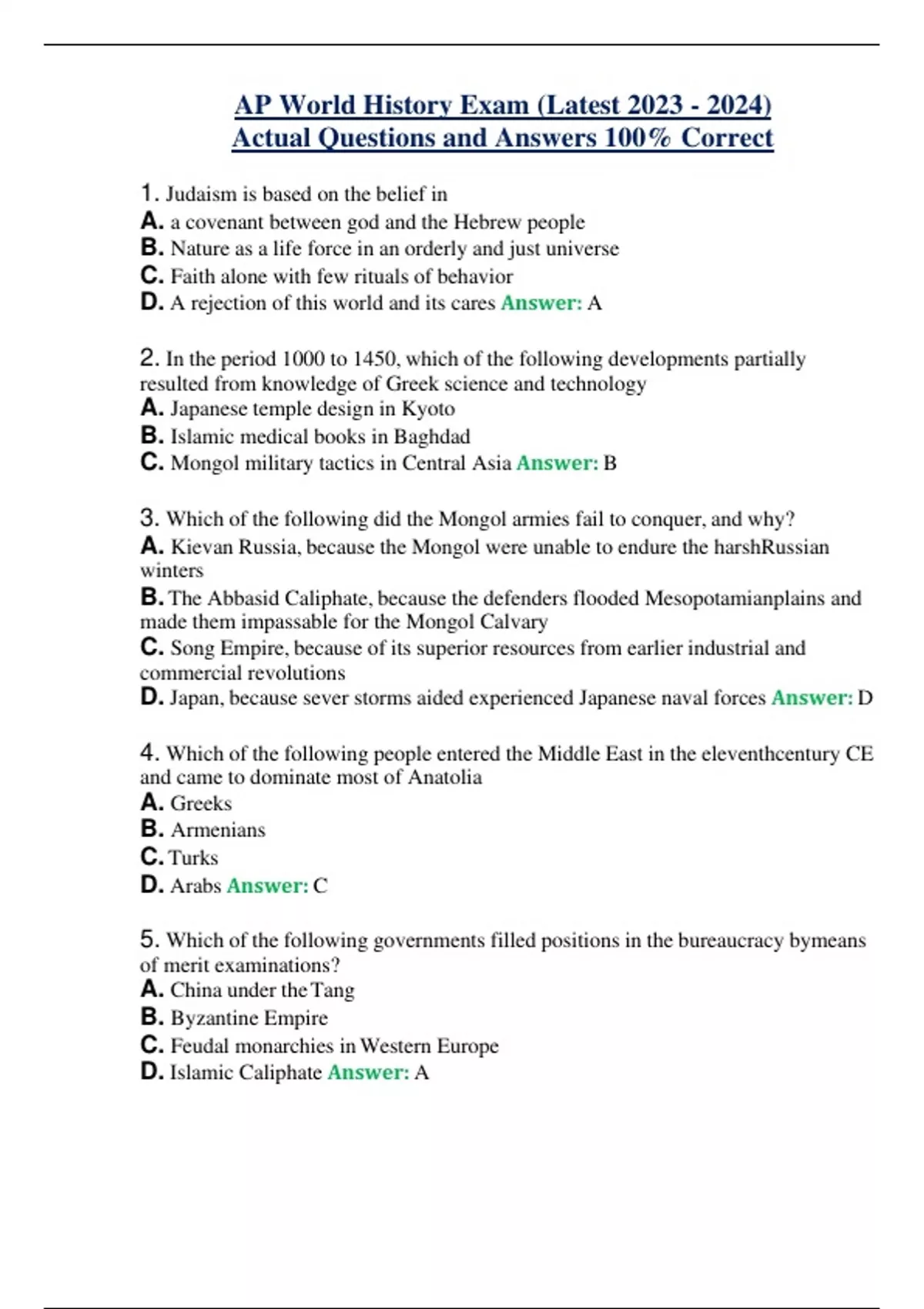
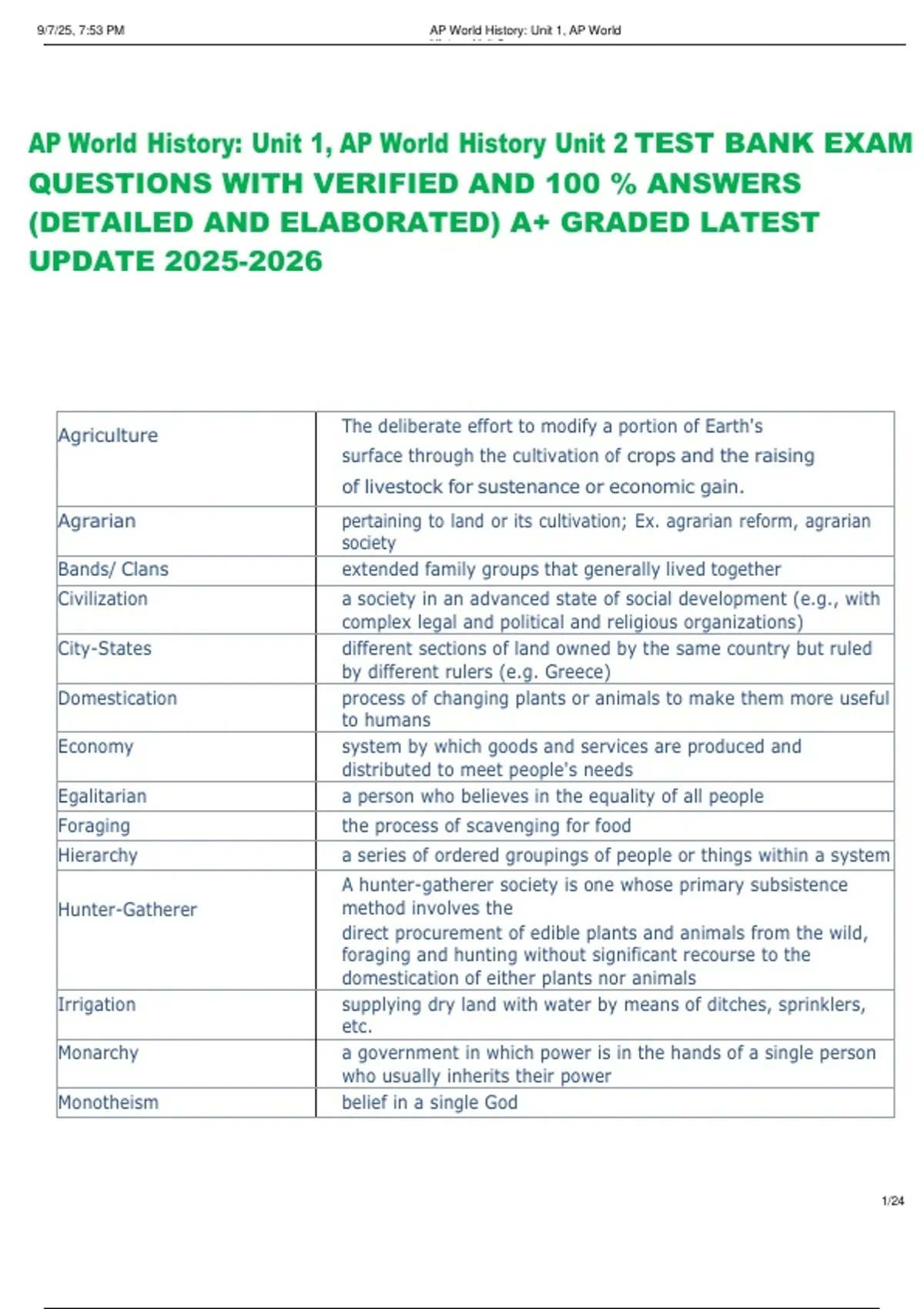
AP World History Unit 1 Multiple Choice Questions PDF: Comprehensive Study Guide and Practice
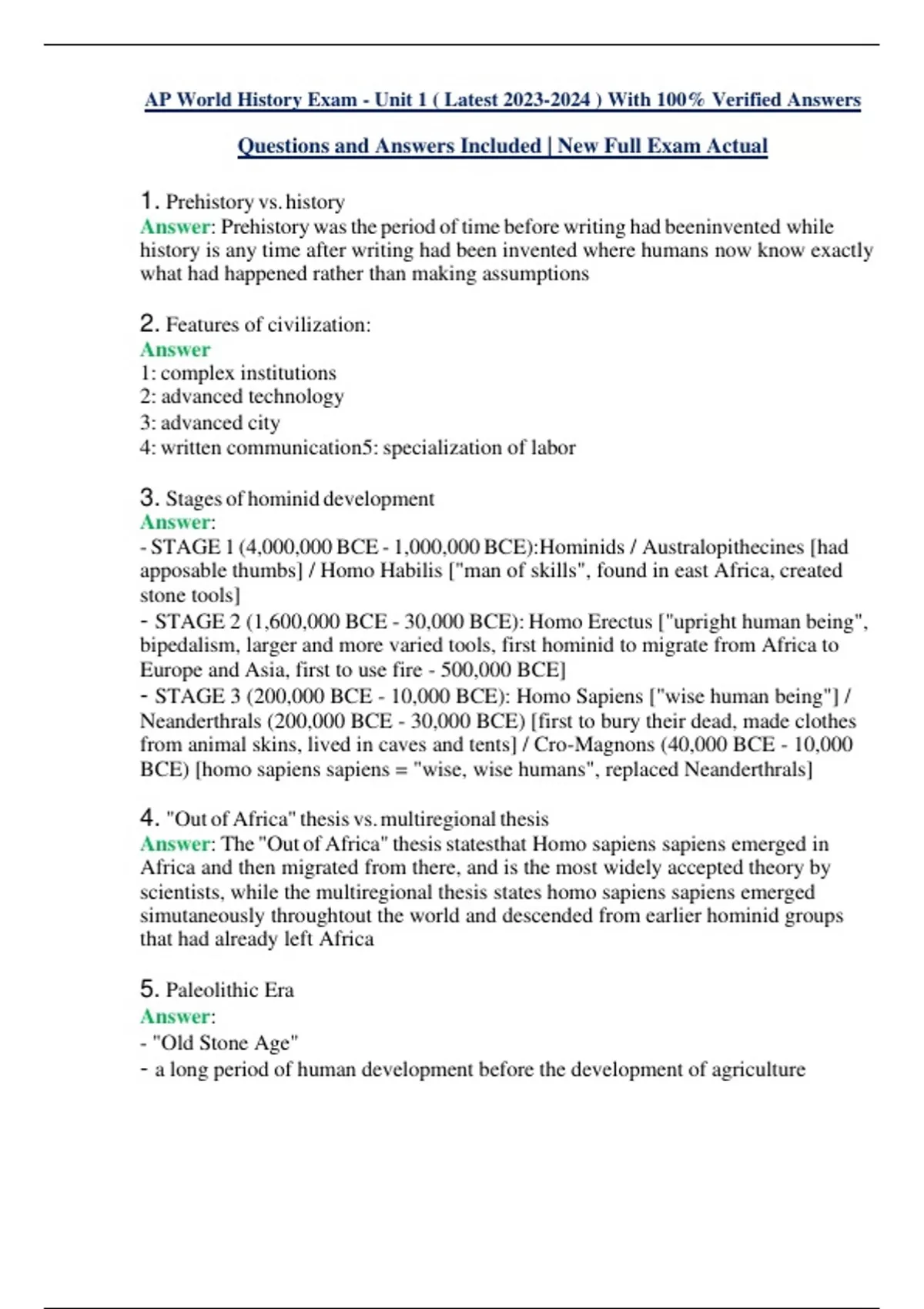
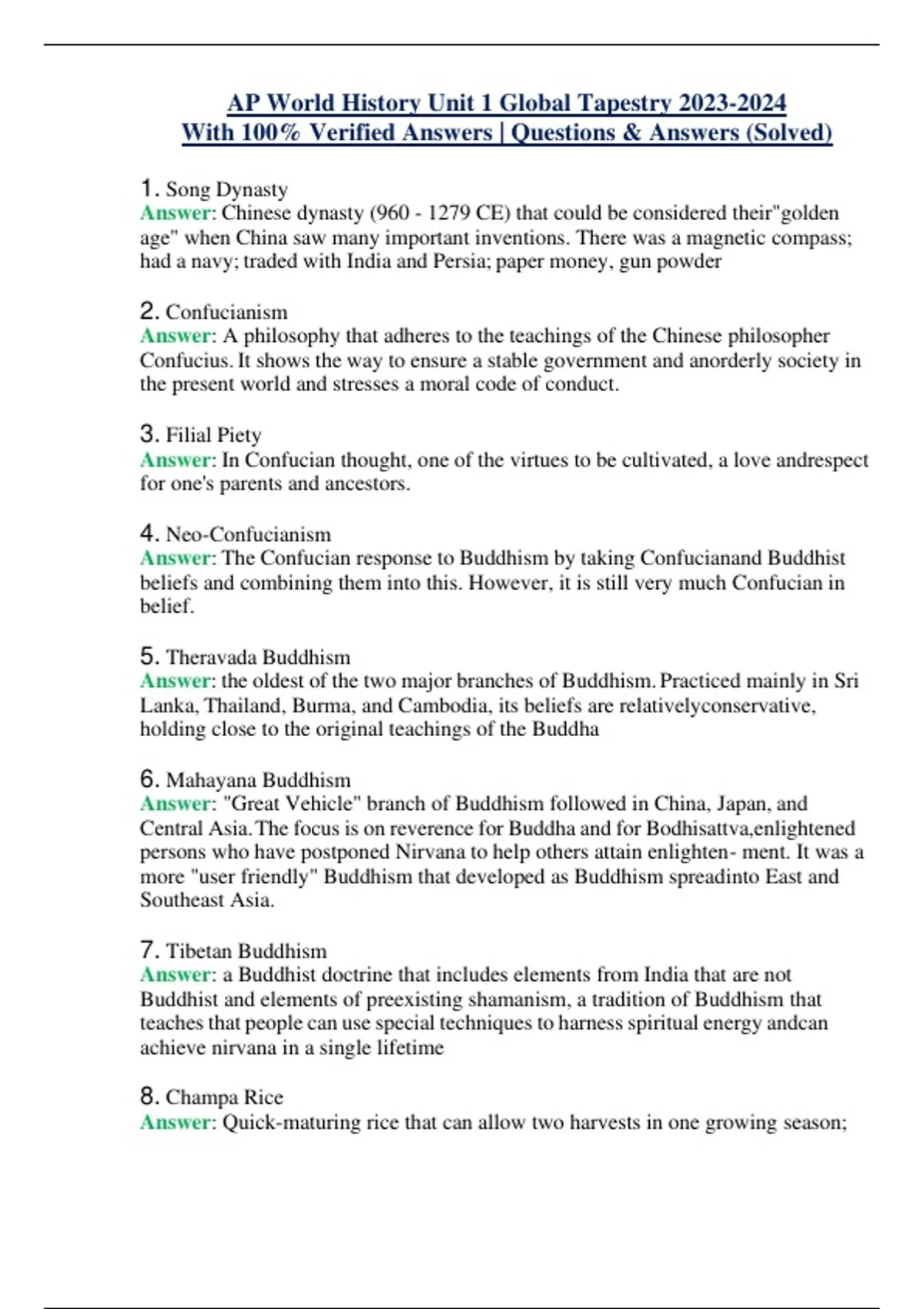
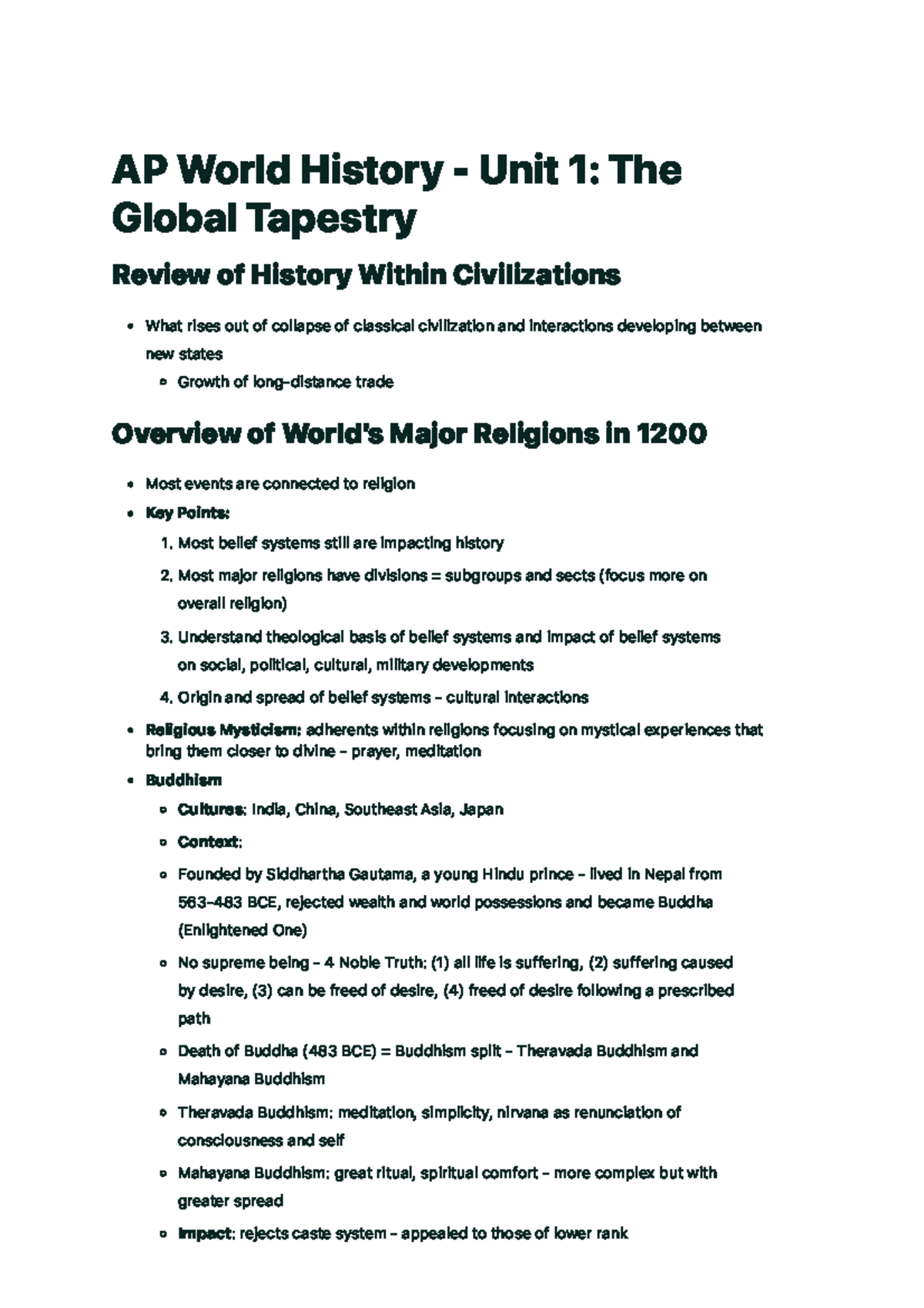
Accessing a high-quality AP World History Unit 1 multiple choice questions PDF is essential for mastering "The Global Tapestry" (c. 1200 to c. 1450). To succeed, students must utilize stimulus-based questions that mirror the official C...
Accessing a high-quality AP World History Unit 1 multiple choice questions PDF is essential for mastering "The Global Tapestry" (c. 1200 to c. 1450). To succeed, students must utilize stimulus-based questions that mirror the official College Board format, focusing on document analysis across East Asia, Dar al-Islam, the Americas, and Europe.
Contents
Understanding the Structure of Unit 1: The Global Tapestry (1200–1450)
Unit 1 of the AP World History: Modern curriculum, titled "The Global Tapestry," sets the foundation for the entire course. It examines how states formed, expanded, and declined in various parts of the world between 1200 and 1450. Unlike later units that focus on global interconnectedness, Unit 1 emphasizes the internal developments of specific regions and their immediate neighbors.
When looking for a Unit 1 multiple choice questions PDF, it is crucial to ensure the materials cover the following key regions and themes:
- East Asia: The persistence of the Song Dynasty, the influence of Confucianism, and the expansion of the Civil Service Exam system.
- Dar al-Islam: The rise of new Islamic political entities like the Seljuk Empire, the Mamluk Sultanate, and the Delhi Sultanates, alongside the intellectual innovations in the House of Wisdom.
- South and Southeast Asia: The spread of Hinduism, Buddhism, and Islam through trade and the emergence of states like the Vijayanagara Empire and the Khmer Empire.
- The Americas: The sophisticated state-building of the Maya city-states, the Mexica (Aztec) Empire, and the Inca Empire.
- Africa: The growth of the Mali Empire and the importance of Ethiopia as a Christian kingdom.
- Europe: The decentralized nature of Feudalism, the role of the Catholic Church, and the gradual transition toward more centralized monarchies.
The Mechanics of Stimulus-Based Multiple Choice Questions
As of 2026, the AP World History exam continues to utilize Stimulus-Based Multiple Choice Questions (SBMCQs). This means that questions are not standalone trivia but are grouped in sets of three to four based on a primary or secondary source. These sources can include:
- Textual Excerpts: Journals (like those of Ibn Battuta or Marco Polo), legal codes, religious texts, or modern historical analyses.
- Visual Resources: Maps, architectural photos, paintings, or woodblock prints.
- Quantitative Data: Tables or charts showing population growth, trade volume, or agricultural output.
A high-quality practice PDF should challenge you to do more than just identify a fact. You must be able to identify the author's point of view, the historical context of the document, and how the document reflects broader global trends like state-building or the spread of religions.
Where to Find Official and Reliable AP World History Unit 1 PDF Resources
Finding a reliable AP World History Unit 1 multiple choice questions PDF requires looking at established educational sources. Because the College Board protects its intellectual property, many "leaked" PDFs are often outdated or unauthorized. However, several legitimate avenues exist for 2026 students:
The College Board Course and Exam Description (CED)
The most authoritative source is the official AP World History: Modern Course and Exam Description. This PDF contains a sample set of multiple-choice questions that represent the exact rigor and style of the actual exam. While it does not contain a full 55-question exam for Unit 1 alone, the sample items provided for the early periods are gold standards for practice.
AP Classroom
For students currently enrolled in the course, AP Classroom offers a "Question Bank" feature. Teachers can generate custom PDFs of Unit 1 questions. These are official questions previously used on exams or developed specifically for the 1200–1450 timeframe.
Educational Repositories and Open Resources
Websites such as Khan Academy and various university-hosted OER (Open Educational Resources) provide downloadable practice sets. While these may not always be in a single PDF format, they can be printed to PDF for offline study. Look for resources that specifically mention "Stimulus-Based" to ensure they align with the post-2019 curriculum standards.
Sample Practice Questions: Unit 1 The Global Tapestry
To help you prepare, consider the following sample stimulus and question set, designed to reflect the complexity of the AP World History exam in 2026.
Stimulus: Excerpt from a decree by a Song Dynasty official, c. 1250
"The examination system is the root of our government's virtue. By testing the young men on the classics of Confucius, we ensure that those who lead our bureaucracy are not merely wealthy, but are men of merit and wisdom. Though the Champa rice from the south has filled our granaries and the Grand Canal brings wealth to the north, it is the wisdom of the sage that maintains the Mandate of Heaven."
Question 1: The decree's emphasis on the examination system best serves as evidence for which of the following developments in East Asia c. 1200–1450?
- A) The transition from a merchant-based economy to a nomadic pastoralist economy.
- B) The use of Confucianism by the Song state to maintain and justify its rule.
- C) The decline of the bureaucracy in favor of military commanders.
- D) The rejection of traditional Chinese values in response to foreign invasion.
- Answer: B. The text explicitly links the examination system and Confucian classics to the "virtue" and leadership of the government.
Question 2: The mention of "Champa rice" in the excerpt most directly explains which of the following?
- A) The spread of Islam into Southern China.
- B) The cultural influence of the Mongol Empire.
- C) The population growth and urbanization of the Song Dynasty.
- D) The military conquest of Southeast Asia by the Song.
- Answer: C. Champa rice, a drought-resistant strain from Vietnam, led to increased caloric intake and a significant rise in China's population.
Comparing Regional Developments (1200–1450)
To effectively answer multiple choice questions, you must be able to compare how different regions handled similar challenges, such as governance and religion. The table below summarizes these key distinctions.
| Region | Primary Form of Governance | Dominant Cultural/Religious System | Key Innovation or Achievement |
|---|---|---|---|
| East Asia (Song) | Centralized Bureaucracy | Confucianism / Neo-Confucianism | Gunpowder, Paper Money, Compass |
| Dar al-Islam | Fragmented Sultanates (e.g., Mamluk) | Islam (Sharia Law) | Medical Advancements, Algebra |
| South Asia | Decentralized Hindu/Muslim Kingdoms | Hinduism / Islam / Bhakti Movement | Complex Temple Architecture |
| Americas (Inca) | Highly Centralized Theocracy | Polytheism (Sun God) | Quipu (Record-keeping), Terraced Farming |
| Europe | Decentralized Feudalism | Roman Catholicism | Gothic Architecture, Three-field System |
| Africa (Mali) | Centralized Empire | Islam (among elites) / Traditional beliefs | Gold-Salt Trade, Timbuktu Centers of Learning |
Common Pitfalls in Unit 1 Multiple Choice Questions
When practicing with a Unit 1 multiple choice questions PDF, students frequently fall into three specific traps:
- Ignoring the Stimulus: Many students try to answer the question based purely on outside knowledge. While outside knowledge is vital, the question often asks what the source proves. If the source is about Song China and the question asks about the "author's perspective," you must find evidence within the text provided.
- Chronological Confusion: Unit 1 ends in 1450. A common distractor in multiple choice questions involves events from Unit 2 or 3 (like the Protestant Reformation or the full Atlantic Slave Trade). If an answer choice mentions a development that occurred after 1450, it is likely incorrect for a Unit 1 question.
- Over-Generalization: Students often assume all Islamic states were unified or all of Europe was a "dark age." In reality, Unit 1 shows the Mamluks and Seljuks were distinct and often at odds, and European cities like Venice were thriving through trade with the East. Look for nuances in the answer choices.
Effective Study Strategies for Unit 1 Practice
To maximize the utility of your practice PDF, follow these steps:
- Timed Practice: The AP exam allows approximately 1 minute per question. Set a timer when working through a 20-question PDF to build your "testing internal clock."
- Annotate the Stimulus: Before looking at the questions, circle the date, the author, and the main idea of the source. This prevents you from having to re-read the entire passage for every question.
- Active Review: When you miss a question, don't just look at the correct letter. Write down why your chosen answer was wrong. Was it historically inaccurate? Was it off-topic? Did it contradict the stimulus?
- Focus on State-Building: Nearly every question in Unit 1 relates back to how states "maintained and justified" their power. Whether it's the Aztec tribute system or the Byzantine use of Caesaropapism, identifying the mechanism of power is usually the key to the correct answer.
Frequently Asked Questions
What is the most important topic in AP World History Unit 1?
While all regions are tested, the Song Dynasty's bureaucracy and the innovations of Dar al-Islam are historically the most frequent subjects in Unit 1 multiple choice sets. Understanding how these states used religion and trade to solidify their power is essential for a high score.
How many multiple choice questions are on the actual AP World History exam?
The full exam consists of 55 stimulus-based multiple choice questions to be completed in 55 minutes. Unit 1 typically accounts for 8% to 10% of the total exam weight, meaning you can expect about 5 to 6 questions specifically on "The Global Tapestry."
Can I use Unit 1 questions to practice for the LEQ and DBQ?
Absolutely. The same PDF resources that provide multiple choice stimuli can provide excellent "Evidence" for your Long Essay Questions (LEQ) or Document-Based Questions (DBQ). For instance, a multiple choice question about the Bhakti movement provides you with a specific historical development you can cite in an essay about cultural shifts in South Asia.
Is Unit 1 still relevant if the exam focuses more on modern history?
Yes. Although the course is titled "AP World History: Modern," Unit 1 (1200–1450) is the essential "Period 1." You cannot understand the later "Age of Discovery" or the "Industrial Revolution" without understanding the trade networks and state structures established during the Global Tapestry era.
Next Steps for Success
After completing your AP World History Unit 1 multiple choice questions PDF, your next action should be to pivot to Unit 2: Networks of Exchange. The developments in Unit 1 (like the Song economic boom and the rise of Islamic caliphates) directly fuel the trade routes discussed in Unit 2, such as the Silk Roads and the Indian Ocean trade. Consistently linking these units will help you recognize the "cause and effect" patterns that the College Board prioritizes in the 2026 curriculum.
Image Gallery