Understanding the Highest Tier of Travel Experiences: A Guide to Ultra-Luxury Travel
The highest tier of travel, often categorized as ultra-luxury or experiential wealth-based travel, transcends traditional notions of five-star hospitality by prioritizing hyper-personalization, exclusive access to restricted sites, and...
The highest tier of travel, often categorized as ultra-luxury or experiential wealth-based travel, transcends traditional notions of five-star hospitality by prioritizing hyper-personalization, exclusive access to restricted sites, and the seamless orchestration of complex logistics. This market segment operates on the principle that time and access are the ultimate currencies, moving beyond mere comfort into the realm of transformative, bespoke life experiences.
Contents
The Defining Pillars of Ultra-Luxury Travel
To distinguish the highest tier of travel from conventional luxury, one must analyze the infrastructure behind the experience. While a premium resort focuses on high-thread-count linens and refined dining, the highest tier of travel focuses on removing friction from the human experience entirely.
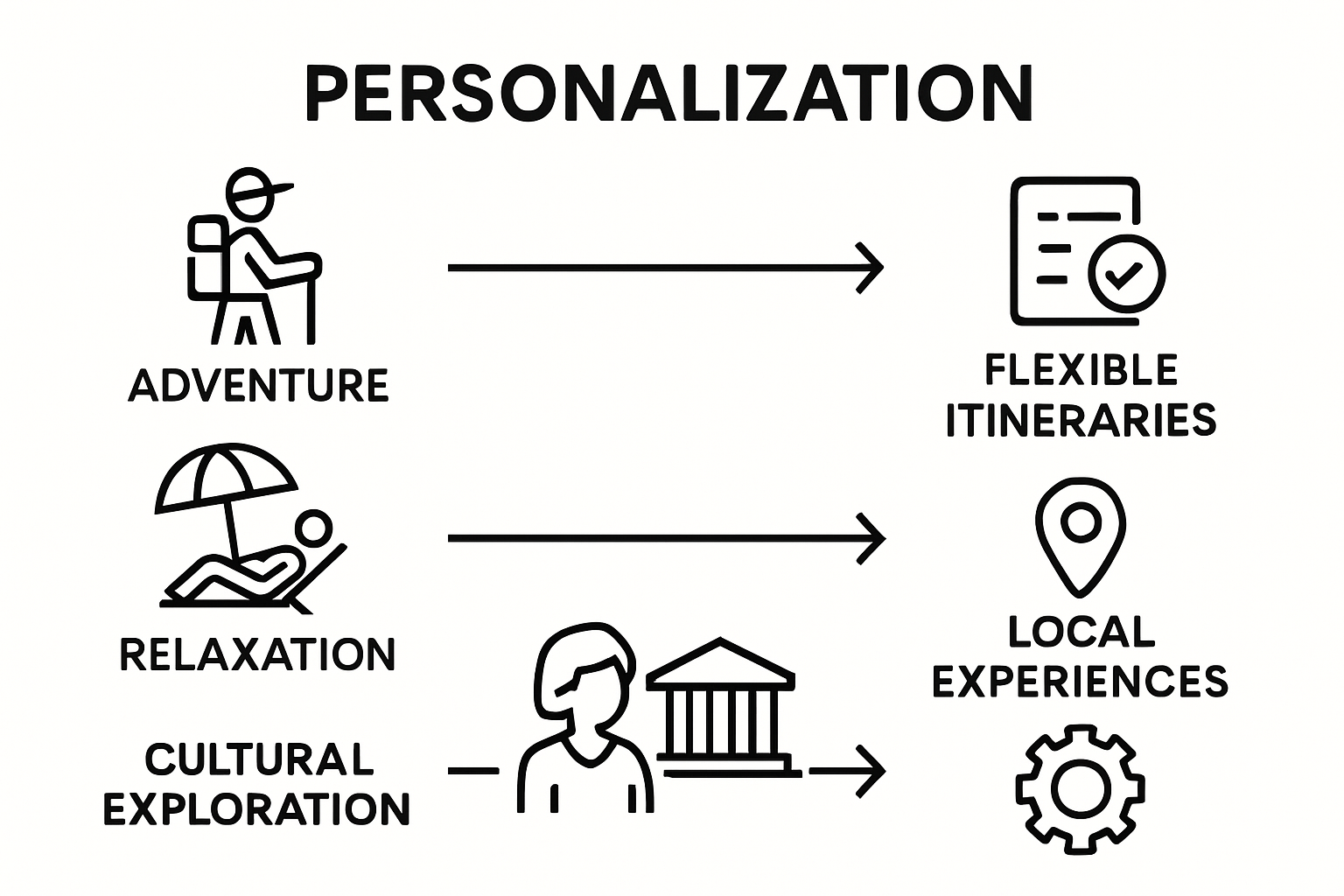
Hyper-Personalization and Anticipatory Service
In this category, service is not just responsive; it is anticipatory. Profiles are curated with immense granularity, covering everything from preferred nutritional profiles and exercise habits to specific art interests or historical fascinations. By 2026, the industry has shifted toward "lifestyle engineering," where travel designers work in tandem with personal assistants to ensure that a guest’s preferences are replicated across multiple geographies and service providers without the guest ever needing to repeat their requirements.
Exclusive Access and Private Logistics
The hallmark of the highest tier is the ability to bypass public friction. This includes private aviation transitions that avoid commercial terminals, after-hours access to historical monuments (such as private viewings of the Vatican Museums or the Pyramids of Giza), and the use of private residences or villa compounds that are not listed on traditional booking platforms. The value proposition here is the elimination of the "crowd" and the "queue."
Intellectual and Transformative Engagement
Modern ultra-luxury travel is increasingly defined by intellectual depth. High-net-worth travelers are looking for more than aesthetic beauty; they seek access to subject-matter experts—such as marine biologists for private dive expeditions in the Galapagos or architectural historians for tours of UNESCO World Heritage sites. This represents a shift from passive observation to active, guided learning.
Comparative Overview: Luxury vs. Ultra-Luxury Travel
Understanding the distinction requires looking at how different travel segments handle the core elements of a journey.
| Feature | Premium/Five-Star Travel | Ultra-Luxury Travel |
|---|---|---|
| Booking Source | Public platforms/Travel Agencies | Private Boutique Advisors/Family Offices |
| Logistics | Scheduled business/first class | Private aircraft charter/dedicated VIP handling |
| Service Model | Concierge desk | 24/7 dedicated private travel designer |
| Exclusivity | High-end suites and hotel rooms | Private estates, islands, or buy-outs |
| Interaction | Standard guided group tours | Private access with subject-matter experts |
Operational Prerequisites for Elite Travel
Accessing this tier of travel requires more than capital; it requires a network of trusted intermediaries. Most travelers in this segment do not "book" trips in the traditional sense.
The Role of the Private Travel Designer
Unlike mass-market travel agents, private travel designers function as creative directors. They manage complex multi-leg itineraries that integrate security details, private aviation, and on-the-ground fixers. In 2026, these designers rely on private networks of local contacts to ensure that logistics are handled with military-grade precision.
Security and Vetting
Security is a foundational element for this tier. This involves vetting transportation providers, ensuring the integrity of private staff, and maintaining communications with local authorities or security firms in regions where political stability or infrastructure might pose risks. The traveler is often unaware of these precautions, as the objective is to maintain a sense of freedom and serenity.
Documentation and Legal Compliance
For international high-tier travel, documentation requirements can be elaborate. This includes navigating private customs clearance, ensuring compliance with international maritime laws for superyacht charters, and managing the intricate insurance portfolios required for high-value expeditions. Many travelers utilize family offices to handle the legal and financial frameworks for these ventures to ensure tax efficiency and liability coverage.
Common Pitfalls and How to Avoid Them
Even at the highest levels, logistical failures can occur if the planning process is decentralized.
- Fragmented Planning: When a traveler attempts to manage a complex trip by booking different components separately, the "hand-offs" between providers are where issues typically arise. The solution is a single point of failure (a primary advisor) who holds the master itinerary.
- Over-Scheduling: A common mistake is the "checklist" approach—trying to pack too much into a single trip. The highest tier of travel emphasizes "slow luxury," allowing for spontaneous adjustments to an itinerary based on the traveler's current mood or weather conditions.
- Underestimating Local Dynamics: Even with a private jet and 24/7 service, local cultural nuances, labor laws, and seasonal logistics can impact the quality of an experience. Reliance on localized, on-the-ground expertise is mandatory to avoid "tourist-trap" scenarios that are often rebranded as luxury.
Frequently Asked Questions
How does one gain entry to these exclusive travel experiences?
Access is usually achieved through referrals or by engaging specialized boutique travel firms. Many of these services operate by invitation only, catering to private clients or family offices that require high levels of confidentiality.
Is the highest tier of travel strictly about cost?
While the financial barrier to entry is high, cost is rarely the primary focus. The focus is on value—specifically, the value of saved time and the assurance that an experience will be perfectly executed. For many, this tier is about mitigating the stress that often accompanies travel.
What is the difference between a concierge and a private travel designer?
A concierge typically reacts to requests at a specific hotel or via a credit card company. A private travel designer proactively curates the entire scope of a journey, often over several months, ensuring that every element—from the transit to the itinerary content—is cohesive.
Are there specific locations associated with this tier of travel?
While certain regions—such as the French Riviera, the Maldives, or private game reserves in Botswana—are traditional hubs, the highest tier of travel is defined by the how rather than the where. It can apply to a remote mountain trek just as easily as it applies to an urban penthouse stay.
How are security and privacy managed?
Professional security details are often integrated into the itinerary, including non-disclosure agreements (NDAs) for staff and the use of private ports of entry to bypass public scrutiny.
Next Actions for Prospective Travelers
If you are looking to elevate your travel experience to this tier, the first step is to consolidate your planning requirements. Seek a travel designer who operates within your specific region or niche of interest, such as luxury expeditions or private estate rentals. Request a consultation that focuses on their network of local fixers rather than a catalog of hotel brands. By shifting your approach from "selecting a hotel" to "designing a journey," you align yourself with the practices of the most experienced ultra-luxury travelers.
Image Gallery