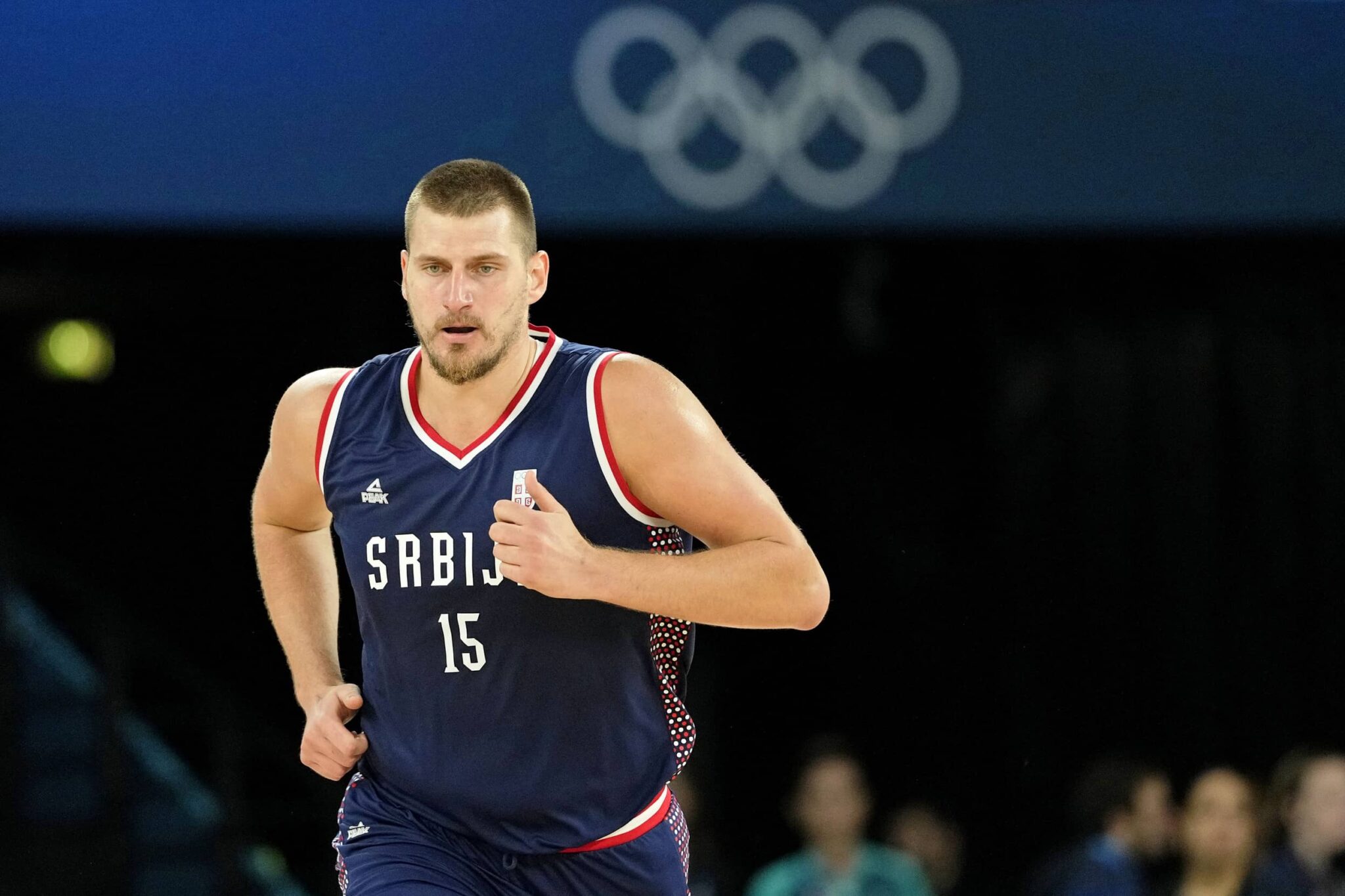
The 10 Greatest International Basketball Players in History
The greatest international basketball players of all time are Hakeem Olajuwon, Nikola Jokić, Giannis Antetokounmpo, Dirk Nowitzki, Steve Nash, Luka Dončić, Pau Gasol, Tony Parker, Manu Ginóbili, and Arvydas Sabonis. Selected based on N...
The greatest international basketball players of all time are Hakeem Olajuwon, Nikola Jokić, Giannis Antetokounmpo, Dirk Nowitzki, Steve Nash, Luka Dončić, Pau Gasol, Tony Parker, Manu Ginóbili, and Arvydas Sabonis. Selected based on NBA Most Valuable Player (MVP) awards, championship titles, FIBA tournament dominance, and foundational legacy, these trailblazers permanently reshaped the modern game.
Contents
Evaluation Criteria for Global Basketball Legends
Defining the top international players requires a balanced framework that accounts for both North American professional achievements in the National Basketball Association (NBA) and national team dominance in International Basketball Federation (FIBA) tournaments and the Olympic Games.
Evaluating international players solely on NBA statistics ignores the immense historical context of European, South American, and African basketball ecosystems. To ensure an objective ranking, players are evaluated using four primary pillars:
- Individual Accolades: NBA Most Valuable Player (MVP) awards, Finals MVP trophies, Defensive Player of the Year (DPOY) honors, All-NBA selections, and FIBA Tournament MVP recognitions.
- Team Success & Championships: NBA championships, EuroLeague titles, Olympic medals, and FIBA World Cup victories.
- Peak Dominance vs. Career Longevity: The height of a player’s statistical and competitive ceiling weighed against sustained elite production over a decade or more.
- Pioneer & Cultural Impact: How significantly the player expanded basketball's global footprint, broken structural barriers for foreign athletes, or altered tactical systems.
Detailed Profiles of the Top 10 International Basketball Players
1. Hakeem Olajuwon (Nigeria)
Born in Lagos, Nigeria, Hakeem "The Dream" Olajuwon stands as the premier international player in basketball history. Drafted first overall by the Houston Rockets in 1984, Olajuwon combined unprecedented footwork, defensive instincts, and offensive versatility to become one of the most complete centers ever to play the sport.
Olajuwon dominated the 1990s, winning back-to-back NBA Championships in 1994 and 1995 while earning Finals MVP both times. In 1994, he accomplished an unprecedented trifecta by capturing the regular-season MVP, Defensive Player of the Year, and Finals MVP in a single campaign. Famous for his signature "Dream Shake" post move, Olajuwon remains the NBA's all-time leader in blocked shots (3,830) and ranks among the top ten in career steals. His success established the template for foreign-born big men entering North American sports.
- Key Achievements: 2x NBA Champion, 2x Finals MVP, 1994 NBA MVP, 2x Defensive Player of the Year, 12x NBA All-Star, Naismith Memorial Basketball Hall of Fame inductee (2008).
2. Nikola Jokić (Serbia)
Nikola Jokić has redefined the center position through unmatched passing vision, elite scoring efficiency, and masterclass rebounding. Drafted 41st overall by the Denver Nuggets in the 2014 NBA Draft during a commercial break, Jokić developed into the most offensively gifted center in modern basketball history.
Between 2021 and 2024, Jokić captured three NBA Most Valuable Player awards (2021, 2022, 2024), joining an elite group of legendary players with three or more MVP trophies. In 2023, he guided the Denver Nuggets to their first-ever NBA championship, capturing Finals MVP honors after becoming the first player in postseason history to lead all playoff participants in total points, rebounds, and assists. Representing Serbia, Jokić has also claimed an Olympic Silver Medal (2016) and an Olympic Bronze Medal (2024), demonstrating his impact on both the international and NBA stages.
- Key Achievements: 1x NBA Champion, 1x Finals MVP, 3x NBA MVP (2021, 2022, 2024), 6x All-NBA Team, Olympic Silver & Bronze Medalist.
3. Giannis Antetokounmpo (Greece)
Giannis Antetokounmpo’s trajectory from selling trinkets on the streets of Athens to global basketball supremacy remains one of sport's most captivating stories. Selected 15th overall by the Milwaukee Bucks in 2013, "The Greek Freak" transformed his physical frame into a hyper-athletic two-way force capable of guarding all five positions on the court.
Antetokounmpo secured consecutive regular-season MVP awards in 2019 and 2020. In 2020, he joined Hakeem Olajuwon and Michael Jordan as the only players in league history to win MVP and Defensive Player of the Year in the same season. His signature career moment came in Game 6 of the 2021 NBA Finals, where he dropped 50 points, 14 rebounds, and 5 blocks to secure Milwaukee’s first championship in 50 years, earning Finals MVP honors in the process.
- Key Achievements: 1x NBA Champion, 1x Finals MVP, 2x NBA MVP (2019, 2020), 2020 Defensive Player of the Year, 8x NBA All-Star, Most Improved Player (2017).
4. Dirk Nowitzki (Germany)
Dirk Nowitzki fundamentally altered the geometry of basketball. Emerging from Würzburg, Germany, the 7-foot power forward introduced a lethal perimeter shooting stroke and an iconic one-legged fadeaway jumper that became one of the unguardable shots in basketball history.
Nowitzki spent his entire 21-year NBA career with the Dallas Mavericks, leading them to the postseason 15 times. In 2007, he became the first European-born player to win the NBA MVP award after leading Dallas to a 67-win season. His crowning achievement arrived in 2011, when he engineered one of the most impressive postseason runs in history, defeating a stacked Miami Heat core to win the NBA Championship and Finals MVP. Nowitzki scored over 31,500 points in his career, establishing himself as the gold standard for European basketball excellence.
- Key Achievements: 1x NBA Champion, 1x Finals MVP, 2007 NBA MVP, 14x NBA All-Star, 12x All-NBA Selection, FIBA World Cup MVP (2002), Naismith Hall of Fame (2023).
5. Steve Nash (Canada)
Born in Johannesburg, South Africa, and raised in Victoria, British Columbia, Steve Nash became the premier playmaker of his era and the engine behind the famous "Seven Seconds or Less" Phoenix Suns offense. Nash’s masterclass in pace, court vision, and elite perimeter shooting laid the tactical foundation for the modern high-tempo, three-point-heavy NBA landscape.
Nash won back-to-back NBA MVP awards in 2005 and 2006, joining rare company as a point guard to accomplish the feat. He led the NBA in assists five times and orchestrated four separate 50-40-90 shooting seasons (50% field goals, 40% three-pointers, 90% free throws), a mark of unprecedented efficiency. Internationally, Nash represented Canada with distinction, earning tournament MVP honors at the 1999 FIBA AmeriCup.
- Key Achievements: 2x NBA MVP (2005, 2006), 8x NBA All-Star, 7x All-NBA Selection, 5x NBA Assist Leader, Naismith Hall of Fame (2018).
6. Luka Dončić (Slovenia)
Luka Dončić entered the NBA as one of the most accomplished European teenagers in history, having already captured the EuroLeague Championship, EuroLeague MVP, and a FIBA EuroBasket title with Slovenia by age 19. Drafted third overall in 2018, Dončić translated his elite court vision, step-back scoring, and high-IQ playmaking directly to the NBA level without missing a beat.
Before turning 26, Dončić achieved five All-NBA First Team selections, an NBA Scoring Title, and led the Dallas Mavericks to the 2024 NBA Finals. His ability to control the tempo of high-stakes playoff games and record historic triple-doubles places him on a trajectory to rank among the top overall players in basketball history by the conclusion of his career.
- Key Achievements: 5x All-NBA First Team, 5x NBA All-Star, 2019 NBA Rookie of the Year, 2024 NBA Scoring Champion, EuroLeague Champion & MVP (2018), EuroBasket Champion (2017).
7. Pau Gasol (Spain)
Pau Gasol served as the cornerstone of Spanish basketball's golden era and a key architect of two NBA titles. Drafted third overall in 2001, Gasol combined finesse, high-post passing, and soft interior touch to win the 2002 NBA Rookie of the Year award with the Memphis Grizzlies.
Gasol’s mid-career trade to the Los Angeles Lakers transformed the franchise, providing Kobe Bryant with the co-star necessary to secure back-to-back NBA Championships in 2009 and 2010. Internationally, Gasol’s resume is virtually peerless: he led Spain to a FIBA World Championship (2006), three EuroBasket titles (2009, 2011, 2015), and two Olympic Silver Medals (2008, 2012), consistently pushing Team USA to the absolute brink in international competition.
- Key Achievements: 2x NBA Champion, 6x NBA All-Star, 4x All-NBA Selection, 2002 NBA Rookie of the Year, FIBA World Cup MVP (2006), Naismith Hall of Fame (2023).
8. Tony Parker (France)
Drafted 28th overall in 2001 by the San Antonio Spurs, French point guard Tony Parker used lightning-fast speed, tear-drop floaters, and elite execution to anchor one of the most successful dynasties in professional sports history.
Parker played a central role in four San Antonio Spurs NBA Championships (2003, 2005, 2007, 2014). In 2007, he became the first European player in NBA history to win the Finals MVP award after averaging 24.5 points on 56.8% shooting against the Cleveland Cavaliers. Representing France, Parker led his country to its first major international basketball gold medal at FIBA EuroBasket 2013, where he finished as the tournament's top scorer and MVP.
- Key Achievements: 4x NBA Champion, 2007 NBA Finals MVP, 6x NBA All-Star, 4x All-NBA Selection, EuroBasket Champion & MVP (2013), Naismith Hall of Fame (2023).
9. Manu Ginóbili (Argentina)
Manu Ginóbili is widely recognized as one of the most creative and competitive players in basketball history. Drafted 57th overall in 1999 by the San Antonio Spurs, Ginóbili popularized the "Euro-step" in North America, a move that is now a fundamental component of modern perimeter footwork.
Ginóbili achieved victory at every level of professional basketball. He won four NBA championships alongside Tim Duncan and Tony Parker as part of San Antonio's legendary core, accepting an impactful Sixth Man role for the betterment of the team. Internationally, Ginóbili accomplished one of the greatest feats in basketball history by leading Argentina to an Olympic Gold Medal at the 2004 Athens Games, defeating Team USA in the semifinals. He is one of only two players in history (alongside Bill Bradley) to win an EuroLeague title, an NBA Championship, and an Olympic Gold Medal.
- Key Achievements: 4x NBA Champion, 2004 Olympic Gold Medalist, 2008 NBA Sixth Man of the Year, 2x NBA All-Star, EuroLeague Champion (2001), Naismith Hall of Fame (2022).
10. Arvydas Sabonis (Lithuania)
Arvydas Sabonis remains one of the ultimate "what-if" stories and legendary figures in global basketball history. Standing 7-foot-3 with elite passing vision, 3-point range, and immense interior strength, Sabonis dominated European competition throughout the 1980s, winning the 1988 Olympic Gold Medal with the Soviet Union against the United States.
Severe Achilles tendon injuries and political restrictions delayed Sabonis’s entry into the NBA until 1995, when he joined the Portland Trail Blazers at age 30 with diminished mobility. Despite these physical limitations, his brilliant passing and post intelligence helped lead Portland to multiple deep playoff runs. International coaches and players who saw Sabonis at his peak during the 1980s universally consider him one of the most talented centers to ever live.
- Key Achievements: 1988 Olympic Gold Medalist, 2x Olympic Bronze Medalist (Lithuania 1992, 1996), Euroscar Player of the Year (6x), EuroLeague Champion (1995), Naismith Hall of Fame (2011).
Historical Impact: How Global Stars Reshaped the NBA and FIBA
The modern basketball landscape is inherently international. Thirty years ago, foreign players were often viewed as secondary project prospects or late-round fliers. Today, global superstars routinely dominate the upper echelon of the NBA’s statistical leaders, MVP votings, and championship rosters.
EVOLUTION OF INTERNATIONAL BASKETBALL
- 1980s-1990s: THE PIONEERS
- Olajuwon, Sabonis, Petrović prove international players can dominate.
- Dream Team (1992) accelerates global interest and talent development.
- 2000s-2010s: SYSTEMIC INTEGRATION
- Nowitzki, Nash win regular-season MVPs.
- Spurs Dynasty (Parker/Ginóbili) wins 4 titles with global playmaking.
- Spain & Argentina break North American Olympic dominance (2004 Gold).
- 2020s-PRESENT: GLOBAL SUPREMACY
- Jokić, Antetokounmpo, Dončić routinely sweep NBA MVP honors.
- Positionless basketball driven by big men with elite perimeter skills.
This evolution occurred due to several distinct shifts in coaching philosophy, player development, and structural changes:
- Pioneering Footwork and Post Play: Hakeem Olajuwon proved that international training regimens could produce the most athletic, footwork-refined post players in the sport's history.
- Perimeter Spacing for Big Men: Dirk Nowitzki destroyed the traditional expectation that 7-footers must play exclusively near the block, paving the way for stretch-fours and stretch-fives.
- Point-Center Offenses: Nikola Jokić built upon the high-post passing legacy of Arvydas Sabonis, creating a modern offense where a 7-footer functions as the primary ball-handler and playmaker.
- Pace, Space, and European Footwork: Euro-steps (introduced at scale by Ginóbili) and step-back mechanics (refined by Dončić) are now fundamental training requirements for American and international guards alike.
Comparative Breakdown of Career Achievements
The following table summarizes the primary accolades, positions, primary countries represented, and major titles captured by the top 10 international players.
| Player | Country | Position | NBA MVPs | NBA Championships | Finals MVPs | Olympic / FIBA Gold Medals | Hall of Fame |
|---|---|---|---|---|---|---|---|
| Hakeem Olajuwon | Nigeria | Center | 1 (1994) | 2 (1994, 1995) | 2 | 1 (1996 USA Olympic Gold)* | Yes (2008) |
| Nikola Jokić | Serbia | Center | 3 (2021, 2022, 2024) | 1 (2023) | 1 | 0 (Silver 2016, Bronze 2024) | Active |
| Giannis Antetokounmpo | Greece | Power Forward | 2 (2019, 2020) | 1 (2021) | 1 | 0 | Active |
| Dirk Nowitzki | Germany | Power Forward | 1 (2007) | 1 (2011) | 1 | 0 (Bronze 2002 World Cup) | Yes (2023) |
| Steve Nash | Canada | Point Guard | 2 (2005, 2006) | 0 | 0 | 0 | Yes (2018) |
| Luka Dončić | Slovenia | Guard/Forward | 0 | 0 | 0 | 1 (EuroBasket 2017) | Active |
| Pau Gasol | Spain | Power Forward/Center | 0 | 2 (2009, 2010) | 0 | 1 (2006 FIBA World Cup) | Yes (2023) |
| Tony Parker | France | Point Guard | 0 | 4 (2003, 2005, 2007, 2014) | 1 | 1 (EuroBasket 2013) | Yes (2023) |
| Manu Ginóbili | Argentina | Shooting Guard | 0 | 4 (2003, 2005, 2007, 2014) | 0 | 1 (2004 Olympic Gold) | Yes (2022) |
| Arvydas Sabonis | Lithuania | Center | 0 | 0 | 0 | 1 (1988 Olympic Gold)* | Yes (2011) |
*Note: Hakeem Olajuwon gained US citizenship in 1993 and competed for USA's 1996 Olympic team. Arvydas Sabonis won Olympic Gold with the USSR in 1988 prior to representing independent Lithuania in 1992 and 1996.
Honorable Mentions and Rising Global Superstars
Narrowing international basketball history down to ten individuals inevitably leaves out legendary pioneers and dominant contemporary stars who have made historical contributions:
- Dražen Petrović (Croatia): A legendary shooting guard whose lethal perimeter jumper established that European backcourt players could excel in the NBA before his tragic death in 1993.
- Marc Gasol (Spain): 2013 NBA Defensive Player of the Year, 3x NBA All-Star, and 2019 NBA Champion, serving alongside his brother Pau as Spain's physical foundation.
- Yao Ming (China): The 7-foot-6 center was an 8x NBA All-Star who single-handedly expanded basketball's cultural and commercial presence throughout Asia.
- Rudy Gobert (France): A 4x NBA Defensive Player of the Year who stands among the premier interior defenders in basketball history.
- Shai Gilgeous-Alexander (Canada): An All-NBA First Team selection and scoring threat who led Team Canada to a FIBA World Cup Bronze Medal in 2023.
- Victor Wembanyama (France): Possesses unprecedented physical dimensions and perimeter fluidity, establishing himself early in his career as an elite prospect with historic structural potential.
Frequently Asked Questions
Who is considered the single greatest international basketball player of all time?
Hakeem Olajuwon is widely considered the greatest international player of all time based on his combination of peak dominance and lifetime accolades. Olajuwon won two NBA Championships, two Finals MVPs, one regular-season MVP, and two Defensive Player of the Year awards, while ending his career as the NBA's all-time official leader in blocked shots.
Why is Hakeem Olajuwon counted as an international player if he played for Team USA?
Hakeem Olajuwon was born, raised, and learned the game of basketball in Lagos, Nigeria, before emigrating to the United States to play college basketball for the University of Houston. Although he later became a naturalized U.S. citizen in 1993 and competed for the 1996 U.S. Olympic team, his foundational development and athletic roots originate in Nigeria.
Which country outside the United States has produced the most top-tier NBA talent?
Canada and France currently produce the highest volume of high-draft-pick NBA talent, largely due to modernized development pipelines and grassroots programs. However, historically, countries like Spain, Serbia, Lithuania, and Croatia have produced the most decorated international national teams in FIBA and Olympic history.
How many international players have won the NBA regular-season MVP award?
Five international players have won the NBA Most Valuable Player award: Hakeem Olajuwon (Nigeria, 1994), Steve Nash (Canada, 2005, 2006), Dirk Nowitzki (Germany, 2007), Giannis Antetokounmpo (Greece, 2019, 2020), and Nikola Jokić (Serbia, 2021, 2022, 2024).
How does FIBA performance factor into ranking international basketball players?
FIBA performance is essential because it measures a player's capability to adapt to international rules, shorter quarter lengths, physical interior play, and different defensive zone structures. Players like Manu Ginóbili, Pau Gasol, and Arvydas Sabonis elevate their historical rankings significantly due to legendary achievements in Olympic and World Cup tournaments.
Recommended Next Steps for Basketball Analysts and Fans
To gain a deeper understanding of how international talent continues to shape professional basketball, consider the following analytical steps:
- Study Historical FIBA Archives: Watch game footage of the 2004 Argentina Men's Olympic Team or the 2006 Spanish FIBA World Championship team to analyze how European and South American tactical systems dismantled traditional isolation play.
- Track Advanced Metrics: Analyze modern advanced stats such as Player Efficiency Rating (PER), Win Shares per 48 Minutes (WS/48), and Box Plus/Minus (BPM) to trace how players like Nikola Jokić and Luka Dončić dominate offensive efficiency metrics compared to historical benchmarks.
- Monitor International Scouting Pipelines: Keep track of major global leagues—including EuroLeague, Australia's NBL Next Stars program, and the NBA Academy Africa—to identify the next generation of international superstars prior to the NBA Draft.
Image Gallery