Comprehensive Guide to Auto Cycle and Motorcycle Insurance in Connecticut (2026)
In Connecticut, auto cycle insurance refers to the mandatory financial protection required for three-wheeled vehicles (autocycles) and standard motorcycles. As of 2026, the State of Connecticut requires all riders to carry minimum liab...
In Connecticut, auto cycle insurance refers to the mandatory financial protection required for three-wheeled vehicles (autocycles) and standard motorcycles. As of 2026, the State of Connecticut requires all riders to carry minimum liability coverage of $25,000 for bodily injury per person, $50,000 per accident, and $25,000 for property damage.
Contents
Operating a vehicle on Connecticut’s diverse roadways—from the dense traffic of I-95 to the winding rural routes of Litchfield County—requires a nuanced understanding of state insurance statutes. Whether you are piloting a modern three-wheeled autocycle like a Polaris Slingshot or a traditional two-wheeled cruiser, the insurance landscape is governed by specific definitions and minimum requirements set by the Connecticut Department of Motor Vehicles (DMV) and the Insurance Department.
Defining the "Autocycle" in Connecticut Law
Before securing a policy, it is essential to distinguish between a motorcycle and an autocycle. Under Connecticut General Statutes, an autocycle is defined as a three-wheeled motor vehicle that has a steering wheel and seating that does not require the operator to straddle or sit astride it.
This distinction is more than academic; it dictates the type of license you need and how the vehicle is rated by insurance carriers. While a traditional motorcycle requires a Class M endorsement, an autocycle can typically be operated with a standard Class D driver’s license. From an insurance perspective, most carriers treat autocycles under a specialized motorcycle form, though some hybrid policies exist that blend elements of passenger vehicle and motorcycle coverage.
Why the Distinction Matters for Your Policy
If you register a vehicle that the DMV classifies as an autocycle, you must ensure your insurance company recognizes this specific classification. Misclassifying a vehicle during the quoting process can lead to denied claims or policy cancellation. In 2026, most major carriers have integrated "Autocycle" as a specific vehicle type in their quoting engines to account for their increasing popularity in the Northeast.
Mandatory Minimum Coverage Requirements for 2026
Connecticut is a "fault" state, meaning the party responsible for an accident is liable for the damages. To ensure riders can meet this financial responsibility, the state mandates specific minimum coverage levels.
Bodily Injury Liability
The state-mandated minimum is $25,000 per person and $50,000 per accident. This coverage pays for the medical expenses, lost wages, and pain and suffering of third parties (other drivers, pedestrians, or passengers) if you are found at fault in a collision. Given the high cost of medical care in 2026, these minimums are often viewed by experts as insufficient for protecting personal assets.
Property Damage Liability
A minimum of $25,000 is required to cover damages you cause to someone else’s property. This includes other vehicles, fences, buildings, or public utility poles. In an era where the average cost of a new vehicle exceeds $45,000, a $25,000 limit can be exhausted quickly in a multi-vehicle accident.
Uninsured and Underinsured Motorist (UM/UIM) Coverage
Connecticut law requires that your policy includes Uninsured/Underinsured Motorist coverage equal to the minimum liability limits ($25/50). This protects you if you are hit by a driver who has no insurance or whose limits are too low to cover your injuries. Because motorcycle and autocycle riders are more vulnerable than those in enclosed passenger cars, UM/UIM is arguably the most critical component of a Connecticut policy.
Expanded Coverage Options for Enhanced Protection
While the state only requires liability and UM/UIM, most Connecticut riders opt for additional layers of protection to safeguard their investment and personal health.
Collision Coverage
Collision insurance pays for damage to your autocycle or motorcycle resulting from a collision with another vehicle or object, regardless of fault. For riders in urban centers like Hartford or New Haven, where fender-benders are frequent, collision coverage is vital for vehicles under ten years old.
Comprehensive Coverage
Often called "Other Than Collision," this covers losses caused by fire, theft, vandalism, or contact with animals. Given the high rate of deer-related accidents in suburban Connecticut, comprehensive coverage is a highly recommended addition. It also provides peace of mind against the theft of high-value autocycles, which can be targets in metropolitan areas.
Medical Payments (MedPay)
MedPay covers medical bills for you and your passenger regardless of who caused the accident. This is particularly useful in Connecticut because it can fill the gaps left by high-deductible health insurance plans.
Guest Passenger Liability
Specifically for traditional motorcycles, guest passenger liability covers injuries to a person riding on the back of your bike. While some policies include this in the general bodily injury limit, others require it as a separate endorsement. For autocycles with side-by-side seating, this is typically included in the standard liability portion, but it is always worth verifying with your agent.
| Coverage Type | Required by CT Law? | What it Protects | Recommended Limit (2026) |
|---|---|---|---|
| Bodily Injury | Yes | Others' medical bills | $100,000 / $300,000 |
| Property Damage | Yes | Others' property | $50,000 - $100,000 |
| UM/UIM | Yes | Your injuries (from others) | Matches BI Limits |
| Collision | No* | Your vehicle (accidents) | Actual Cash Value |
| Comprehensive | No* | Your vehicle (theft/nature) | Actual Cash Value |
| CPE | No | Custom parts/Chrome/Paint | Up to $10,000+ |
*Note: Lenders will require Collision and Comprehensive if the vehicle is financed or leased.
Factors Influencing Insurance Premiums in Connecticut
Insurance rates in Connecticut are influenced by a combination of state-wide data and individual risk profiles. In 2026, several factors stand out as primary drivers of premium costs.
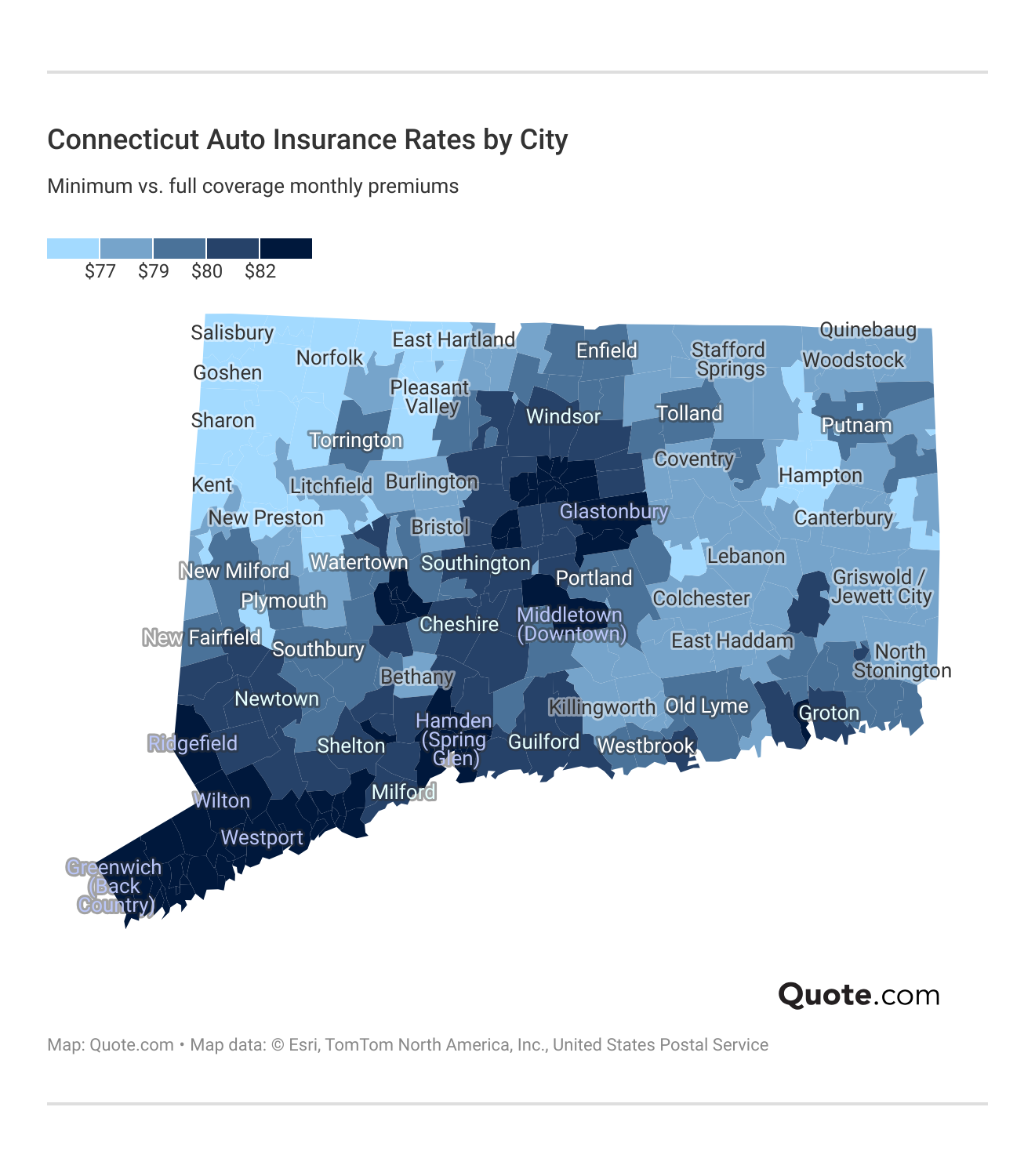
- Geography and Zip Code: Riders in Fairfield County typically face higher premiums than those in Windham County due to higher traffic density and increased litigation rates.
- Vehicle Performance: A high-performance sportbike will cost significantly more to insure than a touring autocycle or a standard cruiser. Carriers categorize vehicles based on their power-to-weight ratio and historical claim frequency.
- Rider Experience and Training: Connecticut rewards safety. Completing a Connecticut Rider Education Program (CONREP) course not only helps you get your license but often triggers a significant discount on your insurance premium.
- Credit History: Connecticut allows insurers to use credit-based insurance scores to help determine premiums, though there are regulations limiting how this data can be applied.
- Seasonal Use: Many Connecticut policies are "annual" but priced with the knowledge that the vehicle will be stored during the winter months. Some insurers offer "Lay-up" periods where coverage is reduced to comprehensive-only during the winter to save money.
Custom Parts and Equipment (CPE) Coverage
Connecticut has a vibrant custom bike and autocycle culture. Standard insurance policies usually only cover the vehicle as it left the factory. If you have added custom chrome, specialized paint, aftermarket exhausts, or high-end electronics to your Slingshot or Harley-Davidson, you likely need Custom Parts and Equipment (CPE) coverage.
Most policies include a small amount (e.g., $1,000) of CPE, but for many riders, this is woefully inadequate. In 2026, specialized endorsements are available to cover up to $30,000 in modifications, ensuring that your investment is fully protected in the event of a total loss.
Connecticut Licensing and Safety Regulations
Compliance with state law is a prerequisite for valid insurance. If you are found to be operating outside the terms of your license, your insurer may have grounds to deny a claim.
- Helmets: As of 2026, Connecticut law requires helmets for riders and passengers under age 18, as well as for all riders operating under a motorcycle training permit. While not mandatory for all adults, some insurance companies offer lower rates for riders who commit to wearing full safety gear.
- Eye Protection: All motorcycle operators must wear goggles, glasses, or a face shield unless the bike is equipped with a high-profile windshield.
- The "M" Endorsement: For two-wheeled cycles, you must pass the DMV knowledge and vision tests and complete a safety course to earn your "M" endorsement. Autocycles, as previously noted, generally require only a standard driver's license.
Frequently Asked Questions
Is a Polaris Slingshot considered a motorcycle or an autocycle in CT?
In Connecticut, the Polaris Slingshot is classified as an autocycle. This means you do not need a motorcycle endorsement (Class M) to drive it; a standard driver's license (Class D) is sufficient. However, for insurance purposes, it is usually covered under a motorcycle-style policy that accounts for its three-wheel configuration.
Can I get a discount for taking a safety course in 2026?
Yes. Most Connecticut insurers offer a "Safety Course Discount" ranging from 5% to 15% for riders who complete the Connecticut Rider Education Program (CONREP) or an equivalent MSF-approved course. This discount often stays on the policy for three years.
What happens if I ride my autocycle without insurance in CT?
Driving without insurance in Connecticut is a serious offense. Penalties include fines ranging from $100 to $1,000, suspension of your registration and driver's license, and potential impoundment of the vehicle. Furthermore, being caught uninsured makes you a "high-risk" driver, significantly increasing your future premiums.
Does Connecticut require "Guest Passenger" coverage?
Yes, if you plan to carry passengers, your policy must account for their liability. In Connecticut, this is often bundled into your bodily injury liability, but you should verify that your policy does not have a "passenger exclusion" clause, which is common in some low-cost, bare-minimum policies.
Should I cancel my insurance during the Connecticut winter?
It is highly recommended not to cancel your policy entirely. If you cancel, you create a "lapse in coverage," which leads to much higher rates when you try to re-insure in the spring. Instead, ask your agent about a "Lay-up" policy or "Winter Storage" status, which maintains comprehensive coverage (against theft and fire) while removing the expensive road-coverage portions like collision and liability.
Next Steps for Connecticut Riders
To ensure you are properly protected for the 2026 riding season, start by requesting quotes from at least three different carriers. Compare the cost of state minimums against a "100/300/50" policy; often, the difference in premium is less than $10 per month, yet the protection is quadrupled. Always provide your VIN to the agent to ensure the vehicle is correctly classified as a motorcycle or autocycle from the start.
Before heading out on Connecticut's roads, verify your insurance identification card is accessible, either physically or digitally via your provider’s app, as CT law requires proof of financial responsibility to be presented upon request by law enforcement.
Image Gallery