A Definitive Overview of Adam Jones: The Architect of Tool's Sonic and Visual Identity
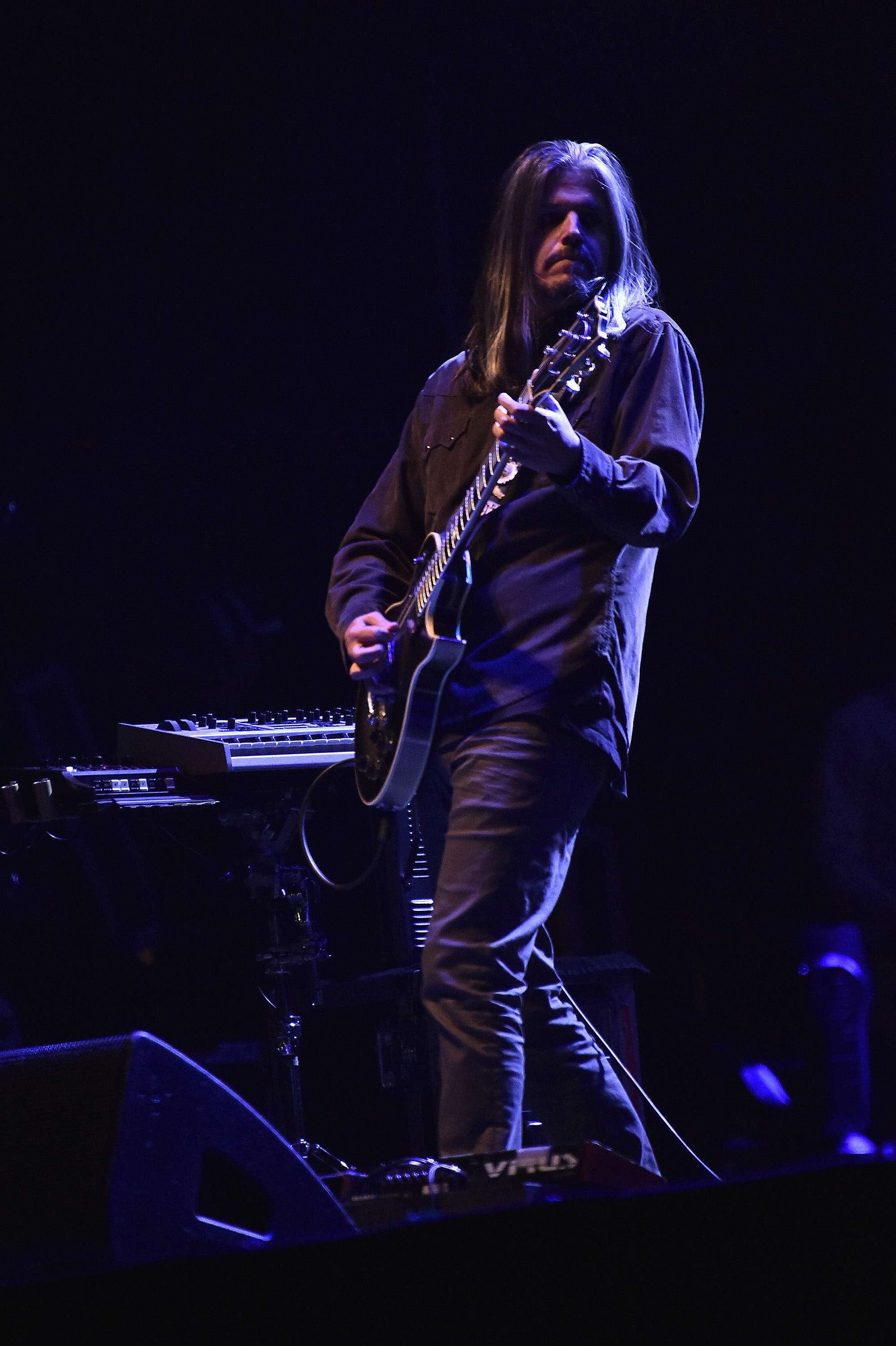
Adam Jones is a world-renowned American musician, visual artist, and director best known as the lead guitarist and a founding member of the progressive metal band Tool. By 2026, his legacy is defined not only by his innovative, polyrhy...
Adam Jones is a world-renowned American musician, visual artist, and director best known as the lead guitarist and a founding member of the progressive metal band Tool. By 2026, his legacy is defined not only by his innovative, polyrhythmic guitar work but also by his mastery of stop-motion animation and special effects, which have shaped the band's distinctive aesthetic for over three decades.
Contents
The Intersection of Visual Arts and Music
Adam Jones occupies a unique position in the music industry. Unlike many guitarists who focus solely on their instrument, Jones views the creative process through a multi-disciplinary lens. Before Tool achieved global success, Jones worked in the Hollywood special effects industry, contributing to iconic films such as Jurassic Park, Terminator 2: Judgment Day, Dances with Wolves, and Predator 2. This background in makeup, sculpture, and design became the foundation for Tool’s visual identity.
His transition from the film studio to the recording studio was not a departure but an evolution. He applied the meticulous, frame-by-frame discipline of stop-motion animation to the composition of Tool's music. This resulted in a collaborative environment where the music and the visuals are inseparable. As the primary director of the band's music videos—including "Schism," "Parabola," and "Vicarious"—Jones utilizes grotesque, surrealist imagery influenced by the Brothers Quay and H.R. Giger to create a cinematic experience that complements the band's complex sonic structures.
Musical Philosophy and Technical Style
The "Adam Jones sound" is characterized by its heavy, atmospheric, and rhythmically intricate nature. While many of his contemporaries in the 1990s and 2000s focused on speed and shredding, Jones prioritized texture, dynamics, and the "space" between the notes. His playing is often built on the foundation of Drop D tuning, which allows for a deep, resonant low end and the ability to play power chords with a single finger—a staple of the Tool sound.
Rhythmic Complexity and Polyrhythms
A hallmark of Jones’s style is his ability to maintain steady, driving riffs while drummer Danny Carey and bassist Justin Chancellor explore shifting time signatures. Jones often employs polyrhythms, where he might play a riff in 4/4 or 5/4 while the rest of the band operates in a different meter. This creates a sense of tension and release that is central to the progressive metal genre.
Use of Feedback and Harmonics
Jones is a master of controlled feedback. He often uses his guitar’s natural resonance to sustain notes through long, ambient passages. Additionally, his use of "pinch harmonics"—a technique where the thumb of the picking hand lightly touches the string—adds a mechanical, almost industrial squeal to his riffs. This is most evident in tracks like "7empest" and "Third Eye," where the guitar serves as both a melodic lead and a percussive texture.
The Signature Sound: Rig and Equipment
By 2026, the gear used by Adam Jones has reached legendary status among enthusiasts. His setup is a blend of vintage reliability and high-end boutique amplification. The core of his sound has remained remarkably consistent since the early 1990s, centered around a specific vintage guitar and a multi-amp configuration.
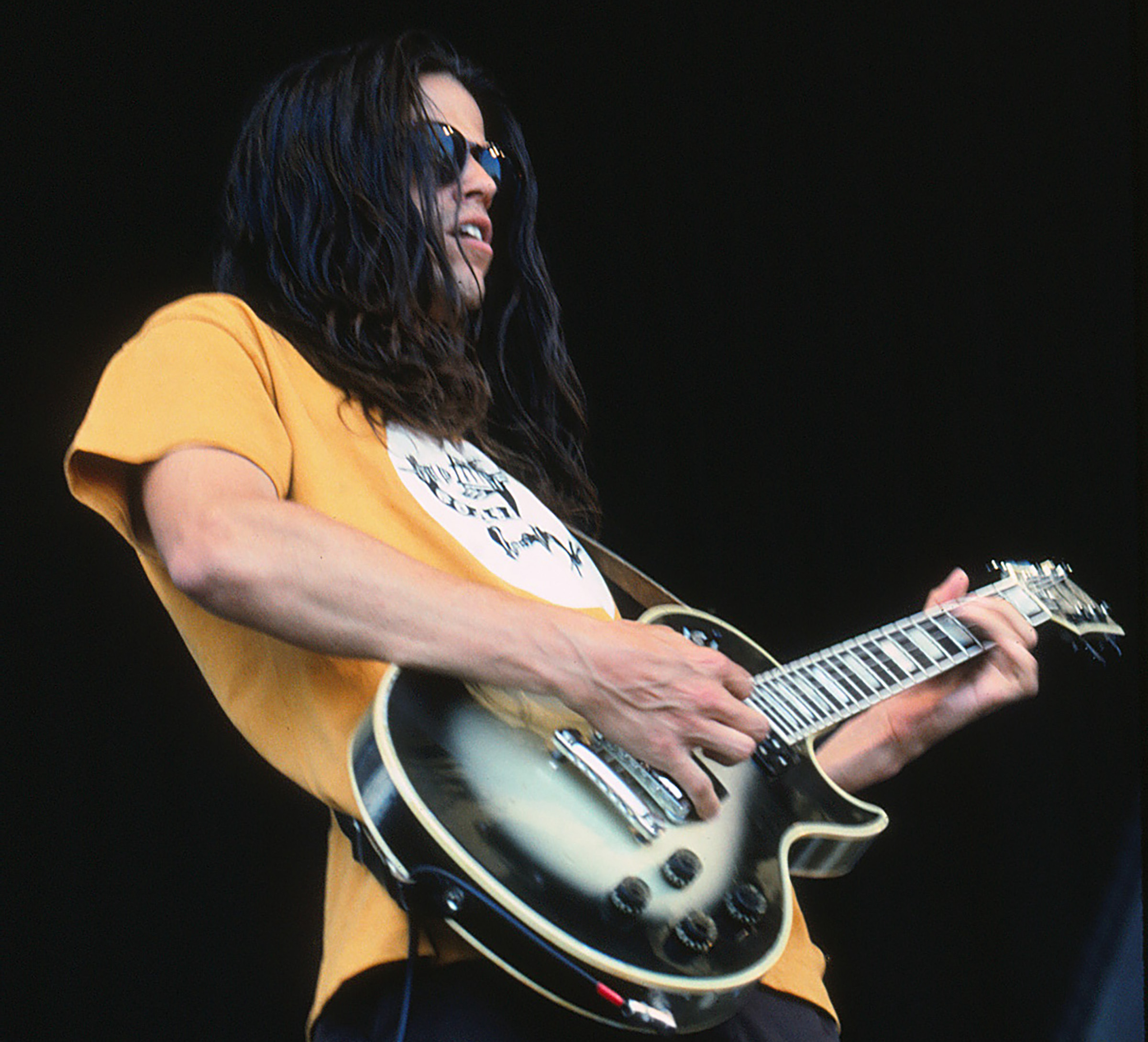
The 1979 Gibson Les Paul Silverburst
Jones is synonymous with the 1979 Gibson Les Paul Custom Silverburst. He famously owns several of these, preferring the original late-70s models. There was a long-standing myth in the guitar community that the metallic flake in the Silverburst paint contained actual silver, which allegedly oxidized over time and changed the guitar's tone. While this is largely debunked by luthiers, Jones maintains that these specific guitars possess a weight and sustain that modern equivalents struggle to replicate.
Amplification and Signal Chain
To achieve his thick, saturated tone, Jones uses a "wall of sound" approach by blending different amplifiers simultaneously:
- Diezel VH4: This German-made boutique amp provides the heavy, high-gain distortion that defines Tool’s modern era.
- 1976 Marshall Super Lead (Modded): This vintage head provides the "mids" and the classic British crunch that cuts through the mix.
- Mesa Boogie Dual Rectifier: Often used in the studio and occasionally live to add low-end "thump" and girth.
The Pedalboard Essentials
Jones is not a "gear minimalist," but his pedalboard is curated for specific functions rather than experimental noise. Key components include:
- Boss BF-2 Flanger: Essential for the "metallic" sweeping sound found in the intros to songs like "Forty Six & 2."
- Heil Talk Box: Used for the vocal-like guitar solo in "Jマネ" and "The Pot."
- Wah Pedals: Typically a Dunlop Cry Baby BB535, used sparingly for rhythmic filtering rather than traditional blues-style soloing.
| Component | Model Specification | Primary Usage |
|---|---|---|
| Primary Guitar | 1979 Gibson Les Paul Custom | Main recording/touring instrument (Silverburst) |
| Primary Amp | Diezel VH4 (Blueface) | High-gain, articulate distortion |
| Secondary Amp | vintage Marshall Super Lead | Mid-range punch and clarity |
| Key Effect | Boss BF-2 Flanger | Modulated textures and intros |
| Signature Gear | Gibson Adam Jones Custom Shop | 2020s-era replica of his main guitar |
Directorial Influence and Visual Storytelling
Adam Jones’s contribution to Tool extends far beyond the fretboard. He serves as the band’s de facto creative director. In the early 1990s, he pushed the band toward using stop-motion animation for their videos instead of traditional performance-based clips. This decision helped Tool maintain an air of mystery, as the band members were rarely seen in their own promotional material.
His directorial style often involves the use of practical effects. Because of his background in the film industry, he prefers tangible models and animatronics over purely digital CGI. This gives Tool’s videos a visceral, "uncanny valley" quality that resonates with the themes of psychology, evolution, and spirituality found in Maynard James Keenan’s lyrics. This dedication to craft has earned him multiple awards and solidified Tool’s reputation as one of the most visually ambitious bands in history.
Collaborations and Side Projects
While Tool is his primary focus, Jones has engaged in several notable collaborations. He has a long-standing relationship with the band The Melvins, having performed on several of their albums and appeared in their live sets. His friendship with Buzz Osborne (King Buzzo) was instrumental in the early days of Tool, as the Melvins provided a blueprint for the heavy, sludgy, unconventional rock that Jones would eventually refine.
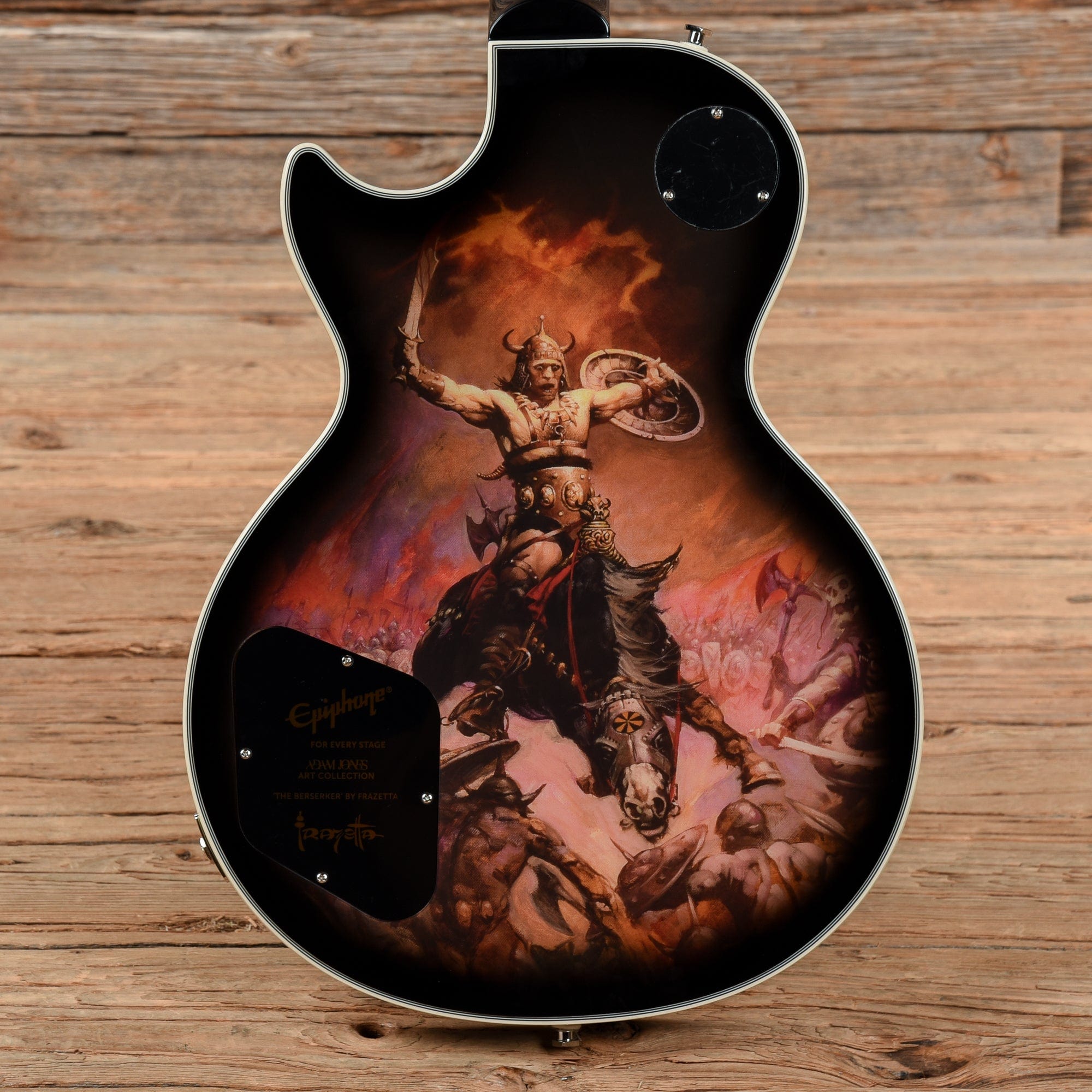
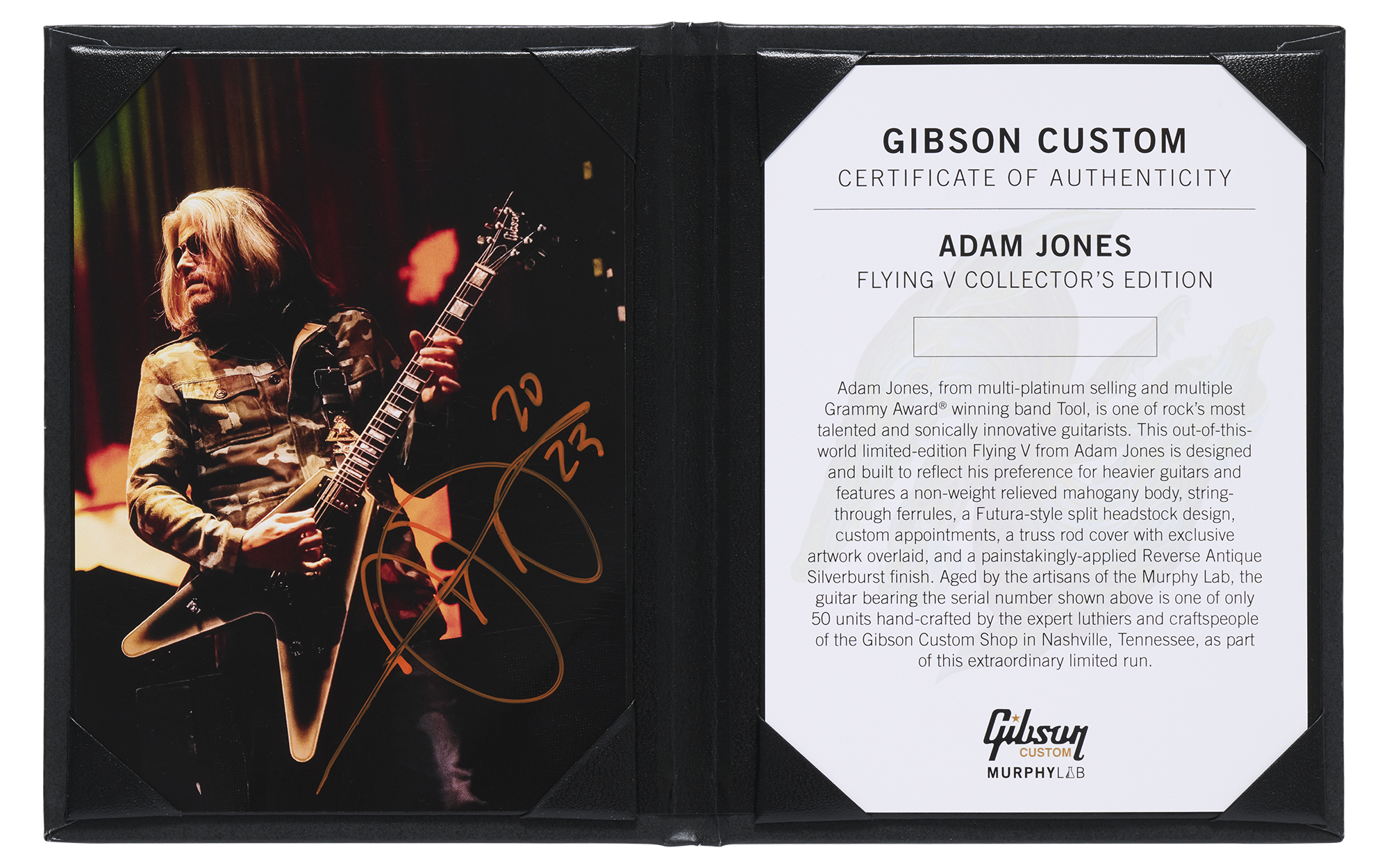
Furthermore, Jones has collaborated with Gibson Guitars to release a series of signature models. These range from the ultra-limited "Murphy Lab" aged replicas of his original 1979 Silverburst to more accessible Epiphone versions released in the mid-2020s. These releases have allowed a new generation of musicians to study and replicate his unique tonal signature.
Legacy and Impact on Modern Metal
By 2026, Adam Jones is recognized as one of the most influential guitarists of his generation. He bridged the gap between 70s progressive rock (King Crimson, Pink Floyd) and 90s alternative metal. His refusal to conform to standard song structures or radio-friendly durations—often writing tracks that exceed 10 or 15 minutes—has inspired countless bands to prioritize artistic integrity over commercial viability.
His influence is seen in the "Djent" movement and modern math-rock, where musicians emphasize rhythmic precision and odd time signatures. However, Jones remains distinct because of his emphasis on analog warmth and physical art. In an era increasingly dominated by digital modeling and AI-generated visuals, Jones continues to advocate for the human element of performance and the physical labor of sculpture and animation.
Frequently Asked Questions
What tuning does Adam Jones use most often?
Adam Jones primarily uses Drop D tuning (D-A-D-G-B-E). This tuning is essential for the heavy, resonant power chords and the specific intervals he uses in his riffs. While most of Tool's catalog is in Drop D, some tracks utilize different tunings, such as "Prison Sex" (which uses a unique variation where the low E string is tuned down to B and the A string to E).
How does Adam Jones get his signature "flange" sound?
His signature modulation comes from the Boss BF-2 Flanger. Unlike many guitarists who use a light flange for subtle movement, Jones often sets the manual and depth controls to create a very metallic, "hollow" sound. He frequently engages this pedal during clean or semi-dirty intros to add a haunting, industrial quality to the notes.
Is Adam Jones a self-taught musician?
While Jones has a deep understanding of music theory, his background is largely rooted in practical application and collaborative experimentation. He grew up playing the violin and later the bass guitar before switching to the six-string guitar. His "education" was as much about visual composition at the Hollywood Makeup Academy as it was about scales and chords.
What is the significance of the "Silverburst" finish?
For Adam Jones, the Silverburst Gibson Les Paul is more than just an aesthetic choice; it is a functional tool. The heavy mahogany body and the specific electronics of the late-70s models provide a darker, more compressed tone than standard sunburst Les Pauls. By 2026, his association with this finish is so strong that Gibson has dedicated an entire product line to replicating his specific instruments.
Does Adam Jones use digital amp modelers like Kemper or Axe-FX?
While Jones uses digital technology for certain studio applications, his live rig remains predominantly analog. He relies on the physical interaction between his tubes, speakers, and the air in the room to create controlled feedback. He has expressed a preference for the "unpredictability" and "soul" of real amplifiers over the perfection of digital modeling.
Practical Recommendation for Aspiring Musicians
For musicians looking to capture the essence of Adam Jones’s style, the most important step is not buying expensive gear but mastering rhythmic discipline. Jones’s playing is defined by how he locks in with the percussion. Practice playing simple riffs in 5/4 or 7/8 time signatures against a steady metronome.
If you are pursuing his tone, prioritize a high-quality "British-voiced" amplifier and a guitar with high-output humbuckers. The "secret" to his sound is not just high gain, but clarity within the distortion. Ensure that your settings allow individual notes within a chord to be heard clearly, even when using heavy saturation. Finally, study his visual work to understand the "mood" he aims to create; his music is often a soundtrack to a visual story that is still unfolding.
Image Gallery