Utah Life Insurance Agent License Sample Exam: Practice Questions & Licensing Guide
To pass the Utah life insurance producer exam, candidates must master both general life insurance principles and Utah-specific insurance statutes established under Title 31A of the Utah Insurance Code. Administered through Prometric, t...
To pass the Utah life insurance producer exam, candidates must master both general life insurance principles and Utah-specific insurance statutes established under Title 31A of the Utah Insurance Code. Administered through Prometric, the examination tests knowledge on policy provisions, annuities, taxation, fiduciary duties, and state trade practices. Reviewing sample practice questions and completing the required background checks helps candidates navigate the licensing process successfully.
Contents
Utah Life Insurance Exam Overview and Structure
The state of Utah requires prospective insurance agents to pass a standardized licensing exam to solicit, negotiate, or sell life insurance products. The examination is developed and administered by Prometric in coordination with the Utah Insurance Department.
Candidates taking the Utah Life Insurance Producer Exam face a computer-based test that measures competency in two main subject areas:
- General Insurance Knowledge (National Portion): Covers fundamental insurance concepts, types of life insurance policies, policy provisions, options, riders, annuities, federal tax considerations, and retirement plans.
- Utah State-Specific Insurance Law (State Portion): Focuses on the statutes and administrative rules governing insurance practices in Utah, including the authority of the Utah Insurance Commissioner, licensing procedures, producer duties, unfair trade practices, and replacement regulations.
| Exam Parameter | Details |
|---|---|
| Exam Administrator | Prometric |
| Exam Name | Utah Life Insurance Producer |
| Total Question Count | Scored questions plus unscored experimental pretest items |
| Passing Score | 70% scaled score |
| Time Allowed | 2 hours (120 minutes) |
| Primary State Portal | Sircon / Vertafore or NIPR |
| Fingerprint Provider | Approved Live Scan vendors / Fieldprint |
| Continuing Education (CE) | 24 hours every 2 years (includes 3 hours of ethics) |
Sample Practice Exam Questions with Detailed Rationales
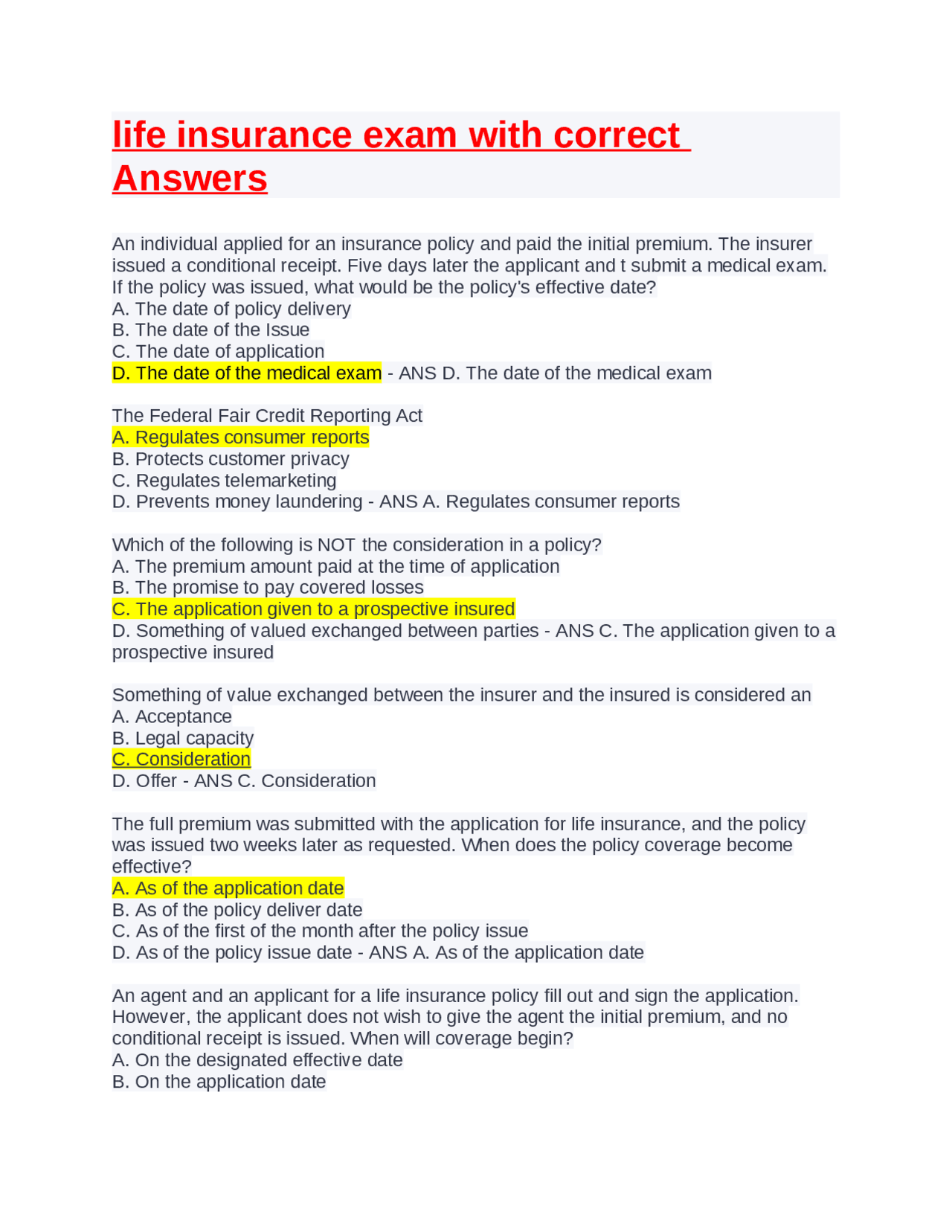
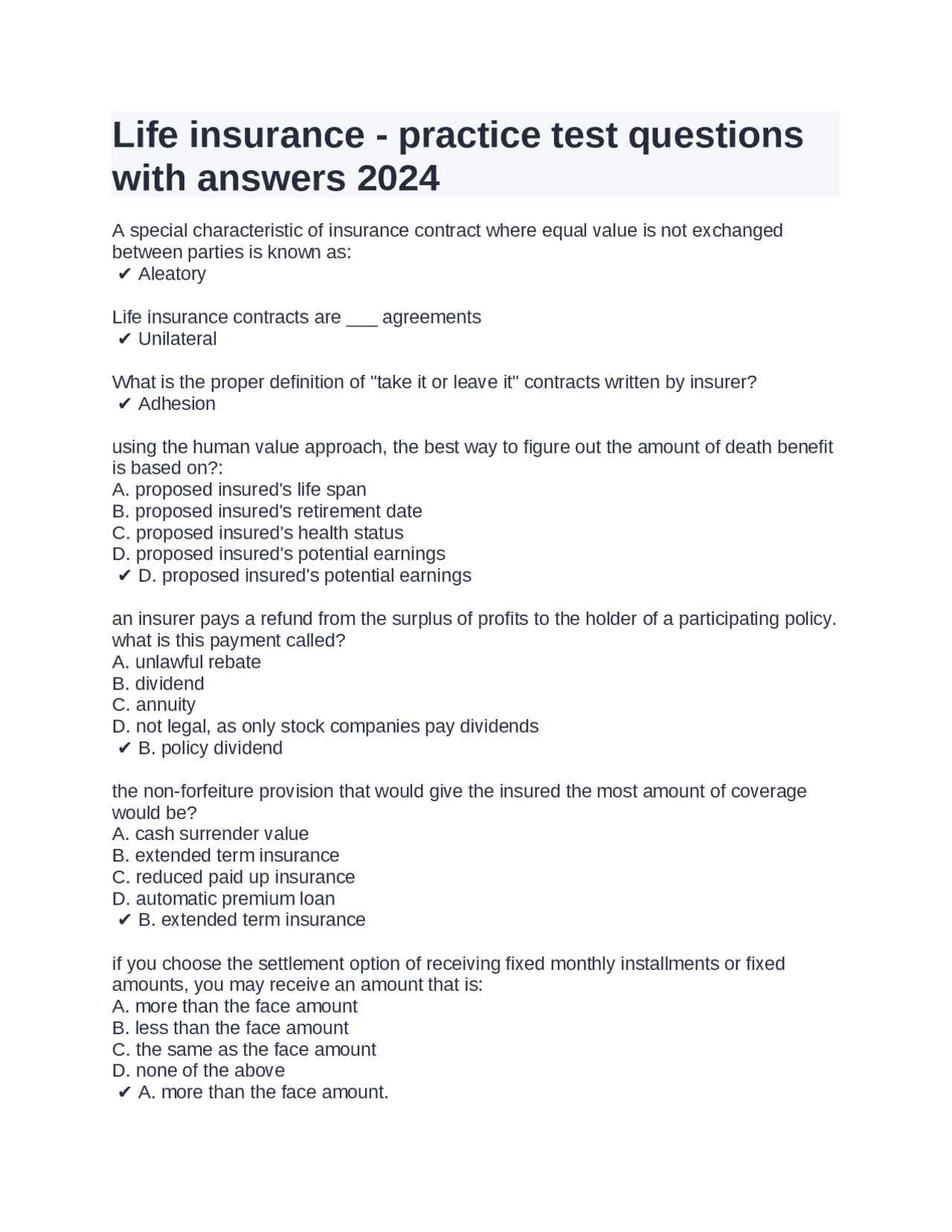
Reviewing practice questions formatted similarly to the actual Prometric licensing examination helps candidates identify knowledge gaps and get comfortable with multiple-choice problem structures.
Question 1: General Knowledge — Policy Provisions
Which life insurance policy clause prevents an insurer from contesting statements made in the application after the policy has been in force for a specific period, usually two years?
- A) The Reinstatement Provision
- B) The Incontestability Clause
- C) The Entire Contract Provision
- D) The Grace Period Clause
Correct Answer: B) The Incontestability ClauseRationale: The incontestability clause dictates that after a life insurance policy has been active for two years during the insured’s lifetime, the insurance company cannot void the contract or deny a claim based on misstatements or omissions made in the initial application (except in rare cases of deliberate fraud or nonpayment of premium). Option A allows a lapsed policy to be restored. Option C states that the policy and attached application constitute the complete agreement. Option D grants extra time to pay overdue premiums before a policy lapses.
Question 2: Utah Law — Policy Replacement Rules
Under Utah Insurance Code Title 31A and state administrative rules, what document must a producer present to an applicant when replacing an existing life insurance policy?
- A) An Affidavit of Financial Solvency
- B) A Notice Regarding Replacement signed by both applicant and producer
- C) A Certificate of Authority issued by the Commissioner
- D) A Waiver of Premium Guaranty
Correct Answer: B) A Notice Regarding Replacement signed by both applicant and producerRationale: When a transaction involves replacing an existing life insurance policy or annuity, Utah law mandates that the producer deliver a written "Notice Regarding Replacement" to the applicant prior to or upon taking the application. The notice must clearly outline the potential disadvantages of replacing existing coverage (such as new contestability periods, higher premiums due to age, and loss of accumulated cash value). A copy signed by the applicant and producer must be left with the applicant.
Question 3: General Knowledge — Nonforfeiture Options
An owner of a permanent cash-value life insurance policy decides to stop paying premiums. If they select the Extended Term nonforfeiture option, how is the cash value utilized?
- A) It pays for a reduced face amount of whole life insurance for the remainder of the insured's life.
- B) It is paid immediately to the policyowner in a single lump-sum cash payment.
- C) It purchases level term insurance equal to the original face amount for as long a duration as the cash value can buy.
- D) It automatically converts the contract into a fixed payout immediate annuity.
Correct Answer: C) It purchases level term insurance equal to the original face amount for as long a duration as the cash value can buy.Rationale: The Extended Term option uses the policy's net accumulated cash value as a single premium to purchase term insurance with the same face amount as the original policy. The coverage lasts for whatever period of time the cash value can fund. Option A describes the Reduced Paid-Up option, while Option B describes the Cash Surrender option.
Question 4: Utah Law — Unfair Trade Practices
A Utah insurance producer offers to pay a prospective buyer $250 out of their own commission as an inducement to buy a life insurance policy. Which illegal trade practice has occurred?
- A) Twisting
- B) Churning
- C) Rebating
- D) Defamation
Correct Answer: C) RebatingRationale: Rebating involves offering a prospect any valuable consideration, inducement, discount, or portion of a commission that is not explicitly stated in the insurance policy contract. In Utah, rebating is prohibited unless specifically allowed under limited, statutory exceptions. Twisting (Option A) involves making misleading statements to induce a policyholder to lapse or surrender existing coverage to buy another policy.
Question 5: General Knowledge — Life Insurance Riders
Which life insurance rider allows the policyowner to purchase additional amounts of permanent life insurance at specified future dates without proving insurability?
- A) Waiver of Premium Rider
- B) Guaranteed Insurability Rider
- C) Accidental Death Benefit Rider
- D) Cost of Living Rider
Correct Answer: B) Guaranteed Insurability RiderRationale: The Guaranteed Insurability Rider allows the insured to purchase specified additional amounts of coverage at set intervals (e.g., ages 25, 28, 31, 34, 37, 40) or after major life events (such as marriage or the birth of a child) without having to submit evidence of medical insurability.
Question 6: Utah Law — Commissioner Powers & Enforcement
Which statement accurately describes the regulatory authority of the Utah Insurance Commissioner?
- A) The Commissioner writes and passes new state insurance statutes without legislative approval.
- B) The Commissioner enforces state insurance laws, conducts examinations of insurers, and issues administrative rules.
- C) The Commissioner sets standard premium rates for all commercial life insurance policies in Utah.
- D) The Commissioner prosecutes criminal felony cases directly in state district court.
Correct Answer: B) The Commissioner enforces state insurance laws, conducts examinations of insurers, and issues administrative rules.Rationale: The Utah Insurance Commissioner heads the Utah Insurance Department and is charged with enforcing the state's insurance laws (Title 31A), issuing administrative rules, examining the financial conditions of insurers, licensing producers, and protecting consumers. The legislature—not the Commissioner—enacts statutes, and private insurance companies set their own competitive rates subject to regulatory standards.
Question 7: Taxation — Life Insurance Death Benefits
Under federal income tax law, how are individual life insurance death benefits paid to a named beneficiary generally treated?
- A) Fully taxable as ordinary income in the year received
- B) Subject to mandatory federal withholding of 20%
- C) Received income tax-free when paid in a lump sum
- D) Taxed as long-term capital gains
Correct Answer: C) Received income tax-free when paid in a lump sumRationale: When paid in a lump sum to a designated beneficiary, death benefit proceeds from an individual life insurance policy are generally exempt from federal income tax. However, if settlement options are chosen where the principal accrues interest (such as fixed-period payouts), any interest earned on the proceeds is taxable as ordinary income.
Question 8: Utah Law — Producer Licensing & Continuing Education
To maintain an active life insurance producer license in Utah, how many hours of continuing education (CE) must a producer complete during each two-year licensing period?
- A) 12 hours total, including 1 hour of ethics
- B) 24 hours total, including 3 hours of ethics
- C) 30 hours total, including 5 hours of ethics
- D) 40 hours total, with no mandatory ethics requirement
Correct Answer: B) 24 hours total, including 3 hours of ethicsRationale: Utah resident producers must complete 24 credit hours of approved continuing education every two years to renew their license. At least 3 of those 24 hours must focus specifically on insurance ethics.
Key Utah Insurance Statutes (Title 31A) to Study
To pass the state-specific section of the examination, applicants should focus on key provisions within Title 31A of the Utah Insurance Code.
- Utah Insurance Code (Title 31A)
- Commissioner's Authority
- Conducts audits
- Issues orders
- Holds hearings
- Producer Duties & Licensing
- 24 hrs CE biennially
- Fiduciary account
- Prompt claim reporting
- Unfair Trade Practices Rules
- Prohibition of rebating & twisting
- Replacement rules
- Commissioner's Authority
1. Fiduciary Responsibilities and Premium Handling
In Utah, all insurance premiums collected by a producer are held in a fiduciary capacity. Producers must not commingle personal or agency operating funds with client premiums. Funds must be promptly remitted to the insurer or maintained in a designated premium trust account.
2. Notice of License Changes
Licensed producers must notify the Utah Insurance Department within 30 days of any change in legal name, residential address, business address, email address, or phone number. Failure to report updates can result in administrative fines or license suspension.
3. Policy Replacement Rules
Under Utah Administrative Rule R590-93, replacement occurs when a new life policy or annuity is purchased, and existing coverage will be:
- Lapsed, forfeited, surrendered, or terminated.
- Converted to reduced paid-up insurance or extended term insurance.
- Reissued with a reduction in cash value or benefit amount.
- Pledged as collateral or borrowed against for more than 25% of the cash value.
Producers must provide applicants with a formal replacement notice and submit copies to the replacing insurance company.
4. Controlled Business Limits
Utah law restricts controlled business—insurance written on the producer's own life, family members, or business associates. A producer's license may be revoked if the total premiums generated from controlled business exceed specific statutory thresholds over a 12-month period.
Step-by-Step Licensing Process in Utah
Candidates can follow this sequence to earn their Utah life insurance license:
- Step 1: Study & Exam Prep
- Step 2: Schedule Exam with Prometric
- Step 3: Complete Live Scan Fingerprints
- Step 4: Submit Application via Sircon / NIPR
- Step 5: License Issued & CE Tracking (24 hours CE every 2 years)
Step 1: Complete Exam Preparation
Although Utah does not require mandatory pre-licensing education hours prior to testing, candidates should complete a structured study course or work through practice exams. The exam tests precise legal definitions and policy math, making preparation essential.
Step 2: Register for the Prometric Exam
Schedule your test online through the Prometric Utah Insurance Portal.
- Create a Prometric account.
- Select the Utah Life Insurance Producer exam option.
- Pay the exam fee directly to Prometric.
- Choose between testing at a physical Prometric testing center (e.g., Salt Lake City, Lindon, Ogden) or via remote online proctoring (ProProctor).
Step 3: Submit Fingerprints for Background Check
Utah law requires all resident producer applicants to submit fingerprints for state (Utah Department of Public Safety) and federal (FBI) background checks.
- Schedule fingerprinting through an approved Live Scan vendor or at participating Prometric test centers in Utah.
- Ensure fingerprints are submitted within the timeframe mandated by the Utah Insurance Department to avoid application delays.
Step 4: Complete the License Application
After passing the Prometric exam, submit an electronic application:
- Access Sircon or the National Insurance Producer Registry (NIPR).
- Pay the Utah state application fee.
- Provide background screening disclosures regarding criminal records, administrative actions, or financial judgments.
Step 5: License Issuance and Renewal Maintenance
Once approved, your license can be printed directly from the Sircon portal. To maintain your license, you must:
- Renew every two years by the end of your birth month.
- Complete 24 credit hours of state-approved continuing education (CE), including 3 hours of ethics coursework.
- Submit your renewal application through Sircon or NIPR.
Exam Day Preparation Tips
- Focus on Utah Title 31A Laws: General life insurance concepts are similar across states, but specific administrative rules (such as replacement guidelines, grace period lengths, and Commissioner powers) vary by state. Pay close attention to Utah's unique statutes.
- Read Questions Carefully: Watch out for qualifying words like EXCEPT, NOT, ALWAYS, or NEVER. Distracters often describe a true rule for a different situation than the one asked about.
- Pace Yourself: You have 120 minutes for the exam. Aim to complete the first pass through the questions in under 90 minutes, flagging difficult items for review during your remaining time.
- Master Policy Options & Riders: Expect multiple questions comparing settlement options (lump sum, fixed period, fixed amount, life income) and nonforfeiture options (cash surrender, reduced paid-up, extended term).
Frequently Asked Questions
What score is required to pass the Utah life insurance exam?
Candidates must earn a scaled score of at least 70% to pass the Utah life insurance producer examination. Prometric provides an unofficial score report immediately upon exam completion.
Can I take the Utah life insurance producer exam online?
Yes, Prometric offers both in-person testing at authorized test centers and remote online proctoring via the ProProctor platform. Remote testing requires a quiet space, a reliable internet connection, a webcam, and adherence to strict proctoring security standards.
How long is my exam score valid in Utah?
Passing exam scores are valid for up to two years. You must complete your background check and submit your license application through Sircon or NIPR within this timeframe.
Does Utah mandate pre-licensing classroom hours for life insurance?
No, Utah does not mandate a fixed number of pre-licensing education hours prior to taking the exam. However, using a self-study course, video lectures, and practice exams is highly recommended due to the technical nature of the material.
What is the difference between a Life Insurance Producer and a Life & Health Producer license?
A Life Insurance Producer is authorized to market life insurance policies and fixed annuities. A Life & Health Producer holds a combined license that permits them to sell health insurance, disability income, long-term care products, and life insurance policies.
Professional Advisory & Next Steps
Preparing for the Utah life insurance exam requires balancing a solid understanding of financial concepts with a clear grasp of state regulations. Use the sample questions provided above to evaluate your readiness, focus your study on areas where you missed questions, and carefully review Utah Insurance Code Title 31A.
Disclaimer: Licensing rules, examination structures, and fees are subject to change by regulatory authorities. Candidates should verify current requirements directly with the Utah Insurance Department and Prometric prior to scheduling their examination.
Image Gallery