Key Figures Involved in the Titanic Sinking: A Historical Analysis
The sinking of the RMS Titanic involved over 2,200 individuals on board, ranging from the world’s wealthiest industrialists and elite crew members to hundreds of hopeful immigrants. Key figures included Captain Edward J. Smith, White S...
The sinking of the RMS Titanic involved over 2,200 individuals on board, ranging from the world’s wealthiest industrialists and elite crew members to hundreds of hopeful immigrants. Key figures included Captain Edward J. Smith, White Star Line managing director J. Bruce Ismay, ship designer Thomas Andrews, and heroes like Captain Arthur Rostron of the rescue ship Carpathia.
Contents
The tragedy of the RMS Titanic, which occurred on the night of April 14 and the early morning of April 15, 1912, remains the most scrutinized maritime disaster in history. Even as of 2026, over a century since the ship struck an iceberg in the North Atlantic, the actions, decisions, and fates of those involved continue to serve as the foundation for modern maritime safety regulations. Understanding who was involved requires looking beyond a simple list of names; it necessitates examining the roles played by the ship's owners, the bridge officers, the "black gang" in the engine rooms, and the passengers whose lives were forever altered.
The Architects and Owners: The Visionaries Behind the Vessel
Before the Titanic even touched the water, several key figures were responsible for its existence. Their involvement shaped the ship's design, its safety features, and the corporate culture that influenced the response to the disaster.
J. Bruce Ismay
As the managing director of the White Star Line, Ismay was a central figure both during the ship’s construction and its fateful maiden voyage. He is often historically cast as a villain because he survived the sinking by boarding one of the last collapsible lifeboats, while 1,500 others perished. Testimonies from the 1912 inquiries suggested Ismay may have pressured Captain Smith to maintain high speeds to reach New York early for publicity, though Ismay consistently denied this. His survival led to lifelong social ostracization.
Thomas Andrews
Thomas Andrews was the managing director and head of the drafting department for the shipbuilder Harland and Wolff in Belfast. As the Titanic's chief designer, he was on board to observe the vessel’s performance. Andrews is remembered as a hero; after the collision, he was the first to realize that the ship was mathematically certain to sink after inspecting the damaged hull. He spent his final hours helping passengers into lifeboats and was last seen in the First Class smoking room, staring at a painting of Plymouth Harbour.
Lord Pirrie and J.P. Morgan
While not on the maiden voyage, William Pirrie (chairman of Harland and Wolff) and J.P. Morgan (the American financier whose conglomerate, International Mercantile Marine, owned the White Star Line) were the masterminds of the Olympic-class liners. Pirrie missed the voyage due to illness, and Morgan canceled his trip at the last minute. Their involvement established the "bigger and more luxurious" philosophy that prioritized opulence over redundant safety measures, such as carrying enough lifeboats for everyone.
The Command and Crew: Decisions on the Bridge
The responsibility for the ship’s safety rested with the bridge officers and the specialized crew members who operated the vessel's communications and lookout systems.
Captain Edward J. Smith
Known as the "Millionaire’s Captain" due to his popularity with wealthy travelers, Smith was one of the most experienced captains of his era. The Titanic was intended to be his final voyage before retirement. While his legacy is one of bravery—he chose to go down with his ship—he has also faced historical criticism for failing to heed iceberg warnings and for not maintaining a more organized evacuation process.
The Bridge Officers
- William Murdoch (First Officer): He was the officer in charge on the bridge when the iceberg was sighted. Murdoch is credited with the "hard-a-starboard" maneuver and reversing the engines in an attempt to avoid the collision. He died in the sinking, though accounts of his final moments vary.
- Charles Lightoller (Second Officer): The most senior officer to survive. Lightoller was responsible for the evacuation on the port side, where he famously enforced a strict "women and children only" policy, often launching lifeboats with empty seats rather than allowing men to board.
- Harold Lowe (Fifth Officer): Lowe was the only officer to organize a group of lifeboats to return to the debris field to search for survivors after the Titanic had disappeared beneath the waves. He successfully pulled four people from the freezing water.
The Lookouts: Frederick Fleet and Reginald Lee
Frederick Fleet was the lookout who first spotted the iceberg and rang the warning bell, shouting, "Iceberg, right ahead!" Fleet survived the disaster but was haunted by the fact that the lookouts lacked binoculars, which had been locked away in a cupboard for which no one on the bridge had the key.
Prominent Passengers: The Social Fabric of the Disaster
The passenger list was a microcosm of early 20th-century society, divided strictly by class. Each group had key figures whose stories have become legendary.
First Class: Wealth and Sacrifice
The first-class cabins held some of the richest people in the world. John Jacob Astor IV, then the wealthiest man on the ship, was among those who did not survive. Benjamin Guggenheim famously refused a lifebelt, instead dressing in his finest evening wear and stating, "We’ve dressed up in our best and are prepared to go down like gentlemen."
Isidor and Ida Straus, owners of Macy’s department store, provided one of the most poignant stories of the night. Ida refused to leave her husband, stating, "As we have lived together, so we shall die together." They were last seen sitting together on deck chairs.
Second and Third Class: The Unsung Majority
While less documented in the immediate aftermath, the third-class (steerage) passengers made up the majority of the casualties. Many were immigrants from Ireland, Scandinavia, and the Middle East seeking a new life in America. Figures like Margaret "Molly" Brown, a first-class passenger who grew up in poverty, became a hero by taking control of Lifeboat No. 6 and demanding that it return to look for survivors, earning her the nickname "The Unsinkable Molly Brown."
The Rescuers and the "Mystery Ship"
The tragedy involved ships miles away from the collision site, whose crews faced their own moral and technical challenges that night.
Captain Arthur Rostron and the RMS Carpathia
Located roughly 58 miles away when the distress calls came in, Captain Rostron turned the Carpathia around and pushed his ship to its absolute physical limits through dangerous ice fields. His crew's preparation—turning off heating to divert every ounce of steam to the engines—allowed them to reach the survivors at 4:00 AM.
Captain Stanley Lord and the SS Californian
The SS Californian was much closer to the Titanic than the Carpathia, yet it did not respond to the Titanic's distress rockets. Captain Stanley Lord had stopped his ship for the night due to ice. Despite his crew reporting strange rockets in the sky, Lord did not wake his wireless operator or move the ship. He was later severely criticized in both the American and British inquiries for his inaction.
Summary of Key Individuals and Fates
The following table highlights the roles and outcomes for the primary figures associated with the sinking of the Titanic.
| Name | Role | Status | Historical Significance |
|---|---|---|---|
| Edward J. Smith | Captain of the Titanic | Deceased | Remained on the ship; criticized for speed and lack of oversight. |
| J. Bruce Ismay | White Star Line Director | Survived | Criticized for his survival and alleged pressure for high speeds. |
| Thomas Andrews | Chief Ship Designer | Deceased | Recognized for his heroic efforts to assist others during the sinking. |
| Charles Lightoller | Second Officer | Survived | Senior-most surviving officer; key witness at the inquiries. |
| John Jacob Astor IV | First Class Passenger | Deceased | Richest man on board; death symbolized the loss of the era's elite. |
| Molly Brown | First Class Passenger | Survived | Lead efforts in the lifeboats; became a famous philanthropist. |
| Arthur Rostron | Captain of the Carpathia | Survived | Awarded the Congressional Gold Medal for the rescue of 705 survivors. |
| Stanley Lord | Captain of the Californian | Survived | Blamed for failing to respond to distress signals despite being nearby. |
The Investigations: Senator Smith and Lord Mersey
After the survivors reached New York, the focus shifted to those involved in the legal and technical autopsies of the disaster.
Senator William Alden Smith
The U.S. Senate inquiry was led by Senator William Alden Smith. He was criticized by the British for his lack of maritime knowledge, but his aggressive questioning of J. Bruce Ismay and the crew led to immediate changes in American maritime law, specifically regarding the number of lifeboats required on passenger vessels.
Lord Mersey
In the United Kingdom, the British Wreck Commissioner's inquiry was headed by Lord Mersey. While the British inquiry was more technical and protective of the Board of Trade, it confirmed the findings that speed was the primary cause of the collision and that the "women and children first" custom had been inconsistently applied.
Frequently Asked Questions
Did the Titanic's musicians really stay and play?
Yes. Led by Wallace Hartley, the eight-member band played on the deck until the very end to help keep the passengers calm. None of the band members survived. Their involvement is cited as one of the ultimate acts of self-sacrifice during the disaster.
Why were there no binoculars in the lookout nest?
A crew reshuffle just before the Titanic left Southampton resulted in Second Officer David Blair being transferred off the ship. He accidentally took the key to the lookout's locker with him. Consequently, the lookouts had to rely on their naked eyes, which was significantly less effective on a moonless, calm night where there was no surf breaking against the base of icebergs.
Was J. Bruce Ismay really a coward?
This is a matter of historical debate. While popular culture often depicts him as sneaking onto a boat, Ismay claimed he assisted others until no women or children were left in his immediate vicinity. However, the fact that he survived while so many of his passengers died made him a pariah in the eyes of the 1912 public.
How many people survived out of the total involved?
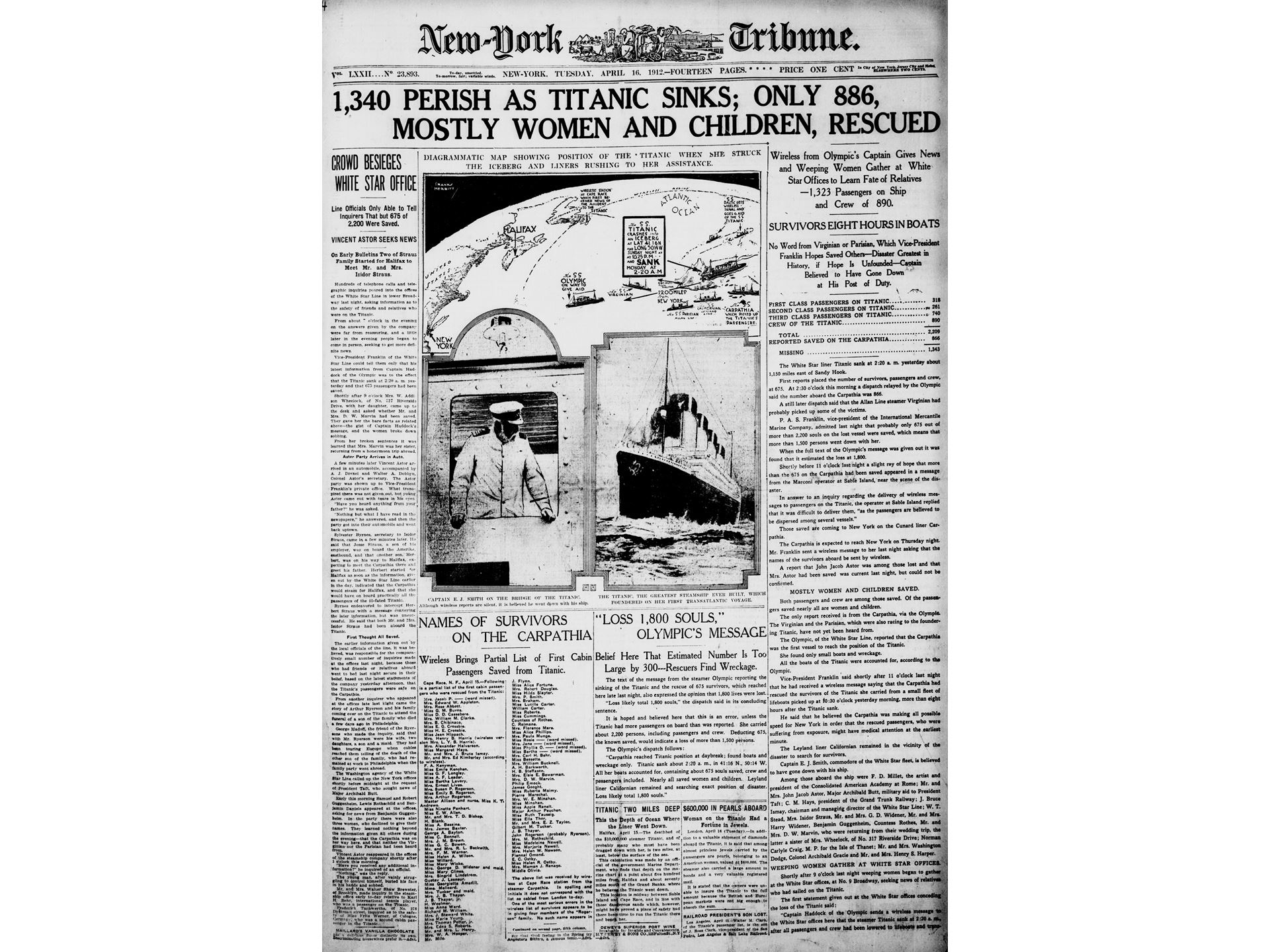
There were approximately 2,224 people on board. Of these, 705 survived and 1,514 perished. The survival rates were heavily skewed by class: roughly 60% of first-class passengers survived, compared to only 25% of third-class passengers.
Who was the last living person involved in the sinking?
Millvina Dean was the last survivor of the Titanic. She was only nine weeks old at the time of the sinking. She passed away in 2009 at the age of 97. As of 2026, there are no longer any living survivors, making the preservation of historical records even more vital.
Moving Forward: The Legacy of the Titanic
The individuals involved in the Titanic sinking were not just victims of a maritime accident; they were the catalysts for a global overhaul of safety standards. Following the inquiries, the first International Convention for the Safety of Life at Sea (SOLAS) was passed in 1914. This treaty, which is still updated and enforced today, mandates sufficient lifeboats for all persons on board, 24-hour radio watches, and the creation of the International Ice Patrol.
If you are researching the Titanic for educational or genealogical purposes, the best next step is to consult the official passenger and crew manifests held by the National Archives (UK) or the Titanic Historical Society. These records provide a comprehensive view of the diverse group of people whose lives intersected on that cold April night.
Image Gallery