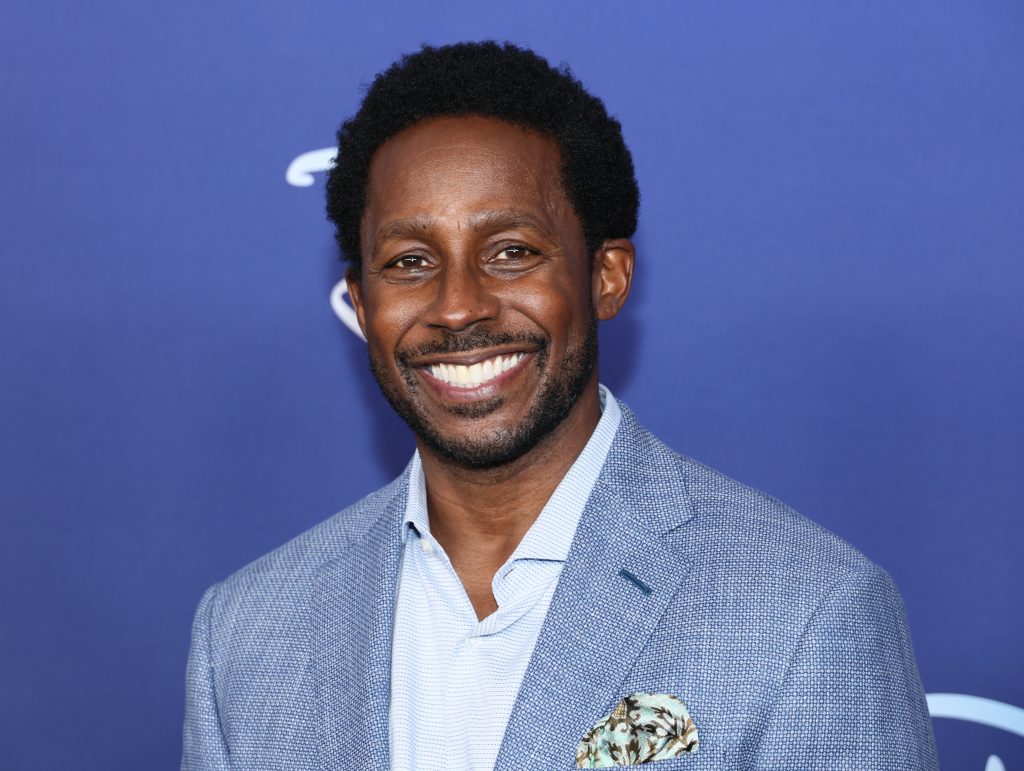
Desmond Howard: Age, Career Highlights, and Legacy of an NFL Legend
As of 2026, Desmond Howard is 56 years old, born on May 15, 1970. A legendary figure in American football, he is best known for winning the 1991 Heisman Trophy at the University of Michigan and earning Super Bowl XXXI MVP honors with t...
As of 2026, Desmond Howard is 56 years old, born on May 15, 1970. A legendary figure in American football, he is best known for winning the 1991 Heisman Trophy at the University of Michigan and earning Super Bowl XXXI MVP honors with the Green Bay Packers as a return specialist.
Contents
Desmond Howard remains one of the most recognizable names in football, transitioning seamlessly from a record-breaking player to a mainstay in sports media. His journey from the high school fields of Cleveland to the Pro Bowl and the Super Bowl stage is a masterclass in specialization and resilience. Below is a comprehensive look at his age, career milestones, and the lasting impact he has made on the game.
Early Life and the Road to Ann Arbor
Born in Cleveland, Ohio, Desmond Kevin Howard attended St. Joseph High School, where his athletic prowess first gained national attention. Even in his teenage years, Howard displayed the explosive "stop-and-start" speed that would define his professional career. By the time he graduated, he was a highly sought-after recruit, eventually choosing to play for the University of Michigan under legendary coach Bo Schembechler and later Gary Moeller.
At Michigan, Howard did not immediately become a household name. He spent his early years refining his route running and understanding the nuances of the return game. However, by his junior season in 1990, it was clear that Howard was a generational talent. He set several school records, but it was the 1991 season that would etch his name into the annals of college football history.
The 1991 Heisman Season and "The Pose"
The year 1991 is often cited as one of the greatest individual seasons in college football history. Desmond Howard didn't just win the Heisman Trophy; he dominated the voting with the second-largest margin in the history of the award at that time.
During that season, Howard accounted for 23 touchdowns—an astounding number for a wide receiver. He led the nation in scoring with 138 points and captured the hearts of fans with his versatility. He wasn't just a deep threat; he was a weapon on end-arounds, punt returns, and kickoff returns.
The Defining Moment: Ohio State 1991
The most iconic highlight of Howard's career occurred during the annual rivalry game against Ohio State. After returning a punt for a 93-yard touchdown, Howard struck the "Heisman Pose" in the end zone. While today such celebrations are common, at the time, it was a bold statement of confidence that effectively sealed his Heisman campaign.
According to the official Heisman Trust records, Howard finished the 1991 season with:
- 62 receptions for 985 yards and 19 touchdowns.
- Two rushing touchdowns.
- One punt return touchdown.
- One kickoff return touchdown.
NFL Career: From High Expectations to Specialized Mastery
Desmond Howard was selected 4th overall in the 1992 NFL Draft by the Washington Redskins. Entering the league with high expectations as a primary wide receiver, Howard's transition to the professional ranks was initially challenging. In Washington, he struggled to find consistent chemistry within the offensive scheme, leading many to label him a "bust" in his early years.
After three seasons in Washington and one with the Jacksonville Jaguars during their inaugural expansion season, Howard signed with the Green Bay Packers in 1996. This move changed the trajectory of his career and redefined the value of special teams players in the NFL.
The 1996 Season and Super Bowl XXXI
In Green Bay, head coach Mike Holmgren and special teams coach Nolan Cromwell recognized that Howard’s greatest value was in open space. During the 1996 regular season, Howard led the NFL with 875 punt return yards—an NFL record at the time—and three punt return touchdowns.
His performance peaked during Super Bowl XXXI against the New England Patriots. Howard recorded a 99-yard kickoff return touchdown in the third quarter, which effectively iced the game for the Packers. He finished the game with 154 kickoff return yards and 90 punt return yards. To this day, Howard remains the only player to win the Super Bowl MVP award based solely on a special teams performance.
Later Career and Professional Transition
Following his Super Bowl success, Howard spent time with the Oakland Raiders and the Detroit Lions. While his statistics as a wide receiver never matched his college output, his presence as a returner remained a constant threat. In 2000, while playing for the Detroit Lions, he earned a Pro Bowl selection, proving that even a decade into his career, his speed and vision were elite.
Howard officially retired after the 2002 season. His career totals reflect a player who maximized his specific skill set:
- Total Punt Return Yards: 2,895
- Total Kickoff Return Yards: 7,959
- Total Return Touchdowns: 8
According to Pro Football Reference, Howard's 12,155 all-purpose yards rank him among the most productive "utility" players in league history.
Career Statistical Summary
The following table highlights the contrast between Howard's peak college year and his most impactful NFL season.
| Metric | 1991 Michigan (College) | 1996 Green Bay (NFL) |
|---|---|---|
| Games Played | 12 | 16 |
| Receiving Yards | 985 | 95 |
| Punt Return Yards | 282 | 875 |
| Kickoff Return Yards | 412 | 460 |
| Total Touchdowns | 23 | 3 (All Returns) |
| Major Awards | Heisman Trophy, Maxwell Award | Super Bowl MVP, All-Pro |
Life After Football: Media and Broadcasting
In 2005, Desmond Howard joined ESPN as an analyst for College GameDay. His transition to the booth was as successful as his transition to the NFL return game. Howard provides a unique perspective as a former Heisman winner, often focusing on the mental preparation and "it-factor" of modern collegiate stars.
As of 2026, he remains a staple of Saturday mornings for millions of football fans. His ability to articulate the pressure of big-game moments, combined with his charismatic personality, has made him one of the most respected analysts in the industry. Beyond broadcasting, Howard is heavily involved in charitable work and frequently returns to the University of Michigan to mentor young student-athletes.
Why Desmond Howard’s Legacy Matters
Howard’s career is a testament to the importance of the "third phase" of football: special teams. Before Howard, return specialists were often seen as replaceable. His 1996 season forced opposing coaches to rethink their kicking strategies, often choosing to kick out of bounds or "squib kick" rather than risk giving him the ball.
Furthermore, he paved the way for future specialists like Devin Hester and Cordarrelle Patterson. He proved that a player could influence the outcome of a championship game without being the starting quarterback or a leading rusher.
Frequently Asked Questions
How old is Desmond Howard right now?
As of May 2026, Desmond Howard is 56 years old. He was born on May 15, 1970, in Cleveland, Ohio.
Did Desmond Howard ever win a Super Bowl?
Yes, Desmond Howard won Super Bowl XXXI as a member of the Green Bay Packers. He was also named the game's Most Valuable Player (MVP) for his record-setting return performances.
What was Desmond Howard's 40-yard dash time?
During his prime, Howard was clocked at approximately 4.35 to 4.40 seconds in the 40-yard dash. His elite acceleration allowed him to hit top speed faster than almost any other player on the field.
Which NFL teams did Desmond Howard play for?
Over his 11-season NFL career, Howard played for the Washington Redskins (1992–1994), Jacksonville Jaguars (1995), Green Bay Packers (1996, 1999), Oakland Raiders (1997–1998), and Detroit Lions (1999–2002).
Is Desmond Howard in the College Football Hall of Fame?
Yes, Desmond Howard was inducted into the College Football Hall of Fame in 2010. This honor recognized his incredible contributions to the University of Michigan, specifically his 1991 Heisman season.
Practical Recommendation for Fans and Historians
For those looking to study the art of kick returning, Desmond Howard’s 1996 film is essential viewing. Pay close attention to his "vision" and how he allows blocks to develop before making a decisive cut. To learn more about his current insights, following his weekly segments on ESPN's College GameDay during the football season provides a modern perspective on how the game has evolved since his playing days.
Image Gallery