Why Motor Oil in Power Steering Matters: Understanding the Risks and Correct Procedures
Putting motor oil into a power steering system can cause rapid seal degradation, internal component swelling, severe contamination, and permanent pump or rack failure because power steering systems are engineered to operate exclusively...
Putting motor oil into a power steering system can cause rapid seal degradation, internal component swelling, severe contamination, and permanent pump or rack failure because power steering systems are engineered to operate exclusively on specialized hydraulic fluids rather than engine lubricants.
Contents
Understanding why motor oil in power steering matters requires a close look at automotive fluid dynamics, hydraulic pressure, and material science. Modern vehicles rely on precise hydraulic assistance to make steering responsive and effortless. When the wrong fluid—specifically standard engine oil—is introduced into this closed-loop system, it sets off a chain reaction of chemical and mechanical failures. Whether a mistake happened during a routine fluid top-off or as a misguided attempt at a quick fix, realizing the implications and knowing how to correct the issue can save a vehicle from catastrophic steering failure.
The Mechanical Design of Power Steering Systems
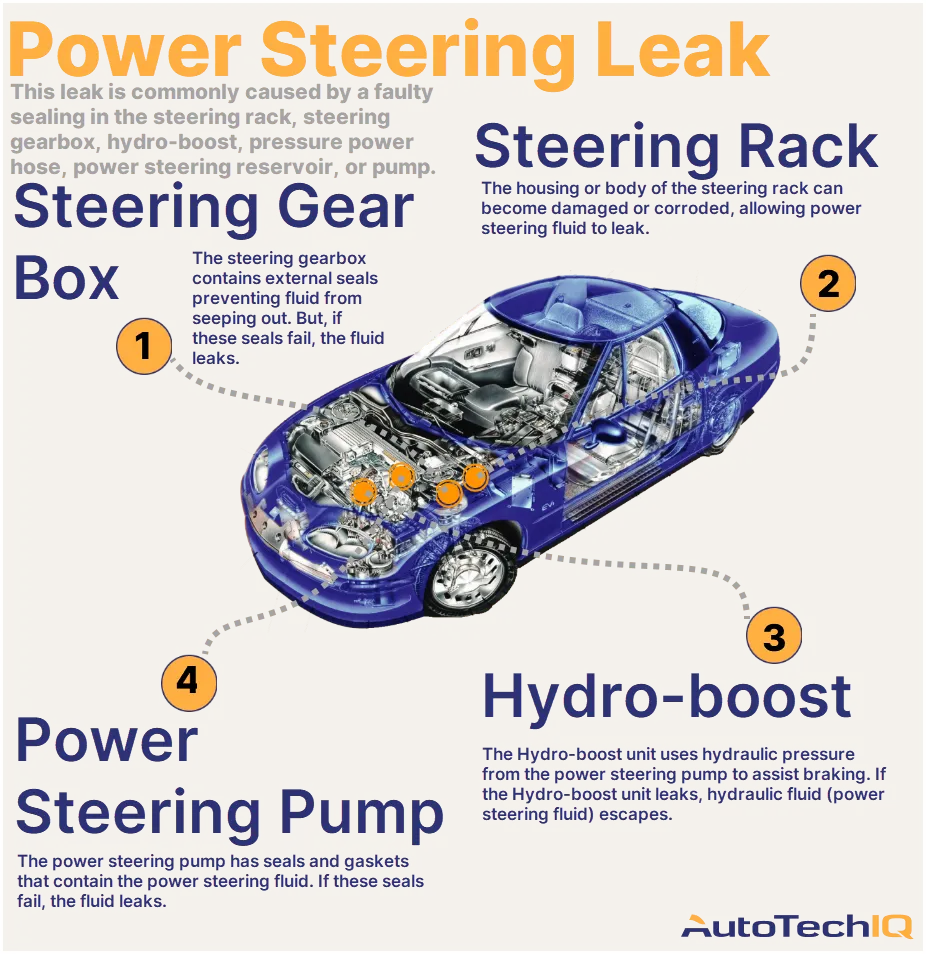
To understand why introducing motor oil into a power steering reservoir is destructive, one must first examine how these hydraulic systems operate. A standard hydraulic power steering system consists of a pump driven by the engine's serpentine belt, high- and low-pressure hoses, a fluid reservoir, and a steering gear assembly (either a rack-and-pinion unit or a traditional recirculating ball gearbox).
The system functions by pressurizing fluid and routing it to the steering gear. When the driver turns the steering wheel, internal valves direct this pressurized fluid to assist the mechanical movement, drastically reducing the physical effort required to maneuver the vehicle.
Fluid Requirements and Viscosity Differences
Power steering fluid is a specialized hydraulic oil formulated with specific anti-wear additives, anti-foaming agents, rust inhibitors, and viscosity index improvers. It must maintain stable thickness across wide temperature ranges—flowing smoothly during freezing winter starts and resisting thinning out under high under-hood operating temperatures.
Motor oil, by contrast, is engineered for internal combustion engines. It contains detergents, dispersants, and multi-grade polymers designed to clean carbon deposits, coat metal-on-metal engine components operating under extreme heat and combustion byproducts, and suspend soot. These chemical properties are entirely wrong for the high-pressure shear forces and elastomer seals found in a power steering circuit.
Immediate and Long-Term Consequences of Motor Oil Contamination
When motor oil mixes with or completely replaces proper power steering fluid, several destructive processes begin immediately. The severity of the damage depends on how long the engine oil remains in the system and whether the vehicle is driven while contaminated.
Seal Degradation and Rubber Swelling
The most critical vulnerability in a power steering system is its rubber and synthetic elastomer seals, O-rings, and hoses. These components are manufactured from specific compounds—such as Nitrile or EPDM rubber—formulated to be compatible with power steering fluid or automatic transmission fluid (ATF), depending on the manufacturer's specifications.
Motor oil contains chemical additives and detergents that aggressively attack these specific rubber compounds. Exposure to motor oil causes the seals to:
- Swell and Deform: Elastomers absorb components of the motor oil, causing them to expand beyond their design tolerances.
- Lose Elasticity: The rubber becomes brittle, cracked, or excessively mushy, destroying its ability to maintain a hydraulic seal.
- Weep and Leak: Once deformed, seals fail to contain the fluid under pressure, leading to external leaks around the steering rack boots, pump shaft, and hose fittings.
Viscosity and Hydraulic Pressure Failure
Viscosity mismatch is another major issue. Motor oil—even a standard 5W-30 or 10W-30 grade—has significantly different flow characteristics and shear resistance compared to dedicated power steering fluid. Under the intense hydraulic pressures generated by the power steering pump (often exceeding 1,000 to 1,500 psi during low-speed maneuvers), motor oil behaves differently than intended:
- Aeration and Foaming: Motor oil lacks the specific anti-foaming agents required for rapid hydraulic agitation. As the pump cycles the oil, air bubbles form, leading to fluid cavitation, loud whining noises, and a spongy or erratic steering feel.
- Thermal Breakdown: Engine oil retains heat differently than hydraulic fluid. The intense friction of being forced through tight valve bodies causes the oil to break down rapidly, forming varnish and sludge that clog internal orifices.
Fluid Comparison Overview
The differences between standard power steering fluids and engine lubricants highlight why substitution leads to mechanical failure.
| Feature / Property | Dedicated Power Steering Fluid | Standard Motor Oil (e.g., 5W-30) |
|---|---|---|
| Primary Function | Hydraulic pressure transmission and lubrication | Engine lubrication and combustion contaminant suspension |
| Detergent Level | Low to moderate (non-foaming focus) | High (designed to clean soot and carbon) |
| Seal Compatibility | Formulated for Nitrile, Neoprene, and EPDM | Can cause severe swelling, softening, and degradation |
| Shear Stability | High resistance to mechanical breakdown under pressure | Designed for engine bearing clearances, not hydraulic valves |
| Foam Resistance | Enhanced with specialized anti-foaming additives | Minimal resistance to rapid hydraulic agitation |
Corrective Actions: What to Do If Motor Oil Was Added
Discovering that motor oil has been poured into the power steering reservoir requires immediate intervention. Driving the vehicle with contaminated fluid accelerates the destruction of expensive components like the steering rack and the power steering pump.
1. Avoid Starting the Engine
If the mistake is caught before the engine has been turned on, do not start the vehicle. Starting the engine engages the power steering pump, instantly drawing the motor oil out of the reservoir and circulating it deep into the steering gear, cooler lines, and hoses. Keeping the oil confined to the reservoir makes the cleanup process much simpler.
2. Perform a Complete Fluid Flush
If the vehicle has not been driven, a simple extraction and refill might suffice, but a complete system flush is generally required if the fluid has circulated:
- Reservoir Extraction: Use a turkey baster or fluid suction pump to empty the power steering reservoir completely.
- Line Disconnection: To purge the entire system, mechanics typically disconnect the return line from the reservoir, direct it into a catch container, and cap the return port.
- Manual Flushing: While keeping the reservoir filled with fresh, manufacturer-approved fluid, an assistant turns the steering wheel lock-to-lock with the engine disabled (or briefly cranked) to push the contaminated fluid out through the disconnected return line.
- Refill and Bleed: Reconnect the line, fill the reservoir to the proper level, and bleed any remaining air from the system by turning the steering wheel from side to side with the engine running.
3. Component Replacement Requirements
If the vehicle was driven for an extended period with motor oil in the system, flushing the fluid may not be enough. If the rubber seals inside the steering rack or pump have already swelled or ruptured, those components must be physically replaced. Ignoring internal seal damage will lead to persistent leaks and eventual loss of steering assistance on the road.
Frequently Asked Questions
Can I use automatic transmission fluid (ATF) instead of motor oil if I am in a pinch?
Many vehicles specifically call for Dexron or Mercon ATF as their factory power steering fluid. However, you should always check the owner's manual or reservoir cap. While ATF is a hydraulic fluid and much closer in formulation to power steering fluid than motor oil, using the wrong fluid type can still cause premature wear if the manufacturer specifies a dedicated synthetic hydraulic oil.
What are the symptoms that indicate the wrong fluid is in my power steering?
Common symptoms include a loud whining or groaning noise when turning the steering wheel, a heavy or stiff steering feel (especially at low speeds or idle), erratic steering resistance, and visible fluid leaks around the pump or steering rack boots. You may also notice dark discoloration or frothing inside the fluid reservoir.
Will a small amount of motor oil mixed with power steering fluid ruin the system?
Even a small amount of motor oil can initiate chemical breakdown of rubber seals over time, though an immediate catastrophe is less likely if diluted significantly. However, because power steering systems operate in a closed loop with a relatively small total fluid capacity, even a few ounces of engine oil represent a substantial percentage of the total fluid volume, making a complete flush the safest course of action.
Is hydraulic fluid damage covered by standard auto insurance?
No. Standard auto insurance policies cover damage resulting from collisions, theft, weather events, and vandalism. Routine maintenance errors, fluid contamination, and mechanical wear-and-tear resulting from adding the wrong fluids are considered owner maintenance issues and are not covered.
How often should power steering fluid be changed?
Unlike engine oil, power steering fluid is often considered a lifetime fluid by some vehicle manufacturers. However, automotive specialists recommend inspecting the fluid every 30,000 to 50,000 miles and performing a fluid flush if the fluid appears dark, smells burnt, or contains particulate debris to extend the lifespan of the pump and rack.
Final Recommendations
Never use motor oil as a substitute, top-off, or temporary fix for power steering fluid. The chemical incompatibility between engine lubricants and hydraulic system seals creates an aggressive environment that leads to expensive mechanical failures. Always verify fluid requirements in the vehicle owner's manual before opening any under-hood fluid container, and immediately address accidental contamination with a complete system flush to protect critical steering components.
Image Gallery