What Infrared Light Really Does to Your Skin: Science, Benefits, and Risks
Infrared light affects your skin by penetrating beyond the surface to stimulate cellular repair, boost collagen production, and improve circulation through a process called photobiomodulation. While controlled doses offer significant a...
Infrared light affects your skin by penetrating beyond the surface to stimulate cellular repair, boost collagen production, and improve circulation through a process called photobiomodulation. While controlled doses offer significant anti-aging and healing benefits, excessive or unprotected exposure to solar infrared radiation can contribute to thermal aging and oxidative stress.
Contents
The relationship between the human body and light is far more complex than the simple tan-or-burn dynamic associated with ultraviolet (UV) rays. As we move into 2026, the dermatological community has shifted its focus toward the "other" half of the solar spectrum: infrared (IR) radiation. Infrared light accounts for approximately 54% of the solar energy that reaches the Earth's surface, yet its specific physiological impacts on human skin have remained misunderstood by the general public for decades.
To understand what infrared light really does to your skin, one must distinguish between the therapeutic applications of concentrated wavelengths and the environmental exposure we encounter daily. Unlike UV light, which primarily targets the epidermis and DNA directly, infrared light travels deeper into the dermis and subcutaneous layers, interacting with the very engines of our cells.
The Physics of Penetration: NIR, MIR, and FIR
Infrared light is categorized into three distinct bands based on wavelength: Near-Infrared (NIR), Mid-Infrared (MIR), and Far-Infrared (FIR). Each interacts with skin tissue differently based on its ability to penetrate and the specific molecular vibrations it triggers.
Near-Infrared (700 nm – 1400 nm)
NIR is the most studied band in clinical dermatology. Because its wavelengths are shorter, they possess higher energy and can penetrate the skin to a depth of 5 to 10 millimeters. This allows NIR to reach the deep dermis and even the underlying muscle tissue. At this depth, NIR light interacts with mitochondrial chromophores, specifically cytochrome c oxidase, to trigger metabolic changes.
Mid-Infrared (1400 nm – 3000 nm) and Far-Infrared (3000 nm – 1 mm)
MIR and FIR are primarily experienced as heat. These wavelengths do not penetrate as deeply as NIR; instead, they are largely absorbed by the water molecules in the upper layers of the skin. While FIR is frequently used in "infrared saunas" to induce sweating and detoxification through thermal regulation, its direct cellular signaling impact on the skin is less pronounced than that of NIR.
Photobiomodulation: How Infrared Heals the Skin
The primary mechanism behind the benefits of infrared light is photobiomodulation (PBM). When specific wavelengths of NIR light hit the mitochondria—the "powerhouse" of the cell—they kickstart a series of biochemical reactions.
Mitochondrial Activation and ATP Production
The most significant effect of IR light is the stimulation of cytochrome c oxidase, a protein in the mitochondrial electron transport chain. When this protein absorbs light, it increases the production of adenosine triphosphate (ATP). ATP is the universal energy currency of cells; when a cell has more ATP, it can perform repair functions, replicate, and defend itself against stressors more efficiently.
Nitric Oxide Release
Infrared exposure also triggers the release of nitric oxide (NO) from the mitochondria. Nitric oxide is a potent vasodilator, meaning it relaxes the blood vessels. Increased vasodilation improves localized blood flow, ensuring that oxygen and essential nutrients are delivered to the skin tissue while metabolic waste products are carried away. This "cellular flushing" is why infrared therapy is often associated with a healthy, immediate "glow."
Collagen and Elastin Synthesis
For those concerned with anti-aging, the impact of IR on fibroblasts is paramount. Fibroblasts are the cells responsible for synthesizing collagen and elastin. Research published in journals such as the Journal of Photochemistry and Photobiology indicates that NIR light can upregulate the expression of Type I collagen. By stimulating these cells without the traumatic heat associated with traditional ablative lasers, NIR provides a non-invasive route to firmer, more resilient skin.
The Dual Nature of Infrared: When It Becomes Harmful
While therapeutic infrared is a boon for skin health, it is a mistake to assume all infrared exposure is beneficial. Context, intensity, and duration determine whether infrared light heals or harms.
Thermal Aging (Inflammaging)
Excessive infrared radiation—specifically the "heat" felt from the sun or high-intensity industrial sources—can lead to infrared-induced skin aging. Unlike UV, which causes direct DNA mutations, IR-induced damage is largely thermal. Chronic heat exposure can increase the expression of matrix metalloproteinases (MMPs), specifically MMP-1. These enzymes are responsible for breaking down collagen fibers. Over time, this leads to a "leathery" skin texture and deep wrinkling, a phenomenon often seen in workers exposed to high-heat environments (like glassblowers or bakers).
Reactive Oxygen Species (ROS) Generation
About 50% of the free radicals generated in the skin by sunlight are attributed to the infrared and visible light spectrums, not just UV. When IR light hits the skin at high intensities, it creates an imbalance in the antioxidant defense system, leading to the production of Reactive Oxygen Species (ROS). These unstable molecules attack cellular membranes and accelerate the degradation of the extracellular matrix.
Melasma and Hyperpigmentation
For individuals struggling with melasma, infrared light can be particularly problematic. Heat is a known trigger for melanocyte activity. Because infrared light generates heat within the deeper layers of the skin, it can exacerbate pigmentary disorders even if the individual is wearing a high-SPF sunscreen that only blocks UV rays. This is why many dermatologists now recommend "total spectrum" protection or antioxidants like Vitamin C and E to neutralize the ROS generated by infrared.
Comparative Overview of Infrared Wavelengths
The following table summarizes how different infrared bands interact with the skin based on current 2026 clinical standards.
| Infrared Type | Wavelength Range | Primary Target | Main Effect | Clinical Use |
|---|---|---|---|---|
| Near-Infrared (NIR) | 700 – 1400 nm | Mitochondria, Deep Dermis | Collagen synthesis, ATP boost, Wound healing | LED masks, Professional PBM panels |
| Mid-Infrared (MIR) | 1400 – 3000 nm | Water molecules (Epidermis) | Thermal stimulation, Increased circulation | Specialized lasers, Industrial heat |
| Far-Infrared (FIR) | 3000 nm – 1 mm | Surface water molecules | Deep tissue heating, Detoxification | Infrared saunas, Therapeutic wraps |
Therapeutic Applications and Devices in 2026
The market for infrared technology has matured significantly. By 2026, the distinction between high-quality medical devices and "novelty" gadgets has become clearer through stricter regulatory oversight.
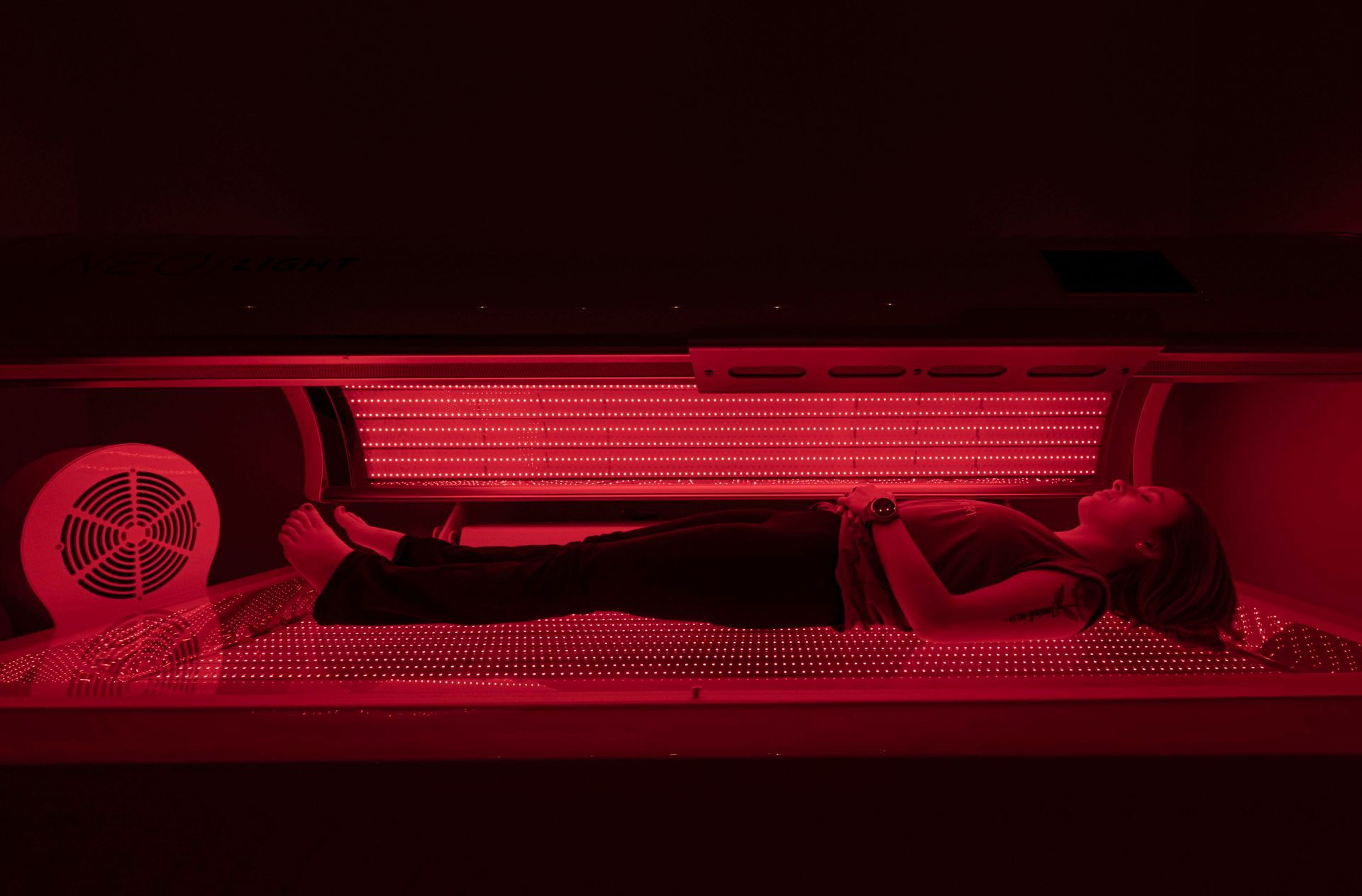
At-Home LED Masks and Panels
Most consumer-grade devices utilize a combination of Red light (630–660 nm) and Near-Infrared light (830–850 nm). The 830 nm wavelength is considered the "gold standard" for skin rejuvenation because it reaches the depth where fibroblasts are most concentrated. For these devices to be effective, they must provide sufficient irradiance (measured in mW/cm²). Low-power devices may fail to reach the threshold required for photobiomodulation.
Professional Clinical Treatments
In a clinical setting, dermatologists use higher-intensity NIR devices to accelerate post-surgical healing and treat inflammatory conditions like rosacea. These treatments are often titrating to ensure that the skin's temperature remains below the threshold (roughly 39°C to 40°C) where thermal damage and MMP-1 activation begin.
Infrared Saunas vs. Skin Health
While FIR saunas are excellent for systemic health and muscle recovery, their direct "skincare" benefits are secondary. The primary skin benefit from a sauna is increased perspiration, which helps clear pores, and the subsequent vasodilation. However, users with sensitive skin or rosacea should exercise caution, as the heat can trigger flare-ups.
Frequently Asked Questions
Does infrared light cause skin cancer?
Current scientific consensus indicates that infrared light does not directly cause DNA mutations in the same way that UV radiation (UVA/UVB) does. However, by generating ROS and contributing to chronic inflammation, it may create a cellular environment that is more susceptible to damage. It is considered a "promoter" of photoaging rather than a primary carcinogen.
Should I use infrared therapy if I have melasma?
If you have heat-sensitive melasma, proceed with caution. While NIR light (which is non-thermal) is generally safer, many IR devices generate some degree of warmth. It is best to use "cool" LED-based NIR therapy rather than heat-based IR lamps and to consult a dermatologist about using topical antioxidants to mitigate any heat-induced pigment triggers.
Can I use infrared light every day?
Yes, most photobiomodulation protocols suggest 3 to 5 sessions per week for optimal results. However, more is not always better. The Arndt-Schulz Law applies here: there is a "sweet spot" for light therapy. Too little has no effect, while too much can lead to cellular fatigue or inhibitory effects, effectively neutralizing the benefits.
Does sunscreen protect against infrared light?
Standard chemical and physical sunscreens are designed to block UV rays. To protect against infrared, you need products containing "IR-shielding" ingredients like knotgrass extract or specialized antioxidants. Physical blockers like Zinc Oxide and Titanium Dioxide provide a minor buffer by reflecting some IR, but they do not block it entirely.
How long does it take to see results from IR skin therapy?
Because IR works at a cellular level to stimulate protein synthesis, results are not instantaneous. While an immediate "glow" from increased circulation is common, structural changes like improved skin elasticity and reduction in fine lines typically take 8 to 12 weeks of consistent use, aligning with the natural cycle of collagen production.
Practical Recommendations for 2026
To harness the power of infrared light without falling victim to its potential for thermal damage, consumers and patients should adopt a balanced approach:
- Prioritize Quality Over Price: When purchasing at-home NIR devices, ensure they list specific wavelengths (ideally 830nm or 850nm) and have cleared safety certifications.
- Monitor Skin Temperature: If a device feels uncomfortably hot to the touch, it may be triggering thermal aging rather than photobiomodulation. The skin should feel pleasantly warm, never burning.
- Use Antioxidant Support: Whether using a therapeutic device or spending time in the sun, apply a potent antioxidant serum (containing Vitamin C, Ferulic Acid, or Resveratrol). This neutralizes the ROS generated by the IR spectrum.
- Limit Session Duration: Follow manufacturer guidelines strictly—usually 10 to 20 minutes. Prolonged exposure does not "speed up" collagen growth and may lead to the inhibitory phase of the Arndt-Schulz curve.
Infrared light is a powerful biological tool. When used with precision, it offers a non-invasive way to maintain skin density and accelerate healing. However, as with all forms of radiation, the "dose makes the poison," and respecting the thermal limits of your skin is essential for long-term health.
Image Gallery