Understanding the Index in Finance Basics: A Complete Guide for 2026
A financial index is a statistical measure that tracks the performance of a specific group of assets, such as stocks, bonds, or commodities. It serves as a standardized benchmark for investors to gauge market health, compare investment...
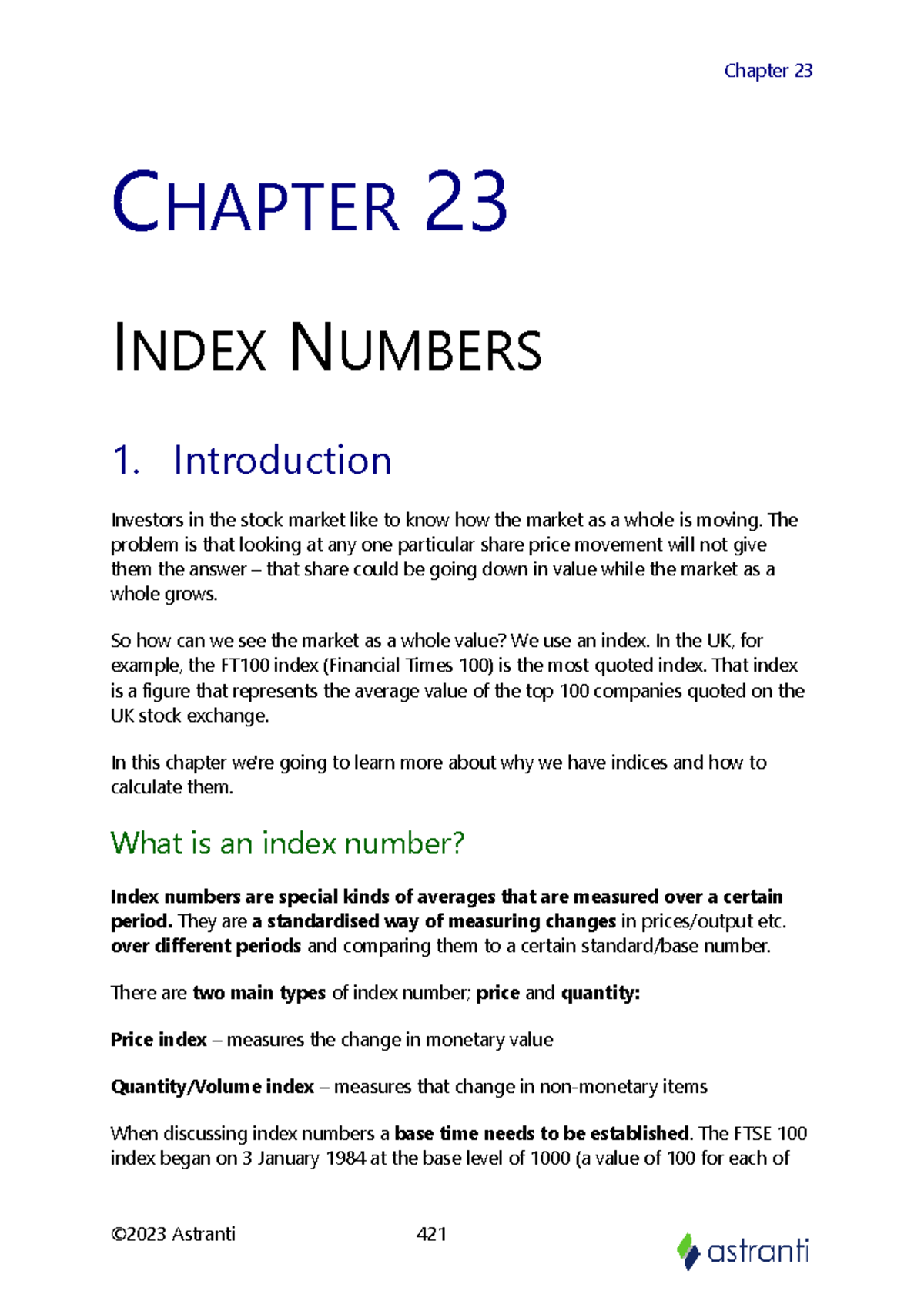
A financial index is a statistical measure that tracks the performance of a specific group of assets, such as stocks, bonds, or commodities. It serves as a standardized benchmark for investors to gauge market health, compare investment performance, and build diversified portfolios through passive investment vehicles like ETFs and mutual funds.
Contents
Defining the Financial Index
In the broadest sense, a financial index is a "yardstick" for the economy or a specific sector. It is a hypothetical portfolio of investment holdings which represents a segment of the financial market. Because you cannot invest directly in an index, financial institutions create products—such as index funds and exchange-traded funds (ETFs)—that track these indices, allowing individual investors to gain exposure to the entire group of assets in a single transaction.
As of 2026, the financial index remains the most critical tool for both retail and institutional investors. Whether you are looking at the performance of your 401(k) or checking the daily news, indices provide a shorthand way to understand how "the market" is doing without needing to analyze thousands of individual securities.
Each index has its own calculation methodology and is usually managed by a specialized provider, such as S&P Dow Jones Indices, MSCI, or FTSE Russell. These providers determine which companies are included in the index, how much weight each company carries, and when the index needs to be updated or "rebalanced."
Core Calculation Methodologies
Understanding how an index is calculated is essential for interpreting what its movements actually mean. Not all indices are created equal; the way a company's size or price impacts the total index value can vary significantly. There are three primary methods used in modern finance.
Market-Capitalization Weighting
This is the most common method used by major indices like the S&P 500 and the Nasdaq Composite. In a market-cap-weighted index, companies with the highest total market value (share price multiplied by the number of outstanding shares) have the greatest impact on the index's performance.
For example, if a massive technology conglomerate sees a 2% increase in its stock price, it will move the index much more than a 2% move from a smaller utility company. Proponents of this method argue that it naturally reflects the actual structure of the market, giving more weight to the businesses that command the most capital. However, critics point out that this can lead to "top-heaviness," where a few giant firms dictate the direction of the entire index.
Price Weighting
Price weighting is an older methodology, most famously used by the Dow Jones Industrial Average (DJIA). In this system, the index value is determined by the share prices of the component stocks rather than their total market value. A company with a $300 share price will have three times the influence of a company with a $100 share price, even if the $100 company is actually much larger in terms of total market capitalization.
In 2026, price weighting is often viewed as a legacy system. It can lead to distortions because a stock split—which changes the price but not the value of a company—requires the index "divisor" to be adjusted to prevent the index value from jumping artificially. Despite these quirks, the Dow remains one of the most cited indices in the world due to its long historical record.
Equal Weighting
An equal-weighted index treats every constituent company the same, regardless of its size or share price. If an index has 100 companies, each company accounts for exactly 1% of the index. This approach provides more exposure to smaller companies and prevents the index from being dominated by a few "mega-cap" stocks. While this offers better diversification, it often results in higher turnover and trading costs, as the index must be frequently rebalanced to return every stock to its equal percentage.
Major Global Indices You Should Know
To understand finance basics, you must be familiar with the "Big Three" in the United States and their international counterparts. These indices serve as the primary barometers for global economic health.
- The S&P 500: Managed by S&P Dow Jones Indices, this index tracks 500 of the largest publicly traded companies in the U.S. It is widely considered the best single gauge of large-cap U.S. equities. Because it covers approximately 80% of available market value, it is the primary benchmark for professional fund managers.
- The Dow Jones Industrial Average (DJIA): Often referred to simply as "the Dow," it consists of 30 "blue-chip" companies. These are established, leader-of-industry firms across various sectors (excluding utilities and transportation).
- The Nasdaq Composite: This index includes almost all stocks listed on the Nasdaq stock exchange. It is heavily weighted toward the technology, biotechnology, and internet sectors, making it the "go-to" indicator for the growth-oriented tech economy.
- MSCI World Index: This is a broad global equity index that represents large and mid-cap equity performance across 23 developed market countries. It is the standard for investors looking for international diversification.
- Russell 2000: While the S&P 500 focuses on giants, the Russell 2000 tracks the "small-cap" segment—the 2,000 smallest companies in the broader Russell 3000 Index. It is often used to gauge the health of the domestic U.S. economy.
Comparison of Primary U.S. Indices
| Feature | S&P 500 | Dow Jones (DJIA) | Nasdaq Composite |
|---|---|---|---|
| Number of Stocks | 500-505 | 30 | 2,500+ |
| Weighting Method | Market-Cap Weighted | Price Weighted | Market-Cap Weighted |
| Sector Focus | Diversified Large-Cap | Blue-Chip Leaders | Technology & Growth |
| Primary Use | Institutional Benchmark | General Market Pulse | Tech Sector Health |
| Provider | S&P Dow Jones | S&P Dow Jones | Nasdaq Inc. |
The Difference Between an Index and an Index Fund
A common point of confusion for beginners is the distinction between the index itself and the investment products based on it. You cannot "buy" the S&P 500. It is just a list and a mathematical formula maintained by a provider. To invest in it, you must buy an index fund or an ETF (Exchange-Traded Fund).
An index fund is a type of mutual fund or ETF with a portfolio constructed to match or track the components of a financial market index. These are known as "passive" investments because the fund manager isn't trying to "beat" the market by picking winners; they are simply trying to mirror the index as accurately as possible.
The benefits of index funds include:
- Low Costs: Since there is no need for expensive research teams to pick stocks, the management fees (expense ratios) are typically very low.
- Tax Efficiency: Index funds tend to have lower turnover (buying and selling of assets), which results in fewer capital gains distributions.
- Diversification: Buying one share of an S&P 500 ETF gives you fractional ownership in 500 different companies, instantly reducing the risk of a single company's failure ruining your portfolio.
Why Indices Matter: Benchmarking and Beyond
The most practical application of a financial index is benchmarking. If you have a diversified portfolio of stocks and it returns 8% in a year, you might think you’ve done well. However, if the S&P 500 returned 12% in that same period, your portfolio actually underperformed the broader market. Without the index, you would have no objective way to measure the "opportunity cost" of your investment strategy.
Indices also play a vital role in asset allocation. Financial advisors use indices to represent different asset classes—such as "U.S. Large Cap," "Emerging Markets," or "Total Bond Market"—when building a balanced portfolio. By looking at the historical volatility and returns of these indices, they can project potential outcomes for a client’s retirement plan.
Furthermore, indices are essential for the creation of derivative products, such as options and futures. These allow institutional investors to hedge against market downturns or speculate on the future direction of the economy. According to S&P Dow Jones Indices, trillions of dollars are currently indexed or benchmarked to their products globally.
Modern Trends: Direct Indexing and ESG
In 2026, the world of indexing has expanded beyond simple market-cap tracking. Two major trends have changed how investors interact with indices: Direct Indexing and ESG Indexing.
Direct Indexing allows an investor to buy the individual stocks that make up an index directly, rather than buying a fund. Enabled by advanced fintech platforms and zero-commission trading, this allows for "tax-loss harvesting" at the individual stock level. For example, if 490 stocks in your "personal S&P 500" are up but 10 are down, you can sell the 10 losers to offset other gains, a strategy not possible when holding a single ETF share.
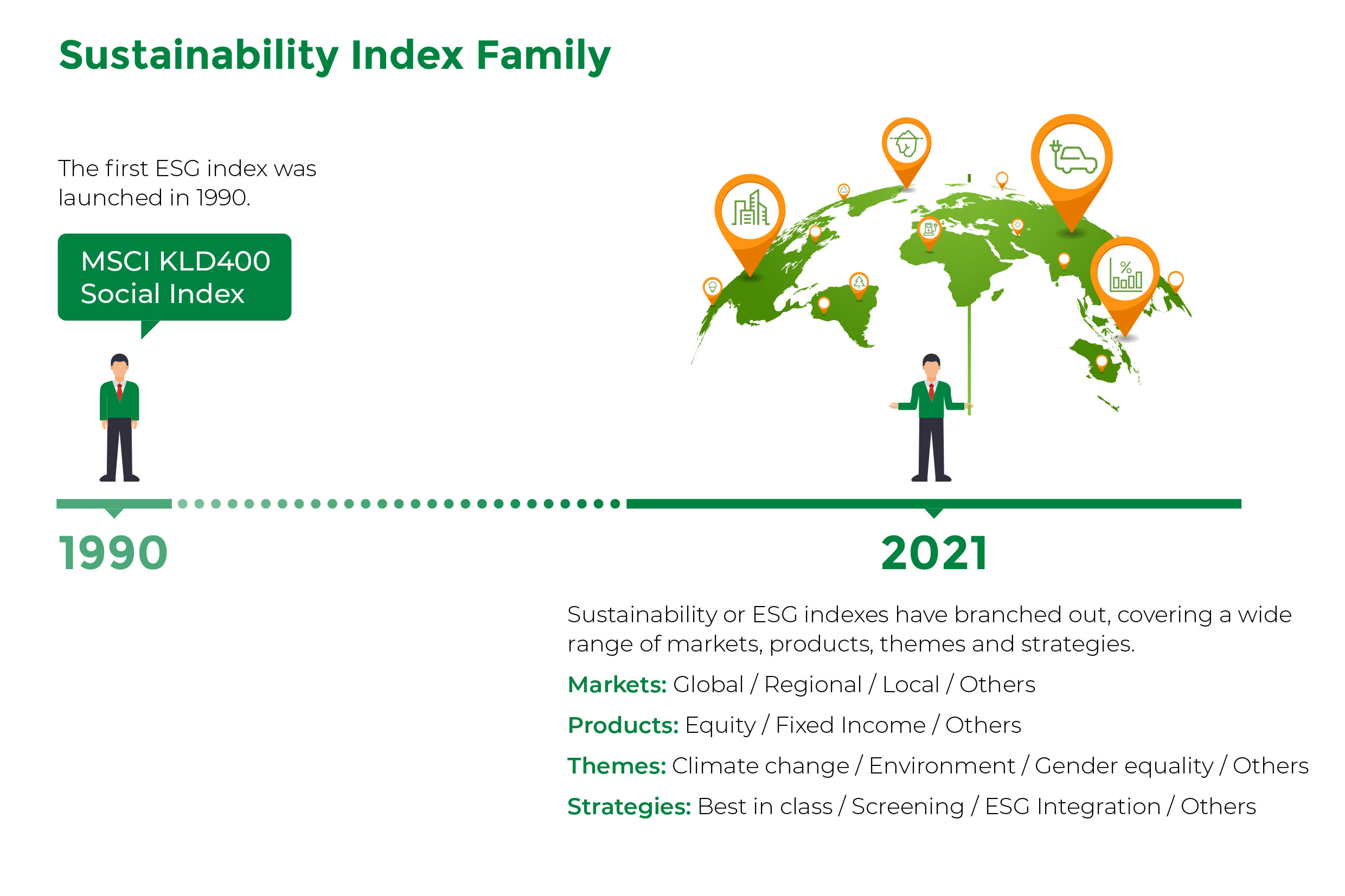
ESG Indexing (Environmental, Social, and Governance) involves indices that filter companies based on their ethical impact. These indices might exclude tobacco companies, heavy polluters, or firms with poor board diversity. Major providers like MSCI offer various ESG versions of their flagship indices, allowing investors to align their capital with their values without abandoning the disciplined approach of index-based investing.
Limitations and Risks of Indexing
While indexing is widely recommended, it is not without risks. One primary concern is concentration risk. As mentioned earlier, in market-cap-weighted indices, the largest companies can become so dominant that the "diversified" index begins to behave like a tech-concentrated fund. If the top five companies in the S&P 500 struggle, the entire index will fall, even if the other 495 companies are performing well.
Another risk is tracking error. This occurs when an index fund fails to perfectly mirror its underlying index due to management fees, transaction costs, or the timing of trades. While usually minimal in major ETFs, tracking error can be significant in niche or international indices where liquidity is lower.
Finally, there is the "index effect." When a company is added to a major index like the S&P 500, thousands of index funds are forced to buy its shares simultaneously, often driving the price up artificially. Conversely, being removed from an index can lead to a sharp decline in price regardless of the company's fundamental health.
Frequently Asked Questions
What does it mean when the "market is up"? Generally, when news anchors say the "market is up," they are referring to the percentage change in the price of the S&P 500 or the Dow Jones Industrial Average. It means that, on a weighted average basis, the prices of the stocks within those specific indices increased during that trading session.
Can an index go to zero? In theory, a broad market index like the S&P 500 would only go to zero if every single one of the 500 largest companies in the United States went bankrupt simultaneously. While individual stocks frequently go to zero, the diversified nature of an index makes it virtually impossible for the entire index to lose all value, barring a total collapse of the global financial system.
How often do indices change their stocks? Most major indices are reviewed quarterly or semi-annually. During these "reconstitution" periods, the index provider evaluates which companies still meet the criteria (size, liquidity, sector) and replaces those that do not. For example, a company that has seen its market value drop significantly might be moved from the S&P 500 to the S&P MidCap 400.
What is the difference between a "price return" and a "total return" index? A price return index only tracks the changes in the stock prices of its components. A total return index assumes that all dividends paid by those companies are reinvested back into the index. For long-term investors, total return is a much more accurate measure of actual wealth creation.
Are indices only for stocks? No. There are indices for almost every asset class, including bonds (like the Bloomberg Aggregate Bond Index), commodities (like the Bloomberg Commodity Index), real estate (REIT indices), and even cryptocurrencies.
Practical Recommendation for 2026
For the average individual looking to build long-term wealth, the most effective strategy is to utilize low-cost, broad-market index funds. Rather than attempting to pick individual winners—a task that even most professional fund managers fail to do consistently over decades—investors should focus on capturing the overall growth of the economy.
A "Three-Fund Portfolio" consisting of a Total Stock Market Index Fund, a Total International Stock Index Fund, and a Total Bond Market Index Fund remains the gold standard for simplicity and efficiency. Always check the expense ratio of any index fund you consider; in 2026, there is rarely a reason to pay more than 0.05% to 0.10% for a standard broad-market index ETF.
Disclaimer: This information is for educational purposes only and does not constitute financial, legal, or investment advice. Market conditions can change, and all investments involve risk of loss.
Image Gallery