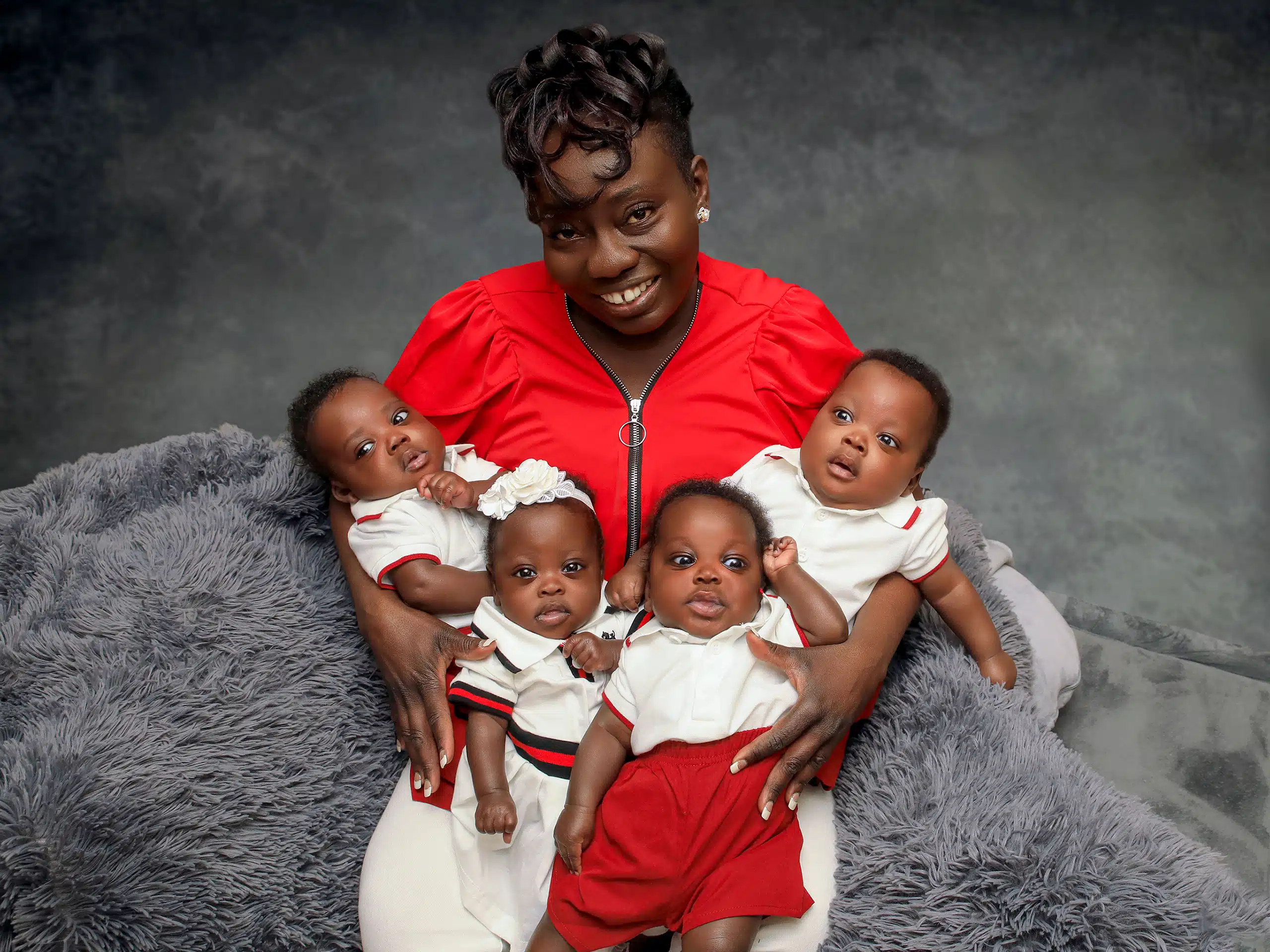
Who Is the Youngest Mother of Quads in History?
Zoya Stefanovic is historically recognized as the youngest mother of quadruplets, having given birth in 1997 at the age of 16 in Belgrade, Serbia. Her pregnancy was exceptionally rare because the quadruplets were conceived naturally, w...
Zoya Stefanovic is historically recognized as the youngest mother of quadruplets, having given birth in 1997 at the age of 16 in Belgrade, Serbia. Her pregnancy was exceptionally rare because the quadruplets were conceived naturally, without the use of fertility drugs or assisted reproductive technologies.
Contents
The phenomenon of multiple births, particularly quadruplets, is a rare occurrence in human biology. When such an event involves an adolescent mother, the case becomes a significant point of interest for medical professionals, historians, and the general public. While multiple births have become more common since the 1980s due to the rise of In Vitro Fertilization (IVF) and other fertility treatments, spontaneous (natural) quadruplets remain a statistical anomaly. This article examines the life of Zoya Stefanovic, other young mothers who have broken similar records, and the medical complexities associated with adolescent multiple pregnancies.
The Record-Breaking Case of Zoya Stefanovic
In June 1997, 16-year-old Zoya Stefanovic made international headlines when she gave birth to quadruplets at a hospital in Belgrade, Yugoslavia (now Serbia). At the time, she was a teenager who had not reached the legal age of majority in many countries, making the biological feat of carrying four fetuses to a viable term even more extraordinary.
The quadruplets—three boys and one girl—were named Marija, Milos, Milan, and Mihajlo. Because quadruplet pregnancies rarely reach full term (40 weeks), Zoya’s children were born prematurely via Cesarean section, which is the standard medical procedure for high-order multiple births to ensure the safety of both the mother and the infants.
Natural vs. Assisted Conception
One of the most defining aspects of the Stefanovic case was the method of conception. Most quadruplet births recorded in the late 20th and early 21st centuries are the result of ovarian stimulation or IVF. In Zoya’s case, the conception was entirely spontaneous. Medical experts at the time noted that the odds of a 16-year-old conceiving quadruplets naturally are approximately 1 in 600,000 to 1 in several million, depending on the specific demographic and biological markers used in the calculation.
Health and Survival in 1997
The survival of all four infants was a testament to the neonatal care available in Belgrade during a period of regional instability. Multiple births carry high risks of respiratory distress syndrome, low birth weight, and developmental delays. The Stefanovic quadruplets required specialized incubator care and monitoring, but they eventually transitioned to a stable health status, solidifying Zoya’s place in medical history.
Other Notable Young Mothers of Quadruplets
While Zoya Stefanovic holds the record for the youngest, other teenagers have also experienced the rare event of a quadruplet pregnancy. These cases are often cited in "Guinness World Records" and medical journals documenting "high-order multiples."
Khaira Haque (1989)
Prior to Zoya Stefanovic, Khaira Haque was widely cited as one of the youngest mothers of quadruplets. In 1989, at the age of 17, she gave birth to quadruplets in Birmingham, England. Like Stefanovic, Haque’s pregnancy was spontaneous. Her case brought significant attention to the Birmingham Maternity Hospital, as the survival of all four babies at that time was considered a major success for British neonatal medicine.
Vicky Moore (1993)
Vicky Moore, an 18-year-old from the United Kingdom, gave birth to quadruplets in 1993. While she was slightly older than Stefanovic and Haque, she was still within the adolescent age bracket. Her story was frequently featured in the British media during the 1990s, highlighting the economic and social challenges faced by very young parents who suddenly find themselves caring for four infants simultaneously.
Comparative Summary of Young Quadruplet Mothers
The following table compares the most well-documented cases of adolescent quadruplet births in modern history.
| Mother's Name | Age at Birth | Year | Location | Conception Method |
|---|---|---|---|---|
| Zoya Stefanovic | 16 | 1997 | Belgrade, Serbia | Spontaneous |
| Khaira Haque | 17 | 1989 | Birmingham, UK | Spontaneous |
| Vicky Moore | 18 | 1993 | United Kingdom | Spontaneous |
| Unnamed Mother | 19 | 2014 | Saharanpur, India | Spontaneous |
The Science of Spontaneous Quadruplets
To understand how a 16-year-old can conceive quadruplets naturally, one must look at the mechanics of ovulation and twinning. Spontaneous quadruplets occur in one of three ways:
- Tetrazygotic: Four separate eggs are fertilized by four separate sperm. This results in four fraternal siblings.
- Trizygotic: One egg splits into identical twins, and two other eggs are fertilized separately.
- Dizygotic: Two eggs each split into two sets of identical twins, or one egg splits into three (identical triplets) and one is fertilized separately.
In teenage mothers, the endocrine system is highly active. While younger age is generally associated with a lower probability of multiple ovulations (which typically increases as women approach their 30s), anomalies can occur. The hyper-ovulation required for natural quadruplets in a 16-year-old is often attributed to a genetic predisposition or a unique hormonal surge.
Hellin’s Law
Historically, physicians used Hellin’s Law to calculate the probability of multiple births. The law suggests that twins occur once in every 80 births, triplets once in $80^2$ (6,400) births, and quadruplets once in $80^3$ (512,000) births. While modern statistics have shifted these numbers due to fertility treatments, for spontaneous cases like those of Stefanovic and Haque, Hellin’s Law remains a baseline for understanding the rarity of the event.
Medical Risks and Management of Teenage Multiple Pregnancies
Carrying quadruplets is physically demanding for any woman, but for a 16 or 17-year-old, whose own body may still be developing, the risks are magnified.
Preeclampsia and Hypertension
Younger mothers are statistically at a higher risk for gestational hypertension and preeclampsia. When carrying four fetuses, the placental mass is significantly larger, which increases the likelihood of these complications. Preeclampsia can lead to organ failure or seizures if not managed strictly through bed rest and medication.
Preterm Labor and Gestational Age
The average gestation period for a single baby is 40 weeks. For quadruplets, the average drops to approximately 28 to 31 weeks. The primary challenge for doctors is keeping the babies in the womb as long as possible to allow for lung development. Every additional day in the womb significantly reduces the time the infants must spend in the Neonatal Intensive Care Unit (NICU).
Nutritional Demands
A mother of quadruplets must consume significantly more calories and nutrients—particularly folic acid, iron, and protein—to support the growth of four fetuses. Adolescent mothers often have higher nutritional needs for their own growth, creating a "biological competition" for nutrients between the mother and the multiple fetuses.
Social and Economic Impact on Young Parents
The birth of quadruplets changes the trajectory of a young parent's life instantly. For Zoya Stefanovic and others like her, the transition from being a teenager to a mother of four required massive social support systems.
- Financial Burden: The cost of diapers, formula, medical check-ups, and clothing for four infants simultaneously is astronomical. In many of these historical cases, local communities or government agencies provided specialized grants or housing to accommodate the families.
- Education Interruption: Most mothers who give birth to quadruplets at 16 or 17 are forced to pause or end their formal secondary education. The 24-hour care cycle required for four infants makes traditional schooling nearly impossible without a large team of helpers.
- Psychological Stress: The "instant family" effect can lead to higher rates of postpartum depression and anxiety. Young mothers lack the life experience usually associated with managing high-stress household environments, making external counseling and family intervention vital.
Verification of Records
As of 2026, the records for "youngest mother" are meticulously tracked by medical registries and organizations like Guinness World Records. It is important to distinguish between "youngest mother ever" (Lina Medina, who gave birth to a single child at age 5) and the "youngest mother of quadruplets."
While there are occasional unverified reports from rural regions globally regarding younger mothers of multiples, Zoya Stefanovic remains the most consistently documented and verified case in modern medical history. Verification requires official birth certificates for both the mother and the infants, as well as hospital records confirming the delivery details.
Frequently Asked Questions
Is it possible to have quadruplets naturally at 16?
Yes, though it is extremely rare. It occurs through spontaneous hyper-ovulation, where the ovaries release four eggs during a single cycle, or through a combination of multiple egg releases and embryo splitting. The odds are estimated to be less than one in a million for that specific age group.
What happened to Zoya Stefanovic’s quadruplets?
The Stefanovic quadruplets grew up in Serbia. While they have largely lived private lives as adults, periodic updates in Serbian media have indicated that they survived their premature birth and reached adulthood successfully.
Who is the youngest mother of quintuplets?
The records for quintuplets (five babies) often cite mothers in their late teens or early twenties, but verified cases for mothers under 18 are even rarer than those for quadruplets. Most quintuplet births are the result of fertility treatments in slightly older women.
How long does a quadruplet pregnancy usually last?
Most quadruplet pregnancies last between 28 and 32 weeks. It is very rare for a woman to carry quadruplets to the 37-week "full term" mark because the uterus reaches its maximum capacity for expansion much earlier.
Are quadruplets always born via C-section?
In almost all modern medical settings, quadruplets are delivered via Cesarean section. This is done to minimize the risk of cord prolapse, fetal distress, and other complications that are highly likely during a prolonged vaginal delivery of multiple infants.
Final Recommendation for Researchers and Parents
For those researching the history of multiple births or adolescent pregnancy, it is crucial to rely on peer-reviewed medical journals and official record-keeping bodies. The case of Zoya Stefanovic serves as a primary example of how maternal age and extreme biological events can intersect. If you are a parent or caregiver of multiples, seeking out organizations such as the International Council of Multiple Birth Organizations (ICMBO) can provide essential resources for managing the unique logistical and emotional challenges of raising high-order multiples.
Image Gallery