The Global Impact of Argentine Athletes Across Sports History
Argentine athletes have profoundly influenced global sports by redefining tactical standards, elevating performance benchmarks, and popularizing distinct competitive philosophies. From football icons like Diego Maradona and Lionel Mess...
Argentine athletes have profoundly influenced global sports by redefining tactical standards, elevating performance benchmarks, and popularizing distinct competitive philosophies. From football icons like Diego Maradona and Lionel Messi to Formula 1 pioneer Juan Manuel Fangio and basketball legend Manu Ginóbili, Argentina has consistently produced elite talent that reshaped international coaching, professional league dynamics, and sports culture across multiple continents.
Contents
1. Tactical and Cultural Transformation in Global Football
Football (soccer) represents the most extensive arena of Argentine influence. Argentina’s footballing export model has delivered not only elite players to top European leagues but has also exported tactical ideologies through legendary managers and influential playing styles.
- Early Evolution: Di Stéfano (Real Madrid 1950s)
- Total Football foundations
- Maradona (Napoli/World Cup 1986)
- Individual brilliance & cultural impact
- Modern Global Dominance: Messi (Barça/World Cup 2022)
- Tactical versatility & goat status
The Individual Pioneers: From Di Stéfano to Messi
The lineage of Argentine football supremacy began internationally with Alfredo Di Stéfano in the 1950s. Di Stéfano's arrival at Real Madrid catalyzed the club's dominance in the early European Champion Clubs' Cup (now the UEFA Champions League), winning five consecutive titles between 1956 and 1960. His revolutionary, complete-player dynamic—operating effectively across defense, midfield, and attack—foreshadowed modern "Total Football."
In the 1980s, Diego Maradona redefined the relationship between individual brilliance and team success. Leading Argentina to victory in the 1986 FIFA World Cup in Mexico, Maradona showcased an unprecedented combination of low-center-of-gravity dribbling, vision, and tactical playmaking. His tenure at SSC Napoli (1984–1991) shifted the economic and competitive power dynamic in Italian football, proving that a single transcendent talent could elevate a mid-tier club to domestic and European glory against traditional northern Italian powers.
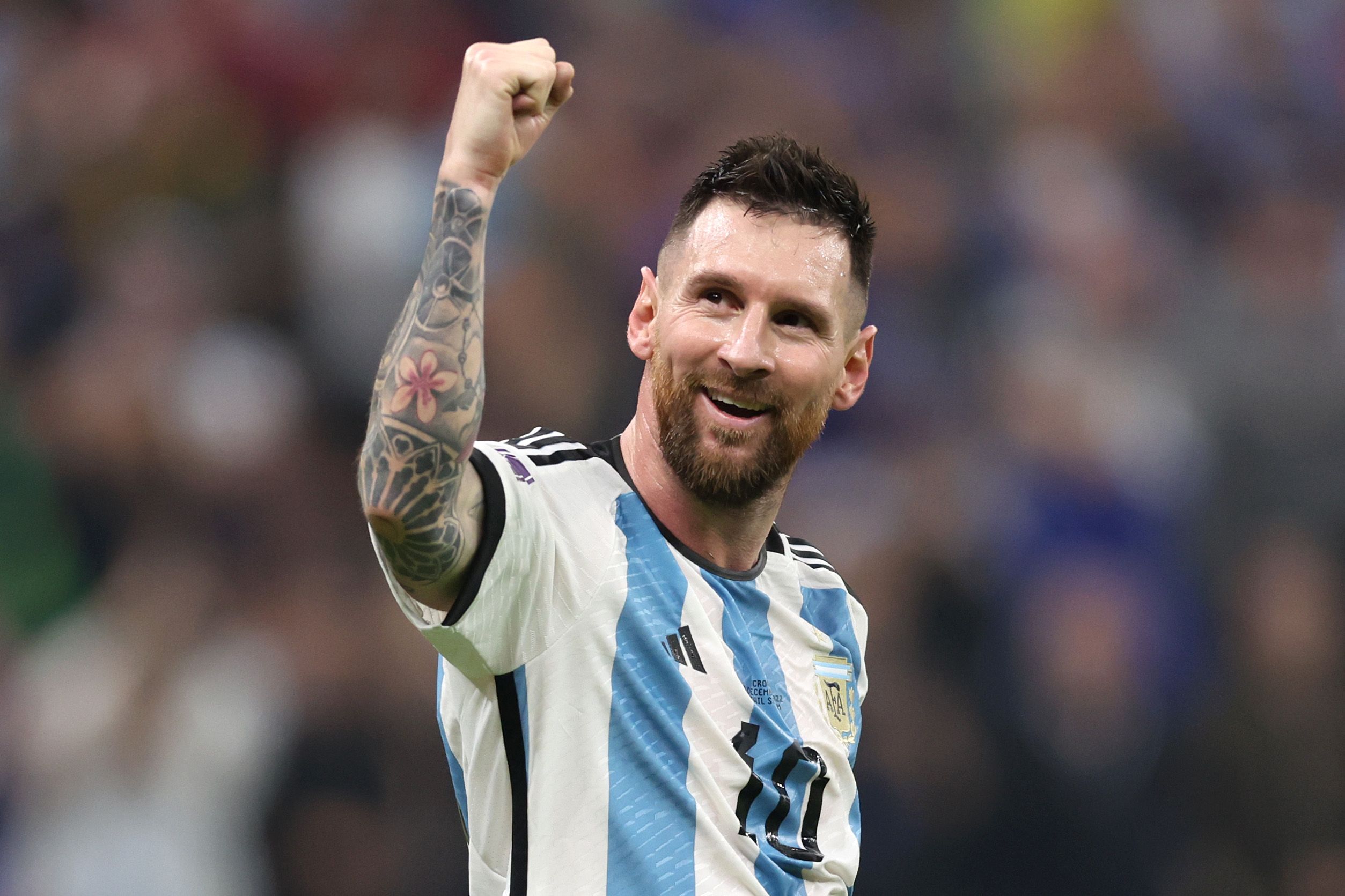
Lionel Messi subsequently sustained world-class performance over two decades, winning eight Ballon d'Or awards and leading Argentina to the 2022 FIFA World Cup title in Qatar. Messi’s period at FC Barcelona reinvented the "False 9" positional role under manager Pep Guardiola, altering how top-tier teams structure offensive space, build-up play, and pressing schemes globally.
Managerial Philosophies and Tactical Export
Beyond individual athletes, Argentine coaches have established global tactical paradigms:
- Bielsismo (Marcelo Bielsa): Characterized by high-intensity man-to-man pressing, rapid vertical transitions, and rigorous positional rotation. Bielsa’s tactical concepts directly influenced elite global managers, including Pep Guardiola, Mauricio Pochettino, and Jorge Sampaoli.
- La Nuestra & Menottismo (César Luis Menotti): Prioritized creative freedom, possession, and aesthetic mastery, balancing the physical intensity of European football with South American technical improvisation.
- Bilardismo (Carlos Bilardo): Focused on hyper-pragmatic preparation, set-piece specialization, and strict defensive organization, establishing a blueprint for tournament play.
2. Breaking Monopolies: The Basketball "Generación Dorada"
In basketball, Argentina achieved one of the most remarkable accomplishments in international sports history by disrupting North American dominance in the late 1990s and 2000s.
| THE GOLDEN GENERATION (1999-2008) |
|---|
| • 2002 FIBA World Championship: First team to defeat an all-NBA US roster. |
| • 2004 Athens Olympic Games: Won Gold Medal (Defeated USA in Semifinals). |
| • Key Figures: Emanuel Ginóbili, Luis Scola, Andrés Nocioni, Fabricio Oberto. |
| • NBA Impact: Popularized the Eurostep, ball-movement offense, unselfish spacing. |
The 2004 Athens Olympics and FIBA Dominance
Led by Emanuel "Manu" Ginóbili, Luis Scola, Andrés Nocioni, and Fabricio Oberto, the Argentine national basketball team—dubbed the Generación Dorada (Golden Generation)—achieved unprecedented success:
- 2002 FIBA World Championship (Indianapolis): Argentina became the first team to defeat an all-NBA United States national team squad in official competition, ending a 58-game winning streak.
- 2004 Olympic Games (Athens): Argentina eliminated Team USA in the semifinals before defeating Italy to claim the Olympic Gold Medal, remaining the only nation outside the United States to win Olympic Men's Basketball gold since 1992.
NBA Tactical Evolution and the Eurostep
Manu Ginóbili’s 16-season career with the San Antonio Spurs yielded four NBA Championships (2003, 2005, 2007, 2014) and fundamentally altered how guards attack the rim in the NBA. Ginóbili popularized the Eurostep—a deceleration and directional change technique—which subsequently became a fundamental footwork skill taught across global basketball academies.
Furthermore, the Golden Generation popularized a style of basketball built on unselfish passing, weak-side cutting, and positional versatility, directly influencing the ball-movement offenses adopted by modern NBA franchises.
3. Individual World Champions: Motorsport, Tennis, Hockey, and Rugby
Argentina's global sporting impact extends across individual sports and specialized team disciplines, establishing historical standards of excellence.
| Sport | Key Figures | Global Legacy & Innovations |
|---|---|---|
| Formula 1 | Juan Manuel Fangio | 5 World Championships; highest win percentage (46.1%) |
| Tennis | Guillermo Vilas | Popularized topspin groundstrokes and the "Gran Willy" |
| Tennis | Gabriela Sabatini | 1990 US Open Champion; globalized women's game |
| Field Hockey | Luciana Aymar | 8-time FIH Player of the Year; "The Maradona of Hockey" |
| Rugby Union | Hugo Porta, Agustín Pichot | Led Los Pumas to 2007 World Cup 3rd; expanded Championship |
| Polo | Adolfo Cambiaso | Redefined horse breeding, cloning, and handicap standards |
Motorsport: Juan Manuel Fangio's F1 Blueprint
Juan Manuel Fangio set the benchmark for modern auto racing during Formula 1's inaugural decade. Winning five FIA Formula One World Drivers' Championships (1951, 1954, 1955, 1956, 1957) with four different constructors (Alfa Romeo, Maserati, Mercedes-Benz, Ferrari), Fangio established records that stood for nearly half a century.
His driver winning percentage of 46.15% (24 victories out of 52 Championship starts) remains the highest in Formula 1 history. Fangio set standards in smooth driving technique, vehicle mechanical management, and professional fitness that modern racing drivers emulate.
Tennis: Technical Innovations of Vilas and Sabatini
In tennis, Guillermo Vilas brought revolutionary technical changes to court play during the 1970s. Vilas was instrumental in popularizing extreme topspin from the baseline, particularly on clay courts, altering racket physics demands and training regimens worldwide. His 1977 season—wherein he won 16 ATP singles titles, including the French Open and US Open—remains one of the most dominant single-year records in open-era tennis. Vilas also popularized the trick shot known as the Gran Willy (hitting the ball between the legs with one's back to the net).
Gabriela Sabatini elevated Argentine women's tennis globally, capturing the 1990 US Open singles title and reaching a career-high ranking of World No. 3. Sabatini’s rivalry with Steffi Graf drove significant international viewership and inspired grass-roots tennis infrastructure development across Latin America. Later, Juan Martín del Potro continued this tradition by winning the 2009 US Open, breaking the dominance of tennis's "Big Three" (Federer, Nadal, Djokovic) at Grand Slam events.
Field Hockey: Luciana Aymar's Unrivaled Dominance
In women's field hockey, Luciana Aymar is widely regarded as the greatest female player in the sport's history. Named the International Hockey Federation (FIH) Player of the Year an unprecedented eight times (2001, 2004, 2005, 2007, 2008, 2009, 2010, 2013), Aymar led Las Leonas (the national team) to two World Cups (2002, 2010) and four consecutive Olympic medals. Her stickhandling speed and upright dribbling stance redefined spatial creation in modern hockey tactics.
Rugby Union and Polo Supremacy
In Rugby Union, national icon Hugo Porta set early standards for elite fly-half play and goal-kicking accuracy in the 1970s and 1980s. Decades later, team captain Agustín Pichot led Los Pumas to a historic third-place finish at the 2007 Rugby World Cup. This achievement forced World Rugby to expand international elite fixtures, ultimately integrating Argentina into the Rugby Championship alongside New Zealand, Australia, and South Africa.
In Equestrian Polo, Argentina holds an uncontested global monopoly. The country produces virtually all of the world's 10-handicap players. Figures like Adolfo Cambiaso revolutionized the sport not only through athletic execution at the Argentine Open (Palermo) but also by pioneering equine cloning technology and breeding programs that shifted global polo infrastructure.
4. Analytical Comparison of Argentine Sporting Achievements
The following table summarizes the structural impact of Argentine sporting icons across major international sports:
| Sport Discipline | Key Figures | Era of Dominance | Primary Tactical / Technical Contribution | Highest Global Achievement |
|---|---|---|---|---|
| Football | Alfredo Di Stéfano | 1950s | Total-field mobility, prototype complete player | 5x European Cup Winner |
| Football | Diego Maradona | 1970s–1990s | Low-center dribbling, dynamic playmaking | 1986 FIFA World Cup Champion |
| Football | Lionel Messi | 2000s–2020s | False 9 positioning, deep chance creation, finishing efficiency | 2022 FIFA World Cup, 8x Ballon d'Or |
| Basketball | Manu Ginóbili | 2000s–2010s | Popularized the Eurostep, bench playmaking, unselfish ball movement | 2004 Olympic Gold, 4x NBA Champion |
| Formula 1 | Juan Manuel Fangio | 1950s | Mechanical preservation, defensive line management | 5x F1 Drivers' World Champion |
| Tennis | Guillermo Vilas | 1970s–1980s | Extreme baseline topspin, heavy clay-court conditioning | 4x Grand Slam Singles Titles |
| Field Hockey | Luciana Aymar | 2000s–2010s | High-speed upright stickhandling, isolation elimination | 8x FIH Player of the Year |
| Polo | Adolfo Cambiaso | 1990s–2020s | Equine cloning integration, high-goal team organization | 18+ Argentine Open Titles |
5. The "Garra Argentina" and Talent Development Systems
Understanding the global impact of Argentine athletes requires examining the cultural, social, and structural mechanisms that produce elite performers despite periodic economic instability.
- Local Youth Clubs (Clubes de Barrio)
- Technical Skill under Pressure
- (Futsal, tight-space play, tactical grit)
- Cultural Resilience ("Garra / Gambeta")
- International Elite Performance Leagues
The "Club de Barrio" Model
Unlike the collegiate system in the United States or corporate-funded academies in parts of Europe and Asia, Argentina relies heavily on Clubes de Barrio (community sports clubs). These non-profit institutions function as social hubs where children engage in multiple sports from early childhood. This multi-sport foundation builds diverse motor skills, hand-eye coordination, and spatial awareness before specialized development begins.
Futsal and Small-Sided Play
In football, early development occurs overwhelmingly on hard surfaces playing futsal or baby fútbol. The restricted dimensions and heavier ball enforce rapid decision-making, tight ball control, and short-passing accuracy under intense physical pressure. This environment directly breeds the characteristic Argentine gambeta—an intuitive, body-shifting style of dribbling used to beat defenders in tight spaces.
Competitive Resilience ("Garra")
Argentine sporting culture emphasizes garra (competitive grit) and viveza (tactical cunning). Athletes are conditioned from a young age to perform under intense pressure, vocal crowds, and adverse economic or logistical conditions. This psychological resilience enables Argentine athletes to adapt seamlessly to demanding foreign leagues and international tournament pressure.
6. Key Takeaways for Sports Historians and Analysts
- Disproportionate Global Output: Despite a population smaller than many industrialized nations, Argentina has produced leading figures across football, basketball, motorsport, tennis, field hockey, and polo.
- Tactical Innovation: Argentine figures consistently invent or refine tactics—such as the Eurostep in basketball, extreme baseline topspin in tennis, and pressing/positional play models in football—that become standardized practices worldwide.
- Adaptability: The combination of early multi-sport engagement, futsal-based technical training, and high-pressure competitive environments creates versatile athletes capable of long-term consistency at elite levels.
Frequently Asked Questions
What is the most significant tactical contribution of Argentine players to global football?
Argentine players and coaches popularized positional flexibility and intense pressing dynamics. Alfredo Di Stéfano introduced the concept of an all-pitch box-to-box attacker, while Lionel Messi perfected the modern "False 9" role. Additionally, managers like Marcelo Bielsa pioneered modern high-pressing defensive systems used across top European leagues.
How did Argentina change international basketball standards?
Argentina’s Generación Dorada demonstrated that disciplined ball movement, tactical perimeter screening, and team-wide unselfishness could defeat athletic, NBA-dominated teams. Manu Ginóbili also revolutionized perimeter footwork in the NBA by popularizing the Eurostep.
Who is considered Argentina’s most successful individual athlete outside of football?
Formula 1 driver Juan Manuel Fangio is widely considered Argentina’s most successful individual athlete outside of football. He won five Formula 1 Drivers' World Championships during the 1950s and still holds the highest win percentage (46.15%) in F1 history.
What role do local sports clubs play in developing Argentine talent?
Local sports clubs (Clubes de Barrio) provide low-barrier access to structured athletics. They foster early multi-sport participation and high-intensity community competition, building technical foundations and mental toughness prior to elite academy selection.
How did Guillermo Vilas influence modern tennis mechanics?
Guillermo Vilas popularized the heavy baseline topspin style on clay courts during the 1970s. His success forced racket manufacturers and physical conditioning specialists to adapt to longer, more strenuous baseline rallies dominated by topspin ball trajectory.
Recommended Next Steps
For researchers, coaches, and sports analysts looking to analyze or apply lessons from Argentina's athletic development system:
- Study Small-Sided Youth Formats: Examine how futsal and baby fútbol integration enhances spatial awareness and foot-eye coordination in early youth development programs.
- Analyze Multi-Sport Club Models: Evaluate how non-profit community sports facilities cultivate sustained athletic engagement without relying on expensive private travel leagues.
- Review Tactical Film: Examine game film of 1980s SSC Napoli (Maradona), 2004 Argentine Olympic Basketball (Ginóbili/Scola), and 2008–2012 FC Barcelona (Messi) to understand how individual Argentine stars optimized spacing and pace under pressure.
Image Gallery