Limor Fried: The Visionary Founder of Adafruit Industries and Champion of Open-Source Hardware
Adafruit Industries was founded in 2005 by MIT-educated electrical engineer Limor Fried, widely recognized across the technology world by her online moniker "Ladyada." Fried established Adafruit to create learning resources and high-qu...
Adafruit Industries was founded in 2005 by MIT-educated electrical engineer Limor Fried, widely recognized across the technology world by her online moniker "Ladyada." Fried established Adafruit to create learning resources and high-quality hardware for makers of all skill levels, growing the company into an influential, bootstrapped open-source electronics manufacturer based in New York City.
Contents
Early Academic Background and the Creation of "Ladyada"
Limor Fried’s path as an engineer and entrepreneur began at the Massachusetts Institute of Technology (MIT), where she earned a Bachelor of Science in Electrical Engineering and Computer Science in 2003, followed by a Master of Engineering in 2005. During her tenure at MIT’s Media Lab and Computer Science and Artificial Intelligence Laboratory (CSAIL), Fried focused on physical computing, personal privacy tech, and hardware interaction design. Her master’s thesis, titled Social Defense Mechanisms: Tools for Reclaiming Our Personal Space, demonstrated an early interest in empowering individual citizens through custom-built electronics, featuring projects like personal radio jammers and privacy-enhancing accessories.
During her academic career, Fried adopted the online handle Ladyada, chosen in honor of Lady Ada Lovelace, the 19th-century mathematician widely acknowledged as the world’s first computer programmer. Operating under the Ladyada moniker, she began posting step-by-step assembly guides, schematics, and open-source code for custom DIY hardware projects on her personal web portal.
Among her earliest viral open-hardware creations were:
- MiniPOV: A persistence-of-vision kit that used pulsing LEDs to render floating text in the air when waved back and forth.
- MintyBoost: A portable USB charger powered by AA batteries housed inside a standard Altoids mint tin, which became one of the most widely constructed DIY hardware projects of the mid-2000s.
- Wave Shield: An add-on board for microcontrollers that allowed hobbyists to output high-quality audio directly from SD cards.
As demand for physical component kits grew among readers who wanted to solder and assemble these tools themselves, Fried began packaging raw electronic parts into bags at her dorm room desk. This grassroots fulfillment operation served as the operational testing ground for what would soon become Adafruit Industries.
Founding and Operating Model of Adafruit Industries
Official operations for Adafruit Industries began in 2005. Unlike standard tech startups emerging during the Web 2.0 boom, Fried opted to build Adafruit without accepting outside venture capital or private equity funding. This decision was driven by a commitment to preserve complete creative control, remain dedicated to open-source hardware licenses, and avoid the economic pressures that often force hardware firms to outsource production to low-cost overseas suppliers.
- MIT Research & Dorm Assembly
- Direct Bootstrapping & Local Fulfillment
- NYC Industrial Plant (Pick-and-Place SMT Lines)
- Global Open-Source Distribution & STEM Ecosystem
As sales volume increased, Fried relocated operations to New York City, establishing a dedicated industrial manufacturing and warehousing facility in Lower Manhattan. Operating out of Hudson Square, Adafruit brought complex electronics manufacturing back into an urban U.S. center. The factory was built around modern surface-mount technology (SMT) assembly lines, automated pick-and-place machines, selective soldering equipment, and laser cutters.
By maintaining 100% ownership and operating as a certified woman-owned business enterprise (WBE), Fried demonstrated that a hardware firm could remain profitable while retaining localized manufacturing, paying living wages, and releasing every hardware design file to the public domain under open-source licenses.
Technical Contributions to the Maker Movement and STEM Education
Limor Fried’s technical leadership at Adafruit fundamentally transformed how hobbyists, students, software engineers, and industrial prototypers interact with physical electronics. Before Adafruit popularized modern breakout boards, working with advanced sensors, microcontrollers, and displays required deep specialized knowledge of circuit board design, signal noise mitigation, and surface-mount soldering. Fried streamlined this process by designing modular hardware platform standards, authoring comprehensive software drivers, and building accessible educational frameworks.
Key Hardware Platforms and Ecosystem Innovations
- The Feather Ecosystem: Launched to establish an open standard for small, portable development boards, the Feather standard defines a unified pinout, board dimension set, and integrated lithium-polymer battery charging circuit. Dozens of microprocessors (including microcontrollers based on ARM Cortex-M, ESP32, and RP-series silicon) utilize the Feather form factor, allowing engineers to swap underlying processing architectures without redesigning peripheral hardware stacks.
- Circuit Playground: Purpose-built for computer science instruction and STEM classrooms, the Circuit Playground line integrates an array of sensors (accelerometer, temperature, light, sound), addressable RGB LEDs, capacitive touch pads, and buttons directly onto a circular circuit board. This design eliminates the need for breadboards or complex wiring when introducing programming fundamentals.
- NeoPixel Ecosystem and Drivers: While addressable LEDs (such as the WS2812 series) were originally designed for commercial display panels, Fried authored optimized software libraries and power-management hardware guidelines that turned individually addressable lighting into an accessible medium for digital art and wearable technology.
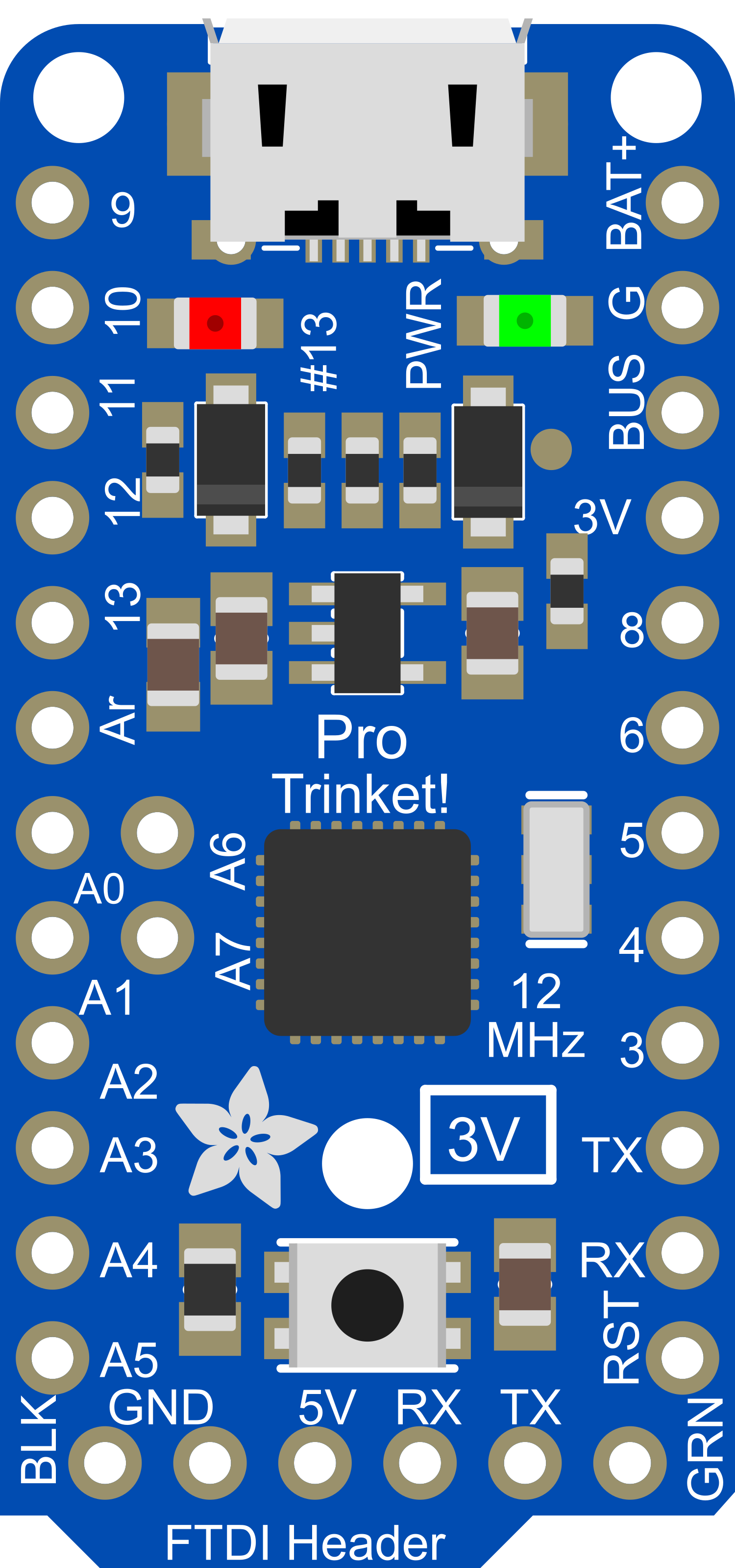
- Trinket and Gemma Platforms: Ultra-compact development boards designed to fit minimal budgets and tiny physical enclosures, proving that high-performance computing capabilities could be integrated into lightweight wearable items and miniature robotics.
Development of CircuitPython
Recognizing that traditional compiled languages like C and C++ present a steep barrier to entry for novice programmers, Fried and the Adafruit engineering team invested heavily in CircuitPython—an open-source fork of MicroPython designed to simplify physical computing. CircuitPython allows a microcontroller to present itself to any host computer as a standard USB flash drive. Users can open code files in any basic text editor, save their script, and see the code execute live on the hardware without installing specialized integrated development environments (IDEs), toolchains, or hardware compilers.
Core Technical Architectures Developed by Adafruit
To understand the scope of Fried’s engineering oversight, the following table summarizes the key platform architectures, underlying technical specifications, and primary applications established under her leadership:
| Ecosystem / Platform | Core Processing Architectures | Integrated Features & Interfaces | Primary Target Application |
|---|---|---|---|
| Feather Format | ARM Cortex-M0+/M4, ESP32, RP2040, RP2350 | Standardized 28-pin layout, built-in LiPo charging, modular "Wing" expansion headers | Rapid prototyping, wireless IoT nodes, modular embedded systems |
| Circuit Playground | Microchip SAMD21 (Express) / Nordic nRF52840 (Bluefruit) | 10x NeoPixels, motion/sound sensors, mini speaker, alligator-clip pads | STEM/STEAM education, beginner programming, physical computing |
| CircuitPython | Cross-platform software runtime (ARM, RISC-V, Xtensa) | USB Mass Storage hardware emulation, REPL execution, unified HAL libraries | Computer science education, rapid hardware scripting, sensor telemetry |
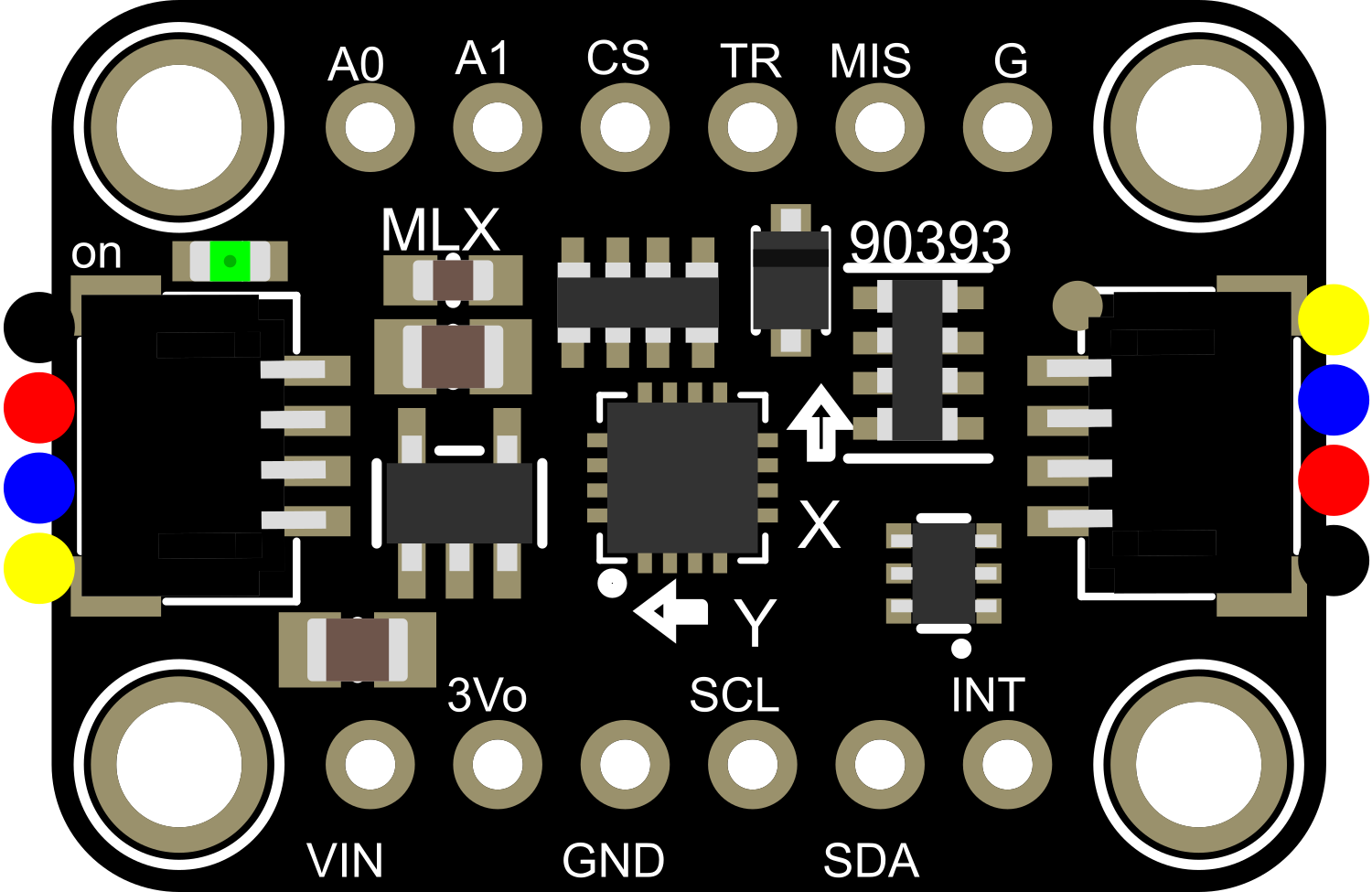
| STEMMA / STEMMA QT | Standardized 3-pin & 4-pin JST connectors (I2C / ADC / UART) | Plug-and-play solderless interconnects, cross-voltage level shifting | Rapid sensor prototyping, breadboard-less hardware assembly |
| Trinket / ItsyBitsy | ATtiny85, SAMD21, NRF52840 | Micro-form factor, direct USB native stacks, low power idle modes | Wearable electronics, miniaturized custom embedded projects |
Open-Source Advocacy and Manufacturing Ethics
Limor Fried’s business philosophy centers on the conviction that technological knowledge should be shared openly. Adafruit is a core contributor to the Open Source Hardware Association (OSHWA) standards, ensuring that board designs, schematic diagrams, printed circuit board (PCB) layouts, component bill-of-materials (BOM), and firmware libraries are published under permissive open-source licenses (such as Creative Commons Attribution-ShareAlike and the MIT License).
- Schematic & PCB Design File Release (CC-BY-SA)
- Permissive Software Driver Libraries (MIT)
- Open Educational Documentation (Adafruit Learning System)
This commitment extends to the Adafruit Learning System, a massive, freely accessible repository containing thousands of step-by-step tutorials, code samples, 3D printing design files, and engineering theory guides. Rather than relying on patents or proprietary hardware locking mechanisms to protect market share, Fried built Adafruit's commercial strength on brand trust, rapid manufacturing iteration, high product quality control, and superior customer technical documentation.
Additionally, Fried’s approach to manufacturing inside New York City challenged conventional industry wisdom regarding global technology supply chains. By running local pick-and-place lines, testing procedures, and logistics operations under one roof, Adafruit can design, prototype, manufacture, and release a new breakout board to market in a matter of days, providing rapid component support whenever semiconductor foundries release new microcontrollers or sensor packages.
Industry Recognition, Awards, and Cultural Impact
Limor Fried’s pioneer status in electronics design, manufacturing, and open-source Advocacy has earned her prominent global recognition across engineering, business, and mainstream media communities.
| Year | Recognition / Award |
|---|---|
| 2009 | EFF Pioneer Award |
| 2011 | Wired Magazine Cover (First Female) |
| 2012 | Entrepreneur Magazine "Entrepreneur of the Year" |
| 2013 | White House "Champion of Change" |
| 2018 | Forbes Top 50 Women in Tech |
- EFF Pioneer Award (2009): Awarded by the Electronic Frontier Foundation for her contributions to the open-source hardware community and personal digital freedom movement.
- Wired Magazine Cover (2011): Fried made history as the first female engineer featured on the cover of Wired magazine, symbolizing the rise of the modern Maker Movement.
- Entrepreneur of the Year (2012): Awarded by Entrepreneur magazine, highlighting the success of her fully bootstrapped, non-VC business model.
- White House Champion of Change (2013): Recognized by the U.S. Executive Office of the President for her work in advancing American manufacturing, entrepreneurship, and STEM education outreach.
- Induction into Technical Halls of Fame: Recognized across numerous listings, including Forbes’ Top 50 Women in Tech and inclusion in national engineering education advocacy programs.
Beyond accolades, Fried’s public persona—marked by her distinctive bright pink hair, precise technical breakdown videos, and weekly live engineering broadcasts such as Ask an Engineer and Show-and-Tell—helped break traditional stereotypes of what an industrial hardware engineer or tech CEO looks like. Her work paved the way for generations of women and young builders pursuing careers in science, technology, engineering, art, and mathematics (STEAM).
Key Takeaways for Engineers and Entrepreneurs
Analyzing the career and operating model of Limor Fried offers strategic lessons for hardware builders, software developers, and business executives alike:
- Documentation as a Core Differentiator: Adafruit proved that providing comprehensive, high-quality documentation, working code libraries, and accessible tutorials creates significantly more product value than selling isolated hardware chips alone.
- Bootstrapping Preserves Values: Avoiding venture funding allows an organization to prioritize long-term mission goals—such as open-source licensing compliance, local manufacturing, and quality control—without pressure for immediate hyper-scale or exit events.
- Standardization Accelerates Adoption: Creating modular hardware standards like the Feather form factor and plug-and-play connector standards like STEMMA QT creates network effects, allowing modular hardware ecosystems to grow rapidly.
- Lowering Barriers Increases Market Size: By creating tools like CircuitPython that strip away low-level compilation friction, Adafruit expanded the total addressable market of electronics hardware from specialized electrical engineers to educators, artists, web developers, and young students.
Frequently Asked Questions
Who is the founder of Adafruit Industries?
Adafruit Industries was founded by Limor Fried, an electrical engineer and MIT computer science graduate universally known in the engineering and maker communities by her online screen name "Ladyada."
Why is Limor Fried called "Ladyada"?
Limor Fried adopted the moniker "Ladyada" in honor of Lady Ada Lovelace (1815–1852), an English mathematician who worked on Charles Babbage’s mechanical computer, the Analytical Engine. Lovelace is widely considered the world's first computer programmer for writing the first machine algorithm.
Did Adafruit raise venture capital funding?
No. Limor Fried intentionally bootstrapped Adafruit Industries from its inception in her MIT dorm room. The company grew organically through retail revenue, component sales, and manufacturing efficiency without taking outside venture capital or private equity investments.
What is Adafruit's approach to open-source hardware?
Adafruit releases all of its in-house designed hardware boards, schematic diagrams, mechanical CAD layouts, firmware drivers, and educational software under open-source licenses (such as CC-BY-SA, MIT, and GPL). Anyone can inspect, modify, fork, or reproduce their hardware designs without paying license fees.
Where is Adafruit hardware manufactured?
Unlike many technology firms that outsource manufacturing overseas, Adafruit operates a dedicated industrial surface-mount technology (SMT) factory and distribution hub located in Lower Manhattan, New York City.
Recommended Next Steps
To explore the open-source hardware contributions of Limor Fried and Adafruit Industries, consider taking the following actions:
- Explore Open Hardware Files: Visit Adafruit's official GitHub repositories to examine production board schematics, CAD files, and CircuitPython driver sources to learn open-source hardware design standards.
- Build an Entry-Level CircuitPython Project: Acquire a Circuit Playground Express or Feather board to experiment with rapid physical computing without needing complex software compilers.
- Utilize the Adafruit Learning System: Search the collection of tutorials to learn basic electronic principles, surface-mount soldering techniques, micro-controller programming, or custom PCB layout practices.
Image Gallery