How Do Taxes Work Related to Life Insurance?
Life insurance is generally treated as a tax-advantaged financial instrument under the Internal Revenue Code. For most policyholders, the death benefit paid to beneficiaries is exempt from federal income tax. However, taxes may apply i...
Life insurance is generally treated as a tax-advantaged financial instrument under the Internal Revenue Code. For most policyholders, the death benefit paid to beneficiaries is exempt from federal income tax. However, taxes may apply if the policy is sold, if cash value withdrawals exceed the total premiums paid, or if the policy is classified as a Modified Endowment Contract (MEC).
Contents
Understanding the intersection of life insurance and taxation is critical for effective estate planning and wealth management. While the primary purpose of life insurance is to provide financial security for survivors, the "living benefits" of permanent policies—such as cash value accumulation—carry specific tax rules that can either enhance or diminish the policy's value depending on how they are managed. As of 2026, navigating these rules requires a clear distinction between income tax, estate tax, and the specialized testing used to determine a policy's tax status.
The Income Tax Status of Death Benefits
The most significant tax benefit of life insurance is the income tax-free nature of the death benefit. Under Internal Revenue Code (IRC) Section 101(a), amounts received under a life insurance contract, if paid by reason of the death of the insured, are generally not included in the beneficiary's gross income. This applies to term, whole, and universal life insurance policies alike.
However, there are specific nuances and exceptions to this rule that policyholders must monitor:
Interest on Delayed Payments
When a life insurance company pays out a death benefit, there is often a delay between the date of death and the actual disbursement of funds. The insurance company typically pays interest on the death benefit during this interim period. While the principal death benefit remains tax-free, the interest portion is considered taxable income to the beneficiary in the year it is received.
The Transfer-for-Value Rule
If a life insurance policy is sold or transferred to another party for "valuable consideration" (money or something of value), the death benefit may lose its tax-exempt status. In such cases, the beneficiary may owe income tax on the portion of the death benefit that exceeds the amount paid for the policy plus any subsequent premiums paid. There are exceptions to this rule, such as transfers to the insured person, a partner of the insured, or a corporation in which the insured is an officer or shareholder.
Taxation of Cash Value Growth
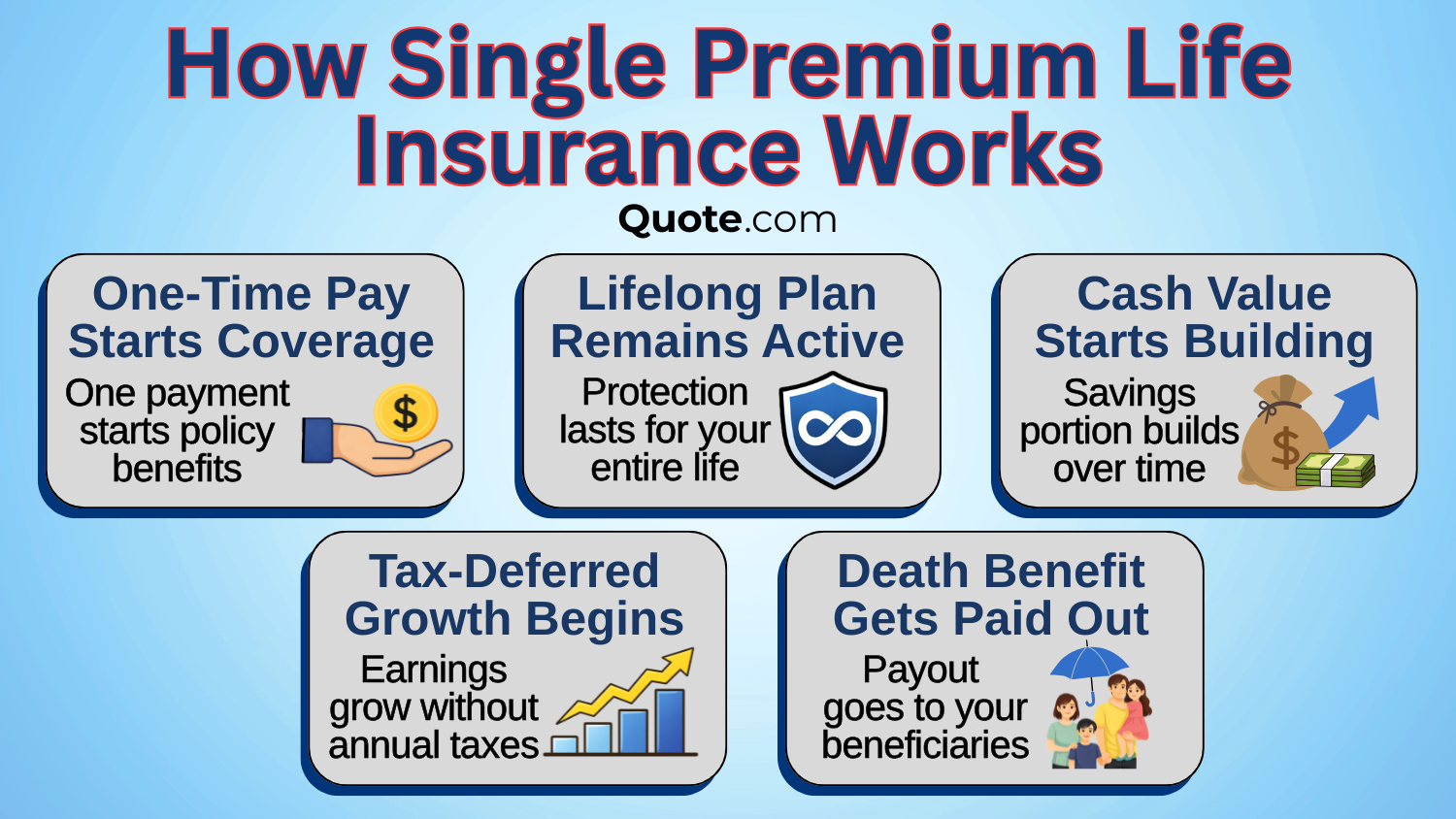
Permanent life insurance policies, including Whole Life and Universal Life, feature a cash value component that grows over time. One of the primary advantages of these policies is tax deferral.
As long as the cash value remains within the policy, the internal growth (interest or investment gains) is not subject to annual income tax. This allows the policy to benefit from compounding interest more efficiently than a taxable brokerage account. If the policy remains in force until the insured’s death, the entire cash value is essentially converted into the tax-free death benefit, and the accumulated gains are never taxed as income.
Taxation of Policy Dividends
Many "participating" whole life policies pay annual dividends. The IRS generally views these dividends not as investment income, but as a return of premium. Consequently, dividends are usually tax-free until the total amount of dividends received exceeds the total amount of premiums paid into the policy (the "cost basis"). If dividends are used to purchase "paid-up additions" (additional insurance coverage), they are not taxed at the time of the transaction.
Accessing Cash Value: Withdrawals vs. Policy Loans
When a policyholder decides to access the cash value of their policy during their lifetime, the tax consequences depend heavily on how the funds are retrieved.
Withdrawals (Partial Surrenders)
Withdrawals are generally taxed on a First-In, First-Out (FIFO) basis. This means the IRS considers the first dollars taken out to be your "cost basis" (the premiums you paid). These withdrawals are tax-free. Only after you have withdrawn an amount equal to your total premiums do the withdrawals become taxable as ordinary income.
Policy Loans
One of the most powerful features of permanent life insurance is the ability to take a loan against the cash value. Under current tax laws, policy loans are not considered taxable income, even if the loan amount exceeds the cost basis. The policy acts as collateral for the loan.
However, there is a significant risk: if the policy lapses or is surrendered while a loan is outstanding, any "loan forgiveness" is treated as a distribution. If the outstanding loan plus the remaining cash value exceeds the cost basis, the policyholder will face a potentially large tax bill for the "gain" in the policy, even though they did not receive a fresh cash disbursement at the time of the lapse.
Modified Endowment Contracts (MECs) and the 7-Pay Test
To prevent life insurance from being used purely as a tax-sheltered investment vehicle with no insurance risk, the IRS established the 7-Pay Test under the Technical and Miscellaneous Revenue Act of 1988 (TAMRA).
A policy becomes a Modified Endowment Contract (MEC) if the cumulative premiums paid during the first seven years exceed the amount needed to pay up the policy in seven years. Once a policy is classified as a MEC, it loses several key tax advantages:
- LIFO Taxation: Distributions (including withdrawals and even policy loans) are taxed on a "Last-In, First-Out" basis. This means the gains are taxed first as ordinary income before any tax-free basis can be accessed.
- Penalty Tax: If the policyholder is under age 59.5, any taxable portion of a MEC distribution is subject to a 10% federal penalty tax, similar to an early withdrawal from an IRA.
- Irreversibility: Once a policy becomes a MEC, it remains a MEC forever.
Federal Estate Tax Considerations
While death benefits are usually free from income tax, they are not necessarily free from estate tax. As of 2026, the federal estate tax exemption has undergone significant shifts due to the sunsetting of prior tax legislation.
If the insured individual holds "incidents of ownership" in the policy at the time of death, the full value of the death benefit is included in their gross estate for federal estate tax purposes. Incidents of ownership include the right to change beneficiaries, borrow against the cash value, or cancel the policy.
Irrevocable Life Insurance Trusts (ILIT)
To remove the death benefit from their taxable estate, high-net-worth individuals often use an Irrevocable Life Insurance Trust (ILIT). By having the trust own the policy, the insured individual relinquishes ownership. When they pass away, the death benefit is paid into the trust and can be used to provide liquidity for estate taxes or provide for heirs without being taxed as part of the estate itself. Note that a "three-year rule" applies: if a policyholder transfers an existing policy into an ILIT and dies within three years, the IRS still includes the proceeds in the estate.
Life Insurance Provided by Employers
Many employees receive group term life insurance as a benefit. Under IRS Section 79, the cost of the first $50,000 of employer-paid group term life insurance is tax-exempt for the employee.
If the coverage exceeds $50,000, the "imputed cost" of the excess coverage—determined by IRS "Table I" rates based on the employee's age—is considered taxable income. This amount is reported on the employee's W-2. If the employee pays for the additional coverage with after-tax dollars, the taxable amount is reduced by the employee's contributions.
Summary Table of Life Insurance Tax Treatment
| Scenario | Income Tax Status | Notes/Requirements |
|---|---|---|
| Death Benefit (Lump Sum) | Tax-Free | Generally exempt under IRC Section 101(a). |
| Death Benefit (Interest) | Taxable | Only the interest earned after death is taxable. |
| Cash Value Growth | Tax-Deferred | No tax due as long as the policy remains in force. |
| Policy Loans | Tax-Free | Taxable only if the policy lapses with an active loan. |
| Withdrawals (Standard) | Tax-Free up to Basis | FIFO treatment; amounts above basis are ordinary income. |
| Withdrawals (MEC) | Taxable First | LIFO treatment; 10% penalty if under age 59.5. |
| Policy Dividends | Tax-Free | Treated as a return of premium until basis is reached. |
| Surrendering a Policy | Taxable on Gains | Any value received above the cost basis is ordinary income. |
Frequently Asked Questions
Are life insurance premiums tax-deductible?
For individuals, life insurance premiums are almost never tax-deductible. The IRS views these as a personal expense. There are rare exceptions in certain business-owned life insurance structures or specific alimony arrangements established before 2019, but for the vast majority of taxpayers, premiums are paid with after-tax dollars.
What happens if I sell my life insurance policy?
Selling a policy to a third party (a life settlement) triggers a complex tax calculation. The proceeds up to the cost basis are tax-free. The amount from the cost basis up to the cash surrender value is taxed as ordinary income. Any remaining proceeds above the cash surrender value are generally taxed as capital gains.
Does the 10% MEC penalty apply if I am disabled?
Yes, there are a few exceptions to the 10% penalty for MEC distributions. Similar to retirement accounts, the penalty is typically waived if the distribution is made after the policyholder becomes disabled or if the distribution is part of a series of substantially equal periodic payments.
How do "Accelerated Death Benefits" work for taxes?
If a policyholder is diagnosed with a terminal illness (expected death within 24 months) or a chronic illness requiring long-term care, they may access their death benefit early. Under IRC Section 101(g), these accelerated benefits are generally received income-tax-free, provided they meet specific IRS requirements for qualified long-term care services.
Can I exchange one life insurance policy for another without paying taxes?
Yes, under Section 1035 of the Internal Revenue Code, you can perform a "1035 Exchange." This allows you to transfer the cash value of an existing policy into a new policy (or an annuity) without triggering a tax event on the gains. The cost basis from the old policy carries over to the new one.
Practical Recommendation
To maximize the tax advantages of life insurance, policyholders should prioritize maintaining the "life insurance" status of their contracts by avoiding MEC classification unless the policy is specifically designed for high-premium accumulation. If you have a significant estate that may exceed federal or state exemption limits in 2026, consult with an estate planning attorney regarding the use of an Irrevocable Life Insurance Trust (ILIT) to shield death benefits from estate taxes. Finally, always verify the "cost basis" of your policy with your insurance carrier before taking large withdrawals to ensure you do not inadvertently trigger an ordinary income tax liability.
Image Gallery