The Religion and Spiritual Journey of James Van Der Beek
James Van Der Beek, the acclaimed star of Dawson’s Creek and Varsity Blues, was raised in the Protestant tradition as a member of the Congregationalist church. While his roots are firmly planted in traditional Christianity, his current...
James Van Der Beek, the acclaimed star of Dawson’s Creek and Varsity Blues, was raised in the Protestant tradition as a member of the Congregationalist church. While his roots are firmly planted in traditional Christianity, his current spiritual identity is best described as a personalized, nature-centric spirituality that emphasizes a direct connection with a higher power, gratitude, and holistic living rather than strict adherence to a specific religious denomination.
Contents
The evolution of James Van Der Beek’s belief system is not a story of rejection, but one of expansion. For a public figure who rose to fame in the late 1990s, the journey from the structured pews of a Connecticut church to the expansive, soul-searching landscapes of a Texas ranch reflects a broader cultural shift toward "spiritual but not religious" identities. However, for Van Der Beek, this transition has been punctuated by significant life events—including a high-profile career, the raising of six children, and a well-publicized health battle—all of which have served as catalysts for his spiritual maturation.
Early Life and the Congregationalist Foundation
James Van Der Beek was born in Cheshire, Connecticut, into a family that valued traditional community structures. His father, a former professional baseball player, and his mother, a gymnastics studio owner, raised him within the United Church of Christ (UCC), specifically the Congregationalist tradition. This particular branch of Protestantism is known for its emphasis on individual conscience and the autonomy of the local church body, which may have planted the early seeds of his later desire for a more autonomous spiritual life.
During his youth, the church was a primary social and moral anchor. The Congregationalist upbringing typically involves a focus on social justice, community service, and a relatively liberal interpretation of scripture. For Van Der Beek, this wasn't just about Sunday services; it was about the ethical framework that would eventually guide him through the turbulent waters of teen stardom. Unlike some celebrities who experience a sharp break from their childhood faith, Van Der Beek has often spoken of his early religious life with respect, viewing it as the baseline from which he began his broader exploration of the divine.
The Hollywood Crucible and Spiritual Search
When Van Der Beek became a household name in 1998 with the premiere of Dawson’s Creek, he was thrust into a world that often prioritizes image over substance. This period of his life marked the beginning of a more internal spiritual inquiry. In various interviews throughout the 2000s and 2010s, he alluded to the fact that the trappings of fame did not provide the "peace" that his upbringing had promised.
During his time in Los Angeles, Van Der Beek participated in the typical "spiritual buffet" that the city offers, exploring meditation, mindfulness, and various philosophical texts. However, he never aligned himself with the high-profile religious organizations often associated with Hollywood, such as Scientology or Kabbalah. Instead, he remained a seeker, looking for a way to reconcile his professional ambitions with a growing need for "soul-level" authenticity. This search eventually led him toward a more pantheistic view—finding the divine in the interconnectedness of all things rather than in a specific building or liturgy.
The Great Relocation: Texas as a Spiritual Sanctuary
In 2020, James Van Der Beek and his wife, Kimberly, made the pivotal decision to move their family from Los Angeles to a ranch outside of Austin, Texas. While many observers viewed this as a political or lifestyle choice, Van Der Beek framed it in deeply spiritual terms. He described the move as a "drastic departure" necessary to realign his spirit with the earth and his family.
Living on a ranch allowed Van Der Beek to practice a form of "creation-based" spirituality. He has frequently documented his experiences with the land, describing the act of tending to animals and observing the cycles of nature as a form of prayer. In this context, his "religion" became the daily practice of presence. By removing the noise of the entertainment industry, he sought a direct, unmediated relationship with what he often calls "The Universe" or "God." This period solidified his shift away from the "pew-sitting" Christianity of his youth toward an experiential faith that values silence, labor, and the natural world.
Facing Mortality: Faith in the Wake of a Cancer Diagnosis
In late 2024, James Van Der Beek publicly shared that he had been diagnosed with colorectal cancer. By 2026, his journey through treatment and recovery has become a central pillar of his public testimony regarding faith and resilience. Facing a life-threatening illness often forces a definitive accounting of one's beliefs, and for Van Der Beek, this challenge appeared to reinforce his spiritual foundations.
He has spoken about the "radical acceptance" required to navigate such a diagnosis. Rather than asking "Why me?" in a way that suggests a capricious deity, he has leaned into the idea that life’s hardships are part of a larger, albeit mysterious, spiritual curriculum. His approach to healing has been a blend of modern medicine and spiritual discipline, including deep meditation and prayer. This period of his life has showcased a "faith in action" that transcends theological labels, focusing instead on the power of the human spirit to find meaning in suffering.
Core Beliefs and Spiritual Practices
To understand "the religion of James Van Der Beek," one must look at the practices he advocates for in his daily life. He does not preach from a pulpit, but his social media presence and public speaking engagements suggest a consistent set of "tenets" that he follows.
| Aspect of Belief | Description | Traditional Influence |
|---|---|---|
| Concept of God | Viewed as an all-encompassing energy or "Divine Presence" found in nature and human connection. | Christian Monotheism / Panentheism |
| Prayer Style | Moves between traditional petitionary prayer and meditative "listening" or mindfulness. | Contemplative Christianity |
| Scripture/Text | Draws wisdom from the Bible, but also from poetry, philosophy, and ecological studies. | Universalism |
| Community | Centered on the "domestic church"—the family unit and the local community of neighbors. | Congregationalist Autonomy |
| Afterlife | Focuses on the continuity of the soul and the impact one leaves on the living. | Spiritualism |
Is James Van Der Beek Still Christian?
The question of whether James Van Der Beek is "still a Christian" depends heavily on how one defines the term. If Christianity is defined by regular attendance at a traditional church and the affirmation of specific historical creeds (like the Nicene Creed), he may fall outside those boundaries. However, if Christianity is viewed as a life lived in pursuit of the values of grace, forgiveness, and the "fruits of the spirit," his life reflects many of these core elements.
Van Der Beek often uses Christian terminology—referring to "blessings," "God," and "grace"—but he does so in a way that feels inclusive of other spiritual traditions. He appears to view the Jesus of the New Testament as a profound spiritual guide whose message of love is essential, even if he doesn't subscribe to the more dogmatic or exclusive claims of modern evangelicalism. This "cultural and philosophical Christianity" is common among many who were raised in the faith but have moved toward a broader spiritual horizon.
Frequently Asked Questions
Does James Van Der Beek attend a specific church in Texas?
While he has not publicly identified a single local congregation as his home church, he has participated in various community-based spiritual gatherings. His focus remains more on "home-centered" spirituality and finding the sacred in his daily life on the ranch.
Has James Van Der Beek ever been associated with Scientology?
No. Despite the prevalence of Scientology in Hollywood, James Van Der Beek has never been a member. He has maintained a more independent spiritual path, often avoiding the large-scale religious organizations that attract many of his peers.
How has his cancer diagnosis changed his religious views?
According to his public statements leading into 2026, the diagnosis deepened his sense of "presence" and "gratitude." Rather than causing a crisis of faith, it seems to have accelerated his shift toward a more mystical understanding of life, where the focus is on the quality of the soul rather than the longevity of the body.
What are James Van Der Beek's views on nature and spirituality?
He views nature as a primary "scripture." For Van Der Beek, the outdoors is where one can best observe the laws of the divine. He often speaks about the "intelligence of the earth" and believes that humans find spiritual health by aligning themselves with natural rhythms.
How does he raise his children regarding religion?
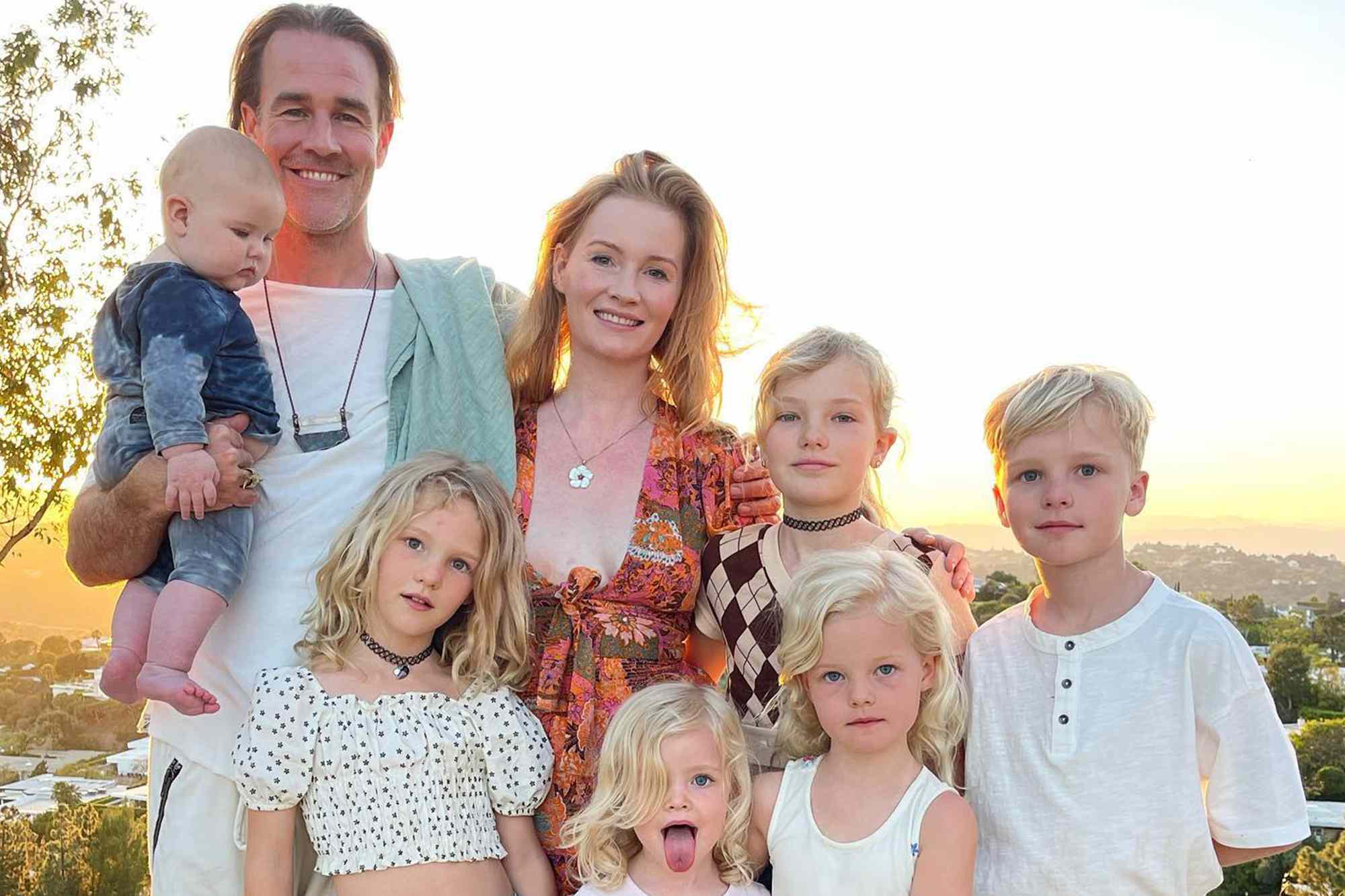
Van Der Beek and his wife, Kimberly, appear to raise their six children with an emphasis on spiritual curiosity and moral integrity rather than strict religious indoctrination. They focus on teaching kindness, connection to nature, and the importance of listening to one's own "inner voice" as a source of divine guidance.
Final Perspective on His Spiritual Path
The religion of James Van Der Beek is a mosaic of his New England Protestant roots, his years of Hollywood introspection, and his eventual grounding in the soil of Texas. It is a belief system characterized by flexibility, resilience, and a deep reverence for the natural world. For those looking to James Van Der Beek for a spiritual example, the lesson is not to find the "right" denomination, but to engage in the "right" practices: being present with family, respecting the earth, and maintaining a heart of gratitude even in the face of profound personal challenges.
If you are navigating your own spiritual transition or facing a health crisis, Van Der Beek’s journey suggests that peace is found not in having all the answers, but in the willingness to remain a student of life’s unfolding mysteries. His life serves as a modern blueprint for integrating traditional values with an evolving, personal understanding of the divine.
Image Gallery