The People Behind Samsung: From Founding Visionaries to Global Leaders
Samsung’s global dominance is driven by the Lee family, specifically Executive Chairman Lee Jae-yong, and a professional management team led by CEOs such as Han Jong-hee. This "chaebol" structure combines hereditary vision with profess...
Samsung’s global dominance is driven by the Lee family, specifically Executive Chairman Lee Jae-yong, and a professional management team led by CEOs such as Han Jong-hee. This "chaebol" structure combines hereditary vision with professional expertise to manage over 260,000 employees across electronics, biopharmaceuticals, and heavy industries.
Contents
To understand the people behind Samsung is to understand the evolution of South Korea’s economy. Since its founding in 1938, the company has transitioned from a small trading firm to a multi-industry titan. This transformation was not accidental; it was the result of high-stakes decisions made by three generations of the Lee family and a cadre of specialized executives who navigated technological shifts from vacuum tubes to 2nm semiconductors and generative AI.
The Architect of the Foundation: Lee Byung-chul
The story of Samsung begins with Lee Byung-chul, who established Samsung Sanghoe in Daegu in 1938. Initially, the company focused on exporting dried fish and noodles. However, Lee Byung-chul was a visionary who believed in "industrial patriotism"—the idea that business should serve the nation’s growth.
After the Korean War, Lee expanded into sugar, textiles, and eventually electronics in 1969. His philosophy of "talent first" remains a core pillar of the company today. He invested heavily in education and training, believing that the right people could overcome a lack of natural resources. By the time of his death in 1987, he had laid the groundwork for a diversified conglomerate, but it was his son who would turn it into a household name globally.
The Global Transformer: Lee Kun-hee
If Lee Byung-chul built the foundation, his third son, Lee Kun-hee, built the empire. Taking over in 1987, Lee Kun-hee is most famous for his 1993 "New Management" declaration in Frankfurt. Faced with reports that Samsung products were gathering dust in Western stores due to poor quality, he famously told his executives to "change everything except your wife and children."
Lee Kun-hee’s leadership was characterized by:
- The Quality Over Quantity Pivot: He once burned $50 million worth of defective phones in front of employees to demonstrate that subpar quality would no longer be tolerated.
- Anticipating Trends: He pushed the company into semiconductors and LCD panels long before they were guaranteed successes.
- Strategic Hires: He moved away from purely seniority-based promotions, favoring meritocracy and bringing in international talent to challenge the insular corporate culture.
His tenure saw Samsung Electronics grow from a regional manufacturer of low-end television sets to the world’s largest producer of smartphones, memory chips, and displays.
Modern Leadership in 2026: Lee Jae-yong (Jay Y. Lee)
As of 2026, Lee Jae-yong (known internationally as Jay Y. Lee) serves as the Executive Chairman of Samsung Electronics. Having officially taken the mantle in late 2022, his leadership style is markedly different from his father’s. While Lee Kun-hee was a charismatic, "emperor-style" leader, Jay Y. Lee is often described as more soft-spoken, analytical, and collaborative.
His current focus is on navigating the "Triple Threat": geopolitical tensions affecting chip supply chains, the rise of specialized AI hardware, and the transition to sustainable energy. Under his watch, Samsung has committed hundreds of billions of dollars to "Future Technology," including:
- GAA (Gate-All-Around) Architecture: Leading the transition in foundry services to compete with TSMC.
- Biopharmaceuticals: Expanding Samsung Biologics into one of the world's largest contract manufacturers.
- AI Integration: Embedding generative AI across the entire Galaxy ecosystem and home appliance lines.
Jay Y. Lee has also worked to reform Samsung’s corporate culture, moving toward a more horizontal organizational structure and addressing long-standing labor and succession criticisms through the Samsung Compliance Committee.
The Professional Management Layer: CEOs and Divisional Heads
While the Lee family provides the long-term vision, the day-to-day operations of Samsung Electronics are handled by professional CEOs. This dual-track system ensures that while the owner-family focuses on decade-long investment cycles, the professional managers focus on quarterly performance and technical excellence.
Han Jong-hee (JH Han)
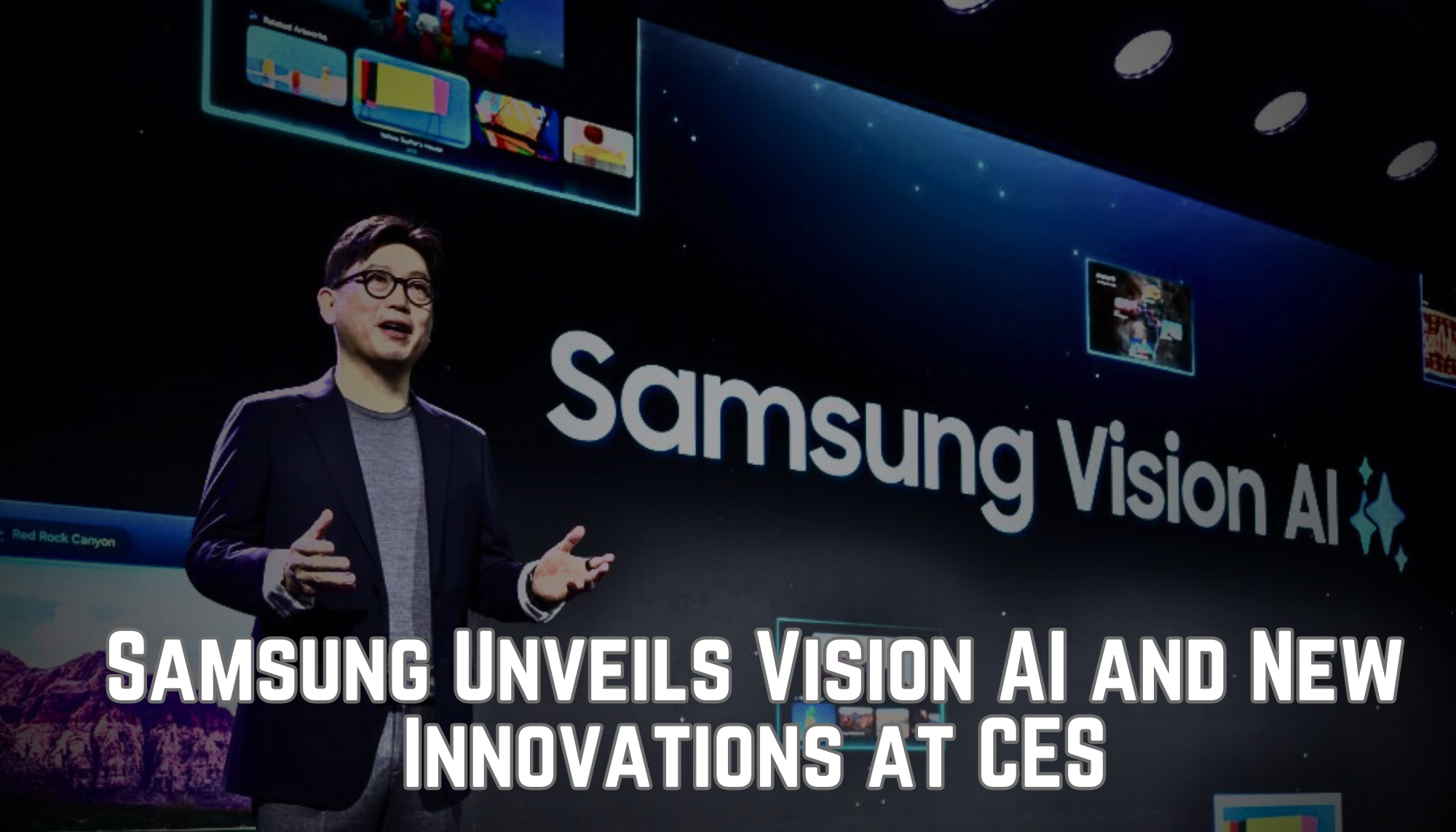
Han Jong-hee serves as the Vice Chairman and CEO of the DX (Device eXperience) Division. This division includes smartphones, televisions, and home appliances. Han is a veteran of the visual display business and is credited with maintaining Samsung’s #1 spot in the global TV market for nearly two decades. His current mandate is "Multi-Device Experience," ensuring that a Samsung refrigerator, phone, and watch work together seamlessly.
Jun Young-hyun
In a strategic shift to reclaim dominance in the semiconductor space, Jun Young-hyun was appointed to lead the DS (Device Solutions) Division. This division is the company's "cash cow," responsible for memory chips, foundry services, and system LSI. Jun is a seasoned engineer who previously led Samsung SDI (the battery division) and is tasked with catching up in the High Bandwidth Memory (HBM) market, which is critical for AI servers.
Key Figures in Samsung’s Evolution
| Individual | Primary Role | Era | Key Contribution |
|---|---|---|---|
| Lee Byung-chul | Founder | 1938–1987 | Established the "Talent First" philosophy and entered electronics. |
| Lee Kun-hee | Chairman | 1987–2020 | Led the "New Management" revolution; focused on quality and globalization. |
| Lee Jae-yong | Executive Chairman | 2022–Present | Steering the company toward AI, 6G, and advanced biotechnology. |
| Han Jong-hee | CEO, DX Division | 2021–Present | Integrating the mobile and consumer electronics ecosystems. |
| Kyung Kye-hyun | Former DS CEO | 2021–2024 | Modernized the semiconductor workplace culture; pivoted to AI chips. |
| Lee Bo-ra | Chief Sustainability Officer | 2023–Present | Directing Samsung’s transition to 100% renewable energy by 2050. |
The Global Workforce: The "Samsung Man"
Beyond the boardroom, the people behind Samsung include over 267,000 employees worldwide. The term "Samsung Man" (or Samsung-in) once referred to a specific type of disciplined, highly loyal employee in South Korea. Today, that demographic is far more diverse.
Samsung operates R&D centers in over 30 countries, including the United States, India, Israel, and the UK. These centers are home to thousands of software engineers and researchers who develop everything from 6G telecommunications standards to advanced camera sensors. The company's ability to localize its leadership—placing regional experts in charge of markets like North America and Europe—has been vital to its ability to outcompete local rivals.
Governance and the Role of the Board
In 2026, the Samsung Board of Directors plays a more active role in governance than in previous decades. Following several high-profile legal challenges involving the founding family, the board has increased the number of independent directors to ensure transparency.
The board is responsible for:
- Capital Allocation: Deciding on multi-billion dollar mergers and acquisitions (M&A).
- Risk Management: Navigating the complex regulatory environments of the EU, China, and the US.
- Sustainability Oversight: Monitoring the company's progress toward carbon neutrality and ethical sourcing of minerals for batteries.
This shift toward institutional governance is intended to mitigate the "Key Man Risk" associated with the founding family while maintaining the stability that a long-term owner-leader provides.
FAQ: Understanding the Leadership and Ownership
Does the Lee family own 100% of Samsung?
No. The Lee family owns a minority of the total shares directly but maintains control through a complex web of cross-shareholdings involving Samsung Life Insurance and Samsung C&T. Most of the company's shares are held by institutional investors, including the National Pension Service of Korea and various global mutual funds.
Who is the "Crown Prince" of Samsung?
The term "Crown Prince" was frequently used by the media to refer to Lee Jae-yong before he became Chairman. Since his ascension to the role of Executive Chairman, the term has largely been retired, though he remains the central figure of the third-generation leadership.
What is the role of the Samsung Global Strategy Group (GSG)?
The GSG is an internal consulting arm that recruits top MBA talent from around the world. These individuals are the "future leaders" behind Samsung, tasked with solving cross-divisional problems and bringing fresh, international perspectives to the South Korean headquarters.
How does the leadership handle competition with Apple?
The leadership views Apple as both a rival and a customer. While the DX Division competes directly with the iPhone, the DS Division often supplies the displays and memory used in those very same devices. This "co-opetition" is managed by keeping the divisions strictly separated to prevent intellectual property leaks.
Has the leadership changed due to the AI boom?
Yes. The leadership has undergone a "technical pivot," placing engineers like Jun Young-hyun in top spots to ensure that Samsung does not fall behind in the AI hardware race. The focus has shifted from high-volume manufacturing to high-value, specialized AI silicon.
Practical Recommendation for Stakeholders
If you are an investor, partner, or job seeker looking to engage with the people behind Samsung, focus on the DS (Device Solutions) and DX (Device eXperience) divisional leadership rather than just the central headquarters. Because Samsung operates with significant divisional autonomy, the "people" who matter most to a specific project or investment are often the Executive Vice Presidents (EVPs) of specific business units, such as the Memory Business or the Mobile eXperience (MX) Business.
For the most current organizational charts and leadership biographies, consult the Samsung Electronics Investor Relations portal, which provides audited details on board composition and executive roles.
Image Gallery