If I Have Term Life Insurance, Why Am I Getting a 1099-R?
Receiving Form 1099-R when you carry term life insurance usually means a taxable event, policy adjustment, or distribution occurred during the tax year. While pure term life death benefits are generally tax-free, receiving this form in...
Receiving Form 1099-R when you carry term life insurance usually means a taxable event, policy adjustment, or distribution occurred during the tax year. While pure term life death benefits are generally tax-free, receiving this form indicates specific scenarios: interest paid on delayed payouts, policy surrender with a return-of-premium rider, a term policy held inside a qualified retirement plan, a life settlement, or an administrative tax-reporting error.
Contents
What Is IRS Form 1099-R?
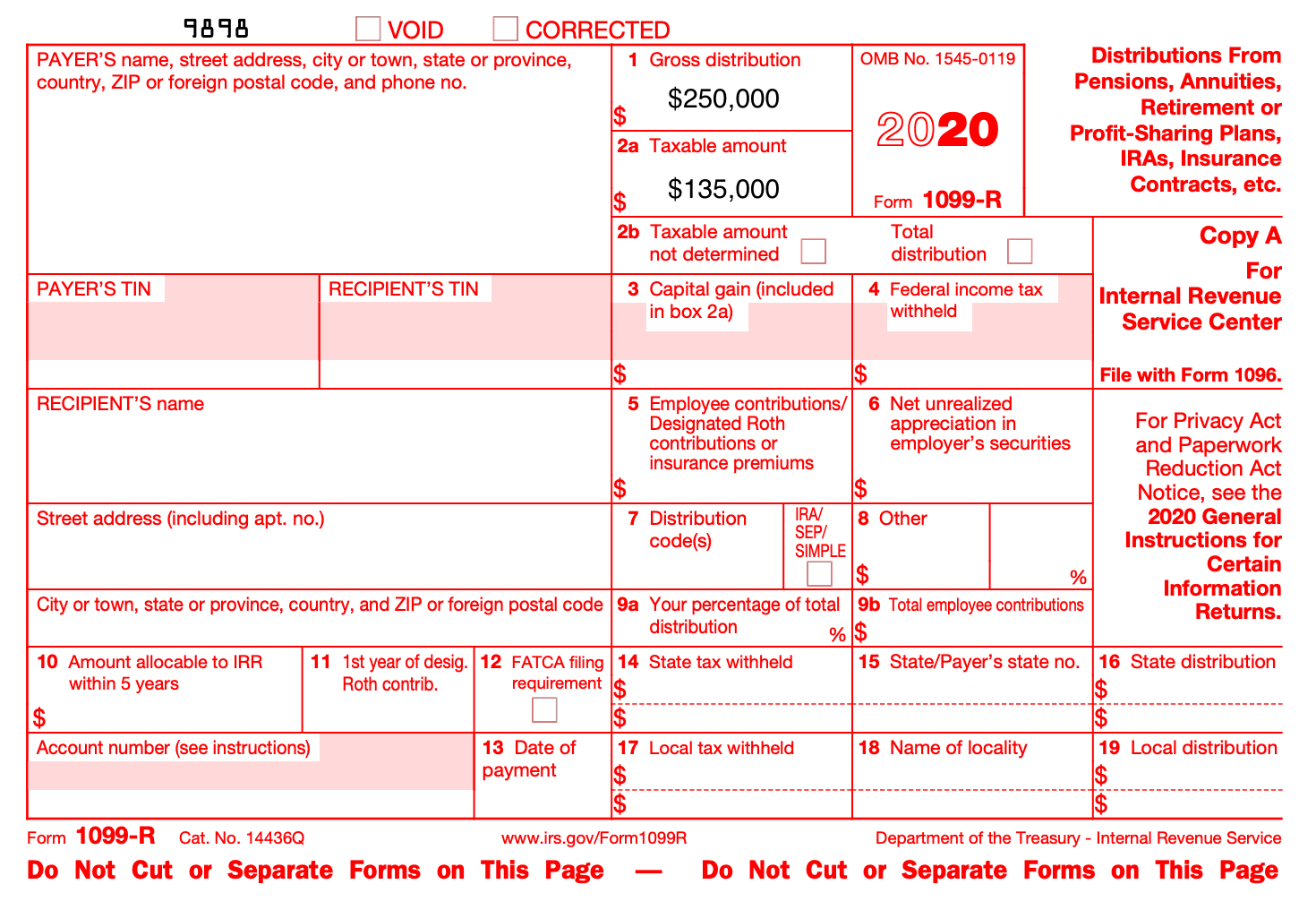
IRS Form 1099-R (Distributions From Pensions, Annuities, Retirement or Profit-Sharing Plans, IRAs, Insurance Contracts, etc.) is the official tax document used by financial institutions and insurance carriers to report payout distributions to policyholders and the Internal Revenue Service.
Under normal circumstances, purchasing a standard term life insurance policy does not generate tax documents. You pay monthly or annual premiums using after-tax dollars, and as long as the policy remains active without cash transactions, no taxable events occur. Term policies differ from permanent policies (such as whole life or universal life) because standard term insurance does not build cash value over time.
However, insurance carriers must issue Form 1099-R whenever money flows from an insurance contract to a policyholder or beneficiary in a taxable or reportable capacity. The Internal Revenue Service (IRS) mandates this reporting to verify whether any portion of the payout exceeds your investment in the contract or qualifies as taxable income.
Disclaimer: This article provides educational information based on U.S. federal tax regulations as of 2026. Tax laws vary by individual situation and state jurisdiction. Always consult a Certified Public Accountant (CPA) or qualified tax professional regarding your specific tax reporting requirements.
6 Main Reasons You Received a 1099-R for Term Life Insurance
Although pure term life insurance rarely generates taxable income, several operational, contractual, and structural situations trigger a Form 1099-R. Understanding these six scenarios will clarify why your insurance company issued the document.
Why Did You Receive Form 1099-R?
- Delayed Payout Interest
- Return of Premium Rider
- Qualified Plan Policy
- Life Settlement Sale
- Carrier Error
1. Interest Earned on a Delayed Death Benefit Payout
The death benefit payout from a term life insurance policy is generally exempt from federal gross income under Internal Revenue Code (IRC) Section 101(a). However, any interest accumulated on that death benefit between the date of the insured’s death and the date the claim is paid is fully taxable.
If an insurer takes several months to process a death claim, state laws usually require them to pay interest on the held funds. While insurers frequently report interest income on Form 1099-INT, some carriers report settlement options or interest payments arising directly from an insurance contract using Form 1099-R.
- Taxable Portion: Only the interest earned is taxable, not the core death benefit.
- Form Details: Box 1 shows the gross distribution, while Box 2a reflects the taxable interest amount.
2. Return of Premium (ROP) Rider Payout or Surrender
Return of Premium (ROP) term life insurance is a specialized policy variant. If you outlive the term (e.g., 20 or 30 years), the insurer refunds all premiums paid over the life of the policy.
- Principal Refund: The return of your original premiums is considered a return of capital (cost basis) and is non-taxable.
- Rider Interest or Excess Returns: If the policy surrendered yielded additional interest, policy dividends, or cash returns beyond total premiums paid, that surplus is taxable income.
- Early Cancellation: Surrendering an ROP term policy early may trigger a partial payout. If the payout exceeds your total cumulative paid premiums, the insurance company will issue a Form 1099-R detailing the taxable gain.
3. The Term Policy Was Held Inside a Qualified Retirement Plan
Employers sometimes offer term life insurance as part of a qualified retirement plan, such as a 401(k), profit-sharing plan, or defined benefit pension plan. Alternatively, small business owners may hold life insurance within qualified plan structures governed by IRC Section 412(e)(3).
When term life insurance is held inside a qualified plan:
- Premiums paid by the plan may have used pre-tax funds.
- Distributions, transfers, or roll-ins/roll-outs of the policy out of the plan into personal ownership create a reportable distribution.
- If the plan paid out benefits or distributed the policy contract to you during the tax year, the plan trustee must file Form 1099-R to document the taxable retirement distribution.
4. Sale of the Policy via a Life Settlement
If you sold your term life insurance policy to a third-party investor (a transaction known as a life settlement or reportable policy sale), the financial transaction creates tax obligations.
Under IRS reporting rules updated by IRC Section 6050Y, entities purchasing life insurance policies and carriers executing policy transfers must report these transactions.
- Cost Basis: The total premiums you paid into the policy serve as your cost basis.
- Taxable Gain: Proceeds received up to your cost basis are tax-free. Proceeds exceeding your cost basis up to the cash surrender value are taxed as ordinary income. Any remaining proceeds are taxed as capital gains.
- Although buyers often issue Form 1099-LS, issuing insurance carriers frequently provide Form 1099-R to record the change in ownership and reportable policy values.
5. Accelerated Death Benefit (ADB) Payouts Exceeding IRS Limits
Many modern term life insurance policies include Accelerated Death Benefit riders. These allow policyholders diagnosed with a terminal illness or qualifying chronic condition to access a portion of their death benefit while still living.
Under IRC Section 101(g), accelerated death benefits are generally excluded from gross income. However, strict statutory exceptions apply:
- Per Diem Thresholds: For chronic illness claims, the IRS establishes annual per-diem exclusion limits. Payments received above the IRS cap without qualifying long-term care expenses become taxable.
- Form 1099-LTC vs. 1099-R: While chronic care payouts are usually filed on Form 1099-LTC, certain lump-sum accelerated death distributions executed under specific contractual provisions are reported on Form 1099-R.
6. Misclassification or Insurer Administrative Error
Insurance companies process thousands of policy conversions, surrenders, and administrative changes annually. A primary reason policyholders receive an unexpected Form 1099-R is simple clerical error by the carrier:
- Misclassified Policy Type: The carrier’s system may have miscoded your term policy as a permanent (whole or universal) cash-value policy during an internal migration.
- Policy Conversion Errors: Converting a term life policy into a permanent policy is a standard tax-free event. However, if the carrier processed the conversion incorrectly as a surrender followed by a new purchase, their automated system might incorrectly issue a Form 1099-R.
Deciphering Key Boxes on Form 1099-R
To understand why you received the form and how much tax you owe, examine the key boxes on the document. Detailed guidelines can be found in the official IRS Instructions for Form 1099-R.
| 1 Gross distribution | 2a Taxable amount |
|---|---|
| $ | $ |
| 2b Taxable amount not determined [ ] | Total distribution [ ] |
| 4 Federal income tax withheld $ | 7 Distribution code(s) IRA/SEP/SIMPLE [ ] |
Box 1: Gross Distribution
This lists the total cash or fair market value paid out during the tax year. It includes both tax-free capital returns and taxable amounts.
Box 2a: Taxable Amount
This displays the exact portion of the distribution subject to federal income tax.
- If Box 2a shows $0.00, the event was reportable to the IRS, but you owe no income tax on it.
- If Box 2a shows a dollar figure, that amount must be included on your IRS Form 1040 as taxable income.
Box 2b: Taxable Amount Not Determined
If this box is checked, the insurance carrier did not have sufficient data (such as your complete cost basis) to calculate the exact taxable portion. You or your CPA must determine the taxable amount manually.
Box 4: Federal Income Tax Withheld
Shows any federal tax withheld by the insurance carrier at the time of distribution. Ensure you claim this credit on your tax return so you do not double-pay.
Box 7: Distribution Codes
Box 7 contains numeric or alpha codes that define the nature of the transaction to the IRS. Common codes related to life insurance include:
| Code | IRS Definition | Life Insurance Context |
|---|---|---|
| 1 | Early distribution, no known exception | Surrender of a policy prior to age 59½ with taxable gain. |
| 4 | Death benefit distribution | Payout to a beneficiary, often containing taxable interest. |
| 7 | Normal distribution | Standard payout or surrender after age 59½. |
| D | Annuity payments from nonqualified life insurance | Settlement options converting life insurance proceeds into structured payouts. |
| W | Charges or payments for qualified long-term care insurance contracts | Accelerated benefits applied toward long-term care riders. |
Term Life Distribution Scenarios & Taxability Summary
The table below summarizes common term life insurance scenarios, the forms involved, tax status, and necessary actions.
| Scenario | Primary Form Issued | Taxable Portion | Action Required on Tax Return |
|---|---|---|---|
| Standard Term Death Benefit | None (or 1099-INT) | Non-Taxable | Exclude from gross income; no reporting required for lump sum core benefit. |
| Delayed Death Benefit Interest | 1099-INT or 1099-R | Interest Only | Report interest amount on Form 1040 as taxable income. |
| Return of Premium (Outlived Term) | 1099-R (if gain exists) | Gains over cost basis | Non-taxable up to total premiums paid. Report excess gain as ordinary income. |
| Term Policy in 401(k) / Pension | 1099-R | Varies (often 100%) | Report as retirement distribution; roll over if eligible to preserve tax deferral. |
| Life Settlement (Sale of Policy) | 1099-LS / 1099-R | Gains over cost basis | Calculate cost basis carefully; report ordinary income and capital gains appropriately. |
| Carrier Administrative Error | 1099-R (Incorrect) | $0 (Upon correction) | Contact insurer to request a Form 1099-R Corrected (Form 1099-R-C). |
Action Plan: What to Do When You Receive Form 1099-R
If Form 1099-R arrives in your mailbox for a term life policy, follow these steps to handle the tax filing properly.
- Step 1: Inspect Boxes 1, 2a, and 7 on Form 1099-R
- Step 2: Cross-Reference Policy Records & Premium Payments
- Step 3: Determine Taxability (Compare Gross Dist. vs Cost Basis)
- Step 4: Contact Insurance Carrier (If Discrepancies Exist)
- Step 5: File IRS Form 1040 with Accurate Taxable Amounts
Step 1: Inspect the Form
Check Box 1 (Gross Distribution), Box 2a (Taxable Amount), and Box 7 (Distribution Code). Verify that your Social Security Number and legal name match your tax records.
Step 2: Compare Against Policy Statements
Pull your policy documents for the tax year in question. Match the distribution amount against your bank deposits or policy transaction receipts:
- Did you surrender an ROP policy?
- Did you receive a delayed claim payout as a beneficiary?
- Did your employer transfer a group term policy out of a pension structure?
Step 3: Calculate Your Cost Basis
Your cost basis equals the total premiums paid out of pocket minus any prior tax-free distributions or policy loans.
$$\text{Taxable Gain} = \text{Gross Proceeds Received} - \text{Total Cumulative Premiums Paid}$$
If gross proceeds are less than or equal to total paid premiums, no taxable gain exists, even if Box 1 reflects a large distribution figure.
Step 4: Address Errors with the Insurance Carrier
If you suspect the 1099-R was issued in error (e.g., a simple tax-free conversion from term to whole life was miscoded as a surrender), contact the carrier's tax reporting department immediately.
Request a formal review of the transaction. If the carrier confirms an error, they must issue an official Corrected Form 1099-R to both you and the IRS. Filing your tax return with uncorrected 1099-R data can trigger automated IRS compliance notices (such as Form CP2000).
Step 5: Report Correctly on IRS Form 1040
When completing your federal tax return:
- Enter the gross distribution from Box 1 on IRS Form 1040.
- Enter the taxable amount from Box 2a on the corresponding line for taxable pensions/annuities.
- If Box 2a is blank or incorrect, report the verified taxable gain calculated with your tax professional and attach an explanatory statement if required by tax preparation software. For details on taxable vs. non-taxable distributions, consult IRS Publication 525.
Frequently Asked Questions
Is the death benefit from a term life insurance policy taxable?
No. Under IRC Section 101(a), death benefit proceeds paid to a designated beneficiary are generally free from federal income tax. However, any interest accumulated on the proceeds after the insured's death before final disbursement is taxable.
Why did I get a 1099-R instead of a 1099-INT for death benefit interest?
While interest income is usually reported on Form 1099-INT, some insurance carriers issue Form 1099-R if the death benefit was held within an insurance annuity contract or settled through structured installment options rather than paid out as a lump-sum cash check.
Will converting my term life policy to a whole life policy cause a 1099-R?
A standard term-to-permanent conversion executed under policy conversion rights is a non-taxable event. You should not receive a taxable 1099-R. If you receive one showing a taxable amount in Box 2a, the carrier likely miscoded the transaction as a policy surrender. Contact the insurer to request a corrected tax form.
Do I get a 1099-R for employer-provided group term life insurance?
Standard employer-provided group term life insurance coverage over $50,000 creates taxable imputed income. However, this imputed income is reported on your annual Form W-2 (Box 12, Code C), not on Form 1099-R. You would only receive a 1099-R if the group policy was held inside a qualified pension or profit-sharing plan and distributed directly to you.
What happens if I ignore Form 1099-R on my tax return?
The issuing insurance company sends a copy of Form 1099-R directly to the IRS. The IRS automated matching system compares the carrier's filing against your Form 1040. Omitting a 1099-R showing taxable income will likely trigger an IRS CP2000 notice, resulting in underreported tax assessments, interest, and potential accuracy-related penalties.
Summary & Recommended Next Actions
Receiving a Form 1099-R for a term life insurance policy is uncommon, but it usually stems from identifiable financial transactions: interest earned on claim distributions, Return of Premium rider payouts, life settlements, policies held within qualified retirement plans, or carrier processing errors.
Your Recommended Next Actions:
- Do not ignore the form. The IRS has received a copy of the same document.
- Review Box 2a and Box 7 to determine whether the carrier identified the funds as taxable income.
- Gather historical policy records to verify your total premium cost basis and confirm transaction accuracy.
- Contact the insurer's customer service department if you converted your policy without receiving funds or suspect an administrative reporting error.
- Work with a CPA or enrolled agent to ensure distributions are correctly entered on Form 1040 while claiming all tax-free basis exclusions available to you under the law.
Image Gallery