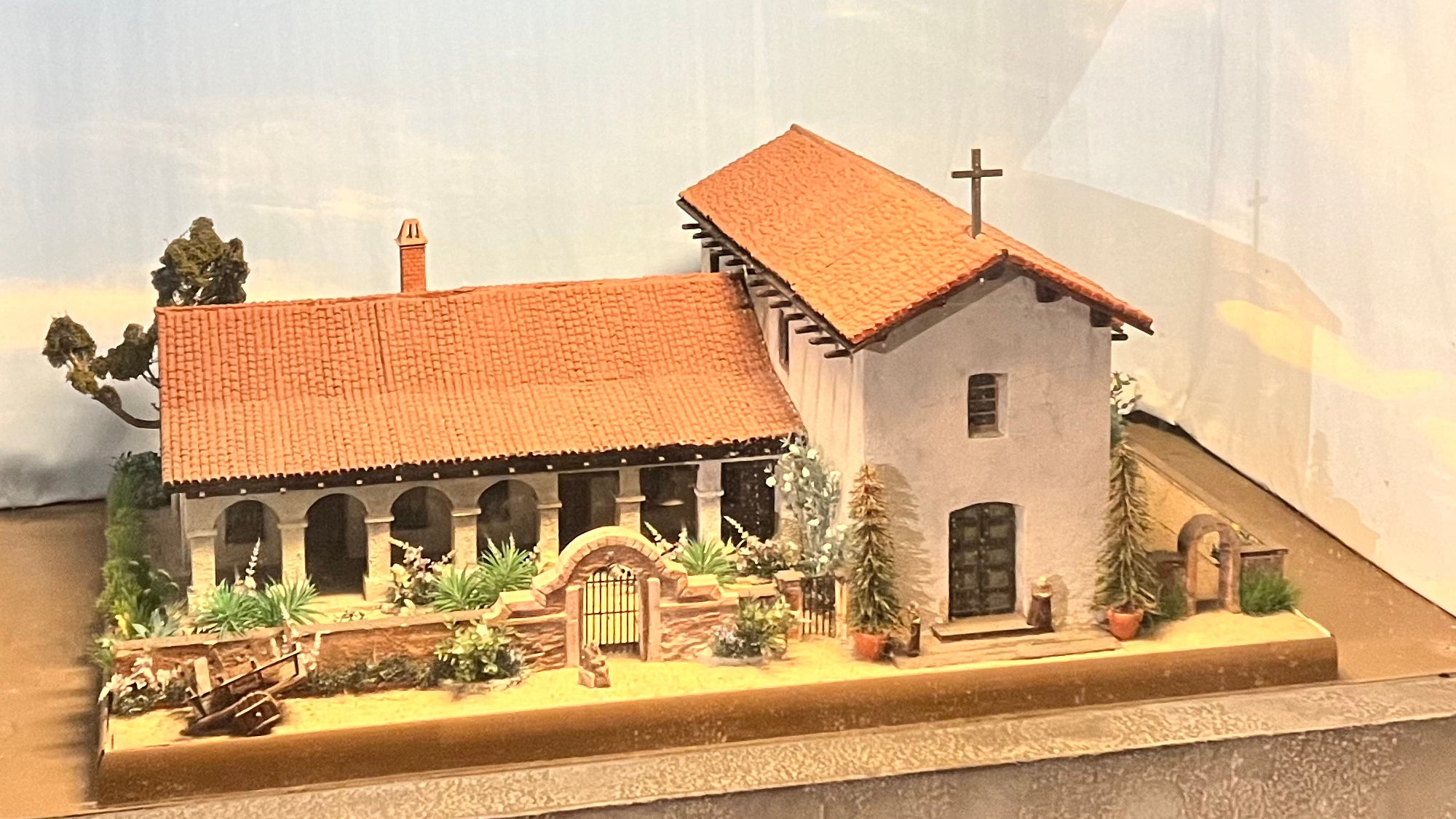
Visiting Mission San Miguel Arcángel: History, Architecture, and Tour Guide
Mission San Miguel Arcángel is one of California's most authentic historical landmarks, famous for preserving its original 19th-century interior wall paintings intact. Located in San Luis Obispo County, this active parish and historic...
Mission San Miguel Arcángel is one of California's most authentic historical landmarks, famous for preserving its original 19th-century interior wall paintings intact. Located in San Luis Obispo County, this active parish and historic museum offers visitors an immersive look into Spanish colonial history, Salinan Native American heritage, and remarkable seismic restoration efforts.
Contents
Overview and Subject Disambiguation
When travelers search for "Mission San Miguel," they are typically looking for Mission San Miguel Arcángel, the 16th Spanish mission established along California's El Camino Real. Situated in the small community of San Miguel in northern San Luis Obispo County, California, this site is renowned among historians because its interior decorations have never been repainted or heavily over-restored, unlike many other California missions.
However, historical travelers may occasionally confuse this site with San Miguel Chapel (also referred to as the San Miguel Mission) in Santa Fe, New Mexico, which holds the title of the oldest church building in the continental United States.
While both sites honor Saint Michael the Archangel, this guide focuses primarily on California's Mission San Miguel Arcángel—providing practical visiting logistics, architectural highlights, historical context, and nearby travel recommendations—while providing clear comparative details for travelers researching the New Mexico site.
Historical Timeline: From 1797 to Modern Restoration
The history of Mission San Miguel Arcángel reflects the complex cultural, religious, and political shifts that shaped California over three centuries. Understanding this timeline enhances the visiting experience, offering context for the physical structures and artifacts on site today.
- 1797: Founded by Fr. Lasuén
- 1816-1821: Present Adobe Built
- 1834: Secularization
- 2003: Earthquake Damage
- 2009+: Reopening & Retrofit
Founding and Early Native Contacts (1797–1806)
On July 25, 1797, Franciscan Father Fermín Francisco de Lasuén founded Mission San Miguel Arcángel as the 16th mission in the California chain. Located midway between Mission San Luis Obispo and Mission San Antonio de Padua, the site was chosen for its proximity to the Salinas River and the local indigenous population, the Salinan people (whom the Spanish called San Migueleños).
The early mission grew rapidly, establishing agricultural crops, livestock herds, and adobe residential quarters. However, in 1806, a devastating fire destroyed most of the original wooden buildings and agricultural stores, prompting a massive reconstruction effort.
Construction of the Present Church and Secularization (1816–1859)
The current adobe church building was constructed between 1816 and 1821 under the direction of Father Juan Martín. Indigenous Salinan artisans provided the physical labor and craftsmanship necessary to fabricate hundreds of thousands of hand-molded adobe bricks and heavy wooden roof timbers brought from the nearby Santa Lucia Mountains.
Following Mexico's independence from Spain, the Mexican government passed the Secularization Act of 1834. Mission San Miguel was confiscated, its communal agricultural land was broken up, and the Franciscan friars were removed.
For two decades, the buildings served commercial purposes, including a saloon, retail store, hotel, and private residence. In 1846, the William Reed family occupied the former mission quarters, where a tragic mass murder took place due to rumors of hidden gold. Finally, in 1859, United States President James Buchanan signed a proclamation returning the church and immediate grounds to the Catholic Church.
The 2003 San Simeon Earthquake and Modern Retrofit
On December 22, 2003, the magnitude 6.5 San Simeon earthquake struck central California, causing catastrophic damage to Mission San Miguel. Thick adobe walls cracked severely, timber roof supports shifted, and the historic church structure was rendered unsafe for public entry.
Engineers and conservation specialists undertook a complex, multi-phase restoration costing over $15 million. The project required:
- Steel-core stabilization pins drilled vertically and horizontally through ancient adobe walls.
- Fiber-reinforced polymer ties to secure roof timbers without altering visible historical features.
- Micro-grouting techniques to consolidate fractured adobe while protecting delicate interior wall frescoes.
The parish church officially reopened to the public in September 2009, with museum rooms and historic wings restored over subsequent years. Today, it stands as a National Historic Landmark and an active Catholic church.
Architectural Significance and Original Interior Murals
What sets Mission San Miguel apart from the other 20 California missions is the exceptional preservation of its original interior artwork. Most California missions suffered severe damage, neglect, or heavy-handed 20th-century repainting that replaced historic artwork with modern interpretations. San Miguel’s interior remains virtually untouched since its completion in the 1820s.
Interior Highlights:
- Retablo (Altarpiece): Designed by Esteban Munras, featuring the All-Seeing Eye of God
- Wall Frescoes: Neoclassical trompe-l'œil pillars and decorative friezes
- Archway Colonnade: 12 exterior arches of varying shapes and sizes
- Adobe Masonry: Walls measuring 5 to 6 feet thick for natural thermal regulation
The Frescoes of Esteban Munras
In 1820, Spanish artist Esteban Munras designed the interior decorative program for the nave and sanctuary. Working alongside local Salinan painters, Munras applied water-based mineral pigments directly onto wet lime plaster (fresco technique).
The design incorporates Neoclassical and Spanish Colonial elements:
- Trompe-l'œil Architecture: Painted classical columns, fluted pilasters, and intricate friezes create an illusion of three-dimensional stone architecture on flat adobe walls.
- The Retablo (Altarpiece): The focal point of the church is a dramatic wooden altarpiece dominated by a radiant depiction of the All-Seeing Eye of God (El Ojo de Dios) inside a golden sunburst above a statue of Saint Michael the Archangel.
- Natural Pigments: Colors were derived from local soil, ox blood, plant extracts, and pulverized minerals, yielding deep ochres, terracottas, and sage greens that have endured for two centuries.
Architectural Features and the Colonnade
The physical building showcases classic Spanish Colonial Franciscan architecture adapted to rural California materials:
- The Colonnade (Corredor): The long exterior corridor features a series of 12 open arches. Notably, the arches are non-uniform in size and shape—some are wide and rounded, while others are narrow or slightly pointed. Local tradition attributes this variance to the different hand-carved wooden forms used by various native construction crews.
- Thick Adobe Walls: The church walls measure between 5 and 6 feet thick at the base, insulating the interior against the extreme heat of the Salinas Valley summers and winter cold.
- Roof Construction: Heavy pine roof beams (vigas) are bound with rawhide strips and supported by decorative corbels, holding thousands of handmade red clay roof tiles (tejas).
Visitor Guide: Hours, Rules, and Logistics
Plan your visit to Mission San Miguel Arcángel using the operational details and visitor guidelines below.
Visitor Checklist:
- Confirm museum & gift shop hours before arrival
- Dress respectfully for an active religious sanctuary
- Purchase self-guided tour access at the gift shop
- Plan 1 to 2 hours for grounds, museum, and church viewing
- Check photography rules (no flash inside the church sanctuary)
Address and Location
- Address: 775 Mission Street, San Miguel, CA 93451
- County: San Luis Obispo
- Access: Located directly off U.S. Route 101, approximately 10 miles north of Paso Robles.
Operating Hours and Mass Schedule
The mission serves dual roles as a museum/tourist destination and an active parish church administered by the Franciscan Friars.
- Museum & Gift Shop Hours: Generally open daily from 10:00 AM to 4:00 PM (closed major religious holidays including Easter, Thanksgiving, and Christmas Day).
- Parish Mass Schedule: Daily and Sunday Masses are held inside the historic church. Visitors are welcome to attend religious services, but sightseeing and museum photography are strictly prohibited during active worship services.
Admission Fees and Tour Options
Self-guided tour tickets can be purchased at the mission gift shop upon entry.
- Adult Admission: $10.00
- Seniors & Military: $8.00
- Children (Ages 6–12): $5.00 (Free for children under 6)
- Docent-Led Group Tours: Available for educational groups and large parties by advance reservation through the parish office.
Accessibility and Photography Guidelines
- Accessibility: The church interior, main museum corridors, gift shop, and central quadrangle garden are wheelchair-accessible via paved pathways and ramps. Certain historic side rooms have uneven brick floors and elevated thresholds.
- Photography Rules: Personal photography is permitted throughout the grounds, museum, and church. Flash photography, tripods, and commercial videography are prohibited inside the main church to protect the delicate original pigments from light degradation.
Comparative Reference: California Mission vs. Santa Fe Chapel
To assist travelers researching historic sites dedicated to Saint Michael, the following table compares California's Mission San Miguel Arcángel with New Mexico's San Miguel Chapel.
| Feature / Detail | Mission San Miguel Arcángel (California) | San Miguel Chapel (New Mexico) |
|---|---|---|
| Primary Location | 775 Mission St, San Miguel, CA 93451 | 401 Old Santa Fe Trail, Santa Fe, NM 87501 |
| Year Established | 1797 (Present church built 1816–1821) | c. 1610–1628 (Rebuilt 1710) |
| Historical Distinction | 16th California Mission; intact original 1820s interior murals | Known as the "Oldest Church in the Continental U.S." |
| Primary Architecture | Spanish Colonial Mission adobe with 12-arch colonnade | High-desert Pueblo-Spanish Adobe chapel |
| Managing Entity | Roman Catholic Diocese of Monterey / Franciscan Friars | St. Michael's High School / Historic Preservation Trust |
| Key Interior Highlight | Esteban Munras retablo featuring the All-Seeing Eye | Historic San José Retablo (1798) and historic bell |
| Typical Visit Duration | 1 to 2 hours | 45 minutes to 1 hour |
Essential Highlights to See on the Mission Grounds
When exploring Mission San Miguel Arcángel, allocate at least 90 minutes to self-tour the primary points of interest across the compound.
Grounds Layout:
- Entrance
- Gift Shop
- Main Church & Sanctuary
- Quadrangle Garden
- Museum Rooms
- Cemetery
1. The Main Church Nave and Sanctuary
Step inside the main nave to view the unpainted 1820s frescoes. Pay close attention to the pulpit mounted on the north wall, designed in the shape of a shell to enhance acoustic projection before modern amplification systems existed. The sanctuary lamp, hand-carved balustrades, and original tile flooring present a rare, unblemished view of early 19th-century church design.
2. The Cactus Garden and Quadrangle Courtyard
The central courtyard once served as the heart of mission economic life, hosting weave shops, leather tanneries, and food processing areas. Today, it features a quiet garden with native California flora, historical olive trees, and mature cacti, surrounded by adobe wings that housed Franciscan living quarters (convento).
3. The Museum Display Rooms
Housed inside the original monastery quarters, the museum displays a collection of artifacts detailing Salinan Native American heritage, Franciscan daily life, and early California ranching history. Key exhibits include:
- Hand-carved wooden statues (santos) brought from Mexico and Europe in the late 1700s.
- Historic liturgical vestments embroidered with silk and metallic threads.
- Archaeological fragments and tools uncovered during seismic stabilization work.
- Original olive oil presses and agricultural equipment.
4. The Historic Cemetery
Located adjacent to the church, the cemetery is the resting place of thousands of Christianized Salinan Native Americans, early Franciscan friars, and prominent local pioneer families. Simple wooden and stone markers stand near an elevated bell tower structure that houses historical mission bells.
Nearby Historic Sites and Region Travel Integration
A visit to Mission San Miguel integrates easily into a broader itinerary through central California's Central Coast wine country and historical corridors.
Recommended Travel Corridor (North to South along US-101):
- Mission San Antonio de Padua
- Mission San Miguel
- Rios-Caledonia Adobe
- Paso Robles Wineries
Rios-Caledonia Adobe
Located less than a mile south of Mission San Miguel along Mission Street, the Rios-Caledonia Adobe was constructed in 1835 by Petronilo Rios. It served as a stagecoach stop on the historic trail between San Francisco and Los Angeles. Today, it operates as a restored historic park and museum, offering excellent complementary insight into post-secularization California history.
Paso Robles Wine Country
Just 10 minutes south on U.S. Route 101 lies Paso Robles, renowned for its world-class wineries, downtown dining district, and thermal hot springs. Combining a morning historical tour of Mission San Miguel with an afternoon wine-tasting itinerary creates a balanced day trip for travelers exploring San Luis Obispo County.
Mission San Antonio de Padua
For dedicated California mission enthusiasts, driving 40 minutes northwest through the Fort Hunter Liggett reservation leads to Mission San Antonio de Padua. Situated in an undeveloped valley, it provides an authentic look at rural mission agriculture and complements the art-focused experience at San Miguel.
Frequently Asked Questions
Is Mission San Miguel Arcángel still an active church?
Yes, Mission San Miguel Arcángel is an active parish church within the Roman Catholic Diocese of Monterey. Regular weekday and weekend Masses are held in the main church building. Visitors should plan museum walkthroughs around scheduled religious services.
Why are the interior wall paintings at Mission San Miguel so famous?
The interior frescoes were painted in the 1820s by Spanish artist Esteban Munras and Salinan Native American artisans. Unlike almost all other California missions, these wall paintings were never painted over, restored with modern paints, or whitewashed. They represent the best-preserved original church artwork from the Spanish Colonial period in California.
How was Mission San Miguel restored after the 2003 earthquake?
After suffering extensive structural damage in the 2003 San Simeon earthquake, engineers used high-tech preservation techniques to stabilize the adobe walls without altering their historical appearance. This involved inserting vertical steel core rods into the walls, securing ceiling timbers with flexible composite ties, and injecting specialized lime grout into cracked adobe bricks.
Is Mission San Miguel the oldest church in the United States?
No. Mission San Miguel Arcángel in California was founded in 1797. The title of "Oldest Church in the Continental United States" belongs to San Miguel Chapel in Santa Fe, New Mexico, which was originally constructed around 1610 to 1628.
How much time should I allocate for a visit?
Most visitors spend between 1 and 2 hours exploring the main church nave, self-guided museum rooms, courtyard cactus gardens, gift shop, and historic cemetery.
Practical Next Steps for Your Visit
To ensure a smooth trip to Mission San Miguel Arcángel, follow these recommended preparation steps:
- Verify Operating Hours: Check the official Diocese of Monterey or parish schedule to confirm museum opening hours and verify that mass services or private ceremonies will not restrict access to the nave.
- Dress Comfortably: Wear sturdy walking shoes for navigating uneven historical tile and brick pathways throughout the museum and quadrangle gardens.
- Combine Your Itinerary: Pair your mission visit with a stop at the nearby Rios-Caledonia Adobe and lunch in historic downtown Paso Robles.
- Support Conservation: Purchase your admission tickets or handcrafted goods directly from the mission gift shop, as proceeds fund the ongoing maintenance and structural conservation of this National Historic Landmark.
Image Gallery