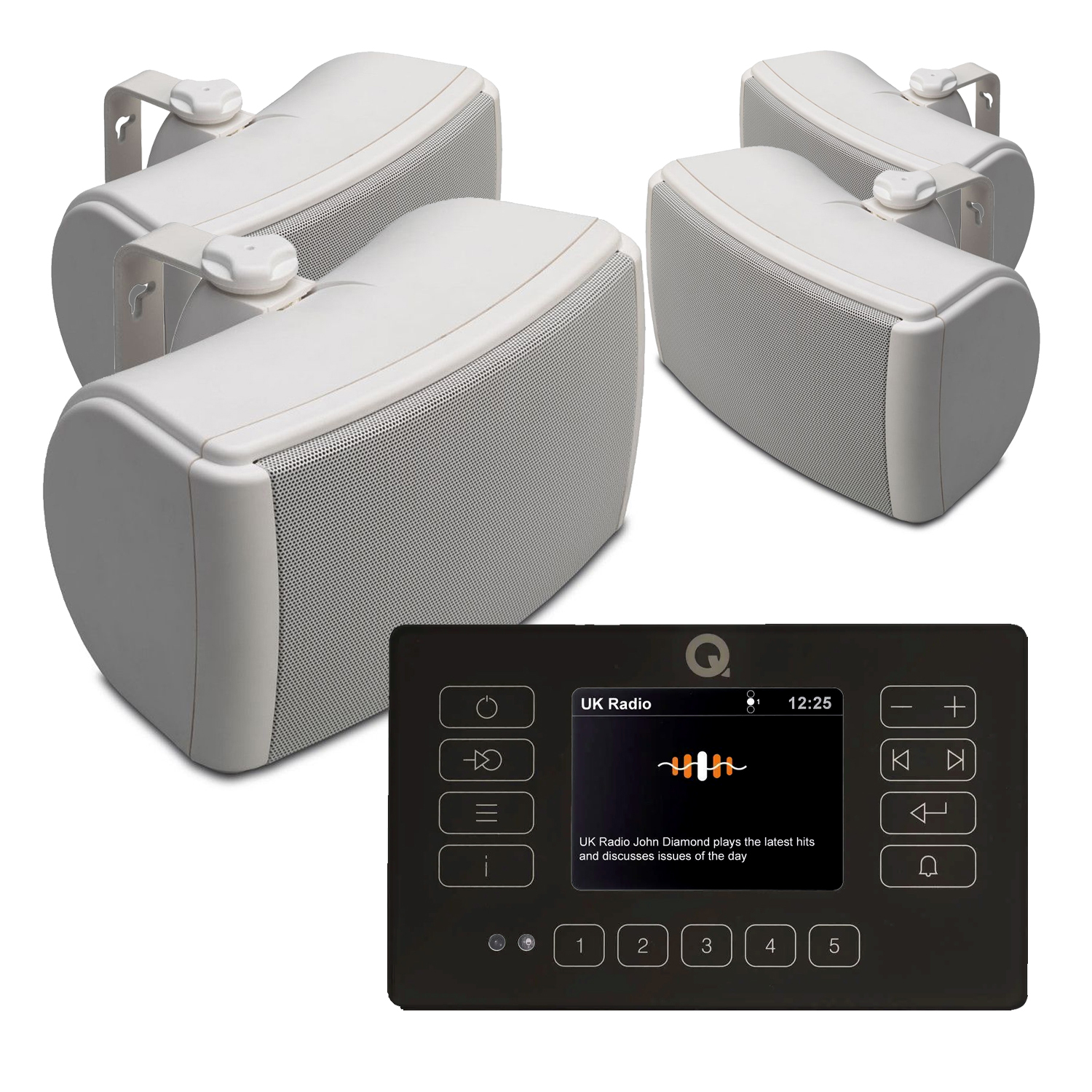
How to Choose the Outdoor Patio Speaker System for Your Backyard
To choose the best outdoor patio speaker system, assess your yard's physical layout, climate conditions, listening preferences, and budget. Select weatherproof speakers with appropriate Ingress Protection (IP) ratings, choose between t...
To choose the best outdoor patio speaker system, assess your yard's physical layout, climate conditions, listening preferences, and budget. Select weatherproof speakers with appropriate Ingress Protection (IP) ratings, choose between traditional 8-ohm stereo and 70-volt distributed line architecture, and determine whether Wi-Fi streaming or Bluetooth offers the right balance of signal range and sound quality for your outdoor entertainment space.
Contents
1. Environmental Protection: Weatherproofing and Build Quality
Unlike indoor loudspeakers housed in controlled environments, outdoor speakers must withstand direct rain, extreme temperature fluctuations, solar ultraviolet (UV) radiation, and airborne debris. Evaluating structural durability and moisture resistance prevents driver degradation and amplifier failure.
Deciphering IP Ratings
The International Electrotechnical Commission (IEC) standardizes enclosure protection through Ingress Protection (IP) codes. An IP rating consists of two digits: the first measures protection against solid objects (0–6), and the second measures protection against liquids (0–9).
- IPX4 / IP54: Protects against light water splashes from any direction and basic dust ingress. Suitable for covered patios, under-eave mountings, or screened porches.
- IP55 / IP65: Protects against low-pressure water jets and heavy dust accumulation. Ideal for uncovered wall mounts exposed to moderate rain and lawn sprinklers.
- IP66 / IP67: Protects against high-pressure water jets or temporary submersion. Essential for landscape satellite speakers positioned at ground level near gardens, pools, or exposed perimeter zones.
For more technical details on IP testing standards, consult the International Electrotechnical Commission.
Materials and Enclosure Construction
Long-term reliability depends heavily on cabinet construction and hardware components. Premium outdoor speakers feature polypropylene or mineral-filled composite cabinets that resist cracking when exposed to intense UV rays. Metallic hardware should utilize powder-coated aluminum or marine-grade stainless steel (316 grade) to prevent rust and oxidation.
Look for speaker grilles made from treated aluminum rather than painted steel, as painted steel will inevitably rust once the outer coating develops micro-fractures from thermal expansion and contraction.
2. System Architecture: Passive vs. Active and 8-Ohm vs. 70-Volt
Selecting the correct drive architecture dictates how your speakers receive power and audio signals from your source components.
- Audio Source / Streamer (Wi-Fi, Bluetooth, Outdoor TV)
- Passive System (External Amplifier)
- 8-Ohm Direct (Home Audio)
- 70V Line (Commercial / Large Yards)
- Active System (Built-in Amplifier)
- AC Mains Power Plug
- Bluetooth / Wireless
- Passive System (External Amplifier)
Active vs. Passive Outdoor Speakers
- Passive Speakers: Require an external amplifier or audio/video receiver (AVR) located indoors or inside a weatherproof enclosure. Speaker wire runs from the amplifier out to the patio. Passive systems offer greater longevity because sensitive electronic amplification components stay protected indoors, allowing easy upgrades to receivers or streamers over time.
- Active (Powered) Speakers: Feature built-in amplifiers and plug directly into an outdoor AC electrical outlet. Many active models include Bluetooth or Wi-Fi receivers within the enclosure. While easier to set up without running long speaker cables from indoors, active speakers place vulnerable power electronics outdoors year-round, increasing long-term failure risks in harsh climates.
Low-Impedance (8-Ohm) vs. High-Impedance (70V / 100V) Audio
For residential installations, deciding between 8-ohm and 70-volt systems depends on the size of the outdoor area and the total number of speakers required:
- Traditional Low-Impedance (8-Ohm): standard home stereo systems run at 4 or 8 ohms. An amplifier drives two to four speakers maximum per output channel without dropping impedance to dangerous levels. 8-ohm systems provide superior high-fidelity stereo imaging and frequency response, making them perfect for defined seating zones, smaller decks, and dining patios.
- 70-Volt / 100-Volt Distributed Audio: Uses step-up transformers at the amplifier and step-down transformers (taps) at each speaker. This configuration allows dozens of speakers to connect in parallel along a single continuous cable run over hundreds of feet without signal loss or amplifier overload. 70V systems are ideal for large properties, expansive swimming pools, and multi-zone landscape environments where consistent background music is desired throughout the area.
3. Outdoor Speaker Types and Form Factors
Matching the mechanical form factor to your hardscaping and landscaping layout ensures proper sound coverage and visual integration.
- Wall-Mounted (Bracket Mount)
- Landscape Satellite (Ground Stake)
Surface-Mount / Wall-Mounted Speakers
Traditional wedge-shaped or rectangular speakers mount to exterior walls, posts, or under roof eaves using adjustable brackets. They deliver wide frequency response and strong directional output. Mounting high under eaves provides natural physical shelter from rain while using the wall structure to boundary-load mid-bass frequencies.
Landscape Audio Systems (Satellite and Buried Subwoofer)
Landscape systems consist of small, stake-mounted satellite speakers hidden in garden beds, paired with an in-ground subwoofer. The subwoofer's main cabinet buries underground, leaving only an unobtrusive canopy hood exposed above the soil line. This architecture distributes audio evenly across broad areas at low, comfortable volumes while maintaining full-range bass response.
Rock and Planter Speakers
Designed to blend into natural landscapes, rock speakers feature composite enclosures styled like granite, shale, or sandstone. Integrated planter speakers allow live foliage to sit atop the enclosure. These options work well around pool decks and garden walkways where wall mounting is unavailable, though sound dispersion remains limited to ground level.
Omnidirectional 360-Degree Speakers
Omnidirectional speakers disperse audio in a full 360-degree horizontal pattern. Typically installed flush in garden beds or attached to outdoor structures, a single omnidirectional unit covers a circular area efficiently, reducing the total speaker count needed for open lawns or fire pit areas.
Outdoor Soundbars
Engineered specifically for outdoor televisions installed on covered patios, outdoor soundbars feature weather-sealed enclosures and high-nit optical finishes. They deliver elevated dialogue clarity over ambient outdoor noise (such as wind or water features) without requiring complex surround sound wiring.
4. Signal Source and Connectivity Options
How audio reaches your outdoor amplifier or active speakers impacts daily convenience, signal integrity, and multi-room audio sync.
| Source Type | Max Range | Audio Quality | Multi-Zone Sync |
|---|---|---|---|
| Bluetooth | 30 – 100 feet | Compressed (SBC) | Single device standard |
| Wi-Fi Network (AirPlay/Sonos) | Whole-home Wi-Fi Coverage | Uncompressed / Hi-Res Audio Formats | Seamless sync across indoor & outdoor zones |
Wi-Fi Streaming Amplifiers and Ecosystems
Integrating an outdoor zone into a dedicated Wi-Fi audio network (using platforms such as Apple AirPlay 2, Sonos, or custom AV distribution systems) offers clear performance benefits:
- Range: Audio playback is limited only by your home Wi-Fi footprint, eliminating dropouts caused by walking around the yard with your phone in a pocket.
- Resolution: Stream uncompressed high-resolution audio files without the bitrate limitations of standard Bluetooth codecs.
- Zone Grouping: Sync outdoor music perfectly with indoor dining room or kitchen speakers during larger gatherings.
Bluetooth Connectivity
Bluetooth active speakers or Bluetooth-enabled outdoor receivers offer quick, intuitive pairing for guests without granting access to your local Wi-Fi network. Modern codecs like aptX HD and LDAC improve wireless sound quality, but range limits (typically under 50 feet outdoors through glass patio doors) make Bluetooth best suited for smaller, localized seating setups.
5. Acoustic Coverage, Placement, and Subwoofer Integration
Outdoor environments lack walls and ceilings to bounce sound waves back to the listener. Without these boundary reflections, outdoor sound dissipates rapidly according to the inverse-square law (sound intensity drops by roughly 6 dB every time distance from the speaker doubles).
Preventing Hot Spots with Distributed Mono
A common mistake is installing two high-powered stereo speakers aimed at a central seating area. To hear the music clearly 40 feet away, volume near the speakers must be cranked to uncomfortable levels, creating acoustic "hot spots" near the house and silent zones farther out.
To solve this, deploy multiple smaller speakers along the perimeter of the living space aimed inward toward the listeners. In outdoor environments spanning more than 20 feet across, configure speaker wiring to play in summed mono rather than stereo. Stereo panning causes listeners seated near the left speaker to lose high-frequency details from the right channel entirely.
- WRONG: High-Volume Stereo Pair
- Speakers: [LEFT], [RIGHT]
- Coverage: [ Loud Hot Spot Area ]
- RIGHT: Perimeter Distributed Mono
- Speakers: [SPK 1], [SPK 2], [SPK 3], [SPK 4], [SPK 5], [SPK 6]
- Coverage: [ Seating / Patio Area ]
Deep Bass Response Outdoors
Low frequencies require significant air movement. Because open air offers no bass reinforcement from room boundaries, outdoor satellite speakers typically sound thin below 80 Hz. Adding an outdoor in-ground subwoofer delivers rich low-end performance without forcing satellite speakers to distort at higher volumes.
6. Speaker Form Factor Comparison Matrix
| Speaker Type | Typical IP Rating | Sound Dispersion Pattern | Installation Complexity | Primary Application | Relative Cost |
|---|---|---|---|---|---|
| Surface Wall-Mount | IP54 – IP65 | 90°–120° Directional | Low to Moderate | Covered patios, decks, building perimeters | Low to Moderate |
| Landscape Satellite | IP66 – IP67 | 60°–90° Narrow Directional | Moderate to High | Flower beds, garden pathways, shrubbery | Moderate to High |
| In-Ground Subwoofer | IP67 | Omnidirectional (Low Freq.) | High (Trenching required) | Paired with landscape satellites for bass | High |
| Rock Enclosure | IP55 – IP65 | 100°–120° Wide Horizontal | Low (Surface placement) | Poolside decks, rock gardens, open yards | Moderate |
| 360° Omnidirectional | IP65 – IP66 | 360° Horizontal Dispersion | Moderate | Open lawns, central fire pits, large gardens | Moderate to High |
| Outdoor Soundbar | IP55 – IP65 | 90° Horizontal / Wide | Low to Moderate | Mounted under outdoor TVs on covered porches | Moderate to High |
7. Wiring, Cable Ratings, and Cable Sizing
Proper wiring protects your audio equipment from electrical shorts, signal degradation, and environmental exposure.
- Direct Burial Cable (CL2/CL3)
- Outer Heavy-Duty Waterproof PE Jacket
- Positive Conductor
- Negative Conductor
- Outer Heavy-Duty Waterproof PE Jacket
Wire Gauge Selection Guide
Long cable runs create electrical resistance, causing loss of power and damping factor. Always select pure oxygen-free copper (OFC) wire rather than copper-clad aluminum (CCA), which corrodes quickly outdoors.
- Up to 50 Feet: 16 AWG (American Wire Gauge)
- 50 to 100 Feet: 14 AWG
- 100 to 200+ Feet: 12 AWG
Direct Burial and Code Compliance
Standard indoor speaker wire degrades rapidly when exposed to moisture, soil acids, and temperature swings. Always use speaker cables rated for Direct Burial with a CL2 or CL3 jacket approved by Underwriters Laboratories (UL). For detailed structural safety standards, refer to the National Electrical Code (NEC) guidelines managed by the National Fire Protection Association (NFPA).
Direct burial wire features a thick, water-resistant polyethylene jacket that resists moisture penetration. When trenching:
- Dig trenches at least 6 to 12 inches deep to prevent accidental damage from lawn aerators or shovels.
- Run wire through schedule 40 PVC conduit beneath high-traffic footpaths or driveways.
- Use silicone-filled, moisture-sealed wire nuts (gel caps) for all outdoor splice connections to prevent corrosion.
Frequently Asked Questions
Can outdoor patio speakers be left outside during freezing winter weather?
Yes, outdoor speakers rated IP65 or higher with weather-sealed composite enclosures can remain installed outside during freezing temperatures. However, extreme thermal cycles can shorten driver surround life over time. If living in sub-zero climates, cover speakers with breathable weather guards or store bracket-mounted units indoors during off-season months.
What is the primary difference between IP55 and IP66 outdoor speakers?
IP55 units are protected against moderate dust levels and light, low-pressure water splashes (such as mild rain). IP66 units feature robust fluid seals that withstand high-pressure water jets from any direction. Choose IP66 speakers for exposed ground-level landscape stakes where sprinklers or heavy storms splash dirt directly onto the housing.
How many speakers do I need for a 500-square-foot patio?
A standard 500-square-foot patio typically requires four wall-mounted speakers or four landscape satellites paired with one subwoofer. Using four speakers spaced evenly around the perimeter allows clear sound reproduction at lower, background volumes without forcing a single pair of speakers to blast loudly near the house.
Should outdoor patio speakers be wired in mono or stereo?
For small, enclosed seating areas where listeners sit equidistant between two speakers, stereo wiring works well. For larger outdoor zones or expansive backyards where people move around freely, wire speakers in summed mono. Mono ensures every listener hears both left and right audio channels regardless of where they stand.
What wire gauge is recommended for outdoor runs over 100 feet?
For direct burial runs exceeding 100 feet, use 12 AWG oxygen-free copper (OFC) speaker wire. Thicker 12 AWG wire minimizes voltage drop and resistance, preserving high-frequency response and delivering full amplifier power to passive outdoor speakers.
Actionable Next Steps for Installation
- Map Your Outdoor Zones: Draw a top-down sketch of your yard. Identify distinct listening areas (dining table, pool lounge, fire pit) and pinpoint power outlets or amplifier location options indoors.
- Determine Total Speaker Count: Plan for a high density of small speakers operating at moderate volume rather than two large speakers blasting at high volume.
- Verify IP Ratings: Match speaker weather ratings to their physical exposure levels—use IP54/IP55 for under-eave mounts and IP66/IP67 for low-lying garden beds.
- Select Cabling: Order UL-listed CL2/CL3 direct burial 14 AWG or 12 AWG pure copper cable. Pick up gel-filled outdoor wire connectors for reliable underground splices.
- Calibrate and Test: Once connected, configure your streaming amplifier to mono mode for multi-speaker layouts and set crossover frequency filters for your outdoor subwoofer (typically 80 Hz).
Image Gallery