The Science and Discovery of Large Dinosaur Eggs
Large dinosaur eggs, specifically those belonging to the oofamily Macroelongatoolithidae, represent some of the most remarkable fossil remains in the paleontological record. These specimens, often exceeding 45 centimeters in length, pr...
Large dinosaur eggs, specifically those belonging to the oofamily Macroelongatoolithidae, represent some of the most remarkable fossil remains in the paleontological record. These specimens, often exceeding 45 centimeters in length, provide critical data on the reproductive strategies, nesting behaviors, and physiological limitations of the largest animals to ever walk the Earth.
Contents
Understanding Dinosaur Oology and Parataxonomy
To study large dinosaur eggs, scientists use a specialized field called oology. Because it is rare to find an embryo inside a fossilized egg, paleontologists cannot always certain which dinosaur laid which egg. To solve this, they use parataxonomy—a classification system based on the physical characteristics of the eggs themselves rather than the parent animal.
Eggs are classified into oogenera and oospecies. For instance, the name Macroelongatoolithus refers to a specific "type" of large, elongated egg. It was only through the discovery of "Baby Louie"—a fossilized embryo found in China—that researchers definitively linked these massive eggs to giant oviraptorosaurs like Beibeilong sinensis.
In 2026, our understanding of these classifications has been further refined by high-resolution micro-CT scanning. This non-destructive technology allows researchers to peer through millimeters of calcified shell to identify embryonic bone structures, even when they are partially degraded. This has bridged the gap between parataxonomy and biological reality, turning "egg types" into identifiable species histories.
The Record Breakers: Macroelongatoolithus
When discussing "large dinosaur eggs," the conversation inevitably centers on the Macroelongatoolithidae family. These are the largest known dinosaur eggs, characterized by their distinct elongated shape, often resembling giant, petrified loaves of bread.
Physical Dimensions and Shell Structure
The largest of these specimens can reach lengths of up to 61 centimeters (24 inches). Unlike the brittle eggs of modern birds, these fossilized shells are remarkably thick, often measuring between 2.5 and 5 millimeters. This thickness was a biological necessity; the shell had to be strong enough to support the weight of a developing embryo and the pressure of nesting materials without being so thick that the hatchling could not break out.
The shell surface is typically covered in a pattern of ridges or nodes, known as ornamentation. In Macroelongatoolithus, this ornamentation often takes the form of linear ridges that run parallel to the long axis of the egg. These structures likely served to increase the surface area for gas exchange, allowing the developing embryo to breathe through the microscopic pores in the dense calcite.
The Mystery of the Parent
For decades, these massive eggs were a mystery. Many suspected they belonged to tyrannosaurs because of their size. However, the discovery of the Beibeilong embryo confirmed that they belonged to giant, feathered oviraptorosaurs. These dinosaurs were bird-like in appearance but reached multi-ton weights. Finding such massive eggs suggests that even the largest theropods maintained reproductive traits similar to their smaller, more modern avian relatives.
Sauropod Eggs: The Spherical Giants
While theropod eggs like Macroelongatoolithus are the longest, the eggs of sauropods (long-necked herbivores) are notable for their volume and spherical shape. These eggs belong to the oofamily Megaloolithidae.
Megaloolithus Characteristics
Unlike the elongated theropod eggs, sauropod eggs are roughly the size of a cannonball or a large grapefruit, typically ranging from 15 to 25 centimeters in diameter. While they are shorter than theropod eggs, they were produced in much larger quantities. A single sauropod might lay a clutch of 20 to 40 eggs in a single nesting event.
Nesting Strategies
Research at sites like Auca Mahuevo in Argentina has revealed that sauropods were "r-strategists." This means they produced a large number of offspring with relatively little parental investment after the eggs were laid. The eggs were often deposited in shallow trenches and covered with soil or vegetation. The heat from decomposing organic matter, or even geothermal heat in some regions, helped incubate the eggs.
Biological Constraints: Why Weren't Eggs Larger?
A common question in paleontology is why dinosaur eggs did not grow larger than approximately 60 centimeters, even though the adult animals weighed tens of tons. The answer lies in the fundamental laws of physics and biology.
- Gas Exchange: As an egg grows larger, its volume increases faster than its surface area. An embryo needs to "breathe" oxygen and expel carbon dioxide through the pores in the shell. If the shell becomes too thick to support a massive volume, the pores become too long, and gas exchange becomes inefficient, effectively suffocating the embryo.
- Structural Integrity: A larger egg requires a thicker shell to prevent it from collapsing under its own weight. However, if the shell is too thick, the hatchling will be physically unable to break out of it.
- Incubation Time: Larger eggs generally require longer incubation periods. An egg much larger than the Macroelongatoolithus specimens might have required an incubation period so long that it would be highly vulnerable to predation or environmental changes.
Geographic Hotspots for Large Egg Discoveries
The distribution of large dinosaur eggs is not uniform across the globe. Certain geological formations have provided the perfect conditions for the preservation of these delicate structures.
The Xixia Basin, China
The Henan Province, particularly the Xixia Basin, is world-renowned for its "Egg Mountain." Thousands of Macroelongatoolithus and Dendroolithus eggs have been recovered here. The Late Cretaceous red beds in this region provided an alkaline environment that prevented the acidic decomposition of the calcium carbonate shells.
The Gobi Desert, Mongolia
Since the famous Roy Chapman Andrews expeditions in the 1920s, the Flaming Cliffs and surrounding areas have yielded incredible theropod nesting sites. These discoveries were the first to prove that dinosaurs laid eggs, rather than giving birth to live young.
Southern France and Spain
The "Aix-en-Provence" basin in France is a primary site for Megaloolithus eggs. These sites have allowed researchers to study the stratigraphic layers of nests, suggesting that sauropods returned to the same nesting grounds for generations, a behavior known as site fidelity.
Comparing Major Types of Large Dinosaur Eggs
The following table summarizes the primary characteristics of the most significant large dinosaur egg types identified in the fossil record.
| Oofamily | General Shape | Typical Length/Size | Suspected Parent | Primary Locations |
|---|---|---|---|---|
| Macroelongatoolithidae | Elongated (Sub-cylindrical) | 40 – 61 cm | Giant Oviraptorosaurs | China, USA (Utah), South Korea |
| Megaloolithidae | Spherical to Sub-spherical | 15 – 25 cm | Titanosaurian Sauropods | Argentina, France, India, Spain |
| Elongatoolithidae | Elongated (Oval) | 10 – 20 cm | Smaller Oviraptorosaurs | Mongolia, China |
| Prismatoolithidae | Asymmetric Elongated | 10 – 18 cm | Troodontids / Small Theropods | USA (Montana), China |
Legal Status and Ethical Collecting in 2026
As of 2026, the international community has tightened regulations regarding the trade of fossilized dinosaur eggs. Large specimens, particularly those from China and Mongolia, are protected under strict national heritage laws.
- Export Restrictions: China and Mongolia have banned the export of all dinosaur fossils. Most large eggs found in Western auctions today were either exported before these laws were enacted or are subject to legal scrutiny.
- UNESCO Convention: The 1970 Convention on the Means of Prohibiting and Preventing the Illicit Import, Export and Transfer of Ownership of Cultural Property remains the primary framework for returning illegally smuggled eggs to their countries of origin.
- Scientific Value: For collectors, the primary concern is "provenance." An egg without a documented discovery location (stratigraphic context) loses approximately 90% of its scientific value, as researchers cannot determine its age or the environment in which it was laid.
Frequently Asked Questions
How can you tell if a large dinosaur egg is real or a fake?
Verification requires examining the shell's microscopic structure. Genuine eggs feature a distinct "eggshell texture" (mammillary layer) and visible pores under a loupe. Fakes are often made of molded plaster or real shell fragments glued onto a common rock. Professional labs in 2026 use X-ray fluorescence (XRF) to ensure the chemical composition of the shell matches the surrounding matrix.
Are there any large dinosaur eggs with preserved embryos?
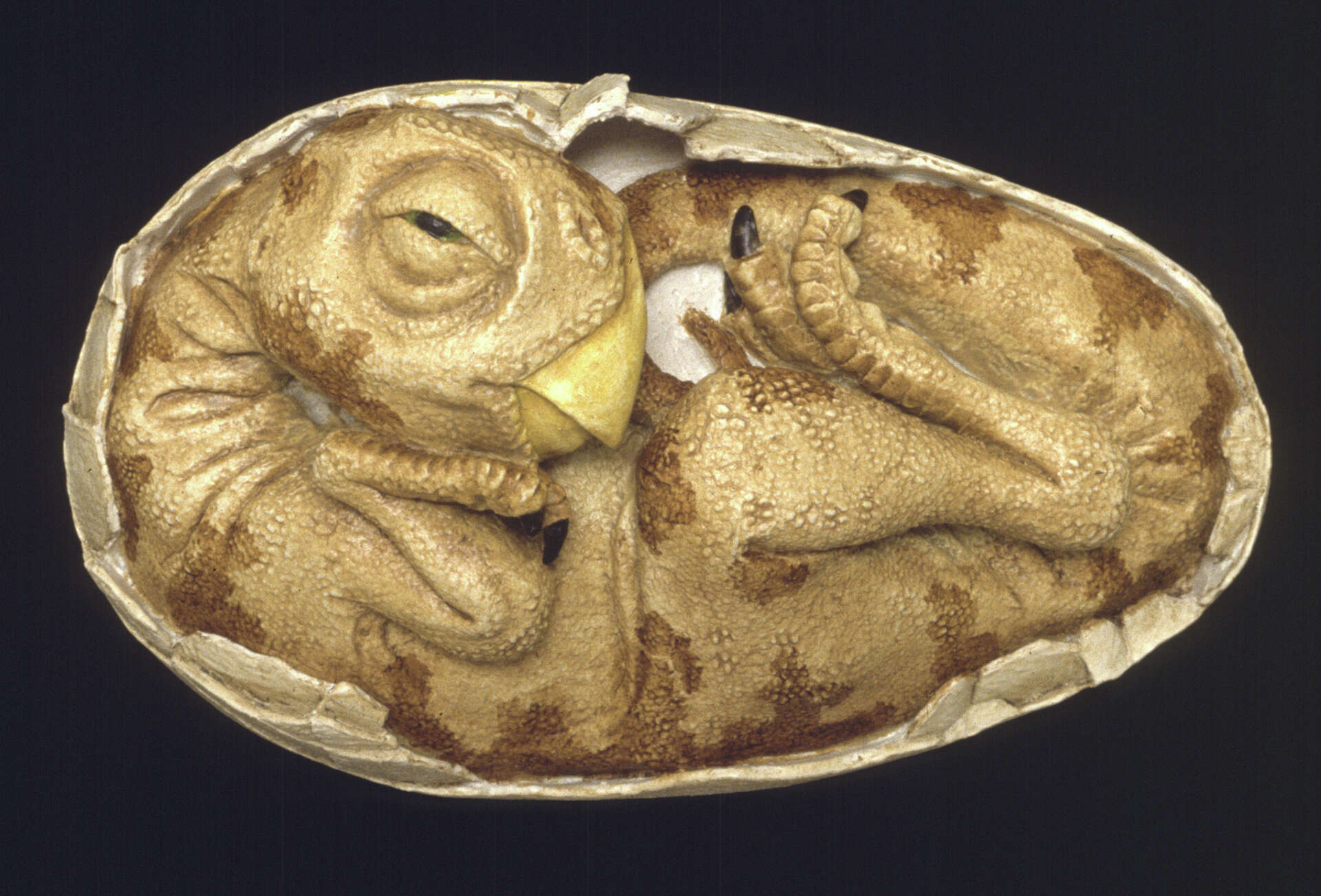
Yes, though they are exceptionally rare. The most famous is "Baby Louie" (Beibeilong), found in China. Another significant find is "Baby Yingliang," an exquisitely preserved oviraptorosaur embryo found in Ganzhou. These specimens are the "Rosetta Stones" of paleontology, allowing scientists to match egg types to specific dinosaur species.
How much do large dinosaur eggs cost?
Legally sourced, high-quality Macroelongatoolithus eggs can command prices from $5,000 to over $50,000 at reputable auction houses, depending on size, completeness, and whether they are in a "clutch" (a group of eggs). However, potential buyers must ensure the specimen has a "legal pedigree" to avoid violating international heritage laws.
Did large dinosaurs sit on their eggs to hatch them?
Evidence suggests that smaller theropods, like Citipati, did sit on their nests in a bird-like fashion. For the giant producers of Macroelongatoolithus, the evidence is more complex. Because of their multi-ton weight, they likely arranged their eggs in a circular ring, sitting in the center of the nest to provide protection and warmth without crushing the shells.
What is the rarest type of large dinosaur egg?
Currently, eggs from the Tyrannosauridae family are considered some of the rarest. Despite the abundance of T. rex skeletal fossils, their nesting sites remain elusive. Most "large" eggs found are oviraptorid or sauropod, not tyrannosaur.
Recommendation for Enthusiasts and Researchers
If you are interested in large dinosaur eggs, your first step should be to visit a verified museum collection, such as the Henan Geological Museum in China or the American Museum of Natural History in New York. These institutions provide the context necessary to understand these fossils as biological remains rather than just curiosities. For those looking to study them professionally, focus on the study of carbonate sedimentology and biomineralization, as these fields provide the tools to understand how these massive structures formed and survived for over 66 million years.
Image Gallery