How ERP Reviews Guide Selection Decisions: A Strategic Evaluation Framework
Enterprise Resource Planning (ERP) reviews guide selection decisions by providing objective, real-world data that counterbalances vendor sales claims. Procurement teams and evaluation committees use peer reviews and analyst assessments...
Enterprise Resource Planning (ERP) reviews guide selection decisions by providing objective, real-world data that counterbalances vendor sales claims. Procurement teams and evaluation committees use peer reviews and analyst assessments to validate functional capabilities, uncover hidden implementation costs, gauge user adoption challenges, and evaluate long-term vendor support responsiveness before committing capital.
Contents
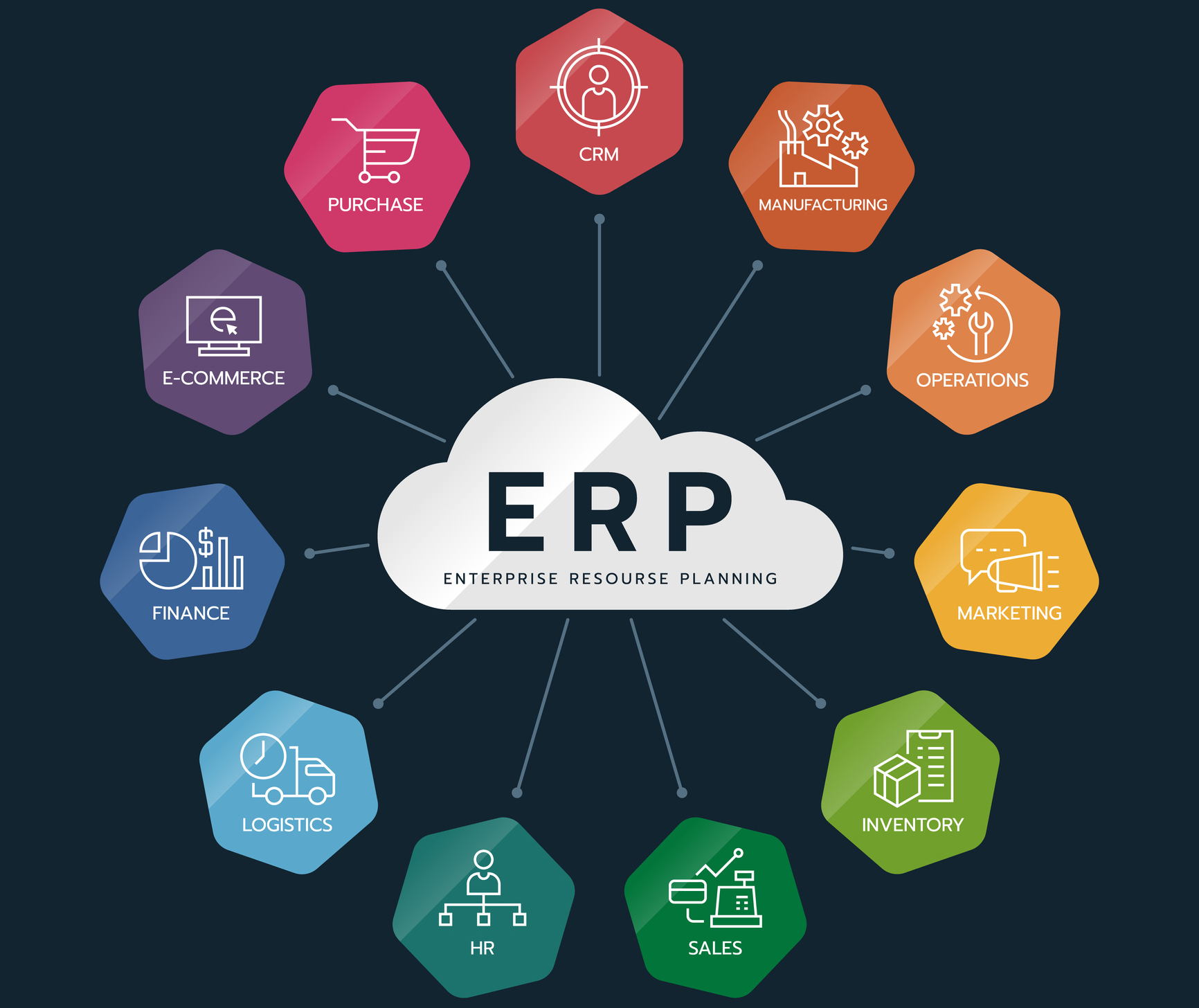
Selecting an ERP system is one of the most capital-intensive and operationally risky decisions an enterprise can make. Modern ERP platforms touch every operational node—from financial ledger management and supply chain logistics to human resources and customer relationship management. Because system failure or extended implementation downtime can jeopardize business continuity, selection committees cannot rely solely on vendor demonstrations, polished request for proposal (RFP) responses, or marketing materials.
In enterprise procurement, structured review evaluations serve as a critical risk-mitigation tool. By analyzing qualitative feedback and quantitative scoring from organizations with similar business models, IT leadership can transform subjective impressions into data-driven purchasing decisions.
The Role of Reviews in the ERP Procurement Lifecycle
The ERP evaluation lifecycle generally moves through broad market research, longlist generation, detailed RFP evaluations, vendor demonstrations, and contract negotiations. Review data plays distinct, essential roles at each phase of this pipeline.
- Phase 1: Market Research: Utilize Analyst Reports & Aggregate Scoring
- Phase 2: Longlisting: Filter Peer Reviews by Industry & Size
- Phase 3: Detailed Evaluation: Cross-Reference RFP Responses with User Feedback
- Phase 4: Risk & TCO Analysis: Uncover Hidden Support Costs & Integration Gaps
- Phase 5: Contract & SLA Negotiation: Leverage Reported Support Weaknesses as Terms
During the initial market research and longlisting phases, technology leaders leverage aggregate review platforms (such as Gartner Peer Insights, G2, and TrustRadius) alongside third-party analyst research (such as the Gartner Magic Quadrant or Forrester Wave) to establish market benchmarks. Analyst reports provide a macro-level overview of vendor vision, market responsiveness, and R&D investment trajectories. Meanwhile, peer review sites offer granular, operational insights into software stability and user satisfaction.
As selection committees narrow their candidates to a shortlist of two or three platforms, peer reviews shift from a discovery tool to a verification mechanism. Decision-makers use feedback from verified users to test the validity of vendor claims regarding module depth, ease of integration, and deployment timelines. By cross-referencing RFP responses against real-world user experiences, organizations spot operational discrepancies early—preventing costly misalignment after contracts are signed.
Key Information ERP Buyers Extract from Reviews
Enterprise reviews contain operational intelligence that standard sales presentations routinely omit. To maximize the utility of peer feedback, evaluation committees focus on four primary operational dimensions.
1. Usability, Interface Design, and User Adoption Rates
System adoption remains a primary point of failure in ERP implementations. A platform can feature rich functional capabilities, but if the user interface (UI) is non-intuitive or requires excessive navigation to execute routine tasks, internal compliance will plummet.
Reviews highlight the actual learning curve for end-users across different departments. Buyers examine feedback from power users (such as accountants and supply chain planners) alongside casual users (such as employees submitting time tracking or expense reports). High ratings for core functionality combined with consistent complaints regarding complex workflows often signal that an organization will need to invest heavily in post-implementation change management and customized user training.
2. Implementation Complexity and System Integrators
ERP projects rarely fail due to software bugs alone; they fail during the implementation phase due to poor data migration, unforeseen customization requirements, or ineffective system integrators (SIs). Peer reviews often break down the deployment journey, detailing:
- The accuracy of initial time estimates provided by the vendor or implementation partner.
- The complexity of configuring core modules versus writing custom code.
- The availability and quality of pre-built application programming interfaces (APIs) for connecting legacy systems.
- The reliance on third-party consultants to achieve basic operational states.
When multiple reviews across similar enterprise profiles report 30% to 50% schedule overruns, procurement teams can adjust their budget contingencies and deployment timelines accordingly.
3. Total Cost of Ownership (TCO) and Hidden Expenses
The sticker price of an ERP subscription or license rarely reflects the total investment required. Reviews frequently reveal indirect costs that do not appear on standard pricing sheets. Reviewers routinely document unexpected expenses related to:
- Licensing tier jumps triggered by minor feature usage or API call volumes.
- Mandatory professional services required for minor system updates or module configurations.
- High costs for storage overages in cloud-hosted environments.
- Premium support tier requirements necessary to obtain acceptable service-level agreement (SLA) response times.
4. Post-Implementation Vendor Support and Service Quality
During the sales cycle, vendors typically promise dedicated account management and rapid technical support response. Peer reviews expose the reality of post-sale customer support. Buyers look for recurring mentions of support response times, the technical competence of tier-1 support staff, patch update frequencies, and how vendors handle system bugs. Feedback indicating that basic support requests are routinely escalated or delayed provides strategic leverage when negotiating contractual SLAs.
Comparative Analysis Framework: User Reviews vs. Analyst Reports vs. Vendor Demos
To synthesize incoming procurement data effectively, selection committees must understand the relative strengths, limitations, and focus areas of each information source.
| Evaluation Dimension | Peer Reviews (User Reviews) | Third-Party Analyst Reports | Vendor Demos & RFPs |
|---|---|---|---|
| Primary Focus | Day-to-day usability, support responsiveness, feature reliability. | Long-term strategy, market viability, architecture evaluation. | Ideal-state product capabilities, broad feature matching. |
| Data Source | Verified enterprise users, end-users, and project managers. | Expert industry analysts, financial audits, executive interviews. | Vendor pre-sales engineering and account teams. |
| Objectivity Level | High operational relevance; potential subjective bias from individual users. | High structural consistency; potential institutional or framework bias. | Low; designed to emphasize strengths and minimize weaknesses. |
| Implementation Insights | Uncovers actual deployment timelines, hidden fees, and consultant performance. | Assesses vendor ecosystem strength and overall partner network. | Presents optimized implementation scenarios under ideal conditions. |
| Cost Transparency | Uncovers hidden maintenance fees, licensing traps, and change request costs. | Evaluates broad pricing model fairness and market competitiveness. | Provides baseline software costs, often omitting ancillary implementation expenses. |
| Optimal Stage of Use | Shortlisting, detailed evaluation, risk mitigation, and SLA drafting. | Longlisting, initial market orientation, strategic roadmap alignment. | Feature verification, solution architecture alignment, final pricing. |
How to Detect Bias and Filter Noise in ERP Reviews
Not all enterprise software reviews carry equal weight. Selection committees must establish systematic protocols to filter out irrelevant data, extreme outliers, and incentivized content.
- Raw Review Stream
- Step 1: Filter by Organization Profile: Match Company Size (e.g., $100M+ Revenue) & Vertical Industry
- Step 2: Separate Platform vs. Integrator: Isolate Core Software Code Issues from Consultant Failures
- Step 3: Analyze Version & Architecture: Discard Legacy On-Premises Feedback for SaaS Evaluations
- Step 4: Validate Sentiment Patterns: Identify Recurring Technical Gaps Across Multiple Users
- Verified Actionable Data
1. Normalize for Enterprise Scale and Industry Context
A mid-market manufacturing firm with 200 employees has vastly different ERP requirements than a global financial institution operating across multiple tax jurisdictions. A review giving a product 2 out of 5 stars because it lacks simple out-of-the-box templates may be entirely irrelevant to a large enterprise that intends to build custom workflows.
Conversely, positive reviews from small businesses praising quick setup times can give enterprise buyers a false sense of security regarding complex deployments. Selection committees should filter review repositories to isolate organizations of similar size, revenue tier, regulatory environment, and geographic footprint.
2. Distinguish Between Software Defects and Implementation Failures
A significant portion of negative ERP reviews stem not from flawed software architecture, but from poor implementation execution executed by third-party system integrators. When reading negative feedback, analysts should determine whether the root cause was a fundamental limitation of the software code, an incompetent implementation partner, or internal resistance to change management within the customer's organization.
3. Evaluate Deployment Models and Product Generations
Legacy ERP platforms often share branding with modern cloud-native systems, even though their underlying code bases are completely different. A negative review detailing complex server maintenance for an on-premises version deployed a decade ago offers little insight into the vendor's current multi-tenant cloud platform. Committees must verify that reviews correspond to the exact product edition, deployment model (SaaS, hosted cloud, or hybrid), and release version under consideration.
4. Cross-Validate Recurring Sentiment Patterns
Individual reviews can be influenced by recent support tickets or personal user frustration. However, when 15 independent reviews across different companies highlight identical flaws—such as slow reporting performance during month-end financial reconciliation or poor native warehouse management integration—buyers should treat that issue as an established technical constraint of the software.
Integrating Review Insights into the ERP Selection Methodology
To ensure review data directly impacts the final purchasing decision, selection teams should embed review research into their standard procurement framework through three structured steps.
- Step 1: Functional Mapping: Tag user reviews against specific RFP requirement nodes
- Step 2: Scoring Adjustment: Adjust vendor RFP scores based on peer validation data
- Step 3: Negotiation Leverage: Convert reported support/hidden cost risks into SLAs
Step 1: Map Review Findings to RFP Functional Requirement Nodes
Create a central matrix that links each core functional requirement (such as multi-currency consolidation, automated inventory reordering, or role-based access control) to user feedback patterns. If an RFP candidate claims full native functionality for multi-site warehouse tracking, but peer reviews consistently report relying on third-party add-ons to achieve multi-site syncing, tag that requirement for deep-dive technical verification during live vendor demonstrations.
Step 2: Adjust RFP Scoring Metrics Based on Peer Data
Standard RFP scoring models evaluate vendors based on self-reported capabilities. Incorporate a "Peer Realization Factor" into the scoring rubric. If Vendor A scores 9/10 on paper for its reporting engine, but user reviews across similar deployment sizes indicate significant query latency requiring external business intelligence (BI) tooling, downgrade the functional score to reflect the true operational overhead.
Step 3: Use Negative Reviews as Terms in Contract Negotiations
Identified weaknesses in user reviews serve as strong leverage during contract and SLA negotiations. For example, if review analysis demonstrates that customers routinely experience extended resolution times for high-priority support tickets, procurement teams can negotiate strict performance clauses into the final contract. These may include financial penalties for SLA breaches, dedicated tier-3 support access, or locked-in professional services rates for custom enhancements.
Common Mistakes When Evaluating ERP Reviews
Even experienced enterprise procurement teams can misinterpret review data if they fail to account for structural bias. Avoiding common analytical mistakes preserves the integrity of the selection process:
- Over-indexing on aggregate star ratings: A 4.8-out-of-5 aggregate score can be misleading if it is heavily skewed by high volumes of small-business user reviews, while the enterprise subset of reviewers rates the system at 3.2.
- Ignoring the implementation partner ecosystem: Selecting a top-rated ERP product without evaluating the local availability and quality of certified implementation partners can lead to project delays, regardless of platform quality.
- Failing to engage back-office operational teams in review analysis: IT procurement teams often focus on technical specifications, overlooking operational usability feedback that directly affects daily finance, human resources, or supply chain workflows.
- Focusing exclusively on recent marketing-driven user campaigns: Vendors frequently launch organized review collection campaigns following major product releases. Evaluation teams should audit review datasets over a 24-to-36-month timeline to evaluate product stability and vendor consistency over time.
Frequently Asked Questions
How do peer user reviews differ from industry analyst reports?
Peer reviews capture operational experiences, daily usability, customer support responsiveness, and deployment challenges directly from end-users and project managers. Industry analyst reports focus on vendor market strategy, financial stability, technical architecture trends, and overall vision. Both sources complement each other: analyst reports help narrow down initial choices, while peer reviews validate real-world execution.
Should evaluation committees consider anonymous user reviews?
Yes, but they require extra verification. Anonymous reviews allow employees to speak candidly about project failures, hidden costs, or vendor relationship friction without fear of breach-of-contract non-disparagement clauses or professional fallout. However, committees should focus on verified anonymous reviews hosted on platforms that validate reviewer identities via corporate email credentials or professional network verification.
How many user reviews should a selection team analyze to build a reliable baseline?
Rather than targeting a raw number, teams should aim for a statistically relevant sample of 15 to 25 detailed reviews from organizations operating within their business tier (e.g., similar enterprise size, employee headcount, annual revenue) and industry vertical. Patterns that appear across this target group provide reliable indicators of system performance.
Can review insights help estimate project implementation timelines?
Yes. User reviews often disclose the actual time required to reach operational readiness versus original vendor estimates. If peer feedback from organizations with comparable operational scope consistently reports implementation schedules 30% to 50% longer than planned, selection committees can adjust project timelines and internal resource allocation accordingly.
How can procurement teams spot fake or incentivized software reviews?
Incentivized reviews are common on major software aggregation portals, as vendors frequently offer gift cards or event access in exchange for feedback. To filter out surface-level or promotional reviews, focus on detailed, narrative responses that outline specific technical challenges, integrations, and operational trade-offs. Look for concrete detail rather than broad praise or generic criticism.
Strategic Recommendations for ERP Selection Committees
To effectively integrate peer and analyst reviews into an ERP procurement strategy, selection committees should execute the following steps:
- Establish Selection Criteria Early: Define core business requirements, integration needs, and budget boundaries before reading external reviews to prevent vendor bias from shaping requirements.
- Build a Verified Review Corpus: Assign business analysts to aggregate peer reviews from verified enterprise platforms, filtering strictly for organizations matching your industry, enterprise scale, and functional scope.
- Cross-Examine Vendors During Demos: Transform identified user review complaints into scenario-based demonstration scripts. Require vendor sales engineers to execute complex workflows live in the application rather than relying on pre-recorded demonstrations.
- Conduct Direct Peer Reference Calls: Use review insights to formulate questions for peer reference calls arranged independently of vendor-curated customer lists. Focus call topics on deployment overruns, vendor support quality, system stability, and unexpected platform costs.
By treating user and analyst reviews as empirical evidence rather than casual opinions, enterprise procurement teams can de-risk software investments, align business capabilities with organizational goals, and secure long-term operational success.
Image Gallery