Core Product Marketing Responsibilities: A Comprehensive Guide to the PMM Role
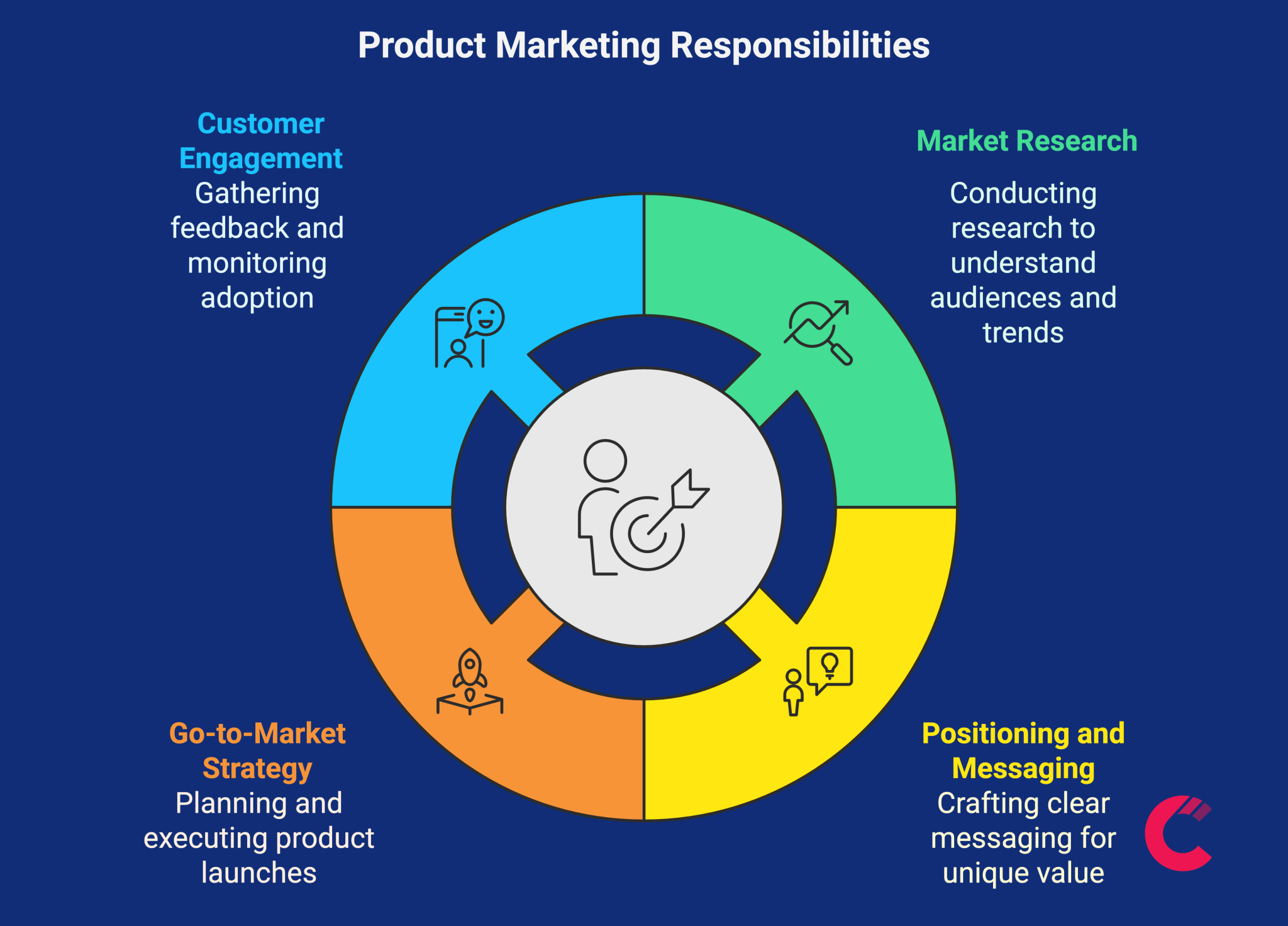
Product marketing responsibilities revolve around bridging the gap between product development and sales. Core duties include defining value propositions, conducting market research, orchestrating go-to-market strategies, and developin...
Product marketing responsibilities revolve around bridging the gap between product development and sales. Core duties include defining value propositions, conducting market research, orchestrating go-to-market strategies, and developing sales enablement materials. By aligning the product’s technical capabilities with customer needs, product marketers ensure sustainable adoption and drive long-term revenue growth.
Contents
In the fast-evolving business landscape of 2026, the role of a Product Marketing Manager (PMM) has shifted from a supportive function to a strategic powerhouse. As markets become more saturated and the cost of customer acquisition rises, the PMM acts as the "connective tissue" within an organization. They are responsible for ensuring that the product vision is translated into a language that resonates with the market, while simultaneously feeding market insights back to the product team to influence the roadmap.
Foundational Pillar: Market and Customer Intelligence
The bedrock of all product marketing responsibilities is an intimate understanding of the market and the customers within it. Without this data-driven foundation, messaging becomes guesswork and go-to-market strategies often miss the mark. In 2026, this involves more than just reading industry reports; it requires a sophisticated synthesis of qualitative and quantitative data.
Customer Segmentation and Persona Development
Product marketers must identify and define the specific groups of people most likely to benefit from the product. This process, known as segmentation, involves categorizing the market based on demographics, firmographics, and, most importantly, behavioral psychographics. Once segments are identified, the PMM creates "Buyer Personas"—fictionalized representations of the ideal customer. These personas include details such as their daily challenges, professional goals, decision-making criteria, and the specific "pain points" they hope to solve. By deeply understanding these personas, PMMs can tailor marketing efforts to speak directly to the individual's needs rather than using a generic "one-size-fits-all" approach.
Competitive Intelligence
Keeping a pulse on the competitive landscape is a continuous responsibility. A PMM must monitor direct competitors, indirect competitors, and emerging "disruptors." This involves analyzing competitor product updates, pricing shifts, and marketing tactics. The goal is not merely to copy what others are doing, but to find the "white space" in the market—the unmet needs or underserved segments where the product can uniquely excel. Competitive intelligence feeds into "battlecards," which are internal documents used by sales teams to handle objections when a prospect mentions a rival solution.
Market Trend Analysis
Beyond immediate competitors, product marketers look at the "macro" environment. This includes shifts in technology (such as new AI capabilities), regulatory changes, and evolving buyer behaviors. For instance, in 2026, many PMMs are navigating the shift toward hyper-personalized, automated buying journeys. Identifying these trends early allows the company to pivot its positioning or influence the product roadmap to stay ahead of the curve.
Strategic Messaging and Positioning
Once the market is understood, the PMM’s responsibility shifts to the "narrative." Positioning and messaging are the strategic foundations of how the world perceives the product.
The Art of Positioning
Positioning is the act of defining where your product fits in the customer's mind relative to other options. It answers the fundamental question: "Why should I choose you instead of the alternative?" Effective positioning focuses on a specific "unique selling proposition" (USP). For example, a project management tool might be positioned as "the most secure option for government agencies" rather than just "a tool for tasks." The PMM ensures this positioning is consistent across all touchpoints, from the website to the sales pitch.
Developing Messaging Frameworks
Messaging is the actual language used to convey the positioning. Product marketers develop "Messaging Houses" or frameworks that outline the primary value pillars and the supporting features for each.
- The Value Proposition: A high-level statement of the primary benefit.
- Core Pillars: Three to four key themes (e.g., Efficiency, Security, Scalability).
- Proof Points: Specific features or data points that validate the claims (e.g., "Reduces manual entry by 40%"). This framework serves as the "single source of truth" for the entire company. Content writers, social media managers, and sales reps all pull from this document to ensure the brand speaks with one voice.
Go-To-Market (GTM) Strategy and Execution
The Go-To-Market strategy is perhaps the most visible of all product marketing responsibilities. It is the comprehensive plan for how a new product or feature will be introduced to the market.
Launch Orchestration
A product launch is not a single event; it is a coordinated series of activities. PMMs categorize launches into "Tiers" based on their impact:
- Tier 1: Major new products or revolutionary updates requiring a full-scale campaign.
- Tier 2: Significant feature updates for existing users.
- Tier 3: Minor fixes or incremental improvements. The PMM manages the "launch calendar," ensuring that the engineering, marketing, and sales departments are all aligned on the release date. They oversee the creation of launch assets, including landing pages, email sequences, press releases, and social media announcements.
Distribution Channel Selection
A product marketer must decide which channels are most effective for reaching the target audience. This might involve a mix of organic search (SEO), paid advertising, influencer partnerships, or community engagement. In 2026, there is a heavy emphasis on "Product-Led Growth" (PLG), where the product itself acts as the primary driver of acquisition. In a PLG model, the PMM focuses on the "in-app" experience, ensuring that free-trial users see the product's value as quickly as possible (the "Aha! moment").
Sales Enablement and Internal Alignment
A product is only successful if the sales team can sell it effectively. Product marketers are responsible for "arming" the sales force with the knowledge and tools they need to close deals.
Asset Creation
PMMs produce a wide variety of sales collateral. These assets are designed to move a prospect through the sales funnel:
- Pitch Decks: Visual presentations that tell the product story.
- Case Studies: Real-world examples of how current customers have succeeded.
- White Papers: Deep-dive technical documents that establish thought leadership.
- ROI Calculators: Interactive tools that help prospects quantify the financial benefit of the product.
Sales Training and Feedback
Beyond creating documents, PMMs conduct training sessions for the sales and customer success teams. They explain the "Why" behind new features and teach reps how to handle specific objections. Crucially, this is a two-way street. Sales reps are on the front lines and hear customer feedback every day. The PMM must systematically collect this feedback and relay it to the product team to inform future development.
Measuring Success: PMM Metrics and KPIs
Product marketing is a highly accountable role. Success is measured through a combination of product usage data and revenue-based metrics.
| Metric Category | Key Performance Indicator (KPI) | Why It Matters |
|---|---|---|
| Market Adoption | Feature Adoption Rate | Measures if customers are actually using the features you launched. |
| Revenue Impact | Pipeline Contribution | Tracks how many sales opportunities were generated by PMM campaigns. |
| Sales Velocity | Win Rate | Indicates if sales enablement tools are helping reps close deals faster. |
| Customer Health | Churn Rate | Helps determine if the product is living up to the marketing promises. |
| Brand Perception | Share of Voice (SOV) | Measures how much the product is being discussed compared to competitors. |
Product Marketing vs. Related Roles
To understand the scope of product marketing responsibilities, it is helpful to distinguish them from other closely related functions.
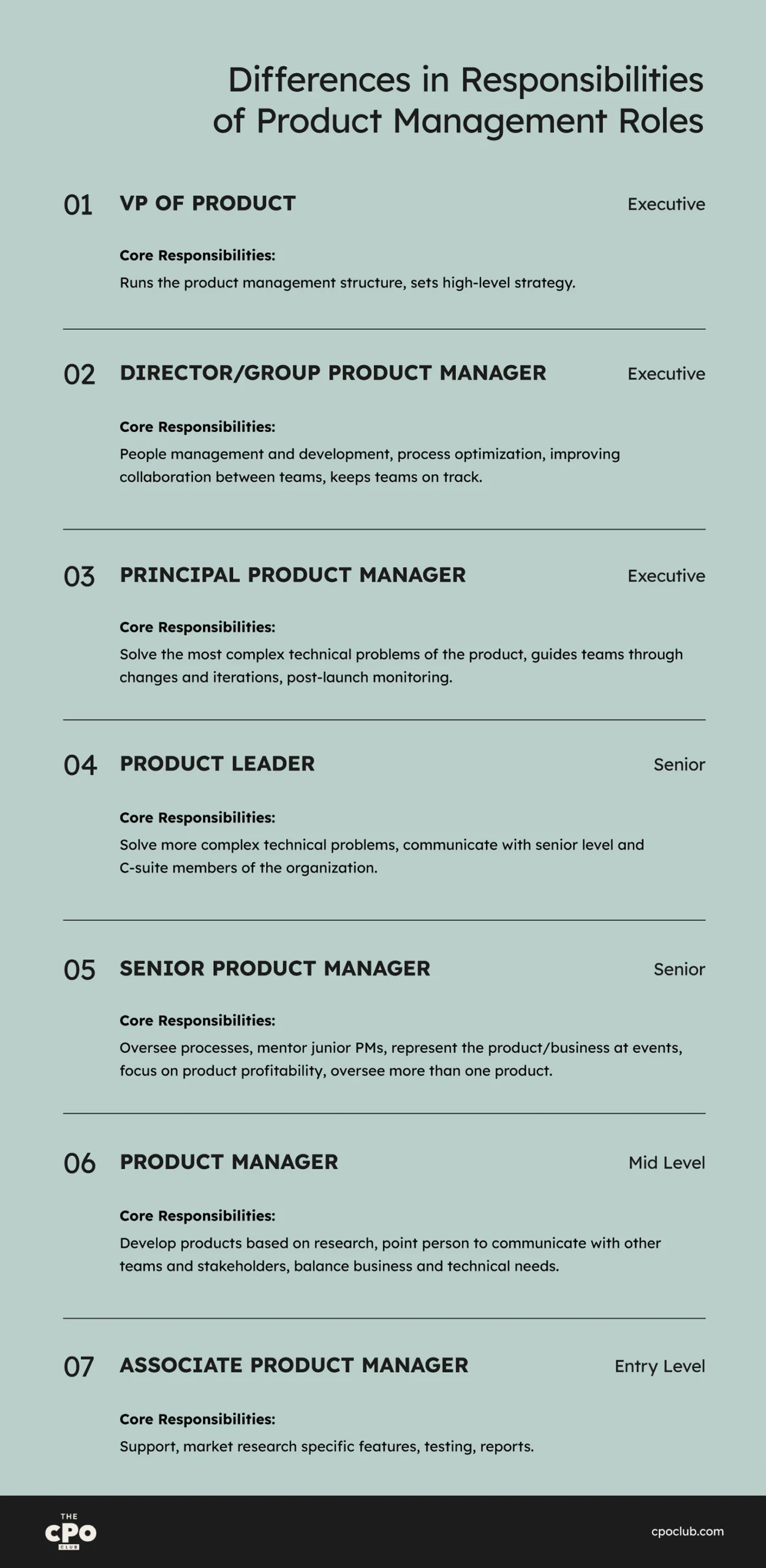
- Product Management (PM): While the PM focuses on what to build (technical specs, roadmap, engineering), the PMM focuses on how to sell it (messaging, GTM, market fit).
- Brand Marketing: Brand marketing focuses on high-level awareness and emotional connection with the company as a whole. Product marketing is more granular, focusing on the specific value of individual products.
- Demand Generation: Demand gen focuses on the "top of the funnel"—getting leads through the door. The PMM provides the content and messaging that the demand gen team uses to attract those leads.
Frequently Asked Questions
What are the most important skills for a Product Marketer in 2026?
The most critical skills include data storytelling, empathy for the customer, and cross-functional leadership. As AI handles more of the routine content generation, PMMs must excel at high-level strategy and the ability to synthesize complex technical details into human-centric narratives. Technical literacy is also vital, as PMMs must understand the "under the hood" mechanics of their products to market them accurately.
How does Product Marketing contribute to pricing strategy?
PMMs often lead or heavily influence pricing and packaging decisions. Because they have the deepest understanding of market willingness-to-pay and competitor pricing, they help determine whether a product should be sold as a subscription, a one-time purchase, or a consumption-based model. They also decide which features belong in "Basic" vs. "Enterprise" tiers to maximize revenue.
Is Product Marketing a technical or a creative role?
It is a hybrid of both. It is creative because it requires crafting compelling stories and visual identities for products. However, it is technical because it requires a deep understanding of the product’s architecture and the data-driven ability to analyze market trends and user behavior. A successful PMM can talk to a software engineer in the morning and a creative director in the afternoon.
How do you break into Product Marketing?
Most PMMs transition from roles in sales, content marketing, or product management. To break into the field, focus on building a portfolio that demonstrates your ability to simplify complex ideas. Certifications from organizations like the Product Marketing Alliance (PMA) are highly regarded in 2026 for establishing a baseline of industry-standard methodologies.
What is the difference between a GTM strategy and a marketing plan?
A marketing plan is a broad document covering all marketing activities for a set period (usually a year). A Go-To-Market (GTM) strategy is a specific, tactical plan for a single product launch or entry into a new market. The GTM is more focused on the "Product" and "Price" aspects of the marketing mix, whereas a general marketing plan focuses more on "Promotion."
Practical Recommendation for Success
To excel in product marketing, prioritize the internal feedback loop. It is easy to get caught up in external campaigns, but the most successful PMMs are those who act as the voice of the customer within their own company. Every quarter, host a "Market Insights" session where you present customer pain points and competitive threats to the engineering and executive teams. By positioning yourself as the expert on the market, you ensure that the product roadmap is always aligned with revenue opportunities.
Image Gallery