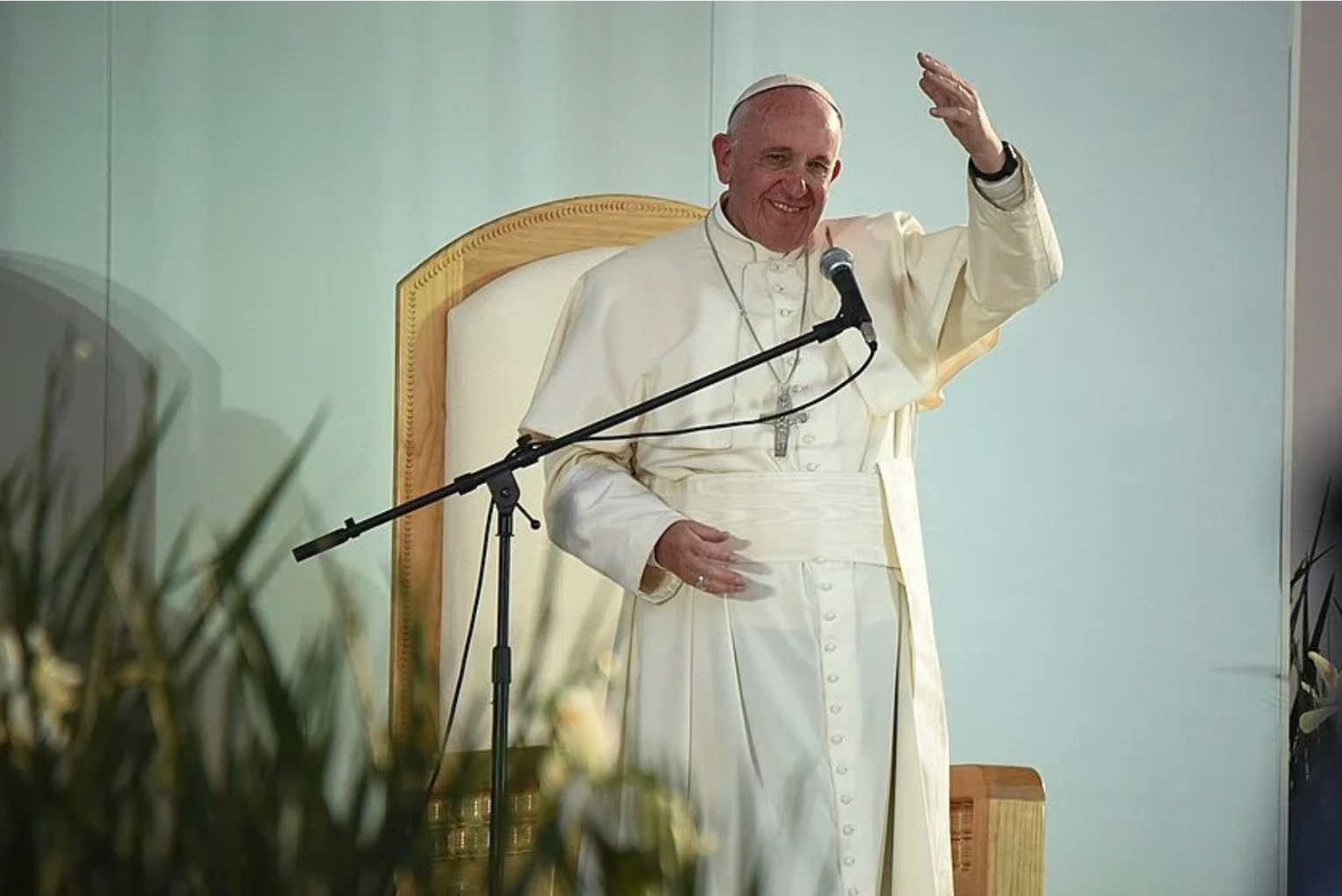
Francis the People’s Pope: A Legacy of Reform and Global Inclusion
Pope Francis earned the title "the people's pope" through his deliberate rejection of traditional papal luxury, his focus on the marginalized, and his push for a more inclusive, "listening" Church. Since his election in 2013, he has pr...
Pope Francis earned the title "the people's pope" through his deliberate rejection of traditional papal luxury, his focus on the marginalized, and his push for a more inclusive, "listening" Church. Since his election in 2013, he has prioritized social justice, environmental stewardship, and mercy over rigid dogmatic enforcement, fundamentally reshaping the global perception of the papacy.
Contents
As of 2026, the legacy of Pope Francis is defined not just by his approachable persona but by the structural and theological shifts he has institutionalized within the Catholic Church. Born Jorge Mario Bergoglio in Buenos Aires, Argentina, his journey from a chemical technician to the 266th Bishop of Rome represents a series of "firsts": the first Jesuit pope, the first from the Americas, and the first to take the name Francis—after St. Francis of Assisi, the patron of the poor.
The Origins of the People’s Pope: From Buenos Aires to the Vatican
The moniker "the people's pope" was not a marketing creation but a reflection of Bergoglio’s lifelong commitment to the "peripheries." In Argentina, as Archbishop of Buenos Aires, he was known as the "Slum Bishop." He famously gave up the archiepiscopal palace to live in a simple apartment, cooked his own meals, and traveled by public bus.
When he was elected on March 13, 2013, following the historic resignation of Pope Benedict XVI, he brought this "theology of the people" to the global stage. His first act as Pope was to ask the crowd in St. Peter’s Square to bless him before he blessed them—a radical reversal of the traditional hierarchy. This gesture set the tone for a papacy that would prioritize humility and human connection over clerical protocol.
Redefining Papal Authority: Humility as a Leadership Tool
One of the most visible ways Francis earned his reputation was through his rejection of the traditional "royal" trappings of the papacy. He chose to reside in the Casa Santa Marta, a Vatican guesthouse, rather than the secluded and ornate Apostolic Palace. This decision allowed him to interact with visitors, staff, and clergy daily, breaking the isolation that often characterizes the papal office.
His choice of transportation—opting for a simple Fiat or Ford Focus rather than armored limousines—and his decision to wear a plain silver cross instead of the traditional gold one were not merely symbolic. These choices served a strategic purpose: they signaled to the world that the Church's leadership was moving away from institutional self-preservation toward a model of "servant leadership." This approach resonated deeply with both Catholics and non-Catholics, positioning him as a moral leader for a modern, often disillusioned world.
Institutional Reform: Cleaning the Vatican’s House
While his public image is one of warmth and accessibility, Francis has spent a significant portion of his papacy engaged in the grueling work of administrative reform. The Roman Curia, the administrative body of the Holy See, had long been criticized for being opaque, bureaucratic, and resistant to change.
Structural Reorganization of the Curia
In 2022, Francis promulgated the apostolic constitution Praedicate Evangelium ("Preach the Gospel"). This document culminated years of work to reorganize the Vatican’s departments (Dicasteries). The most significant change was the elevation of the Dicastery for Evangelization to a position of higher importance than the Dicastery for the Doctrine of the Faith. This move codified Francis’s belief that the Church’s primary mission is to spread a message of mercy, not to function as a theological police force.
Financial Transparency and the IOR
The Institute for the Works of Religion (IOR), often called the "Vatican Bank," has historically been mired in scandal. Francis implemented rigorous transparency measures, aligned the Vatican with international anti-money laundering standards (Moneyval), and centralized the Holy See’s investments to prevent corruption. By 2026, these reforms have significantly professionalized the Vatican's financial operations, although the process faced immense internal resistance from the "old guard" within the Curia.
Key Pillars of the Francis Papacy
The "People’s Pope" is defined by three primary thematic pillars that have guided his encyclicals and public appearances: the environment, social justice, and synodality.
- *Environmental Stewardship (Laudato si’):* Published in 2015, this landmark encyclical called for "swift and unified global action" to combat climate change and poverty. Francis argued that the "cry of the earth" and the "cry of the poor" are the same, linking environmental degradation directly to the excesses of global capitalism.
- Social Justice and Human Fraternity (Fratelli tutti): In his 2020 encyclical, written during the global pandemic, Francis called for an end to "walls" and a move toward a global society built on brotherly love and social friendship. He criticized populist politics and the "throwaway culture" that marginalizes the elderly, the unborn, and the migrant.
- The Synod on Synodality: This multi-year process, which concluded its main Roman phases in late 2024 and moved into global implementation through 2025 and 2026, aimed to make the Church more collaborative. It invited laypeople—including women and those on the margins—to have a voice in Church governance.
Comparison of Papal Leadership Styles
The transition from the papacy of Benedict XVI to Francis marked a significant shift in both style and substance. While Benedict was a world-class theologian focused on the intellectual defense of the faith, Francis is a pastor focused on the practical application of the Gospel in everyday life.
| Feature | Pope Benedict XVI | Pope Francis |
|---|---|---|
| Primary Focus | Intellectual Orthodoxy | Pastoral Mercy |
| Living Quarters | Apostolic Palace | Casa Santa Marta (Guesthouse) |
| Key Emphasis | Tradition and Liturgy | Social Justice and the Poor |
| Geographic Focus | Eurocentric | The "Peripheries" (Global South) |
| Communication Style | Formal, Academic | Informal, Spontaneous |
| View on Reform | Reform in Continuity | Radical Institutional Change |
Challenges and Controversies
Being the "People's Pope" has not meant being universally loved. Francis has faced significant opposition from conservative factions within the Church who believe his focus on mercy and inclusion dilutes traditional Catholic doctrine.
His approach to sensitive issues, such as the pastoral care of LGBTQ+ individuals and the possibility of divorced and remarried Catholics receiving Communion (Amoris Laetitia), sparked "dubia" (formal doubts) from several cardinals. Furthermore, his handling of the global clergy sexual abuse crisis has been a point of intense scrutiny. While he has implemented stricter laws for reporting abuse (such as the motu proprio Vos estis lux mundi), many survivors' advocates argue that the Church still lacks sufficient transparency and accountability for high-ranking bishops who cover up crimes.
The Global Reach of a "Listening" Church
By 2026, the impact of Francis's "listening" model of the Church is evident in how local parishes operate. The emphasis has shifted from a top-down hierarchy to a "synodal" approach where the clergy are encouraged to walk alongside their parishioners. This has led to a more vibrant, if sometimes polarized, Church environment.
Francis’s travels have also been a hallmark of his papacy. He has consistently bypassed major Western capitals in favor of nations that are often overlooked, such as Iraq, South Sudan, and Mongolia. In doing so, he has shifted the gravity of the Catholic Church away from Europe and toward the Global South, where the majority of the world's Catholics now live.
FAQ
Why is Pope Francis called "the people's pope"?
The title stems from his relatable personality, his rejection of papal finery, and his focus on issues that affect ordinary people, such as poverty, labor rights, and climate change. He is known for breaking protocol to hug members of the crowd and for his informal "airplane press conferences" where he speaks candidly with journalists.
What are his most important writings?
His most influential works include Evangelii Gaudium (The Joy of the Gospel), which outlines his vision for a missionary church; Laudato si’ (On Care for Our Common Home), regarding the environment; and Fratelli tutti (On Fraternity and Social Friendship).
Has Pope Francis changed Catholic doctrine?
Technically, Francis has not changed core Catholic dogmas. However, he has significantly shifted "pastoral practice." He emphasizes that the law should not be used as a "stone to throw at people" and prioritizes individual discernment and the context of a person's life when applying Church teachings.
How did he reform the Vatican's finances?
He established the Secretariat for the Economy, hired external auditors, and streamlined the Vatican Bank's operations. His reforms were designed to ensure that the Church's resources are used for its mission rather than being lost to inefficiency or corruption.
What is his stance on LGBTQ+ issues?
Francis famously said, "Who am I to judge?" regarding a priest with a gay orientation. While he maintains the traditional definition of marriage as between a man and a woman, he has consistently advocated for a more welcoming and non-judgmental approach toward LGBTQ+ individuals, emphasizing that God loves all people as they are.
Practical Recommendation for Further Study
To truly understand the "People's Pope," one should look beyond the headlines and read his primary texts. Start with the Apostolic Exhortation Evangelii Gaudium, which serves as the "blueprint" for his entire papacy. Additionally, following the official Vatican News portal provides real-time updates on his ongoing reforms and global missions as he continues to guide the Church through the mid-2020s.
Image Gallery