How a Small Company Handles Accidental Death and Life Insurance Policies
A small company handles group life and accidental death and dismemberment (AD&D) insurance by selecting a licensed insurance provider, managing enrollment and beneficiary records, and facilitating the claims process if an employee dies...
A small company handles group life and accidental death and dismemberment (AD&D) insurance by selecting a licensed insurance provider, managing enrollment and beneficiary records, and facilitating the claims process if an employee dies. When an incident occurs, the employer notifies the insurer, guides the beneficiary through filing claim paperwork, submits an employer statement, and manages regulatory, payroll, and tax compliance.
Contents
Disclaimer: This article provides operational and educational information regarding group life insurance and AD&D policy administration. It does not constitute legal, tax, or financial planning advice. Small business owners and HR administrators should consult a qualified insurance broker, CPA, or labor attorney to address specific regulatory or plan design requirements.
Understanding Group Life and AD&D Insurance in Small Businesses
Offering life insurance and accidental death and dismemberment (AD&D) coverage is a standard method for small businesses to attract top talent and provide financial security to employees' families. However, managing these policies requires a clear understanding of how the coverage is structured and how different policy types function.
In a small enterprise environment, group life and AD&D insurance are typically offered as a combined benefit package. While both pay out cash benefits upon an employee’s death, they serve distinct operational functions:
Group Basic Life Insurance: Provides a tax-free lump-sum payout to designated beneficiaries regardless of the cause of death (illness, medical conditions, natural causes, or accidents), subject to standard policy exclusions like self-harm within the first two years. Employers usually fund 100% of basic coverage, offering either a flat dollar amount (such as $50,000) or a multiple of the employee's annual salary (such as 1x or 2x earnings).
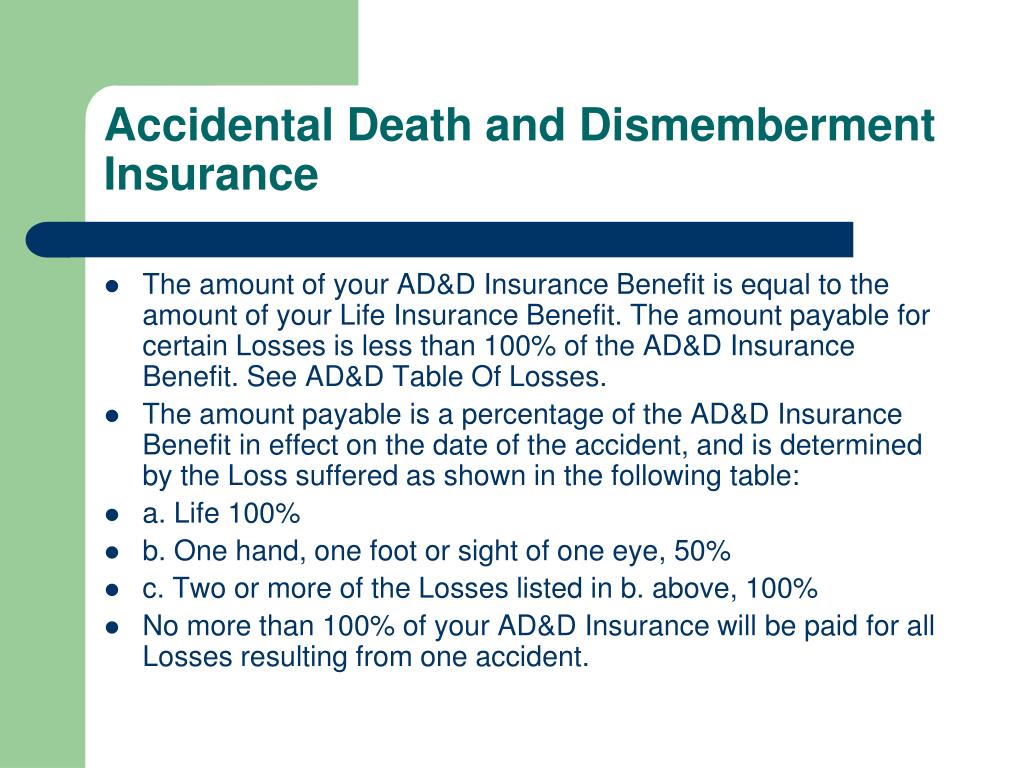
Accidental Death and Dismemberment (AD&D): Functions as a supplemental policy that pays benefits specifically if an insured employee dies or suffers severe injuries—such as loss of sight, speech, hearing, or limbs—as a direct result of a covered accident. If an employee dies accidentally, an AD&D policy pays a benefit in addition to the basic life policy, commonly referred to as "double indemnity."
Supplemental or Voluntary Group Life Insurance: Allows employees to purchase additional life insurance coverage beyond the employer-funded basic limit at negotiated group rates. Employees pay these premiums via post-tax or pre-tax payroll deductions.
Group Benefit Package
- Basic Group Life (Any cause of death)
- AD&D Policy / Rider (Accidental loss)
- Total Combined Protection
For small companies (typically defined as having 2 to 100 employees), insurers establish a Guaranteed Issue (GI) limit. This threshold allows employees to enroll up to a specified benefit amount (e.g., $50,000 or $100,000) without completing individual medical questionnaires or undergoing health underwriting. Amounts requested above the Guaranteed Issue limit require Evidence of Insurability (EOI), where the insurer reviews the individual's medical history before granting additional coverage.
Setting Up and Managing Policy Administration
Small businesses rarely maintain dedicated internal risk management or benefits departments. Consequently, policy administration relies on efficient workflows, third-party benefits platforms, and active partnership with an insurance broker or Professional Employer Organization (PEO).
1. Brokerage and Carrier Onboarding
Small business leadership works with an independent insurance broker or technology vendor to select an insurance carrier. The employer completes a master application, establishes eligibility criteria (e.g., full-time employees working 30+ hours per week), and defines waiting periods (e.g., coverage effective on the first day of the month following 30 days of employment).
2. Enrollment and Beneficiary Management
Proper recordkeeping is critical for small company benefit administration. Employers must ensure every eligible worker completes a formal enrollment process—either accepting or waiving coverage.
- Designating Beneficiaries: Employees must name primary and contingent beneficiaries. Primary beneficiaries receive the payout first; contingent beneficiaries receive funds only if all primary beneficiaries predecease the insured worker.
- Updating Records: Life changes such as marriage, divorce, or the birth of a child require updated beneficiary designations. Employers must maintain signed digital or physical records, as insurance carriers pay claims based strictly on the latest valid beneficiary form on file at the time of death.
- Active at Work Provision: Most group policies include an "active at work" clause, requiring an employee to be actively performing their regular job duties on the day coverage takes effect. If an employee is on medical leave or disabled when the policy goes live, their effective date is deferred until they return to active status.
3. Ongoing Census Reporting
Insurance premiums for group policies are calculated based on the business's active workforce demographic (age, salary, and coverage levels). The company administrator must submit monthly census updates to the insurer, adding newly eligible hires, updating salary changes that affect coverage limits, and terminating coverage for departing workers.
Step-by-Step Claim Handling: What Employers Must Do When a Death Occurs
When an active employee passes away, small company administrators must act swiftly and compassionately while maintaining legal and administrative rigor. Managing an accidental death or general life insurance claim involves five key operational steps.
- Immediate HR Outreach & Condolences
- Formal Notification to Broker & Carrier
- Beneficiary Support & Document Collection (Death Certificate)
- Submission of Employer Statement & Payroll Verification
- Final Payroll Processing & Benefits Continuation (COBRA/Port)
Step 1: Immediate Internal Communication and Compassionate Outreach
The HR lead or business owner should serve as the single point of contact for the deceased employee's family. Express condolences and offer reassurance that the company will assist with navigating benefit claims. Internally, communicate the news respectfully to staff while honoring the family's wishes regarding privacy.
Step 2: Contacting the Insurance Carrier or Broker
Notify the insurance company or benefits broker as soon as practical. The insurer will issue a claim packet, which typically includes:
- Employer Statement (Form 1): Completed by the company to verify employment, salary, active work status, and effective coverage dates.
- Claimant Statement (Form 2): Completed by the primary beneficiary to designate payout options and tax preferences.
- Attending Physician Statement (APS): Required if the death occurred shortly after policy inception or involved an extended medical event, though a death certificate usually satisfies basic proof.
Step 3: Assisting the Beneficiary with Claim Documentation
The primary operational burden for the employer is helping the grieving family complete their documentation without creating administrative delays.
- Death Certificate: The beneficiary or employer must secure a certified copy of the death certificate listing the cause and manner of death. For standard life insurance, this confirms the death. For an AD&D claim, the death certificate must confirm that death resulted directly from an accidental injury, independent of disease or natural causes.
- Accident Reports: If claiming AD&D benefits, the carrier will require supplementary documentation, such as police accident reports, autopsy reports, or toxicological screens, to rule out excluded factors (e.g., operating a vehicle under the influence or self-inflicted injuries).
Step 4: Submitting Employer Statements and Attestations
The employer must attach documentation proving the employee was properly covered. This includes:
- The employee’s original signed enrollment form or electronic enrollment timestamp.
- Payroll records verifying the employee was actively working and that required premium contributions were current.
- The official job description and salary documentation (if benefit amounts are tied to earnings).
Once submitted, the insurer reviews the file. Standard life insurance claims are generally paid within 14 to 30 days of receiving completed documentation. AD&D claims may take longer if an independent investigation into the accident is required.
Step 5: Handling Final Payroll, W-2s, and Dependent Benefits Continuation
In addition to the insurance claim, small employers must process final administrative balances:
- Final Compensation: Unpaid wages, accrued paid time off (PTO), or final bonuses owed to the deceased worker must be issued to the estate or designated beneficiary in accordance with state wage payment laws.
- Tax Withholding: Final wage payments made after death in the same calendar year are exempt from federal income tax withholding, but are subject to Social Security and Medicare (FICA) taxes. The employer issues a Form 1099-MISC to the beneficiary or estate for the unpaid wages, rather than reporting them on the employee's final W-2.
- Health Benefit Continuation: If the deceased worker covered dependents on the company’s health plan, the administrator must issue a COBRA continuation notice (or state mini-COBRA notice for businesses under 20 employees) allowing dependents to remain on the health plan at their own expense for up to 36 months following the qualifying event.
Tax Rules and Legal Compliance for Employer-Provided Life Insurance
Administering group life and AD&D coverage requires strict adherence to federal tax statutes and employee benefit regulations.
IRS Section 79 and Imputed Income
Under Internal Revenue Code Section 79, an employer can provide up to $50,000 of tax-free group term life insurance coverage to an employee.
If the employer provides more than $50,000 in basic life insurance, the cost of the coverage exceeding $50,000 is considered a taxable fringe benefit. This extra cost is called imputed income.
Imputed income is not cash paid to the worker; rather, it is a taxable value calculated using the IRS Uniform Premium Table I (based on the employee’s age). The administrator must calculate this monthly value and add it to the employee’s taxable wages on their pay stub and annual W-2 (Box 1, 3, and 5).
Example: A 45-year-old employee receives $150,000 in employer-paid basic life insurance. The excess coverage is $100,000 ($150,000 total minus $50,000 tax-exempt limit). According to IRS Table I rates, the taxable value per $1,000 of coverage per month for a 45-year-old is $0.15.
$\text{Monthly Imputed Income} = \left(\frac{$100,000}{1,000}\right) \times $0.15 = $15.00 \text{ per month}$
The employer adds $15.00 per month ($180.00 annually) to the employee's taxable wage calculations.
Employer-paid AD&D premiums are treated separately under IRC Section 106 and are generally exempt from income tax and imputed income calculations, provided the policy solely covers accidental loss or death.
ERISA Compliance and Plan Documentation
Most group life and AD&D insurance plans established by private employers are subject to the Employee Retirement Income Security Act (ERISA). ERISA mandates that employers:
- Provide employees with a Summary Plan Description (SPD) detailing plan rules, claim procedures, benefit formulas, and carrier contact information within 90 days of coverage effective dates.
- Maintain a written plan document.
- Follow formal claims and appeals processes if an insurer denies a claim.
Small companies with fewer than 100 participants in an unfunded or fully insured welfare plan are exempt from filing annual ERISA Form 5500 reports, which significantly reduces the administrative burden for small businesses.
Conversion and Portability Options
When an employee resigns, is laid off, or retires, group coverage ends. Federal laws and standard state insurance provisions require carriers to offer conversion or portability rights:
- Conversion: Allows the departing worker to convert their group term coverage into an individual whole life policy without passing a medical exam, regardless of health status. The employee must apply and pay premiums within a strict window (typically 31 days from termination).
- Portability: Allows the employee to continue their group term insurance policy under an individual term billing arrangement at group-adjacent rates, subject to policy restrictions.
Employers must provide terminating employees with a written conversion notice outlining these options before the 31-day grace period expires.
Small Business Life and AD&D Coverage Comparison
To clarify how these options function operationally, the following table compares key administrative characteristics of small company group insurance structures:
| Feature / Dimension | Group Basic Life Insurance | Voluntary Group Life Insurance | Accidental Death & Dismemberment (AD&D) |
|---|---|---|---|
| Primary Trigger for Benefit | Death by any cause (disease, medical illness, natural causes, or accident). | Death by any cause (disease, medical illness, natural causes, or accident). | Accidental death or loss of limb, sight, speech, or hearing directly from an accident. |
| Funding Source | 100% Employer-paid (typically). | 100% Employee-paid (payroll deduction). | Employer-paid or Employee-paid option. |
| Underwriting Requirements | Guaranteed Issue up to policy limits (no health questions). | Guaranteed Issue up to threshold; EOI required for higher limits. | Guaranteed Issue (no medical underwriting required). |
| Tax Impact on Employee | Tax-free up to $50,000 limit. Imputed income applies above $50k under IRS Sec 79. | Paid with post-tax payroll deductions; no imputed income. | Premiums paid by employer are tax-free income under IRC Sec 106. |
| Tax Payout to Beneficiary | Death benefit is received federally income-tax-free (IRC Sec 101a). | Death benefit is received federally income-tax-free (IRC Sec 101a). | Payout is received federally income-tax-free. |
| Employer Administrative Role | Census updates, premium payment, payroll tax tracking, claim facilitation. | Managing voluntary payroll deductions, carrier billing adjustments. | Census updates, claim facilitation, submitting accident documentation. |
Common Operational Challenges and How Small Businesses Avoid Them
Administering life and AD&D policies in a small firm comes with specific practical challenges. Lacking a full compliance division, small businesses often encounter three major operational mistakes:
1. Outdated Beneficiary Designations
- The Issue: An employee enrolled ten years ago named a parent or former spouse as beneficiary and never updated the form after getting married or having children. Upon death, the insurance carrier must pay the individual named on the formal documentation, regardless of changing life circumstances or informal verbal requests made to management.
- Prevention: Conduct an annual benefit audit during open enrollment, prompting every employee to review and re-confirm their listed primary and contingent beneficiaries via the payroll or benefits portal.
2. Missing Active-at-Work Documentation
- The Issue: An employee undergoes medical leave and passes away while off work. The insurance carrier investigates whether the employee met the active-at-work requirement when a policy renewal or benefit increase took effect.
- Prevention: Maintain clear time-tracking, medical leave, and FMLA/FMLA-equivalent documentation. Work closely with your broker to ensure premium waivers or disability extensions (such as Waiver of Premium provisions) are submitted immediately if an employee becomes extendedly disabled.
3. Claim Exclusions and AD&D Delays
- The Issue: Beneficiaries expect immediate payouts following an accidental death, but the AD&D insurer delays payment pending toxicology or law enforcement reports.
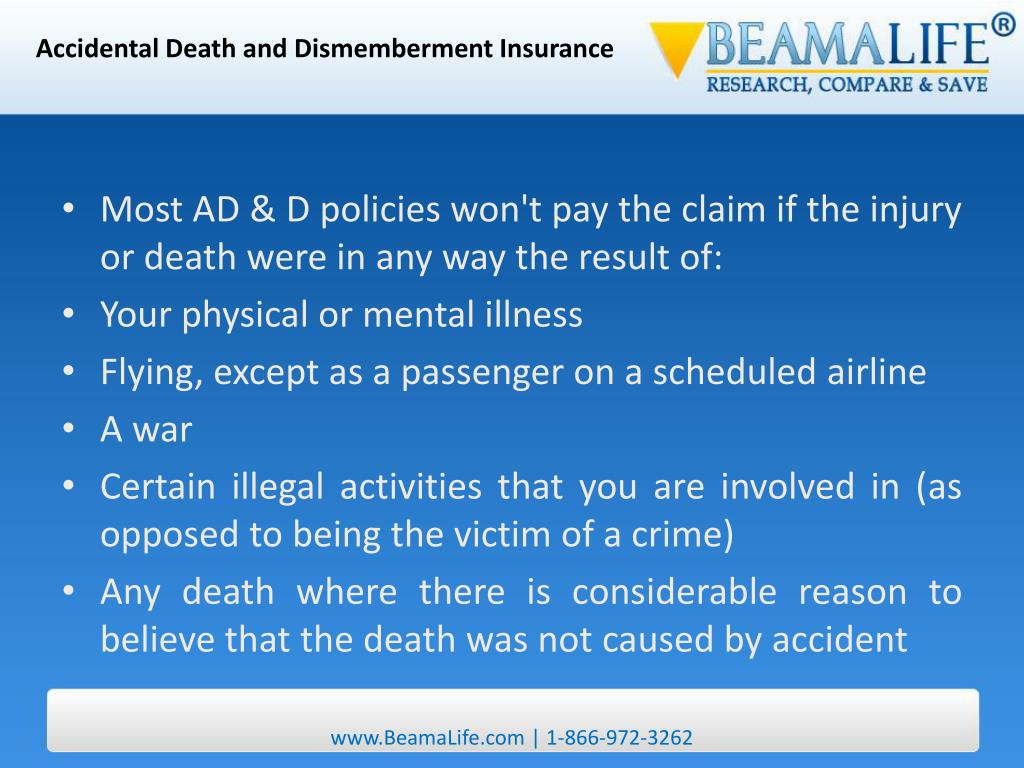
- Prevention: Educate beneficiaries that AD&D claims require an independent investigation to prove the event satisfies policy terms (e.g., death occurred within 90 or 365 days of the accident and was not caused by illness or medical malpractice). Managing expectations early prevents unnecessary conflict during the review period.
Frequently Asked Questions
What happens if an employee dies without listing a beneficiary?
If an employee fails to name a beneficiary or if all listed beneficiaries pass away before the employee, the insurance carrier distributes the death benefit according to the "Facility of Payment" clause in the master policy. Typically, the payout follows a set hierarchy: surviving spouse, surviving children, surviving parents, surviving siblings, and finally the deceased worker's estate. Payouts made directly to an estate may enter court probate, delaying fund release.
Are life insurance payouts to beneficiaries considered taxable income?
No. Under Internal Revenue Code Section 101(a), life insurance and AD&D death benefits paid to a designated beneficiary are generally exempt from federal income tax. However, if the carrier holds the benefit amount and pays interest on the balance before final disbursement, any interest accrued is taxable income to the recipient.
How does a small company handle life insurance for a business owner or key executive?
Small businesses often buy specialized Key Person Life Insurance or execute a Cross-Purchase Buy-Sell Agreement. Unlike standard employee benefit group life, Key Person insurance names the company as the beneficiary. If a critical executive or founder dies, the business receives a tax-free cash payout to stabilize operations, hire a replacement, or purchase the deceased founder’s equity shares from their estate without depleting operating capital.
Can an employee keep their group life insurance if they leave the business?
Yes, under conversion or portability options. When an employee separates from the business, the employer must provide a notice detailing their right to convert group coverage into an individual policy or port group term coverage without undergoing medical underwriting. The former employee must submit the application and pay individual rates directly to the carrier within the designated window (usually 31 days).
Do small companies pay premiums while an employee is on extended sick leave?
It depends on the company's established employee manual policies and the terms of the insurance contract. Many group life policies include a Waiver of Premium clause. If an employee becomes totally disabled before a specified age (usually 60), the insurance company waives future premium payments while maintaining life coverage. If no waiver exists, the employer must establish clear policy rules regarding how long they will fund benefits during unpaid leaves of absence.
Practical Recommendations for Small Business Administrators
Managing accidental death and group life policies requires balancing human empathy with strict legal and tax compliance. Small business owners and HR leaders should implement the following steps to ensure proper administration:
- Conduct an Annual Beneficiary Audit: Every year during open enrollment, require staff to log into your benefits portal or complete a updated physical form confirming their primary and contingent beneficiaries.
- Automate Imputed Income Calculations: Ensure your payroll software is correctly configured to calculate IRS Section 79 Table I imputed income for any employee receiving employer-paid life insurance over $50,000.
- Create a Death Benefit Claims Checklist: Maintain an internal protocol document outlining exact steps, required forms, payroll handling procedures, and broker contact info so your company can handle a crisis smoothly and professionally.
- Review Master Policy Exclusions: Review your insurer's master contract annually with a licensed broker to understand specific AD&D exclusions, active-at-work provisions, and conversion notification requirements.
Image Gallery