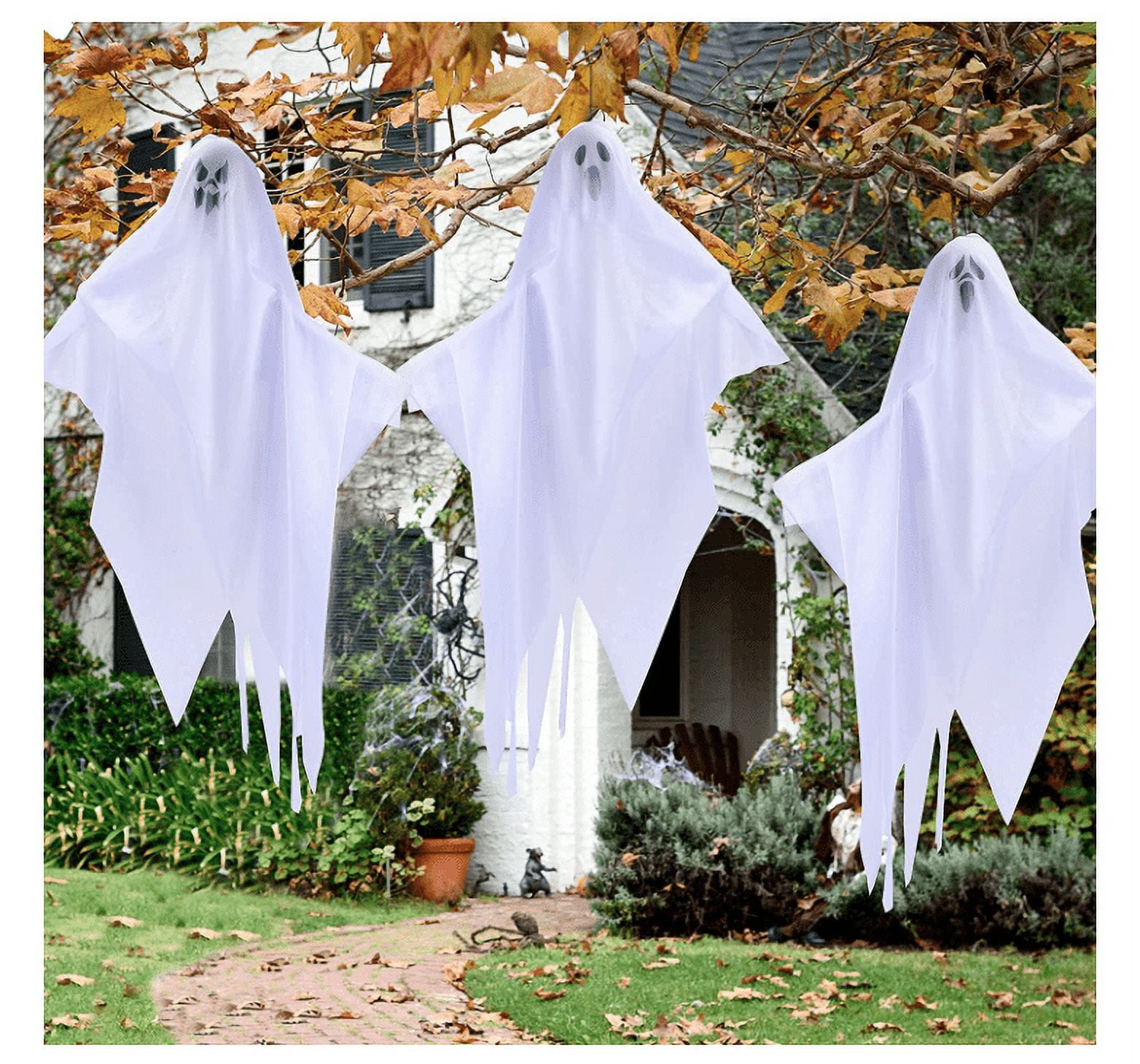
How to Make a Flying Ghost: A Complete Guide to DIY Halloween Haunts
A flying ghost is created using three primary methods: static suspension with monofilament line for a hovering effect, a motorized crank system (known as a "Crank Ghost") for repetitive lifelike movement, or a remote-controlled drone f...
A flying ghost is created using three primary methods: static suspension with monofilament line for a hovering effect, a motorized crank system (known as a "Crank Ghost") for repetitive lifelike movement, or a remote-controlled drone for autonomous flight. The choice depends on your budget, technical skill, and whether the ghost is intended for indoor or outdoor display.
Contents
The illusion of a spectral figure gliding through the air remains one of the most effective ways to elevate a Halloween display from a simple yard setup to a professional-grade "haunt." As we move through 2026, the technology available to DIY enthusiasts—from high-torque micro-motors to lightweight carbon-fiber drone frames—has made it easier than ever to achieve these effects. However, the success of a flying ghost relies less on expensive gadgets and more on the physics of movement, the weight of the materials, and the clever use of lighting.
Understanding the Mechanics of Spectral Movement
Before gathering materials, it is vital to understand the "creep factor" associated with ghost movement. Human perception is highly sensitive to biological motion. A ghost that hangs perfectly still is often less frightening than one that bobs slightly or glides with an unpredictable, non-linear path.
The most common DIY project is the Crank Ghost. This relies on a mechanical linkage that converts the circular motion of a motor into a vertical "walking" or "floating" motion. If you prefer something more mobile, a Drone Ghost utilizes the thrust of a quadcopter to navigate open spaces. For those seeking simplicity, the Pulley and Line method uses a continuous loop of fishing line to transport a ghost between two points, such as from a second-story window to a tree.
Essential Materials and Prerequisites
To build a high-quality flying ghost in 2026, you need to balance durability with lightness. If the ghost is too heavy, your motors will burn out; if it is too light, the wind will catch it and ruin the illusion.
The Ghost Form (The "Skin")
- Cheesecloth or Scrim: This is the industry standard. It is lightweight, catches light beautifully, and has a tattered look that fits the aesthetic.
- Stiffening Agent: Fabric stiffener or a water-and-glue mixture helps the ghost hold its shape while still allowing the edges to flutter.
- Head and Shoulders: A 6-inch Styrofoam ball or a lightweight plastic skull serves as the head. Wire coat hangers or 1/4-inch PEX tubing can create a flexible shoulder frame.
The Power Source
- Wiper Motors or Gear Motors: For mechanical ghosts, a 12V DC motor is preferred for its high torque and ability to run for hours without overheating.
- Power Supplies: A 12V 5A power adapter is usually sufficient for most DIY rigs.
- Control Boards: In 2026, many builders use Wi-Fi-enabled microcontrollers like the ESP32 to trigger ghost movements via motion sensors or smart-home routines.
Method 1: The Mechanical Crank Ghost (FWA Style)
The "Flying With Axle" (FWA) or Crank Ghost is the gold standard for yard haunts. It creates a ghost that appears to rise and fall while its arms move independently.
Step 1: Building the Frame
Construct a rectangular frame using 1x2 wood or PVC pipe. This frame will be mounted to the ceiling of a porch or a tall wooden rig in the yard. The motor is mounted in the center of this frame.
Step 2: Designing the Crank Arm
Attach a "crank arm" to the motor shaft. This is a flat piece of metal or wood about 6 to 10 inches long. As the motor spins, the end of this arm travels in a wide circle.
Step 3: The Three-Point Suspension
This is where the magic happens. Run three separate lines of high-test monofilament (fishing line) from the ghost:
- The Head Line: Attaches to the center of the crank arm.
- The Left Arm Line: Attaches to the outer edge of the frame.
- The Right Arm Line: Attaches to the opposite edge of the frame.
As the motor turns, the head rises and falls. Because the arm lines are fixed to the frame, the ghost’s arms will appear to "reach" toward the ground as the head rises, creating a fluid, swimming motion through the air.
Step 4: Weighting and Balancing
A ghost that is too light will bounce erratically. Add a few metal washers inside the Styrofoam head or at the bottom of the "torso" to provide just enough tension on the lines to keep them taut.
Method 2: The Modern Drone-Powered Ghost
With the advancement of silent propulsion systems in 2026, using a drone to fly a ghost is increasingly popular for neighborhood "jump scares" or choreographed performances.
Choosing the Right Drone
You do not need a high-end cinema drone. A mid-range quadcopter with at least 20 minutes of flight time and "Return to Home" safety features is ideal. However, the ghost must be designed to avoid the propellers.
Aerodynamics and Prop Wash
The biggest challenge with drone ghosts is "prop wash"—the downward air pushed by the rotors. If you drape cheesecloth directly over the drone, the air will push the fabric into the props, causing a crash.
- The Solution: Use a "stand-off" rig. This is a lightweight carbon fiber rod (about 3 feet long) hanging below the drone. The ghost is attached to the bottom of this rod. This keeps the fabric well away from the spinning blades.
Legal and Safety Considerations
When flying a drone ghost, you must adhere to local aviation regulations. In the United States, the Federal Aviation Administration (FAA) requires drones over 250 grams to be registered. Additionally, flying over crowds or at night requires specific lighting (anti-collision lights) and, in some jurisdictions, a remote pilot certificate.
Method 3: The Static Line (Simple Suspension)
If you have two high points, such as a roofline and a tree, you can create a ghost that "flies" back and forth across your yard using a simple pulley system.
- Install a Guide Wire: String a line of heavy-duty fishing line or aircraft cable between the two points.
- The Carriage: Use a small pulley or a carabiner to slide along this line.
- Drive Line: Attach a second loop of string to the carriage. Run this loop through pulleys at both ends. By pulling one side of the loop (or attaching it to a slow-turning motor), you can move the ghost back and forth across the yard.
Comparison of Flying Ghost Methods
| Feature | Crank Ghost (Mechanical) | Drone Ghost (High-Tech) | Static Line (Manual/Motor) |
|---|---|---|---|
| Skill Level | Intermediate | Advanced | Beginner |
| Cost (Est. 2026) | $100 - $250 | $400 - $1,200 | $20 - $60 |
| Durability | High (All-weather) | Low (Battery dependent) | Medium |
| Movement | Repetitive/Bobbing | Fully Autonomous | Linear (Back/Forth) |
| Best Location | Porch/Covered Yard | Open Fields/Large Lawns | Between Trees/Buildings |
Advanced Effects: Lighting and Sound
A flying ghost is only as good as its presentation. In the dark, a white sheet looks like... a white sheet. To make it look like an apparition, you must master lighting.
UV Lighting (Blacklights)
Treat your cheesecloth with a fluorescent dye or laundry detergent containing "optical brighteners." When hit with a 395nm UV LED floodlight, the ghost will glow with an eerie blue-white light while the supporting wires remain invisible.
Directional Spotlighting
Avoid lighting the ghost from the front. Use "side-lighting" or "under-lighting." This creates deep shadows in the folds of the fabric, giving the ghost a three-dimensional, hollow appearance. According to the Illuminating Engineering Society (IES), low-angle lighting is the most effective way to create "spooky" textures on translucent surfaces.
Sound Synchronization
In 2026, small, weather-resistant Bluetooth speakers can be hidden inside the ghost's head. Use a localized sound file—such as a low-frequency moan or the sound of rushing wind—to complete the sensory experience.
Safety and Troubleshooting
- Entanglement: Ensure your flying ghost is not placed near power lines or busy walkways. If using a motorized rig, include a "breakaway" point in the line so that if a person walks into the ghost, the line snaps rather than pulling the motor or frame down.
- Motor Heat: If the motor feels hot to the touch, your ghost is too heavy or your crank arm is too long, creating excessive leverage. Shorten the arm or use lighter fabric.
- The "Invisible" Line: Monofilament is reflective. To make it truly invisible at night, rub the line with a black permanent marker or use specialized "smoke-colored" fishing line.
- Weather Resistance: For outdoor setups, ensure all electrical connections are housed in NEMA-rated waterproof boxes. The Consumer Product Safety Commission (CPSC) recommends using Ground Fault Circuit Interrupter (GFCI) outlets for all outdoor holiday decorations to prevent electrical shock.
Frequently Asked Questions
What is the best fabric for a flying ghost?
Cheesecloth (Grade 10 or 90) is the best choice because its open weave allows wind to pass through it, reducing the "sail effect" that can knock over your rig. It is also highly absorbent, making it easy to dye with UV-reactive paints.
How do I hide the fishing line during the day?
You generally cannot hide the line during the day. Most professional "home haunters" only activate their flying ghosts after sunset. If you must display it during the day, use the thinnest possible fluorocarbon line, which has a refractive index similar to water and is less visible than standard nylon.
Can I use a regular oscillating fan to make the ghost fly?
A fan can create "flutter," but it won't create a "flying" or "gliding" movement. You can use a fan in conjunction with a static line to give the ghost's hemline a constant, ghostly ripple.
Is it legal to fly a ghost drone in my neighborhood?
Yes, provided you follow FAA rules (in the US) regarding altitude, line-of-sight, and weight. You should never fly a drone ghost over public roads or into neighbors' yards without permission, as this may be considered a nuisance or a privacy violation.
Final Recommendation
For most DIYers, the Mechanical Crank Ghost offers the best balance of "wow factor" and reliability. It provides a consistent, haunting movement that can run all night without human intervention. Start by building a simple frame and experimenting with the three-point suspension system; once you master the mechanical timing, the transition from a simple prop to a legendary neighborhood attraction is just a few yards of cheesecloth away.
Image Gallery