Is Split Dollar Life Insurance Premium Taxation a Tax Advantage or a Tax Trap?
Split dollar life insurance is a sophisticated financial arrangement that functions as either a high-leverage tax advantage or a punishing tax trap depending entirely on its structural design and exit strategy. By splitting the costs a...
Split dollar life insurance is a sophisticated financial arrangement that functions as either a high-leverage tax advantage or a punishing tax trap depending entirely on its structural design and exit strategy. By splitting the costs and benefits of a permanent life insurance policy between two parties—typically an employer and an executive—it allows for significant wealth transfer and liquidity. However, without precise adherence to Internal Revenue Service (IRS) regulations under Treasury Regulation Sections 1.61-22 or 1.7872-15, the "phantom income" and "rollout" liabilities can create a catastrophic tax burden.
Contents
Understanding the Split Dollar Mechanism in 2026
To determine if split dollar is an advantage or a trap, one must first understand that split dollar is not a type of insurance policy, but rather a contractual arrangement regarding the ownership and payment of a policy. In 2026, these arrangements remain a cornerstone of executive compensation and estate planning for high-net-worth individuals, especially following the sunset of several Tax Cuts and Jobs Act (TCJA) provisions.
In a typical scenario, an employer pays the premiums on a permanent life insurance policy (such as Whole Life or Indexed Universal Life) for an employee. The "split" occurs in two places:
- The Death Benefit: The employer is usually reimbursed for its premium payments from the death proceeds, while the employee’s beneficiaries receive the remainder.
- The Cash Value: Depending on the agreement, the employer and employee share the policy’s cash accumulation.
The tax treatment of these premiums is dictated by who "owns" the policy, leading to two distinct tax regimes. Choosing the wrong regime for a specific financial goal is the most common way this advantage turns into a trap.
The Economic Benefit Regime: A Potential Trap for the Long-Term
Under the Economic Benefit Regime (often used in "Endorsement" split dollar), the employer is the legal owner of the policy. The employee receives a "current life insurance protection" benefit each year. The IRS views this as a taxable fringe benefit.
The Advantage
The immediate tax advantage is low-cost access to a large death benefit. The employee is not taxed on the full premium paid by the employer. Instead, they are taxed only on the "economic benefit" of the insurance protection. This value is calculated using the lower of the insurer's qualified current term rates or the IRS Table 2001 rates. For a young executive, this taxable amount is a fraction of the actual premium.
The Trap: The Rising Cost of Age
The trap lies in the mathematics of mortality. As the insured individual ages, the cost of one-year term insurance (the Table 2001 rate) increases exponentially. What began as a $1,000 taxable benefit at age 45 can balloon into a $50,000 or $100,000 annual tax liability by age 75.
Furthermore, if the arrangement is designed to give the employee a portion of the policy's cash value equity, that equity may be taxed as compensation the moment it becomes "substantially vested." Many older "equity split dollar" plans fell into this trap when the IRS issued the 2003 regulations, turning what was thought to be a tax-free build-up into a massive income tax event.
The Loan Regime: Leveraging Interest Rates for Advantage
Under the Loan Regime (typically "Collateral Assignment" split dollar), the employee or an Irrevocable Life Insurance Trust (ILIT) owns the policy. The employer’s premium payments are treated as a series of loans to the policy owner.
The Advantage
This regime is often considered the superior "tax advantage" in 2026 for estate planning. The "tax" the employee pays is not based on the cost of insurance, but on the interest that should have been charged on the loan. If the employer charges interest at the Applicable Federal Rate (AFR) and the employee pays it, there is no taxable income. If the interest is "below-market," the employee is taxed on the imputed interest.
Because the AFR (even in the fluctuating interest rate environment of 2026) is often lower than the internal rate of return on a well-funded life insurance policy, the executive effectively uses the employer’s capital to build a private, tax-advantaged asset.
The Trap: The "Underwater" Loan
The trap in the loan regime occurs if the policy's cash value does not grow as projected. If the policy underperforms, the loan balance (the premiums paid plus any accrued interest) might eventually exceed the policy’s cash value. At the "rollout" (the point where the arrangement is terminated), the employee must repay the employer. If the policy cannot cover the repayment, the employee must use outside assets, or the employer must forgive the loan—which triggers immediate, ordinary income taxation on the forgiven amount.
Comparing the Two Taxation Regimes
The following table summarizes the technical differences that determine whether the arrangement serves your specific financial goals or creates a liability.
| Feature | Economic Benefit Regime | Loan Regime |
|---|---|---|
| Legal Owner | Employer | Employee or Trust (ILIT) |
| Tax Basis | Value of "Insurance Protection" (Table 2001) | Interest on Premiums (AFR Rates) |
| Primary Advantage | Low initial cost for young executives | High-leverage wealth transfer/Estate planning |
| The "Trap" | Costs skyrocket with age; equity taxation | Loan interest accrual; policy underperformance |
| Best Use Case | Short-term death benefit needs | Long-term executive retention/Estate liquidity |
| Termination (Rollout) | Transfer of policy is a taxable event | Repayment of loan (often via cash value) |
The "Rollout" Crisis: Where Most Traps are Sprung
The "rollout" is the termination of the split dollar arrangement, usually at retirement. This is the moment of truth where an advantage can transform into a trap. In a rollout, the employer's interest in the policy is satisfied, and the employee becomes the sole owner of the policy and its remaining cash value.
In an Economic Benefit plan, if the policy is transferred to the employee, the fair market value of the policy (minus any amount the employee paid) is taxed as ordinary income. In 2026, with higher top-tier income tax rates, this can result in a tax bill taking 40-50% of the policy's value.
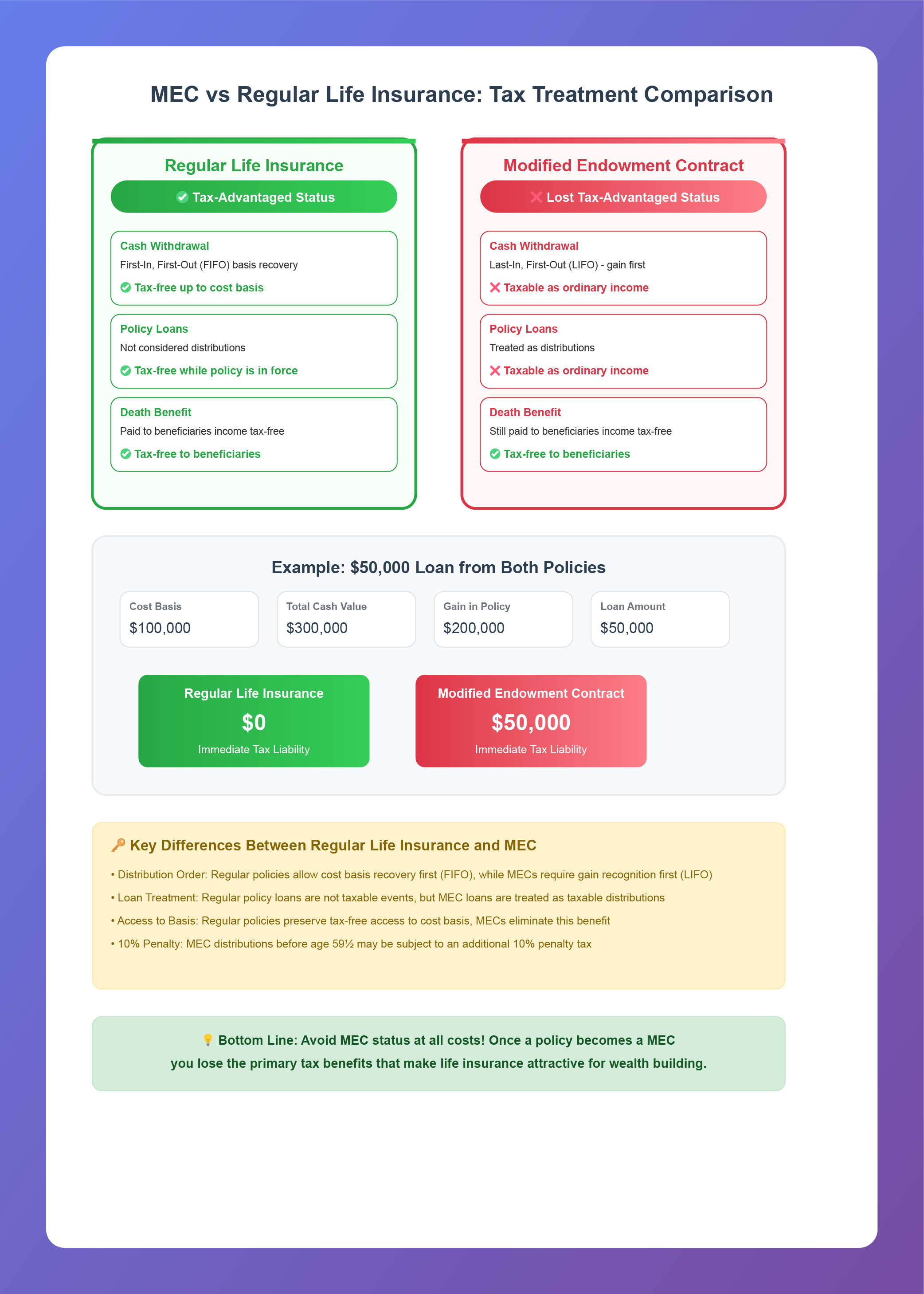
In a Loan Regime plan, the rollout requires the employee to pay back the total premiums advanced. If this is done by withdrawing cash from the policy, it must be managed carefully. If the withdrawal exceeds the "basis" (the amount of premiums paid), it could trigger taxation, or worse, cause the policy to lapse. A lapsed policy with an outstanding loan results in a "tax bomb," where all previous gains are taxed as ordinary income even though no cash is distributed.
2026 Estate Tax Considerations
With the 2026 sunset of the high estate tax exemptions from the previous decade, split dollar has seen a resurgence in Private Split Dollar arrangements. These are used between a donor and an ILIT to move wealth out of an estate while using the donor's gift tax annual exclusion only for the "economic benefit" or "interest" cost, rather than the full premium.
The "advantage" here is the ability to fund a $10 million policy while only reporting a gift of perhaps $20,000 (the economic benefit). The "trap" is the 2026 IRS focus on "valuation of the receivable." If a donor enters a split dollar agreement and dies, the IRS may argue that the "receivable" (the right to be paid back the premiums) is worth the full value of the premiums paid, even if the policy hasn't grown that much yet, leading to unexpected estate taxes.
Common Mistakes to Avoid
- Failing to Update Interest Rates: In a loan regime, if you use a "demand loan" instead of a "term loan," the interest rate (AFR) fluctuates annually. Many taxpayers fail to adjust their imputed income calculations, leading to IRS audits and penalties.
- Ignoring the "Equity" Clause: If your agreement was written before the 2003 final regulations and hasn't been reviewed, you might be sitting on a "frozen" plan that will trigger massive taxes upon the death of the insured or the termination of the plan.
- Inadequate Funding: A "trap" often emerges simply because the policy was underfunded. If the cash value doesn't grow enough to pay off the employer at retirement, the executive is left with a choice between a massive tax bill or losing the coverage entirely.
FAQ
What is the "Table 2001" rate and why does it matter?
Table 2001 is an IRS-provided schedule that dictates the "value" of $1,000 of life insurance protection based on the age of the insured. It is the mandatory measurement for the Economic Benefit Regime unless the insurer has lower, publicly available term rates. It matters because these rates increase every year, meaning your "tax advantage" diminishes as you age.
Can split dollar life insurance be used for key person insurance?
Generally, no. Split dollar is designed to provide a benefit to an employee or their heirs. Key person insurance is designed to protect the business itself. While a business can use split dollar to retain a key person, the tax structure is focused on the benefit provided to the individual, not the business's loss.
How did the 2026 tax changes affect split dollar?
The primary impact in 2026 is the reduction of the federal estate tax exemption. Because more estates are now subject to tax, the "advantage" of using split dollar to fund ILITs has increased. However, the IRS has also increased its enforcement of "below-market loans," making it essential that the AFR used in the agreement is documented correctly.
Is it possible to switch from the Economic Benefit Regime to the Loan Regime?
Switching is technically possible but highly complex. It usually involves "terminating" the first arrangement, which can trigger the very tax trap you are trying to avoid. Most practitioners recommend getting the structure right from the beginning rather than attempting a mid-stream conversion.
What happens if the employer goes bankrupt?
This is a significant risk (and a potential trap). In a collateral assignment (Loan Regime), the employer has a lien on the policy. In a bankruptcy, the employer’s creditors may attempt to seize the policy's cash value to satisfy the employer's debts, potentially leaving the executive with nothing despite years of paying taxes on the benefit.
Final Recommendation
To ensure split dollar life insurance remains a tax advantage rather than a tax trap, you must have a documented Exit Strategy (Rollout) at the time of inception. If the goal is long-term estate planning or retirement income, the Loan Regime is generally the superior choice in 2026, provided the policy is over-funded to handle loan repayments. If the goal is short-term death benefit protection for a young executive, the Economic Benefit regime may suffice. Always consult with a tax attorney to ensure the agreement complies with the 2003 final regulations and current 2026 interest rate requirements.
Image Gallery