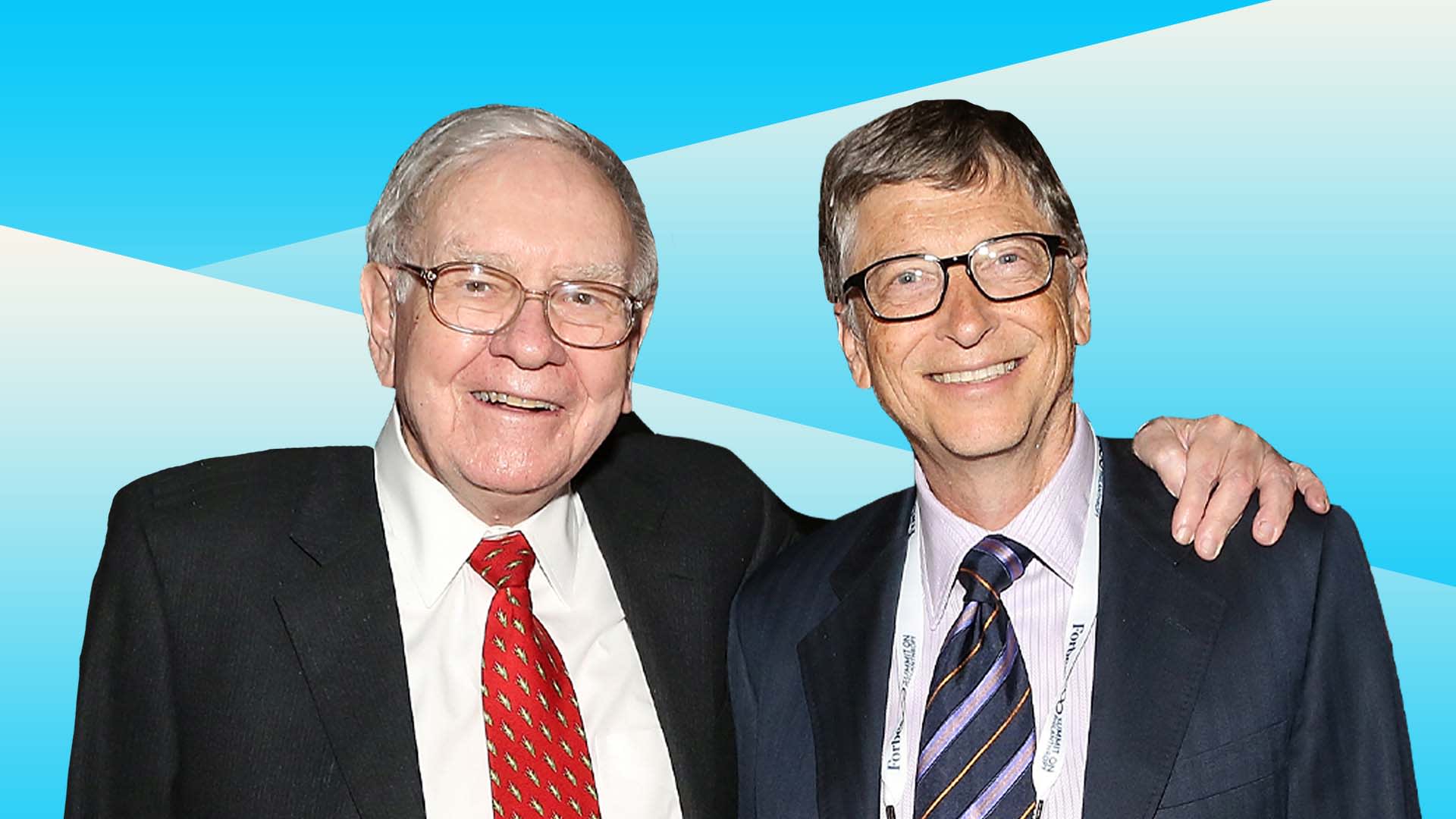
The Inner Circle: Understanding the Significant Friendships of Bill Gates
The most influential figures in Bill Gates’ life include Microsoft co-founder Paul Allen, who shared his early vision for personal computing, and Warren Buffett, whose mentorship transformed Gates into a global philanthropist. These re...
The most influential figures in Bill Gates’ life include Microsoft co-founder Paul Allen, who shared his early vision for personal computing, and Warren Buffett, whose mentorship transformed Gates into a global philanthropist. These relationships, alongside his complex bond with Steve Jobs, have fundamentally shaped the trajectories of modern technology and international development.
Contents
While Bill Gates is often portrayed as a singular, driven architect of the software age, his success and subsequent evolution into a philanthropic leader were heavily influenced by a small circle of confidants. These friendships were rarely just social; they were intellectual partnerships that solved complex problems, from the early days of microcomputing to the present-day challenges of climate change and global health. In 2026, as we look back on decades of his influence, the roles of these individuals remain the most vital keys to understanding his public and private legacy.
The Foundation: Paul Allen and the Birth of Microsoft
The friendship between Bill Gates and Paul Allen is the cornerstone of the personal computer revolution. Their relationship began at Lakeside School in Seattle in the late 1960s. Allen, two years older, shared Gates' obsession with the school’s Teletype terminal, a rare luxury at the time. This bond was forged over a shared language—specifically, the code they wrote for the PDP-10 computer.
The Lakeside Years and Early Ventures
At Lakeside, Gates and Allen were not just friends but business partners in waiting. They founded Traf-O-Data, a venture designed to read raw data from roadway traffic counters and create reports for traffic engineers. While the business was a technical success, it was a commercial failure. However, this early collaboration taught them a crucial lesson: the value of combining software with hardware.
The dynamic was clear from the start: Allen was the "idea man," often looking at the horizon for the next big technical shift, while Gates was the focused executioner, obsessed with efficiency and market dominance. In 1975, it was Allen who saw the cover of Popular Electronics featuring the Altair 8800 and famously told Gates, "It’s happening without us." This prompt led to the creation of a BASIC interpreter for the Altair and the subsequent founding of Microsoft.
The Rift and Reconciliation
The friendship faced immense strain as Microsoft grew. The two clashed over equity and management styles. Gates’ intense work ethic and demanding nature often left Allen feeling sidelined. When Allen was diagnosed with Hodgkin’s lymphoma in 1982, the professional relationship fractured, leading to his departure from the company in 1983.
Despite the professional separation, the personal bond eventually healed. In the years before Allen’s death in 2018, the two reconciled, reflecting on their shared history. As of 2026, Gates continues to honor Allen’s legacy through tributes and continued support for the Allen Institute, acknowledging that without Allen’s foresight and friendship, Microsoft—and the modern computing landscape—would not exist.
The Philanthropic Pivot: The Mentorship of Warren Buffett
If Paul Allen defined the first half of Gates’ life, Warren Buffett defined the second. The friendship between the Microsoft founder and the "Oracle of Omaha" began on July 5, 1991, a date both men frequently cite as life-changing. Initially, Gates was reluctant to meet Buffett, assuming a "value investor" would have little in common with a technology pioneer. He was wrong.
A Shared Intellectual Curiosity
The two bonded over a shared analytical approach to the world. Buffett’s influence shifted Gates’ perspective from wealth accumulation to strategic giving. Through decades of conversations, Buffett taught Gates how to think about the "moat" around a business and, more importantly, the responsibility that comes with extreme wealth.
This friendship led to the creation of The Giving Pledge in 2010, an initiative where the world’s wealthiest individuals commit to giving away the majority of their fortunes. Buffett’s massive contribution to the Bill & Melinda Gates Foundation (now known as the Gates Foundation) served as a vote of confidence in Gates’ ability to apply "business-like" rigor to global health crises.
The Human Side of the Partnership
Beyond the billions of dollars in shared philanthropic goals, the Gates-Buffett friendship is characterized by personal quirks. For years, the two were known for their marathon bridge sessions and their annual trips to Dairy Queen. In 2026, as Buffett nears his late 90s, the partnership remains a benchmark for how high-profile figures can collaborate for social good. Buffett provided the emotional and philosophical framework that allowed Gates to transition from a "ruthless" CEO to a global humanitarian.
The Complex Rivalry: Steve Jobs and the Confidant
The relationship between Bill Gates and Steve Jobs is often categorized as a rivalry, but it was also a deep, albeit complicated, friendship. For over 30 years, they were the twin pillars of the tech industry, alternating between collaborators and bitter competitors.
From Cooperation to Competition
In the early 1980s, Microsoft was a key software developer for the original Macintosh. However, the relationship soured when Microsoft released Windows, which Jobs viewed as a direct theft of the graphical user interface (GUI) concepts Apple had popularized. This led to a decade of legal battles and public insults.
The Late-Stage Reconciliation
The friendship saw a dramatic turning point in 1997 when Gates saved Apple from potential bankruptcy with a $150 million investment. In the years before Jobs' death in 2011, the two men spent significant time together, reflecting on their families and the industry they built. Gates famously wrote Jobs a letter in his final days, which Jobs kept by his bedside. Their friendship serves as a testament to the idea that intense competition can foster a unique form of mutual respect that few others can understand.
Comparison of Key Friendships and Impacts
The following table outlines the different roles these key figures played in Bill Gates’ life and the lasting impact of those relationships as seen from the perspective of 2026.
| Friend | Relationship Type | Key Shared Project | Primary Impact on Gates |
|---|---|---|---|
| Paul Allen | Co-founder / Childhood Friend | Microsoft / BASIC | Sparked the technical vision for the PC revolution. |
| Warren Buffett | Mentor / Philanthropic Partner | The Giving Pledge | Transformed his approach to wealth and global health. |
| Steve Jobs | Rival / Contemporary | Early Macintosh Software | Provided the competitive pressure to innovate. |
| Melinda French Gates | Former Partner / Co-chair | Gates Foundation | Formulated the institutional structure of his giving. |
The Role of Contemporary Collaborators in 2026
As of 2026, Bill Gates’ "inner circle" has expanded to include specialists in climate science and global policy. While the historical figures like Allen and Buffett provided the foundation, his current circle is composed of individuals like Chris Elias (President of Global Development) and various leaders within Breakthrough Energy.
These friendships are increasingly mission-driven. Gates has often stated that his closest friends now are those who challenge his data on carbon capture or vaccine distribution. This shift reflects a man who, in his 70s, prioritizes intellectual utility and shared global goals over the social networking of his younger years.
Managing High-Profile Friendships: Lessons in Networking
Analyzing Gates’ friendships reveals a specific pattern in how he maintains relationships. He prioritizes:
- Intellectual Rigor: He gravitates toward people who can explain complex systems, whether it's Buffett explaining insurance float or Allen explaining microprocessor architecture.
- Shared Values, Different Strengths: Gates often pairs with those who possess the "soft skills" or vision he initially lacked.
- Longevity and Loyalty: Despite public fallouts, he has shown a consistent tendency to return to his roots, reconciling with rivals and honoring early partners.
Frequently Asked Questions
Who is considered Bill Gates’ best friend?
While "best friend" is subjective, Warren Buffett is most frequently cited by Gates as his closest confidant in his adult life. Their relationship spans over three decades and includes both personal leisure (like playing bridge) and professional alignment through the Gates Foundation and The Giving Pledge.
Did Bill Gates and Paul Allen stay friends until Allen's death?
Yes. Despite a period of estrangement in the 1980s and 1990s due to business disagreements, the two reconciled. In his 2018 tribute, Gates noted that "personal computing would not have existed without Paul Allen" and expressed deep sadness at his passing, indicating a restored personal bond.
How did Bill Gates meet Warren Buffett?
They were introduced by Bill’s mother, Mary Gates, on July 5, 1991. Mary had invited Buffett to the Gates' vacation home. Initially, Bill did not want to attend the meeting, believing he would have nothing to talk about with an investor, but the two ended up talking for hours about the future of technology and business.
Are Bill Gates and Steve Jobs friends?
They were "frenemies." They had a professional partnership in the early 80s, a fierce rivalry in the 90s, and a deep, respectful friendship in the 2000s. By the time of Jobs' death, they were on very good terms, frequently visiting each other's homes to discuss their legacies.
How has Gates' circle changed in 2026?
By 2026, Gates’ circle has shifted toward experts in "Green Premium" technologies and pandemic prevention. While he remains close to long-time associates, his daily collaborations are now centered on scientists and policy leaders who facilitate the goals of Breakthrough Energy and the Gates Foundation.
Recommendation for Further Study
To understand the full scope of Bill Gates’ relationships, it is highly recommended to read Paul Allen’s memoir, Idea Man, which provides a firsthand account of the early Microsoft years. Additionally, studying the letters of the Gates Foundation offers insight into how the Buffett-Gates partnership functions on a strategic level. For those interested in the psychological aspect of these friendships, the documentary series Inside Bill's Brain provides a detailed look at his inner circle and the people he relies on to solve the world's most difficult problems.
Image Gallery