Bank of America Money Market IRA: A Practical Overview
A Bank of America Money Market IRA is a retirement savings vehicle that combines the tax advantages of an Individual Retirement Account (IRA) with the security and liquidity of a money market savings account. It provides FDIC-insured c...
A Bank of America Money Market IRA is a retirement savings vehicle that combines the tax advantages of an Individual Retirement Account (IRA) with the security and liquidity of a money market savings account. It provides FDIC-insured capital preservation and tiered interest rates, making it a low-risk option for investors prioritizing stability over aggressive growth.
Contents
The financial landscape of 2026 continues to emphasize the importance of balancing high-yield opportunities with foundational security. For many savers, the Bank of America Money Market IRA serves as a "safe haven" within a broader retirement strategy. Unlike equity-based investments that fluctuate with market volatility, this account provides a predictable, albeit lower, return on investment. It is primarily managed under the Bank of America banking umbrella, though it often complements investment accounts held at its subsidiary, Merrill.
Understanding the Structure: Savings Account vs. Investment Fund
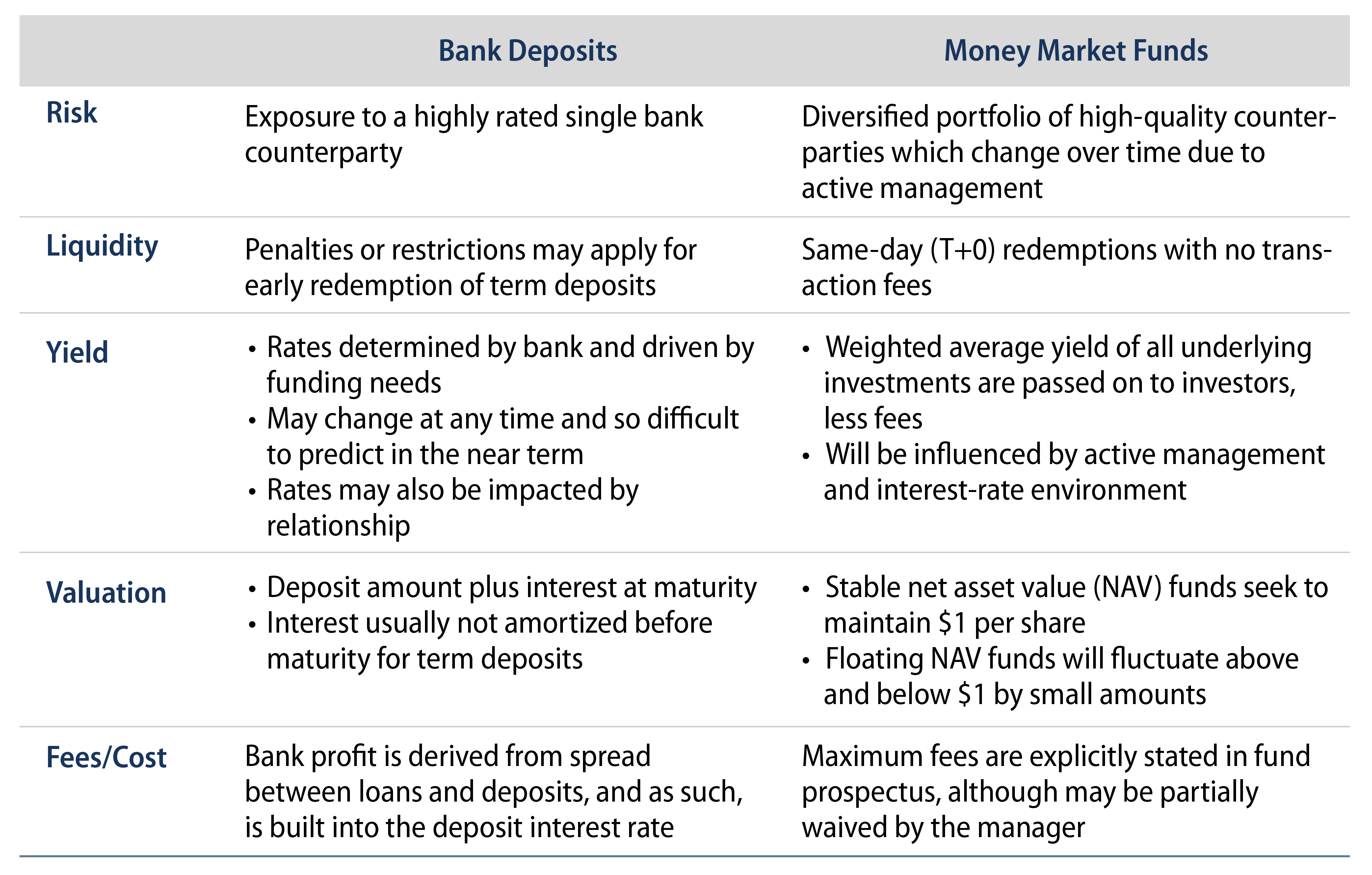
One of the most common points of confusion for retirement savers is the distinction between a Money Market Deposit Account (MMDA) and a Money Market Mutual Fund. When you open a Money Market IRA directly through Bank of America’s banking division, you are utilizing an MMDA.
The Banking Version (MMDA)
The Bank of America Money Market IRA is essentially a specialized savings account held within a tax-advantaged IRA wrapper. Its primary characteristic is safety. Because it is a bank product, the principal is insured by the Federal Deposit Insurance Corporation (FDIC) up to $250,000 per depositor, per insured bank, for each account ownership category. This makes it fundamentally different from brokerage-based money market funds, which are subject to market risk.
The Investment Version (Mutual Fund)
Conversely, if an investor opens an IRA through Merrill (formerly Merrill Edge), they may choose to sweep uninvested cash into a money market mutual fund. While these funds strive to maintain a $1.00 net asset value (NAV), they are not FDIC-insured. They are instead protected by the Securities Investor Protection Corporation (SIPC) against the failure of the broker-dealer, but not against a loss in value. This distinction is critical for conservative investors who require absolute principal protection.
Core Features and Account Types
Bank of America supports the most common IRA structures within its money market offering, allowing savers to choose the tax treatment that best aligns with their long-term financial goals.
Traditional IRA
With a Traditional Money Market IRA, contributions may be tax-deductible depending on the filer’s income and whether they are covered by a retirement plan at work. The funds grow tax-deferred, meaning no taxes are paid on the interest earned until the money is withdrawn, typically during retirement. In 2026, the IRS continues to mandate Required Minimum Distributions (RMDs) for Traditional IRAs once the owner reaches a specific age, necessitating a liquidity strategy that a money market account can easily facilitate.
Roth IRA
The Roth version of the Money Market IRA is funded with after-tax dollars. While there is no immediate tax deduction, the primary benefit is that qualified distributions—including the interest earned—are tax-free. Roth IRAs are particularly attractive for those who expect to be in a higher tax bracket in the future or those who want to avoid RMDs, as Roth IRAs do not require withdrawals during the lifetime of the original owner.
SEP IRA
For small business owners and self-employed individuals, Bank of America also offers the Simplified Employee Pension (SEP) IRA in a money market format. This allows for significantly higher contribution limits than standard Traditional or Roth IRAs, providing a stable place to park business profits while benefiting from tax-deferred growth.
Interest Rates and the Preferred Rewards Program
The yield on a Bank of America Money Market IRA is typically tiered, meaning higher balances often qualify for higher interest rates. However, the most significant factor influencing the rate is the client's status within the Bank of America Preferred Rewards program.
As of 2026, the program remains the primary way for clients to maximize their returns on cash holdings. The program is divided into tiers—Gold, Platinum, and Platinum Honors—based on the three-month average combined balance across Bank of America banking accounts and Merrill investment accounts.
- Standard Rates: These apply to clients who do not participate in Preferred Rewards or have balances below the Gold tier threshold. These rates are competitive with other national "brick-and-mortar" banks but generally trail behind online-only high-yield savings accounts.
- Boosted Rates: Members of the Preferred Rewards program receive an interest rate booster on their Money Market Savings accounts, including those within an IRA. For those in the Platinum Honors tier, this boost can significantly narrow the gap between traditional banking rates and market-leading yields.
Fees, Minimums, and Practical Requirements
To maintain a Money Market IRA at Bank of America, investors must adhere to specific balance requirements and fee structures. Understanding these is essential to avoid eroding the relatively modest interest gains typical of these accounts.
Minimum Opening Deposit
While requirements can vary based on specific promotional offers, a standard Money Market IRA typically requires a minimum initial deposit (often ranging from $1,000 to $2,500). Lower-balance accounts may be available but might not qualify for the best interest tiers.
Monthly Maintenance Fees
Bank of America often charges a monthly maintenance fee for its money market accounts. However, this fee is frequently waived if the account holder maintains a minimum daily balance or possesses a certain status within the Preferred Rewards program. For retirement accounts, it is vital to ensure the fee-waiver criteria are consistently met, as a $10 or $15 monthly fee can quickly negate the annual interest earned on a smaller balance.
Early Withdrawal Penalties
Because these accounts are IRAs, they are subject to IRS rules regarding early withdrawals. Generally, taking money out before age 59½ results in a 10% federal tax penalty in addition to ordinary income tax. Separate from the IRS, the bank itself rarely charges a "withdrawal penalty" for a money market account (unlike a CD), but there may be limits on the number of certain types of withdrawals or transfers allowed per statement cycle under Regulation D, although federal enforcement of these limits has become more flexible in recent years.
Comparing Retirement Savings Options
Choosing the right vehicle within Bank of America depends on the investor's timeline and need for liquidity.
| Feature | Money Market IRA | CD IRA (Certificate of Deposit) | Merrill Edge Self-Directed IRA |
|---|---|---|---|
| Risk Level | Very Low (FDIC Insured) | Very Low (FDIC Insured) | Variable (Market Risk) |
| Liquidity | High (Immediate Access) | Low (Locked for a Term) | Moderate (Trade Settlement) |
| Returns | Variable Interest | Fixed Interest | Market Growth/Dividends |
| Best For | Emergency funds or RMDs | Set timelines (e.g., 2 years) | Long-term growth (10+ years) |
| Fees | Monthly Maintenance | Early Withdrawal Penalty | Commission-free trades/Management fees |
Strategic Use Cases for a Money Market IRA
While a Money Market IRA may not be the primary engine for wealth accumulation due to its conservative yield, it serves several strategic purposes in a 2026 retirement portfolio.
1. Capital Preservation Near Retirement
As investors approach retirement age, the "Sequence of Returns Risk" becomes a major concern. A sharp market downturn just before or after retirement can permanently damage a portfolio's longevity. Transitioning a portion of an IRA into a Money Market account ensures that a specific amount of cash is shielded from market volatility, providing peace of mind and stable funds for immediate expenses.
2. The "Dry Powder" Strategy
For active investors using Merrill, a Bank of America Money Market IRA can act as a holding tank for "dry powder." During periods of extreme market overvaluation, an investor might move funds from equities into the Money Market IRA. This keeps the money within the tax-advantaged IRA umbrella while waiting for a market correction to reinvest at lower prices.
3. Facilitating Required Minimum Distributions (RMDs)
For retirees who must take annual distributions, keeping the RMD amount in a Money Market IRA is a practical move. It ensures the funds are liquid and available for withdrawal without the need to sell stocks or bonds at an inopportune time when the market might be down.
Common Mistakes to Avoid
Even with a relatively simple product like a Money Market IRA, there are pitfalls that can lead to taxes or lost growth.
- Excess Contributions: The IRS sets annual limits on how much you can contribute to all your IRAs combined. Exceeding this limit in 2026 can result in a 6% excise tax on the excess amount for each year it remains in the account.
- Ignoring the "Inflation Gap": Because money market rates often struggle to keep pace with high inflation, keeping 100% of a long-term retirement portfolio in this account can lead to a loss of purchasing power over decades. It is generally best used as a component of a diversified strategy.
- Missing the Preferred Rewards Link: Many clients fail to link their accounts properly. To get the boosted interest rates, your IRA must be recognized as part of your total relationship balance. Ensuring your banking and investment profiles are unified is essential for maximizing the product's value.
How to Open a Bank of America Money Market IRA
The process for opening an account in 2026 is streamlined through digital channels, though in-person assistance remains an option for those with complex rollover needs.
- Eligibility Check: Ensure you have earned income (for a Traditional or Roth IRA) and check the current year’s income limits if you are considering a Roth IRA.
- Select IRA Type: Decide between Traditional or Roth based on your current tax bracket versus your expected retirement tax bracket.
- Application: This can be done via the Bank of America mobile app or website. You will need your Social Security number, employment information, and beneficiary details.
- Funding: You can fund the account through a transfer from an existing Bank of America checking/savings account, a rollover from a 401(k), or a transfer from another IRA provider.
- Verification: If you are performing a rollover, ensure the funds are moved "trustee-to-trustee" to avoid accidental tax triggers or mandatory 20% withholding.
Frequently Asked Questions
Can I lose money in a Bank of America Money Market IRA? Because the account is a bank deposit product and not a mutual fund, your principal is protected by FDIC insurance up to $250,000. Unlike stocks or bonds, the value of the account will not decrease due to market fluctuations. The only way to "lose" value is if the interest rate earned is lower than the rate of inflation, or if monthly maintenance fees exceed the interest earned.
How often does the interest rate change? Interest rates on Money Market IRAs are variable and can change at any time based on the bank's discretion and broader economic conditions, such as movements in the Federal Funds Rate. Bank of America typically reviews and adjusts these rates periodically.
Can I transfer an existing 401(k) into this account? Yes. This is known as a rollover. By rolling over a 401(k) from a former employer into a Bank of America Money Market IRA, you maintain the tax-deferred status of your savings. It is a common move for individuals who want more control over their funds or a simpler way to manage their retirement assets in one place.
Is there a limit to how many withdrawals I can make? While the IRS penalizes withdrawals before age 59½, the bank may also have limits on how often you can move money out of a money market account. Historically, Regulation D limited "convenience" transfers to six per month, though many banks have transitioned to more flexible policies. It is best to check the specific terms of your account agreement in 2026.
Final Recommendation
The Bank of America Money Market IRA is an excellent tool for specific financial goals—namely capital preservation, RMD management, and short-term liquidity within a retirement plan. It is most effective for existing Bank of America clients who can leverage the Preferred Rewards program to secure higher interest rates. However, younger investors with a long time horizon should exercise caution; using this as a primary retirement vehicle may result in insufficient growth to meet long-term goals. For those individuals, the Money Market IRA should be viewed as the "safety net" portion of a broader, more diversified investment strategy.
Image Gallery