Julie Franke and the Edge Computing Debate: Architectural Trade-offs in Distributed Systems
The "Julie Franke and the edge computing debate" refers to a critical professional discourse involving Julie Franke, a known figure in systems architecture, regarding the practical limitations and deployment challenges of edge computin...
The "Julie Franke and the edge computing debate" refers to a critical professional discourse involving Julie Franke, a known figure in systems architecture, regarding the practical limitations and deployment challenges of edge computing in enterprise environments. This debate centers on the tension between reducing latency through decentralized processing and the management complexity inherent in maintaining distributed micro-datacenters.
Contents
The Context of the Edge Computing Debate
To understand the debate surrounding edge computing, one must first define the architectural goal: moving computation and data storage closer to the source of data generation. By processing information at the "edge"—whether that is a factory floor, a cellular base station, or a localized IoT (Internet of Things) gateway—organizations aim to reduce the latency associated with backhauling data to a centralized cloud provider.
Julie Franke’s contributions to this dialogue emphasize a pragmatic, reality-check approach. While the marketing narrative of edge computing often focuses exclusively on speed, the operational narrative involves significant trade-offs in consistency, security, and lifecycle management. The debate is not whether edge computing is useful, but rather where the threshold of diminishing returns lies for the average enterprise.
Key Pillars of the Distributed Systems Conflict
The skepticism regarding aggressive edge adoption, often highlighted in professional engineering circles, rests on several technical pillars that complicate the deployment of distributed infrastructure.
1. The Operational Overhead of Distribution
Managing a centralized cloud environment allows for a unified control plane. When an organization transitions to an edge-heavy architecture, they effectively multiply their management surface area. Every edge node functions as a remote server that requires physical security, power management, cooling, and—most critically—software updates. Franke’s observations frequently touch on the "drift" that occurs when thousands of edge devices run slightly different configurations, leading to inconsistent application behavior.
2. Data Consistency and the CAP Theorem
The CAP theorem—stating that a distributed data store can only provide two of three guarantees: Consistency, Availability, and Partition Tolerance—remains the fundamental constraint in the edge debate. By pushing processing to the edge, architects often sacrifice strong consistency. If an edge node is disconnected from the central backbone, it must either operate on stale data or block operations, both of which introduce systemic risks that are often underestimated in pilot projects.
3. Security Surface Area
Centralized clouds provide a hardened perimeter. Edge computing, by definition, moves that perimeter to physically insecure or semi-secure environments. The debate highlights the difficulty of maintaining consistent patching schedules for firmware and OS-level security across heterogeneous hardware environments. If an edge gateway is compromised, it could theoretically serve as an entry point into the wider corporate network.
Strategic Comparison: Centralized Cloud vs. Edge Deployment
To determine whether an edge architecture is appropriate, architects must weigh the requirements of their specific application against the physical constraints of deployment.
| Feature | Centralized Cloud | Edge Computing |
|---|---|---|
| Latency | High (Backhaul required) | Very Low (Local processing) |
| Data Gravity | High (Data moves to processing) | Low (Processing moves to data) |
| Management | Unified/Centralized | Decentralized/Complex |
| Reliability | Dependent on connectivity | Resilient to backhaul failure |
| Cost Structure | OPEX (Subscription-based) | CAPEX (Hardware deployment) |
Practical Considerations for Implementation
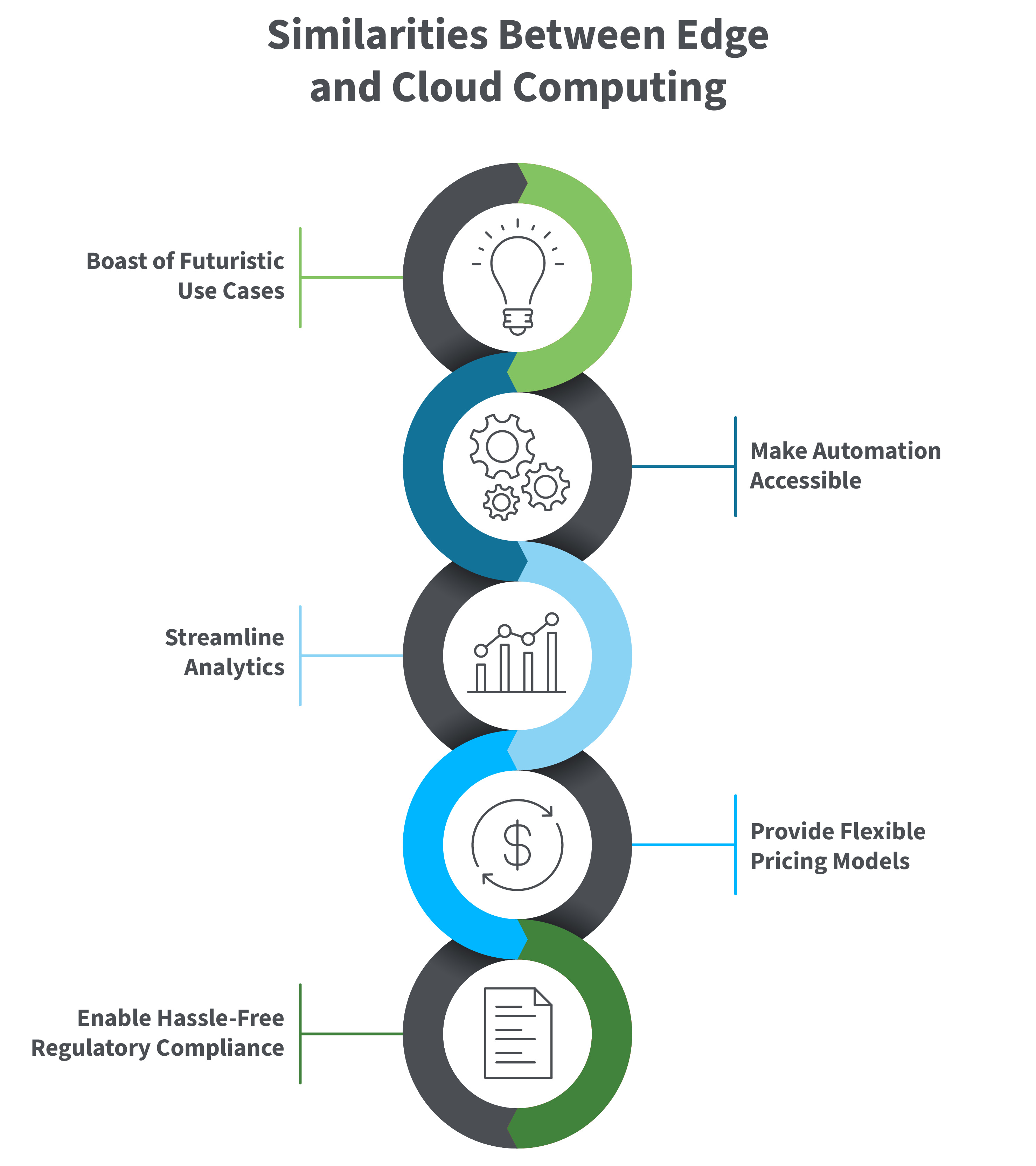
For organizations navigating the edge computing debate, the current best practice is a hybrid model. This approach avoids the binary trap of "all-cloud" versus "all-edge."
- Workload Profiling: Not every application benefits from the edge. Use edge computing primarily for latency-sensitive tasks such as real-time video analytics, autonomous machine control, or sub-millisecond sensor feedback loops.
- Infrastructure as Code (IaC): To mitigate the management complexity Franke identifies, use robust IaC tools. Automating the deployment of configurations ensures that even across hundreds of edge locations, the software state remains consistent.
- Observability at the Edge: Traditional monitoring tools may not suffice in a distributed environment. Implement centralized logging and telemetry aggregation that specifically accounts for intermittent connectivity, ensuring you can debug an edge node that is currently offline.
- Hardware Lifecycle Planning: Unlike virtual instances in the cloud, edge hardware reaches end-of-life. Factor in the physical maintenance costs, including the travel time for technicians to replace failed SSDs or network cards in remote locations.
Common Misconceptions in Distributed Architectures
A frequent error in the current technical landscape is treating edge nodes as small cloud regions. This is a false equivalence. A cloud region has redundant power, massive bandwidth pipes, and on-site staff. An edge node is often a single point of failure in a harsh environment. Architects must design for "graceful degradation," ensuring that if the local edge node loses power or connectivity, the critical business process does not fail entirely but rather shifts to a safe, limited-functionality state.
FAQ: Understanding Edge Computing Realities
What is the primary driver of the edge computing debate? The debate is driven by the gap between the theoretical performance benefits of edge computing and the practical operational costs of managing distributed hardware fleets.
Does edge computing replace cloud computing? No, it complements it. The cloud remains essential for long-term data storage, heavy model training, and global orchestration, while the edge handles immediate, time-sensitive processing.
What is the biggest risk identified in distributed systems? The biggest risk is operational drift—the phenomenon where distributed nodes deviate from the intended configuration over time, leading to security vulnerabilities and application instability.
How can companies justify the costs of edge hardware? Cost justification should rely on specific performance requirements (latency) or bandwidth savings. If the data volume is too high to transmit efficiently to the cloud, edge processing is economically and technically viable.
Is edge computing suitable for every industry? No. Highly regulated industries or those with centralized data requirements may find the risk of distributed data storage outweighs the latency benefits.
Final Recommendations for Architects
If you are currently evaluating an edge migration, do not start with the hardware. Start with the data flow. Map your application’s requirements against the physical reality of your deployment sites. If your system can tolerate 50-100ms of latency, the cost and complexity of an edge deployment are likely unnecessary. However, if your use case involves industrial automation or real-time user experiences where latency is the bottleneck, proceed with a "thin-edge" philosophy—keep the local logic as minimal and stateless as possible to simplify the management burden.
Image Gallery