Why the 400m World Record Still Matters
The 400m world record remains the ultimate benchmark of human physical limits because it represents the perfect equilibrium between maximum velocity and sustained metabolic output. In 2026, Wayde van Niekerk’s 43.03-second mark, set a...
The 400m world record remains the ultimate benchmark of human physical limits because it represents the perfect equilibrium between maximum velocity and sustained metabolic output. In 2026, Wayde van Niekerk’s 43.03-second mark, set a decade ago in Rio, continues to serve as the definitive standard for the "long sprint," challenging modern athletes to bridge the gap between pure speed and elite endurance.
Contents
The Unique Physicality of the 400 Meters
To understand why the world record in this event is so prestigious, one must first understand the physiological nightmare that is the 400-meter sprint. Coaches and exercise scientists often refer to it as the "event of death" because it forces the human body to operate at near-maximum intensity for a duration that exhausts the immediate phosphagen system and pushes the glycolytic pathway to its absolute limit.
In a 100m or 200m sprint, an athlete relies primarily on the ATP-CP (adenosine triphosphate-creatine phosphate) system, which provides immediate energy for short bursts of speed. However, this system depletes in about 10 to 12 seconds. For the remaining 30-plus seconds of a 400m race, the athlete must transition into fast glycolysis. This produces a massive accumulation of hydrogen ions and lactic acid in the muscles, leading to the infamous "piano on the back" sensation during the final 80 meters.
The 400m world record matters because it is not just a measurement of who is the fastest; it is a measurement of who can most efficiently manage a biological collapse. When Wayde van Niekerk ran 43.03, he did not just run fast; he maintained a mechanical efficiency that defied the standard decelerations seen in elite human performance. In 2026, as we analyze the biomechanics of the current generation, that 43.03 remains the gold standard for metabolic management.
The Historical Evolution of the 43-Second Barrier
The progression of the 400m world record is a timeline of human evolution and technological advancement. For decades, the 44-second barrier was the ceiling of what was thought possible.
- The Lee Evans Era: At the 1968 Mexico City Olympics, Lee Evans ran 43.86 seconds. This record stood for 20 years, partly due to the high-altitude advantage of Mexico City, which reduced air resistance.
- The Butch Reynolds Breakthrough: In 1988, Butch Reynolds shattered the mark with a 43.29, a performance that many believed would last for the rest of the century.
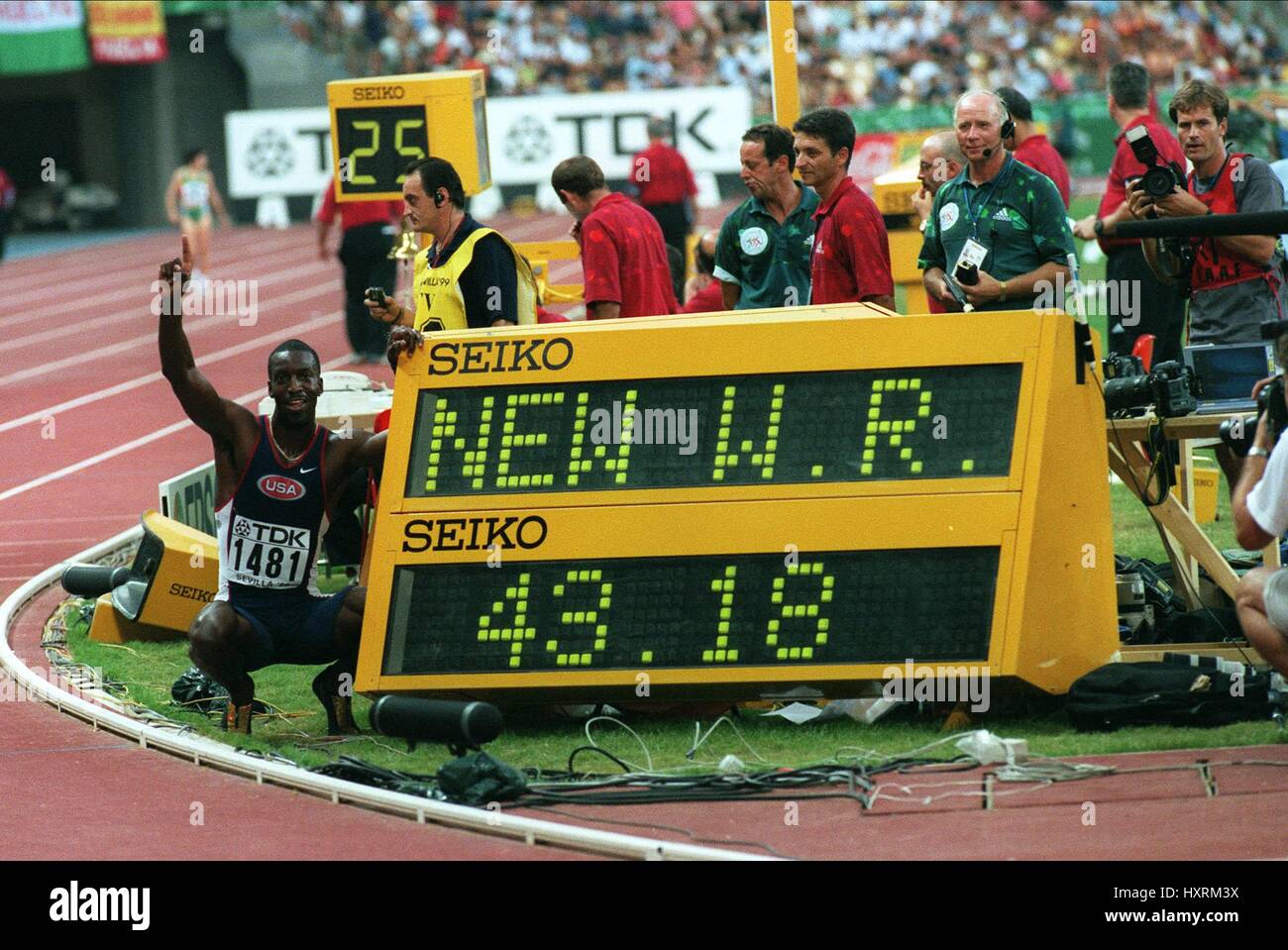
- The Michael Johnson Dominance: Michael Johnson’s 43.18 at the 1999 Seville World Championships was a masterpiece of upright running form and frequency. For 17 years, this mark was considered untouchable.
- The Rio 2016 Miracle: Wayde van Niekerk’s 43.03 from the outside lane (Lane 8) broke the sporting world's collective mind. Running from the outside lane is traditionally a disadvantage because the athlete cannot see their competitors, making pacing almost impossible to judge.
As of 2026, the record still stands. Its persistence through the 2024 Paris Olympics and the 2025 Tokyo World Championships has only increased its mystique. Every time a modern athlete like Quincy Hall or Matthew Hudson-Smith dips into the 43.40s, it highlights just how far ahead of his time Van Niekerk was in 2016.
The Technological Debate: Super Spikes and Track Surfaces
In the 2026 landscape of track and field, the debate over "super spikes" is at its peak. Modern footwear features highly responsive PEBA foams and curved carbon-fiber plates that act as a mechanical lever, returning energy to the athlete with every stride. Additionally, "fast" tracks—engineered with specific elasticity and air-cell technology—have become the standard for Diamond League events.
The 400m world record matters immensely in this context because it serves as a "pre-tech" and "mid-tech" bridge. While Van Niekerk used early versions of advanced spikes, the technology has advanced significantly since 2016. The fact that his 43.03 has survived the introduction of the most advanced spikes in history suggests that human talent still outweighs mechanical assistance.
Critics often argue that modern records are "inflated" by technology. However, the 400m record acts as a shield against this cynicism. If the technology were the only factor, the record would have been lowered multiple times by 2026. Instead, the 43.03 remains a testament to a singular, perfect athletic performance that transcends the equipment used.
Comparing the Kings of the One-Lap Sprint
To appreciate the difficulty of the 400m, we must look at how the record holders distributed their energy. The 400m is never run at a constant speed; it is a calculated decelerating sprint.
| Athlete | Record Time | Year | First 200m (Approx) | Second 200m (Approx) | Differential |
|---|---|---|---|---|---|
| Lee Evans | 43.86 | 1968 | 21.4s | 22.46s | 1.06s |
| Butch Reynolds | 43.29 | 1988 | 21.1s | 22.19s | 1.09s |
| Michael Johnson | 43.18 | 1999 | 21.22s | 21.96s | 0.74s |
| Wayde van Niekerk | 43.03 | 2016 | 20.5s | 22.53s | 2.03s |
| Quincy Hall | 43.40 | 2024 | 21.2s | 22.20s | 1.00s |
The data reveals that Van Niekerk’s record was built on a blistering opening 200m. His differential was higher, meaning he "faded" more than Michael Johnson did, but his raw speed in the first half of the race was so high that even a significant deceleration couldn't stop him from breaking the record. This changed the way coaches in 2026 train their athletes; the focus has shifted toward building a "speed reserve"—making 20.5-second speed feel easy so that the inevitable 22-second finish is manageable.
The Psychological Barrier: The Quest for Sub-43
In the history of athletics, certain barriers carry more than just numerical weight. The 4-minute mile and the sub-2-hour marathon are the most famous. In the 400m, the sub-43-second barrier is the "final frontier."
The record matters because it represents the gatekeeper to that barrier. Every elite 400m runner currently competing in 2026 wakes up with the goal of being the first human to see a "42" on the clock. Until 43.03 is broken, the sub-43 mark remains a theoretical possibility rather than a practical reality.
This pursuit drives the commercial and spectator interest in the sport. When the 400m is announced at a major meet, the crowd isn't just watching a race; they are watching a quest. The record is the yardstick for greatness. An athlete can win an Olympic Gold Medal, but without challenging that 43.03, they remain in the shadow of the greats who defined the previous eras.
Modern Training and the "Speed Reserve" Philosophy
By 2026, training methodologies have shifted significantly because of the standing world record. For years, 400m training was dominated by "over-distance" work—runners doing 500m or 600m repeats to build "stamina."
The persistence of the 43.03 record has proven that the 400m is a speed-based event. Modern training now prioritizes:
- Maximal Velocity Development: 400m runners now train like 100m sprinters for 60% of the year. If you cannot run a 19.8-second 200m, you cannot run a 42-second 400m.
- Neuromuscular Efficiency: Training the brain to fire muscles correctly even under extreme acidosis.
- Specific Endurance: Running at 95% of max speed for 300 meters, rather than 80% for 500 meters.
The record acts as a constant coach. It tells the athletes of 2026 that their "base" is not enough; they need "top-end" speed to reach the next level. This evolution in training is a direct result of the high bar set by the current world record.
FAQ
Is the 400m world record the hardest to break in track and field?
While "difficulty" is subjective, the 400m record is widely considered one of the most resilient. Unlike the 100m, where wind assistance can significantly impact times, the 400m involves two bends, making wind a neutral factor for most of the race. The physical toll is so high that athletes can only produce a "record-level" performance once or twice in an entire career.
Who are the current top contenders to break the record in 2026?
As of 2026, the primary threats to the record are the stars who emerged during the 2024 Olympic cycle. This includes Quincy Hall (USA), Matthew Hudson-Smith (UK), and Muzala Samukonga (Zambia). These athletes have consistently run in the 43.4 to 43.7 range, placing them within striking distance if they can find a perfect race day with ideal humidity and temperature.
How much do "super spikes" help in the 400m?
Research indicates that carbon-plated spikes can improve running economy by approximately 1% to 3%. In a 400m race, this could theoretically translate to a few tenths of a second. However, the mechanical advantage is only useful if the athlete has the power output to utilize the plate's stiffness, which is why we haven't seen a massive influx of sub-43.10 times despite the tech.
Why did Wayde van Niekerk run in Lane 8 when he broke the record?
Van Niekerk was assigned Lane 8 because he had a slower qualifying time in the semi-finals after recovering from an injury. While Lane 8 is usually avoided because you cannot see the field, it has the largest curve radius, which can actually help a tall sprinter maintain their speed more easily than the tight "suicide" Lane 1.
Has anyone ever run a sub-43 split in a 4x400m relay?
Yes, several athletes have recorded unofficial "rolling start" splits under 43 seconds. Michael Johnson famously clocked a 42.91-second split. However, because relay starts involve a moving start and an acceleration zone, these do not count toward individual world records, which require a stationary start from blocks.
Moving Forward: How to Watch the 400m in 2026
For fans and aspiring athletes, the best way to appreciate the 400m world record is to observe the 300m split times in upcoming Diamond League events. Historically, any athlete who crosses the 300m mark in under 31.5 seconds is on "record watch."
To truly understand the gravity of the 43.03 mark, watch the replay of the Rio 2016 final alongside the Tokyo 2025 World Championship final. Observe the "form breakdown" in the last 50 meters. The record still matters because, in a world of ever-improving technology and nutrition, it remains the most stubborn proof that some feats of human will are simply ahead of their time.
Image Gallery