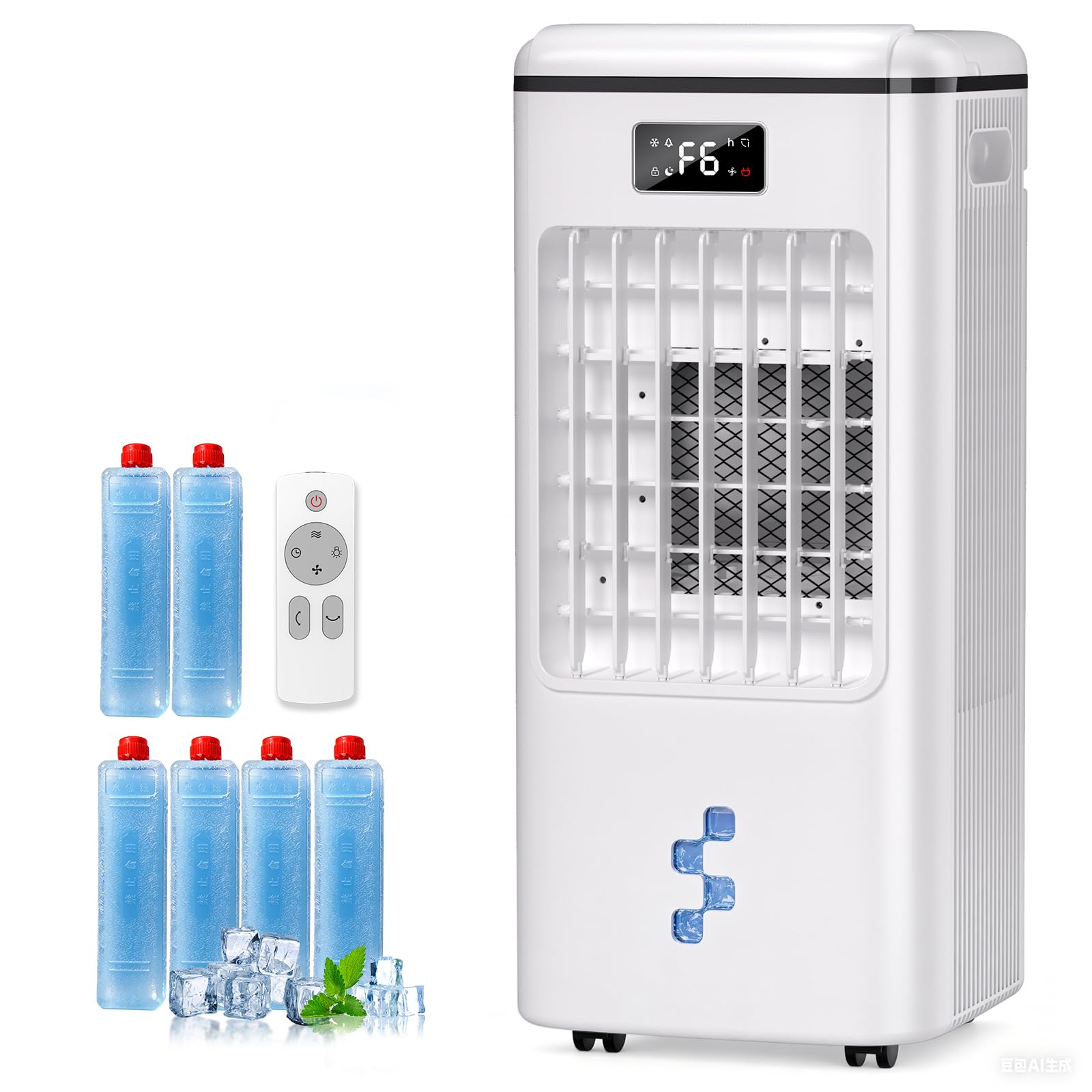
Portable AC Without Water: Understanding No-Drain Cooling Systems in 2026
A portable air conditioner "without water" refers to a fully self-evaporative unit that recycles the moisture collected from the air. Unlike evaporative coolers, which require adding water to function, these air conditioners use a comp...
A portable air conditioner "without water" refers to a fully self-evaporative unit that recycles the moisture collected from the air. Unlike evaporative coolers, which require adding water to function, these air conditioners use a compressor and refrigerant to cool. They vent exhaust and vaporized moisture through a hose, eliminating the need for manual draining under most standard humidity conditions.
Contents
For many years, the primary drawback of portable air conditioning was the constant need to empty a heavy water tank. As we move through 2026, technology has matured to a point where "no-drain" systems are the industry standard for mid-to-high-range units. However, the term "without water" is often a source of confusion for consumers who may be looking for an alternative to evaporative coolers (swamp coolers) or are tired of the maintenance associated with older portable AC models.
To make an informed decision, it is essential to understand the mechanics of heat exchange, the limitations of self-evaporation technology, and how these units differ from other cooling categories.
The Technical Reality of Moisture in Air Conditioning
To understand a portable AC without water, one must first understand that all air conditioning is, by its nature, a dehumidification process. As warm air from a room is pulled into the unit, it passes over cold evaporator coils filled with refrigerant. This process causes the moisture in the air to condense into liquid droplets, much like beads of water forming on a cold soda can.
In older or entry-level portable AC models, this water (condensate) falls into a collection bucket. When the bucket is full, the unit shuts off, requiring the user to manually empty it. A "portable AC without water" uses a self-evaporative system to solve this problem.
How Self-Evaporation Works
In a self-evaporative unit, the collected condensate is not just stored. Instead, it is splashed onto the hot condenser coils by a "slinger ring" or a small pump. The heat from the condenser coils turns the liquid water back into a vapor (re-evaporation). This vapor is then pushed out of the exhaust hose along with the hot air, releasing it outside your home.
This cycle provides two distinct benefits:
- Reduced Maintenance: In environments with low to moderate humidity, the unit can run continuously without ever needing to be drained.
- Increased Efficiency: The water being splashed onto the hot condenser coils actually helps cool the coils down more quickly. This reduces the workload on the compressor and can slightly improve the unit's Energy Efficiency Ratio (EER).
Portable AC vs. Evaporative Coolers: The "Water" Confusion
One of the most common points of confusion in the cooling market is the difference between a portable air conditioner and an evaporative cooler (often marketed as a "waterless cooler" or "swamp cooler").
Evaporative coolers require water to work. They function by blowing dry air over a wet wick or pad. As the water evaporates, it absorbs heat from the air, lowering the temperature. These are technically "without a compressor," but they are definitely not "without water." They are only effective in very dry climates, such as the American Southwest, and they add humidity to the room.
Portable air conditioners, including no-drain models, remove moisture from the air. They use a chemical refrigerant (such as R-32, which has become standard by 2026 due to its lower Global Warming Potential) to move heat from the inside to the outside. When a consumer asks for a "portable AC without water," they are typically looking for a device that uses a compressor but does not require the user to manage the liquid byproduct.
Factors That Affect "No-Drain" Performance
While manufacturers often market these units as "no-drain," environmental factors play a significant role in whether this is 100% true in practice. In 2026, even the most advanced units have physical limits.
High Humidity Thresholds
The self-evaporation system can only process a certain volume of water per hour. If the relative humidity in your room is exceptionally high (typically above 70% or 80%), the unit may produce more condensate than it can evaporate. In these scenarios, the internal emergency tank will eventually fill up, and the unit will shut down or require manual draining via a small plug at the rear.
Cooling Capacity (BTU Ratings)
The efficiency of the evaporation process is often tied to the unit's cooling power, measured in British Thermal Units (BTU). It is important to distinguish between ASHRAE ratings and the SACC (Seasonally Adjusted Cooling Capacity) introduced by the Department of Energy. SACC accounts for the heat "leakage" that occurs with portable units and provides a more accurate representation of how much heat—and therefore how much moisture—the unit can actually handle.
Dual-Hose vs. Single-Hose Systems
Dual-hose units are significantly more effective at managing moisture and temperature than single-hose units. A single-hose AC creates "negative pressure" by blowing air from the room outside, which forces warm, humid air from other rooms or cracks in windows to be pulled back into the space. A dual-hose system uses one hose to pull in fresh air from outside to cool the condenser and another to exhaust it, keeping the room's air pressure balanced and reducing the moisture load on the machine.
Comparison of Cooling Technologies in 2026
| Feature | Evaporative Cooler | Single-Hose Portable AC | Dual-Hose Portable AC |
|---|---|---|---|
| Cooling Method | Evaporation (Water-based) | Refrigerant/Compressor | Refrigerant/Compressor |
| Water Usage | Must add water manually | Produces water (Needs drain) | Self-evaporative (Rarely drain) |
| Humidity Impact | Increases humidity | Decreases humidity | Decreases humidity |
| Climate Suitability | Arid/Dry climates only | All climates | All climates (Best for high heat) |
| Venting | Not required | Requires window exhaust | Requires window exhaust |
| Energy Efficiency | Very high (Low power) | Moderate | High (For portable units) |
Maintenance Requirements for No-Drain Units
Even if you never have to empty the water tank, a "portable AC without water" is not maintenance-free. To ensure the self-evaporation system continues to function correctly, specific upkeep is required.
- Air Filter Cleaning: Dust and pet hair are the enemies of efficient cooling. If the filters are clogged, the airflow over the evaporator coils decreases. This can cause the coils to freeze or lead to an excess of condensate that the self-evaporation system cannot handle. Filters should be checked every two weeks during peak use.
- Checking the Drain Port for Blockages: Over time, minerals in the water or dust can create a sludge in the bottom of the internal pan. Even if you don't use the drain port, it is wise to flush it once a year before seasonal storage to prevent mold growth or clogs.
- Exhaust Hose Integrity: If the exhaust hose is kinked or restricted, the hot, moist air cannot escape efficiently. This leads to moisture "backing up" in the unit, forcing it to store more liquid water than intended.
- Inverter Compressor Care: Many 2026 models utilize dual-inverter compressors. These are more sensitive to power surges than older "on/off" compressors. Using a dedicated surge protector is recommended to protect the electronics that manage the evaporation cycle.
Selecting the Right Unit for Your Needs
When shopping for a portable AC that requires minimal water management, focus on the following specifications:
- Fully Self-Evaporative Labeling: Ensure the manufacturer explicitly states "fully self-evaporative." Some "semi-evaporative" units only evaporate a portion of the water.
- Dehumidifying Capacity: Look for the "pints per day" rating. If a unit can remove 100 pints of moisture a day but doesn't have a high-quality evaporation system, you will be draining it constantly.
- Smart Sensors: High-end models now include sensors that alert your smartphone if the humidity is too high for the self-evaporation system to keep up, allowing you to switch to a lower fan speed or adjust settings remotely.
Frequently Asked Questions
Do I ever have to drain a self-evaporative portable AC?
Yes, in specific circumstances. If you live in a very humid environment (above 70% relative humidity), the unit will likely produce more water than the condenser heat can evaporate. Most units have an internal reservoir and an indicator light that will let you know when manual draining is required.
Is a "waterless" AC the same as a swamp cooler?
No. A "waterless" AC is a marketing term usually applied to self-evaporative air conditioners that use a compressor. A swamp cooler (evaporative cooler) is a completely different technology that adds water to a tank to cool the air through evaporation.
Why is my "no-drain" AC leaking water onto the floor?
Leaking usually occurs due to one of three reasons: the unit is not level, causing water to spill over the internal pan; the internal drain plug is loose or degraded; or the air filters are so dirty that the coils have iced up and are now melting rapidly.
Does a portable AC without water still need a window hose?
Absolutely. Every air conditioner that uses a compressor must vent heat somewhere. If you don't use the exhaust hose, the unit will blow cold air out the front and hot, moist air out the back, resulting in a room that is actually warmer and more humid than when you started.
Can I use a garden hose for continuous drainage?
Most self-evaporative units include a secondary drain port. If you live in an extremely humid area and do not want to manually empty the tank, you can attach a standard garden hose (or a specialized plastic tube) to this port and lead it to a floor drain or out a window.
Final Recommendation
When searching for a portable AC without water in 2026, prioritize dual-hose, fully self-evaporative models with a high SACC BTU rating. These units provide the most consistent cooling performance while minimizing the physical labor of managing condensate. If you reside in a region with high humidity, always check for a "continuous drain" option as a backup, even on self-evaporating models, to ensure uninterrupted operation during the hottest, most humid weeks of the year.
Image Gallery