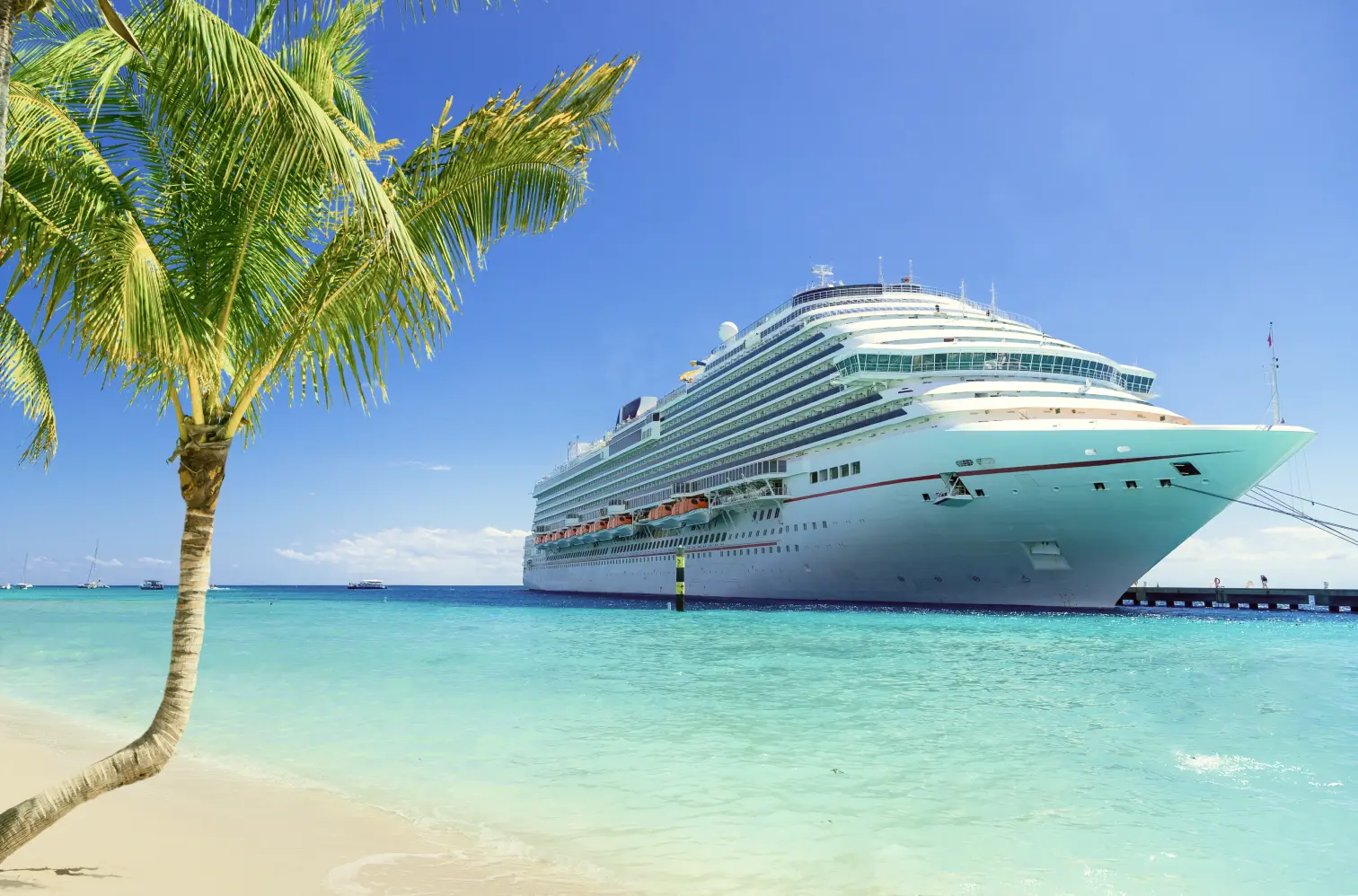
What Is Cruise Insurance? Coverage, Costs, and How It Works
Cruise insurance is a specialized travel insurance policy designed to cover the unique financial and medical risks associated with ocean and river cruises. It protects travelers against non-refundable trip costs, missed port connection...
Cruise insurance is a specialized travel insurance policy designed to cover the unique financial and medical risks associated with ocean and river cruises. It protects travelers against non-refundable trip costs, missed port connections, onboard medical emergencies, and costly emergency evacuations from ships at sea or remote international ports of call.
Contents
Understanding Cruise Insurance: Why Cruise Travel Requires Specialized Coverage
Taking a cruise differs significantly from taking a standard land-based vacation. When you travel on a cruise ship, you navigate international waters, visit multiple foreign destinations within a single trip, and rely entirely on maritime infrastructure for logistics, healthcare, and safety. Standard travel insurance policies or regular domestic health plans often fall short when applied to the realities of ocean-going travel.
Cruise insurance bridges these operational gaps. While traditional travel policies cover standard flights and hotels, cruise-specific plans (or comprehensive travel policies with dedicated cruise riders) account for maritime delays, mechanical breakdowns at sea, cabin confinement due to illness, skipped ports of call, and open-water medical rescues.
Furthermore, cruise lines enforce some of the strictest cancellation penalty schedules in the travel industry. Most major cruise lines require full payment 75 to 120 days prior to departure. If an unexpected emergency forces you to cancel your trip 30 days before sail date, the cruise line may retain 100% of your paid fare. Cruise insurance ensures that an unexpected life event does not result in total loss of your financial investment.
Key Coverage Components of a Cruise Insurance Policy
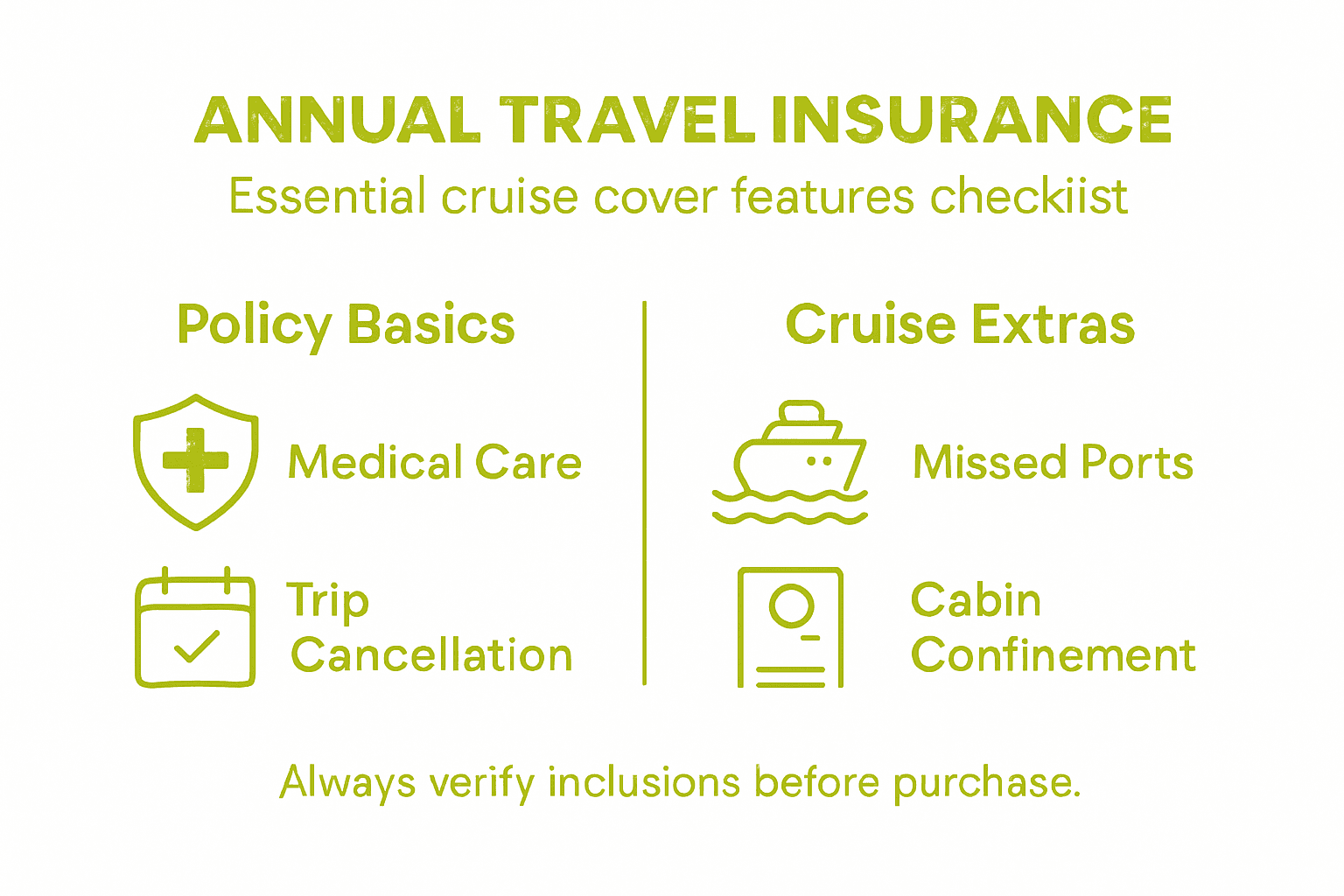
A robust cruise insurance policy combines financial protections for your trip investment with emergency coverage for health and safety. Understanding what each component entails helps you select an appropriate level of protection.
1. Emergency Medical Coverage and Onboard Healthcare
Shipboard medical centers are equipped to handle basic urgent care and stabilization, but they operate as private, out-of-network medical facilities. Onboard physicians do not accept domestic private health insurance, Medicare, or Medicaid. Any care rendered on a ship—from treating seasickness and minor lacerations to managing severe cardiac events—is billed directly to your onboard account before you disembark.
Cruise medical insurance reimburses these out-of-pocket medical expenses incurred at sea or in foreign port hospitals. Primary medical coverage pays your eligible medical claims directly without requiring you to file a claim with your domestic health insurer first, whereas secondary medical coverage pays remaining out-of-pocket balances after your primary health insurance processes or denies the claim.
2. Emergency Medical Evacuation and Repatriation
Emergency medical evacuation is arguably the most critical component of cruise protection. If a passenger suffers a life-threatening injury or acute illness while the ship is miles out at sea, maritime authorities or private air ambulance providers must transport the patient to the nearest suitable hospital ashore via helicopter or specialized watercraft.
According to the U.S. Department of State, an emergency medical evacuation from a cruise ship or isolated island port back to the United States can easily cost between $50,000 and $100,000—and sometimes significantly more depending on distance and medical staffing requirements. Standard health insurance policies almost never cover international air ambulance transport. A dedicated cruise policy provides coverage limits—often $250,000 to $1,000,000 per person—specifically dedicated to air transport, medical escorts, and repatriation of remains.
3. Trip Cancellation and Interruption
- Trip Cancellation: Reimburses 100% of your pre-paid, non-refundable trip costs if you must cancel your cruise prior to departure due to a covered reason. Covered reasons typically include severe personal illness or injury, death of an immediate family member, severe weather damaging your home, military deployment, or jury duty.
- Trip Interruption: Applies if you must leave your cruise mid-voyage due to a covered emergency. It reimburses the unused portion of your cruise fare as well as the additional economy transportation expenses required to fly you home or rejoin the ship at a subsequent port.
4. Missed Connection and Itinerary Disruption
Cruises operate on rigid departure schedules; if your flight to the embarkation port is delayed due to weather or mechanical issues and the ship sails without you, you face substantial costs to catch up.
Missed connection coverage reimburses reasonable accommodation, meal, and transportation expenses (such as last-minute flights to the next port of call) if a covered travel delay causes you to miss your ship’s departure. Additionally, itinerary disruption coverage provides modest daily cash allowances if severe weather or marine hazards force the captain to skip a scheduled port of call.
5. Baggage Loss, Damage, and Delay
Luggage handling for cruises involves complex transfers between airlines, shuttle buses, hotel bell desks, and port porters. Baggage coverage reimburses you for lost, stolen, or damaged luggage and personal belongings. If your bags are delayed by a transport carrier for a specified duration (typically 12 to 24 hours), baggage delay coverage pays for necessary clothes, toiletries, and essentials while you wait for your gear to arrive at the next port.
Cruise Line Protection Plans vs. Third-Party Travel Insurance
When booking a voyage, cruise lines routinely offer their own trip protection plans at checkout. While convenient, these protection plans differ fundamentally from third-party travel insurance policies underwritten by independent insurance companies.
The following comparison illustrates key structural differences between third-party policies and cruise line plans:
| Feature / Coverage Aspect | Third-Party Travel Insurance Policy | Cruise Line Protection Plan |
|---|---|---|
| Primary Financial Coverage | Underwritten by licensed insurance carriers; cash reimbursement for valid claims. | Often underwritten in part by the cruise operator; partial refunds provided as future cruise credits (FCCs). |
| Medical Coverage Limits | High limits (typically $50,000 to $250,000+ for medical care). | Low to moderate limits (often $10,000 to $20,000). |
| Emergency Evacuation Limits | High limits ($250,000 to $1,000,000 per traveler). | Low limits (frequently capped at $25,000 to $50,000). |
| Pre-Existing Condition Waiver | Available if purchased within 14–21 days of initial deposit. | Rarely offered; pre-existing conditions are standard exclusions. |
| Covered Destinations & Logistics | Covers entire travel window, including independent flights, pre-cruise hotels, and non-cruise excursions. | Primarily covers only the cruise segment and travel booked directly through the cruise line. |
| Financial Default Protection | Protects your investment if the cruise line or airline goes bankrupt. | Does not cover the financial default or insolvency of the cruise line itself. |
Independent third-party policies generally offer significantly higher coverage limits, broader legal protections, and cash reimbursements rather than restricted travel vouchers. However, cruise line protection plans can occasionally prove economical for older travelers, as cruise line protection rates are usually based on trip cost rather than traveler age.
How Much Does Cruise Insurance Cost?
On average, a comprehensive third-party cruise insurance policy costs between 4% and 10% of your total non-refundable trip costs. For example, if a couple books a cruise vacation with a total non-refundable value of $5,000, a standard policy will typically cost between $200 and $500.
Several distinct variables influence the premium charged by insurance underwriters:
- Age of Travelers: Because older adults face statistically higher risks of medical complications, insurance premiums increase with age—especially for travelers aged 65 and older.
- Total Non-Refundable Trip Cost: Higher pre-paid costs (including non-refundable airfare, cruise fares, port fees, and pre-paid shore excursions) increase the insurer's liability, resulting in higher policy costs.
- Trip Duration: Longer itineraries increase exposure to environmental, operational, and medical risks, driving up the premium.
- Coverage Limits and Add-Ons: Opting for lower deductibles, primary medical coverage, high evacuation limits, or specialized add-ons (such as Cancel For Any Reason coverage) increases the total premium.
What Is "Cancel For Any Reason" (CFAR) Coverage?
Standard trip cancellation coverage only pays benefits if you cancel for a reason explicitly listed in the policy document. If you decide to cancel your trip due to fear of safety, work schedule changes, or personal preference, standard policies will deny the claim.
Cancel For Any Reason (CFAR) is an optional policy upgrade that grants total flexibility. Under CFAR coverage, you can cancel your cruise for literally any reason—up to 48 hours prior to scheduled departure—and recover 50% to 75% of your pre-paid, non-refundable trip costs. CFAR typically adds 40% to 60% to the base cost of your insurance policy and must be purchased within a strict window (usually 14 to 21 days) of making your initial trip deposit.
Common Exclusions and Limitations to Watch For
While cruise insurance provides extensive peace of mind, policies contain specific contractual exclusions that travelers must review prior to purchase:
- Pre-Existing Medical Conditions: Insurance companies review medical records for a "look-back period" (typically 60 to 180 days prior to policy purchase). Any health condition that was treated, diagnosed, or altered in medication during this period is classified as pre-existing and excluded from coverage unless you qualify for a Pre-Existing Condition Exclusion Waiver.
- High-Risk Adventure Excursions: Participating in extreme activities during port stops—such as scuba diving below specified depths, parasailing, mountaineering, or renting motorbikes—may be excluded unless you purchase an hazardous activity rider.
- Alcohol or Drug Impairment: Injuries or losses sustained while under the influence of non-prescribed controlled substances or excessive alcohol levels are routinely denied by underwriters.
- Mental and Nervous Disorders: Unless explicitly stated in policy provisions, elective cancellations or medical claims related to non-hospitalized anxiety, depression, or mental health episodes may be excluded.
- Travel to High-Risk Destinations: Ports of call under active government travel advisories, war zones, or sanction lists may be excluded from standard coverage.
How to Choose and Buy the Right Cruise Insurance Policy
To ensure you secure adequate protection without overpaying, follow this structured evaluation process:
- Determine Trip Cost & Details
- Evaluate Health & Evacuation Needs
- Compare 3rd-Party vs. Cruise Line
- Purchase Within 14-21 Day Window
Step 1: Calculate Total Non-Refundable Expenses
Compile all pre-paid costs associated with your trip that cannot be fully refunded by vendors. This includes cruise fares, port taxes, flights, train connections, pre- or post-cruise hotel stays, and independent shore excursion bookings.
Step 2: Assess Personal Health and Evacuation Needs
Determine whether domestic health insurance provides any international coverage. According to official guidelines from Medicare.gov, original Medicare explicitly excludes coverage for healthcare services outside the United States, including on cruise ships operating outside U.S. territorial waters and ports. If you rely on Medicare or standard commercial plans, purchasing medical coverage with high evacuation limits ($250,000 minimum for international cruises) is essential.
Step 3: Compare Independent Plans Online
Utilize recognized travel insurance comparison platforms to evaluate third-party policies side-by-side. Pay close attention to whether medical coverage is primary or secondary, and check the limits for emergency evacuation, missed connections, and baggage delays.
Step 4: Purchase Early to Secure Time-Sensitive Benefits
Buy your policy as soon as possible after placing your first deposit. Purchasing within 14 to 21 days of your initial trip payment unlocks crucial time-sensitive benefits, including:
- Pre-existing medical condition waivers.
- Financial default coverage for cruise lines and travel suppliers.
- Eligibility to purchase Cancel For Any Reason (CFAR) coverage.
Frequently Asked Questions
Is cruise insurance mandatory?
Cruise insurance is generally not legally mandatory for all voyages, but individual cruise lines and foreign port governments reserve the right to require it. Following global health crises, several destination countries and select cruise lines require proof of emergency medical and evacuation coverage before allowing passengers to embark. Even when optional, traveling without insurance leaves you personally responsible for all medical and cancellation costs.
Does domestic health insurance cover medical care on a cruise ship?
Most domestic health insurance plans—including Medicare, Medicaid, and regional HMOs—provide zero coverage outside the United States or in international waters. A few private PPO plans may offer out-of-network reimbursement for emergency care ashore, but they require you to pay all costs up front in cash or by credit card and apply for reimbursement later. Domestic insurance almost never covers international emergency air evacuations.
What happens if the cruise line changes or skips a port of call?
If a ship skips a port due to weather, mechanical issues, or maritime safety concerns, the cruise line itself generally refunds port taxes for that specific stop but is not contractually obligated to compensate you for lost experiences. If your policy includes itinerary disruption coverage, your insurer may provide a fixed monetary benefit per skipped port. However, skipping a port does not allow you to cancel the remainder of the cruise for a full refund under standard policy rules.
What is the difference between primary and secondary medical coverage?
Primary medical coverage pays your covered medical bills immediately, without requiring you to file a claim with your personal health insurer first. Secondary coverage requires you to submit all bills to your home health insurance policy first; once your primary insurer issues a payment or denial, the secondary travel insurance steps in to pay remaining out-of-pocket costs, deductibles, and co-pays.
Can I buy cruise insurance after the final payment deadline?
Yes, you can purchase travel insurance up until the day before your departure date. However, buying late means you forfeit time-sensitive coverages—such as the pre-existing condition exclusion waiver and Cancel For Any Reason protection. Additionally, insurance cannot cover events that have already occurred, such as a storm named prior to your purchase date.
Practical Recommendation
When preparing for a cruise, treat travel protection as an integral component of your overall vacation budget rather than an optional add-on. For domestic river cruises, a basic travel insurance policy with modest medical limits may suffice. For international ocean cruises—especially those visiting remote islands, Europe, or polar regions—prioritize third-party policies that offer at least $100,000 in primary medical coverage and $250,000 to $500,000 in emergency medical evacuation benefits.
To maximize your coverage and eliminate pre-existing condition exclusions, finalize your travel policy within 14 to 21 days of making your initial cruise deposit. Always review the detailed policy certificate to understand exact definitions, claim requirements, and exclusions before setting sail.
Image Gallery