Understanding the Corpectomy Definition: What It Reveals About Your Spinal Health
A corpectomy is a major surgical procedure involving the removal of all or part of a vertebral body (the "corpus") and the adjacent intervertebral discs to decompress the spinal cord and nerves. Unlike a standard discectomy, which only...
A corpectomy is a major surgical procedure involving the removal of all or part of a vertebral body (the "corpus") and the adjacent intervertebral discs to decompress the spinal cord and nerves. Unlike a standard discectomy, which only removes disc material, a corpectomy addresses significant structural obstructions caused by bone spurs, tumors, or severe trauma.
Contents
When a surgeon uses the term "corpectomy," the definition reveals more than just a procedural name; it indicates a specific level of severity regarding spinal cord compression. As of 2026, advancements in spinal imaging and minimally invasive techniques have refined how this surgery is performed, but the core objective remains the same: creating space for the central nervous system by removing the very bone that protects it.
The Etymology and Clinical Meaning of Corpectomy
To understand what the corpectomy definition reveals, one must look at its linguistic roots. The word is derived from the Latin corpus (body) and the Greek ektome (excision). In a clinical context, the "body" refers to the thick, drum-shaped front portion of a vertebra.
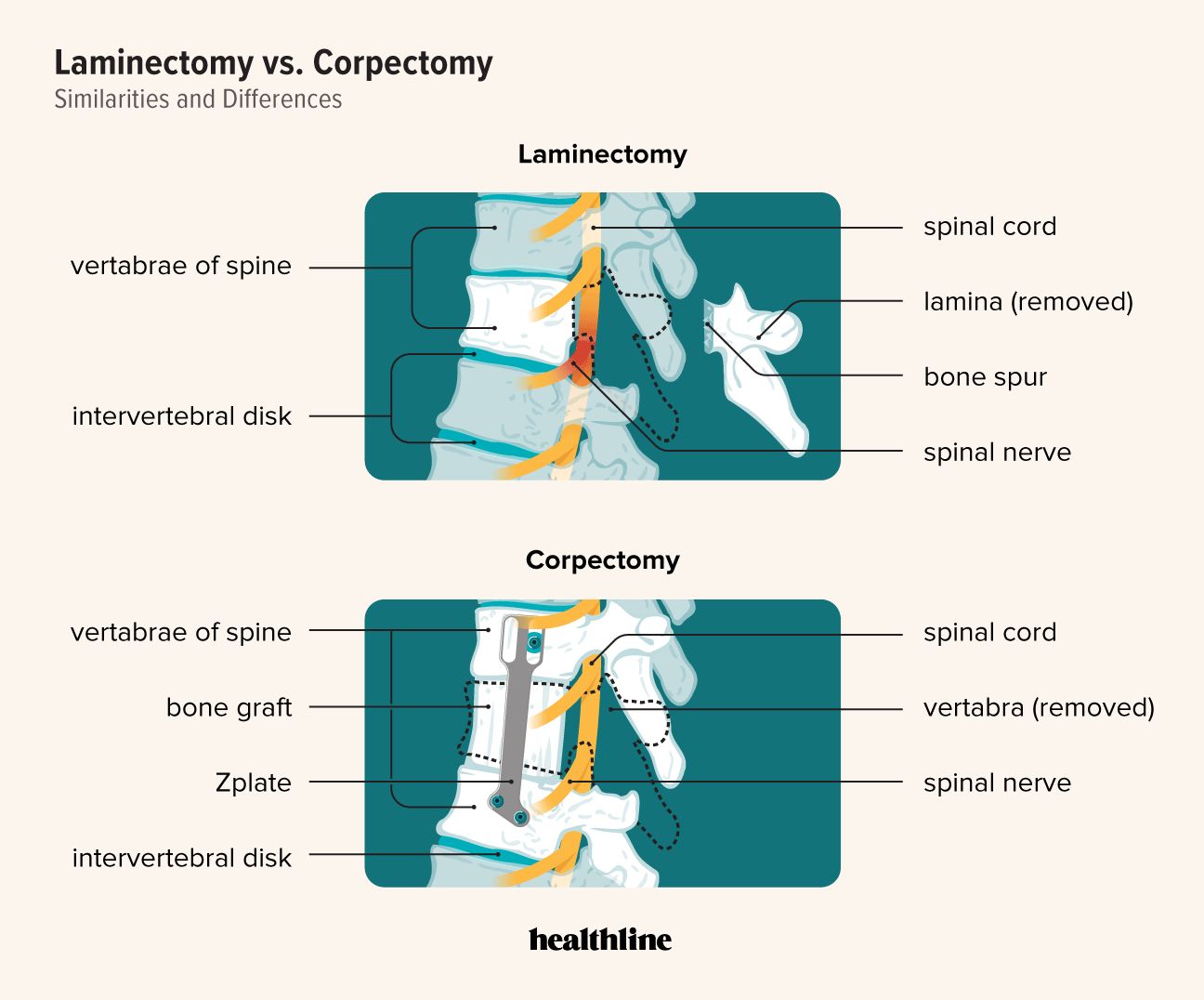
The definition reveals that the pathology—the disease or injury—is located primarily in the anterior (front) column of the spine. While many spinal surgeries, such as laminectomies, approach the spine from the back (posterior), a corpectomy is most frequently performed from the front (anterior). This approach allows the surgeon to remove the bone that is pushing directly backward against the spinal cord.
In the medical hierarchy of spinal procedures, a corpectomy is considered more extensive and complex than a discectomy or a laminectomy. If a patient is told they need a corpectomy, the definition reveals that their condition involves multi-level compression or a centralized obstruction that cannot be safely managed by simply trimming a disc or removing a small portion of bone.
What the Need for a Corpectomy Reveals About Pathology
The recommendation for a corpectomy is rarely a first-line treatment. It typically reveals a condition that has progressed to the point of compromising neurological function. Common underlying causes include:
- Cervical Spondylotic Myelopathy (CSM): This is a degenerative condition where age-related wear and tear leads to significant narrowing of the spinal canal. When the compression occurs over a long segment or is caused by large bone spurs (osteophytes) behind the vertebral body, a corpectomy is required to clear the canal.
- Ossification of the Posterior Longitudinal Ligament (OPLL): This involves the ligament running behind the vertebral bodies turning into bone. Because this "bone" is fused to the back of the vertebra, removing the entire vertebral body is often the only way to safely remove the pressure on the cord.
- Spinal Tumors: Both primary tumors and metastatic lesions often settle in the vertebral body. A corpectomy allows for the removal of the cancerous bone to prevent collapse or paralysis.
- Vertebral Fractures: High-energy trauma can shatter a vertebra. If the fragments are pushed into the spinal canal (burst fractures), a corpectomy is performed to remove the shards and stabilize the column.
- Infections (Osteomyelitis/Discitis): When an infection eats away at the bone, it becomes structurally unsound. Removing the infected bone is necessary to halt the spread and rebuild the spine.
Variations of the Procedure
The definition of a corpectomy changes slightly depending on the region of the spine being treated. Each area carries unique risks and anatomical considerations.
Anterior Cervical Corpectomy and Fusion (ACCF)
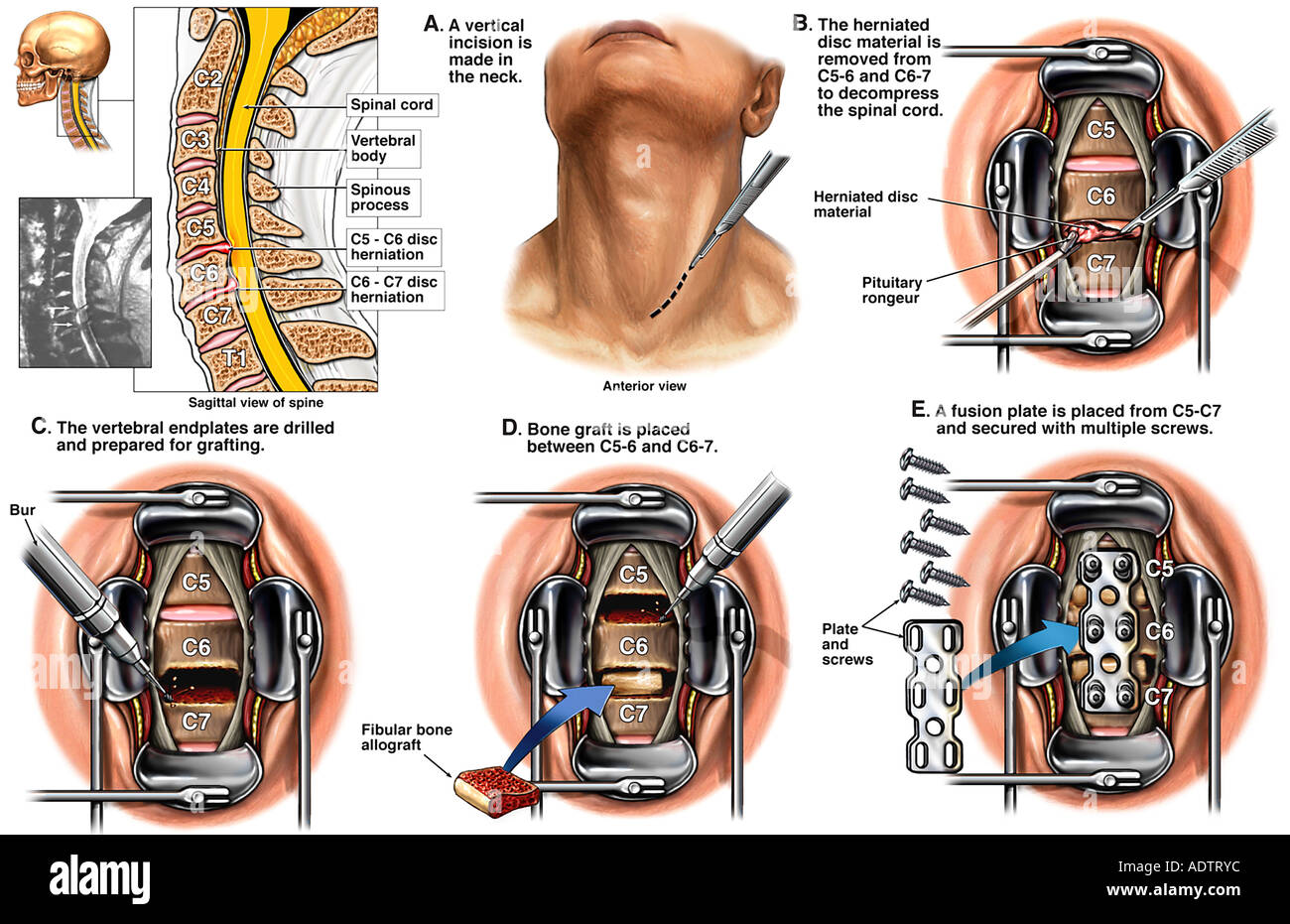
This is the most common form of the procedure. It involves an incision in the neck to reach the cervical spine. It is frequently used to treat multi-level stenosis. Because the surgeon must move the esophagus and trachea to the side, patients often experience temporary swallowing difficulties post-operatively.
Thoracic Corpectomy
The thoracic spine (mid-back) is shielded by the rib cage. A thoracic corpectomy may require a side approach (lateral) or even the removal of a rib to gain access. This is often performed for tumors or severe fractures.
Lumbar Corpectomy
In the lower back, a corpectomy is usually performed to treat "burst" fractures or infections. Because the lumbar vertebrae are the largest and carry the most weight, the reconstruction process (fusion) must be particularly robust.
The Surgical Process: From Decompression to Reconstruction
A corpectomy is essentially a two-part surgery: the destruction (removal of the offending bone) and the construction (restoring stability).
1. Decompression
Once the surgeon reaches the spine, they use specialized high-speed drills and surgical instruments to carefully remove the discs above and below the affected vertebra. They then "square off" the vertebral body, removing the bone until the dura (the protective sac around the spinal cord) is visible and free of pressure.
2. Stabilization and Fusion
Removing the vertebral body leaves a significant gap in the spinal column. Without reconstruction, the spine would collapse. To prevent this, surgeons use a "strut graft" or a "cage." In 2026, the use of 3D-printed porous titanium cages has become a standard, as these devices mimic the structural integrity of bone and allow for better "ingrowth" of natural bone cells.
The cage is filled with bone graft material (either the patient's own bone, donor bone, or synthetic bone-morphogenetic proteins) to encourage the vertebrae above and below to fuse into one solid piece of bone. Finally, a metal plate and screws are usually fixed to the front of the spine to hold everything in place while the fusion heals.
Corpectomy vs. Discectomy: A Comparative Analysis
Understanding the difference between these two terms is crucial for patients navigating surgical options.
| Feature | Discectomy | Corpectomy |
|---|---|---|
| Scope of Removal | Only the intervertebral disc. | The disc(s) plus the vertebral body. |
| Primary Indication | Herniated disc, localized nerve root compression. | Multi-level stenosis, tumors, fractures, OPLL. |
| Surgical Complexity | Moderate; often outpatient. | High; requires multi-day hospital stay. |
| Recovery Time | 2–6 weeks for basic activities. | 3–6 months for significant fusion. |
| Stability Risk | Low; the vertebral column remains intact. | High; requires internal hardware (cages/plates). |
| Neurological Goal | Relieve radiating limb pain (radiculopathy). | Prevent paralysis or improve myelopathy. |
Risks and Complications
Because a corpectomy involves working in close proximity to the spinal cord and major blood vessels, it carries a higher risk profile than simpler spinal surgeries.
- Neurological Deficit: While the goal is to protect the spinal cord, the manipulation of bone near sensitive nerves carries a risk of temporary or permanent weakness or numbness.
- Hardware Failure: In some cases, the screws or plates may shift or break before the bone has fully fused. This is known as "pseudoarthrosis" or non-union.
- Dysphagia: In cervical corpectomies, the retraction of the throat can lead to difficulty swallowing or voice changes (hoarseness) due to irritation of the recurrent laryngeal nerve.
- Cerebrospinal Fluid (CSF) Leak: If the dura is nicked during the removal of bone spurs, a leak may occur, requiring repair and sometimes prolonged bed rest.
Recovery and Rehabilitation in 2026
Recovery from a corpectomy is a marathon, not a sprint. In 2026, post-operative protocols have shifted toward Early Recovery After Surgery (ERAS) pathways, which emphasize early mobilization and non-opioid pain management.
In the first 24 to 48 hours, the focus is on monitoring neurological function and managing drain tubes. Most patients remain in the hospital for two to four days. A neck or back brace is often required for six to twelve weeks to limit motion and protect the developing fusion.
Physical therapy usually begins around the six-week mark. The initial goals are to restore range of motion in the extremities and strengthen the core muscles that support the spine. Patients are generally advised against heavy lifting, twisting, or high-impact activities for at least six months, as it takes that long for the bone graft to show significant biological integration.
FAQ
Does a corpectomy mean I will lose mobility in my neck or back?
Yes, a corpectomy results in a fusion of at least two spinal levels. This means that the specific segment of your spine will no longer bend or twist. However, many patients find that their overall mobility improves because they are no longer in debilitating pain, and the remaining healthy segments of the spine often compensate for the fused area.
Is a corpectomy the same as a "spinal fusion"?
A corpectomy includes a spinal fusion, but not all fusions are corpectomies. A fusion is the process of joining two bones together; a corpectomy is the specific act of removing a vertebral body before performing that fusion.
What are the signs that a corpectomy might be failing?
Warning signs include new or worsening weakness in the arms or legs, difficulty walking, or a sudden change in the "feel" of the hardware (such as a clicking sensation). In 2026, regular follow-up X-rays or CT scans are used to verify that the cage is staying in place and that new bone is forming.
Why is an anterior approach used instead of a posterior approach?
In most cases, the material compressing the spinal cord is located in front of the cord (like a bone spur on the back of the vertebral body). Approaching from the back would require the surgeon to push the spinal cord out of the way to reach the obstruction, which is extremely dangerous. The anterior approach allows direct access to the problem without disturbing the cord.
How long does the 3D-printed cage last?
Modern 3D-printed titanium cages are designed to be permanent. They do not need to be replaced unless there is a specific complication like an infection or hardware migration. Over time, your natural bone grows through the porous structure of the cage, essentially making it a permanent part of your skeleton.
Making an Informed Decision
If your clinical diagnosis has led to a corpectomy recommendation, the definition reveals that your spinal health has reached a critical juncture where the structural integrity of the vertebral column is compromising your nervous system. While the surgery is significant, it is often the most effective way to prevent long-term neurological decline or paralysis.
Patients should seek a detailed consultation with a board-certified neurosurgeon or orthopedic spine surgeon to discuss the specific number of levels involved and the type of reconstruction planned. Understanding the "why" behind the corpectomy definition allows you to approach the recovery process with realistic expectations and a clear path toward spinal stability.
Image Gallery