Navigating Auto and Home Insurance Near Me: Finding the Right Local Coverage
Securing local auto and home insurance policies involves comparing regional carrier networks, evaluating state-specific coverage minimums, and assessing bundled discount opportunities through agents in your immediate geographic area. U...
Securing local auto and home insurance policies involves comparing regional carrier networks, evaluating state-specific coverage minimums, and assessing bundled discount opportunities through agents in your immediate geographic area.
Contents
Understanding Auto Owner and Home Insurance Policies
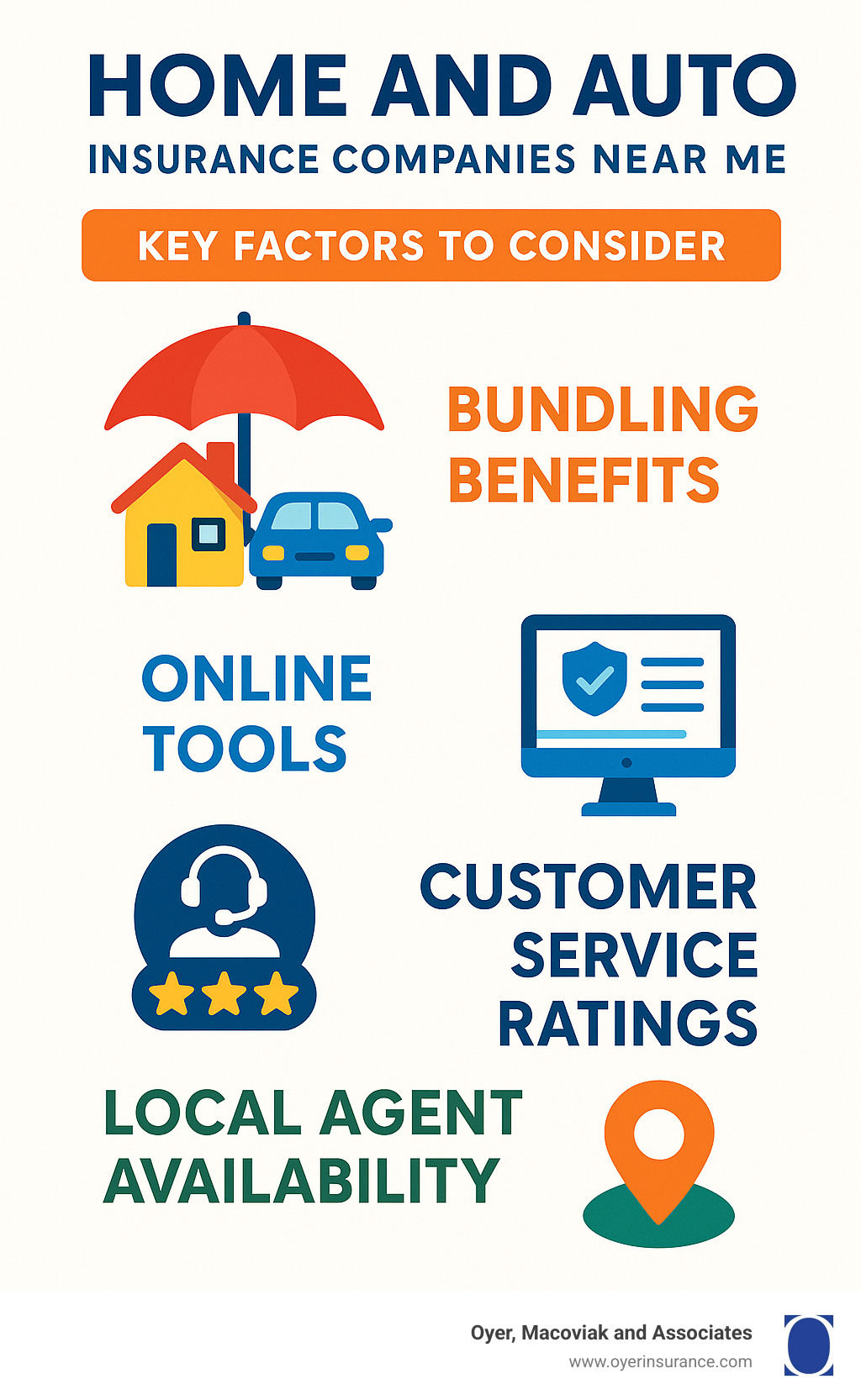
When looking for auto and home insurance near me, policyholders are typically searching for combined protection or localized insurance agency representation. Bundling your personal auto insurance policy with a homeowners insurance policy under a single carrier or local agency is one of the most effective ways to lower overall premium costs while simplifying your financial administration.
Insurance needs vary significantly depending on geographic location, local weather risks, state minimum liability limits, and the replacement cost of your physical assets. Local independent insurance agents or captive agents within your community can offer tailored guidance that national online-only aggregators may overlook. Understanding how these two distinct insurance pillars interact forms the foundation of robust personal asset protection.
Core Components of Home Insurance
Homeowners insurance protects your physical dwelling, personal property, and financial liability against unforeseen perils such as windstorms, fire, theft, and certain types of water damage. A standard policy typically features several essential coverage parts:
- Dwelling Coverage (Coverage A): Pays for the repair or rebuilding of the physical structure of your home if it is damaged by a covered peril.
- Other Structures (Coverage B): Protects detached structures on your property, such as unattached garages, sheds, or fences.
- Personal Property (Coverage C): Covers the contents inside your home, including furniture, electronics, and clothing, whether they are at your residence or temporarily with you while traveling.
- Loss of Use (Coverage D): Provides reimbursement for additional living expenses—such as temporary rental housing and food costs—if your home becomes uninhabitable due to a covered loss.
- Personal Liability (Coverage E): Defends you if you are legally responsible for bodily injury or property damage to third parties on or off your premises.
- Medical Payments to Others (Coverage F): Covers minor medical bills if a guest is injured on your property, regardless of fault.
Core Components of Auto Insurance
Auto insurance provides financial protection against physical damage and bodily injury resulting from traffic collisions and against liability that could arise from incidents in an automobile. Depending on your state of residence, a compliant policy usually includes:
- Liability Coverage: Divided into bodily injury liability and property damage liability, paying for injuries or damage you cause to other drivers and their vehicles.
- Collision Coverage: Pays for damage to your own vehicle resulting from a collision with another car or a stationary object, regardless of fault.
- Comprehensive Coverage: Covers non-collision incidents, including theft, vandalism, fire, striking an animal, or damage from severe weather events like hail or floods.
- Personal Injury Protection (PIP) or Medical Payments: Covers medical expenses, lost wages, and other related expenses for you and your passengers after an accident, independent of fault.
- Uninsured/Underinsured Motorist Coverage: Protects you if you are struck by a driver who carries no insurance or lacks sufficient limits to pay for your damages and medical care.
The Benefits of Local Insurance Agents and Bundling
Searching for coverage near you often connects you with local independent insurance agencies. Unlike captive agents who represent only a single insurance corporation, independent agents partner with multiple regional and national carriers. This allows them to shop the market on your behalf to find competitive rates and comprehensive policy features.
Advantages of Local Representation
Working with a local agent provides distinct advantages when managing claims or modifying policy limits. Local professionals possess intimate knowledge of regional hazard risks—such as wildfire zones, coastal flood plains, or localized severe weather patterns—that automated web portals may under-evaluate. Furthermore, if you need to file a complex claim, having a dedicated local contact to advocate for you through the adjustment process can streamline settlement times.
Financial Incentives of Policy Bundling
Most major insurance providers offer substantial multi-policy discounts—frequently ranging from 10% to 25%—when you purchase both your auto and home insurance from the same company. Beyond direct premium reductions, bundling often simplifies administrative tasks by aligning renewal dates, consolidating billing statements, and granting access to a single deductible waiver in catastrophic events where both your home and vehicle sustain damage simultaneously.
| Coverage Type | Primary Protection Focus | Key Financial Factors | Common Discounts |
|---|---|---|---|
| Home Insurance | Dwelling, personal property, and premises liability | Replacement cost vs. actual cash value, local weather risk | Bundling, alarm systems, roof updates, claims-free |
| Auto Insurance | Vehicle damage, driver liability, and medical care | Deductible limits, vehicle safety ratings, driving record | Bundling, safe driver, paperless billing, good student |
Evaluating Coverage Limits and Deductibles
Balancing premium costs with adequate protection requires a careful assessment of your financial risk tolerance and asset exposure. Selecting the cheapest policy near you can leave significant coverage gaps during a major liability claim or catastrophic property loss.
Determining Home Insurance Adequacy
Many homeowners make the mistake of insuring their home for its real estate market value or purchase price rather than its structural replacement cost. Real estate market value includes land value, which does not burn down or blow away. Replacement cost measures the current local labor and construction material expenses required to rebuild your home from the ground up to its exact original specifications. Additionally, ensure your policy includes extended or guaranteed replacement cost endorsements to guard against post-disaster construction inflation spikes.
Configuring Auto Insurance Limits
State minimum liability limits are rarely sufficient to protect a homeowner's personal assets. If you cause a serious multi-car accident and exhaust your auto liability limits, courts can garnish your wages or place liens on your home equity to cover the remaining judgment. Financial experts generally recommend carrying liability limits significantly higher than state minimums—such as 100/300/100 coverage or higher—and considering a personal umbrella liability policy for an additional layer of broad protection across both your home and autos.
Steps to Find and Compare Coverage Near You
Finding the right insurance provider requires a systematic evaluation of your current needs, local carrier options, and policy terms.
- Audit Your Current Policies: Gather your existing declarations pages for both auto and home insurance to review your current deductibles, liability limits, and expiration dates.
- Identify Local Agencies: Search for independent insurance agencies or regional mutual insurance companies operating within your community or ZIP code.
- Request Multiple Quotes: Obtain customized quotes from at least three different providers, ensuring that each quote utilizes identical coverage limits, deductibles, and endorsement options for accurate comparison.
- Verify Carrier Financial Strength: Check independent financial rating agencies, such as AM Best or Demotech, to confirm the long-term claims-paying stability and financial health of the insurance underwriters.
- Review Customer Service and Claim Reputation: Read independent reviews regarding how specific local agencies and carriers handle claims settlements, customer service response times, and billing inquiries.
- Finalize and Transition: Once you select a provider, finalize your new policy and verify that the effective date coincides seamlessly with the cancellation of your old policy to prevent any lapse in coverage.
Frequently Asked Questions
Can I bundle auto and home insurance if they are with different companies?
Generally, no. To qualify for a multi-policy bundling discount, both your auto and home insurance policies must be underwritten by the exact same insurance carrier group. However, some independent agencies offer agency-specific package incentives if you place multiple lines of coverage through their brokerage, even if placed with separate underlying carriers.
What is the difference between replacement cost and actual cash value on home insurance?
Replacement cost coverage pays the actual cost to repair or rebuild your damaged property with materials of like kind and quality without any deduction for depreciation. Actual cash value (ACV) subtracts depreciation from the replacement cost based on the item's age and condition, meaning you receive a lower payout for older roofs, siding, or personal belongings.
How does my credit score affect my insurance rates?
In most states, insurance companies use credit-based insurance scores as a statistical rating factor because historical industry data indicates a correlation between credit history and the likelihood of filing a claim. Insurers use this score, alongside your driving record or claims history, to help determine your final premium rates.
What should I do if my home is located in a high-risk natural disaster zone?
Standard homeowners insurance policies typically exclude damage caused by floods, earthquakes, and named hurricanes or windstorms in specific coastal regions. If your property is located in a high-risk zone, you may need to purchase separate specialized policies through state-backed insurance pools or the National Flood Insurance Program (NFIP) to ensure full protection.
Are there discounts available for installing safety features on my home and car?
Yes. Insurance companies frequently offer policy discounts for safety upgrades. For home insurance, discounts are often available for monitored security systems, smoke detectors, deadbolt locks, and hail-resistant roofing materials. For auto insurance, you can often secure discounts by equipping your vehicle with anti-lock brakes, factory security systems, passive restraint systems, or dash cameras.
Next Steps for Securing Your Policy
Begin your search by compiling a comprehensive inventory of your personal possessions and vehicle specifications. Contact at least two local independent insurance agencies in your area to review your asset protection needs, request side-by-side bundling quotes, and verify that your liability limits provide adequate financial security for your household.
Image Gallery