Betterment Robo Investing Overview: A Comprehensive Guide to Automated Wealth Management
Betterment is a leading robo-advisor that provides automated, algorithm-driven financial planning and investment management services with minimal human intervention. By utilizing Modern Portfolio Theory (MPT) and advanced tax-efficienc...
Betterment is a leading robo-advisor that provides automated, algorithm-driven financial planning and investment management services with minimal human intervention. By utilizing Modern Portfolio Theory (MPT) and advanced tax-efficiency tools, it helps investors build diversified portfolios of low-cost ETFs tailored to specific financial goals, risk tolerances, and time horizons.
Contents
In the financial landscape of 2026, automated investing has evolved from a niche alternative to a primary vehicle for both novice and sophisticated investors. Betterment, as a pioneer in this space, continues to refine the "set-it-and-forget-it" philosophy by integrating deep automation with personalized financial advice. This overview examines how the platform functions, its cost structure, and the specific technological features that distinguish it from traditional brokerage models.
The Core Philosophy of Betterment’s Automated Investing
At its foundation, Betterment operates on the principles of Modern Portfolio Theory (MPT). This framework suggests that an investor can maximize expected returns for a given level of risk by diversifying across a broad range of asset classes. Rather than attempting to "beat the market" through individual stock picking or market timing, Betterment focuses on capturing market-wide returns through low-cost Exchange-Traded Funds (ETFs).
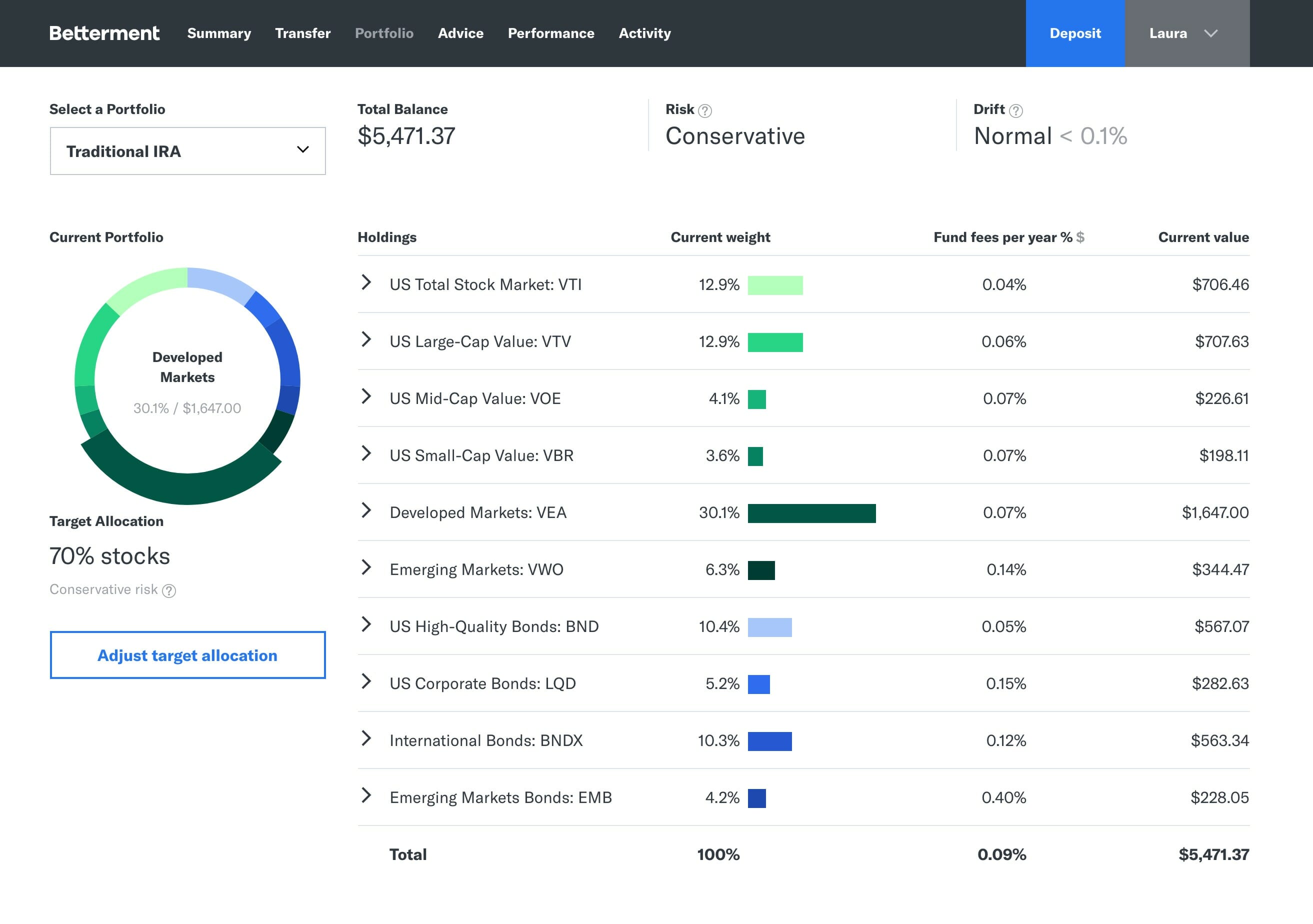
The platform’s algorithm begins by assessing an investor's profile. During onboarding, users answer questions regarding their age, income, financial goals (such as retirement, a safety net, or a major purchase), and their psychological comfort with market volatility. Based on these inputs, Betterment suggests a specific stock-to-bond allocation. For example, a 25-year-old saving for retirement might receive a recommendation for a 90% stock and 10% bond split, whereas a user nearing retirement might see a 40/60 split to preserve capital.
Betterment’s portfolios typically consist of assets from institutional providers like Vanguard and BlackRock. By using ETFs that track broad indices (such as the S&P 500 or international emerging markets), the platform ensures that the user is diversified across thousands of companies globally, reducing the "idiosyncratic risk" associated with any single firm.
Account Types and Eligibility in 2026
Betterment has expanded its offerings to accommodate nearly every stage of an individual’s financial life cycle. As of 2026, the platform supports several distinct account structures:
- Individual and Joint Taxable Accounts: Standard brokerage accounts for general wealth building. These do not have the tax advantages of retirement accounts but offer the most flexibility for withdrawals.
- Retirement Accounts (IRAs): Betterment supports Traditional IRAs, Roth IRAs, and SEP IRAs for the self-employed. It also facilitates 401(k) rollovers, helping users consolidate old employer-sponsored plans into a single managed environment.
- Trust Accounts: For users engaged in estate planning, Betterment allows for the management of revocable living trusts.
- Cash Reserve: A high-yield cash account that acts as a low-risk alternative to a traditional savings account. It is FDIC-insured through program banks and offers a competitive interest rate for funds that are not yet ready for market exposure.
- Betterment at Work: A 401(k) solution for small-to-medium-sized businesses, allowing employers to offer automated investing as a benefit to their employees.
The 2026 Fee Structure and Service Tiers
Betterment employs a transparent fee model designed to be lower than traditional human financial advisors, who often charge 1% or more of Assets Under Management (AUM). The current structure is divided into two primary tiers:
| Feature | Betterment Digital | Betterment Premium |
|---|---|---|
| Annual Fee | 0.25% (or $4/month*) | 0.40% |
| Minimum Balance | $0 | $100,000 |
| Automated Rebalancing | Included | Included |
| Tax-Loss Harvesting+ | Included | Included |
| Financial Advisor Access | Pay-per-package | Unlimited phone access |
| External Account Sync | Included | Included |
*Note: For Digital accounts, the fee is often a flat $4 monthly fee for balances under $20,000 unless a recurring monthly deposit of at least $250 is established. Once the balance exceeds $20,000, it typically reverts to the 0.25% annual AUM fee.
The Digital Plan is the most common entry point. It provides the full suite of automation tools, including rebalancing and tax optimization. The Premium Plan is geared toward high-net-worth individuals who require a human element. Premium subscribers can call a team of Certified Financial Planners (CFPs) for advice on complex topics like marriage, estate planning, or managing outside investments.
Advanced Features: Tax-Loss Harvesting and Rebalancing
One of the most significant advantages of using a robo-advisor like Betterment is the automation of "tax alpha"—the extra return generated through intelligent tax management.
Tax-Loss Harvesting+ (TLH+)
Tax-loss harvesting involves selling a security that has experienced a loss and replacing it with a similar (but not "substantially identical") security. This allows the investor to realize a loss for tax purposes, which can be used to offset capital gains or up to $3,000 of ordinary income. Betterment’s TLH+ software monitors accounts daily for these opportunities. This is a task that would be prohibitively time-consuming for a manual investor but is handled seamlessly by the algorithm.
Automated Rebalancing
Over time, different assets in a portfolio grow at different rates. If stocks perform well, a 70/30 portfolio might "drift" to 80/20. This increases the investor's risk exposure beyond their original intent. Betterment automatically rebalances the portfolio in two ways:
- Cash Flow Rebalancing: When new dividends are received or the user makes a deposit, Betterment buys the underweighted asset class first.
- Sell/Buy Rebalancing: If drift exceeds a certain threshold (usually 3%), the algorithm sells overweighted assets and buys underweighted ones, ensuring the risk profile remains constant.
Diverse Portfolio Strategies
While the "Core" portfolio is the most popular, Betterment offers specialized strategies for users with specific values or objectives:
- Socially Responsible Investing (SRI): These portfolios focus on companies with high Environmental, Social, and Governance (ESG) ratings. In 2026, these have become highly sophisticated, with sub-options focusing specifically on Climate Impact or Social Impact.
- Goldman Sachs Smart Beta: This strategy seeks to outperform the standard market-cap-weighted index by focusing on factors like low volatility, value, and high quality.
- BlackRock Target Income: A 100% bond portfolio designed for investors who prioritize regular income over capital appreciation, often used by retirees.
- Crypto Portfolios: Betterment provides managed access to cryptocurrency markets, utilizing a diversified "basket" of digital assets that are rebalanced just like traditional ETFs.
Comparison: Betterment vs. Competitors
When choosing a robo-advisor, it is essential to compare Betterment with other market leaders such as Wealthfront and Vanguard Digital Advisor.
- Betterment vs. Wealthfront: Both offer 0.25% fees. Wealthfront is often preferred by tech-focused investors for its "Path" planning tool and direct indexing for larger accounts. Betterment is generally viewed as having a more user-friendly interface and offering easier access to human advisors via the Premium tier.
- Betterment vs. Vanguard: Vanguard requires a higher minimum (often $3,000) for its Digital Advisor but can be cheaper (approximately 0.15% to 0.20%). However, Vanguard's interface is often considered less intuitive for beginners compared to Betterment’s goal-based design.
Potential Limitations and Risks
Despite the benefits, robo-investing is not a universal solution. It is important to acknowledge the following:
- Limited Customization: You cannot pick individual stocks. If you have a strong conviction about a specific company, you cannot add it to your Betterment managed portfolio.
- The Human Element: While Premium offers CFP access, the Digital tier relies entirely on algorithms. In times of extreme market panic, some investors find it difficult to stay the course without a dedicated personal advisor to talk them through the volatility.
- Market Risk: Automation does not eliminate market risk. If the global stock market declines, a Betterment portfolio will decline in value accordingly.
Frequently Asked Questions
Is my money safe with Betterment?
Betterment is a member of the Securities Investor Protection Corporation (SIPC), which protects securities customers of its members up to $500,000 (including $250,000 for claims for cash). Additionally, Betterment’s Cash Reserve account offers FDIC insurance through partner banks up to $2 million for individual accounts. While this protects against the firm's failure, it does not protect against market losses.
How does Betterment handle dividends?
Betterment automatically reinvests dividends. When an ETF in your portfolio pays a dividend, the cash is not left sitting idle. The algorithm uses that cash to purchase fractional shares of the asset classes that are currently underweighted in your portfolio, aiding in the rebalancing process.
Can I withdraw my money at any time?
Yes. Betterment does not charge withdrawal fees. However, selling assets in a taxable account may trigger capital gains taxes. It typically takes 4 to 5 business days for the trades to settle and the funds to reach your linked bank account.
Does Betterment support fractional shares?
Yes. Betterment’s ability to purchase fractional shares is a core part of its efficiency. This ensures that every dollar you deposit is invested immediately, rather than waiting until you have enough to buy a full share of a high-priced ETF.
Next Steps for Prospective Investors
If you are considering Betterment for your 2026 investment strategy, the first step is to define a specific goal. Whether it is a "Safety Net" (emergency fund), a "Major Purchase" (house down payment), or "Retirement," the platform functions best when it has a clear time horizon to work with.
To begin, you should link your primary checking account and set up a small, recurring deposit. This takes advantage of dollar-cost averaging, allowing you to buy more shares when prices are low and fewer when they are high. Before committing significant capital, review the recommended asset allocation to ensure it aligns with your personal comfort level regarding market fluctuations.
Image Gallery