Understanding the California Lemon Law: Protections for Consumers
Yes, California has a comprehensive consumer protection law commonly known as the "Lemon Law," officially titled the Song-Beverly Consumer Warranty Act. This legislation is designed to protect buyers and lessees of new and certain used...
Yes, California has a comprehensive consumer protection law commonly known as the "Lemon Law," officially titled the Song-Beverly Consumer Warranty Act. This legislation is designed to protect buyers and lessees of new and certain used vehicles that suffer from persistent, non-repairable defects, commonly referred to as "lemons," ensuring they are entitled to a replacement or a refund from the manufacturer.
Contents
The Purpose and Scope of the Song-Beverly Consumer Warranty Act
The California Lemon Law is one of the most robust consumer protection statutes in the United States. Its primary objective is to hold manufacturers accountable when they fail to repair a vehicle that is under a manufacturer's express warranty. Unlike general consumer goods laws, the Song-Beverly Act provides specific, structured remedies for automotive defects that impair the vehicle's use, value, or safety.
The law applies to a wide range of vehicles, provided they were purchased or leased primarily for personal, family, or household purposes. This includes:
- New cars, pickup trucks, vans, and SUVs.
- The chassis, chassis cab, and drive train of motorhomes.
- Demonstrator vehicles.
- Many used vehicles still covered by a manufacturer’s original new-vehicle warranty.
It is important to note that the law specifically targets problems that occur within the duration of the manufacturer’s original warranty period. If a defect manifests after the warranty has expired, the protections under the Song-Beverly Act generally do not apply, regardless of how severe the defect may be.
Eligibility Criteria: What Defines a "Lemon"?
Not every mechanical issue qualifies a vehicle as a lemon under California law. The statute requires that the defect be "substantial." A substantial defect is defined as one that impairs the vehicle’s use, value, or safety to the consumer. Minor issues, such as a loose dashboard trim or a cosmetic paint scratch, typically do not reach the threshold required for a successful claim.
To establish a lemon law claim, the following conditions must be met:
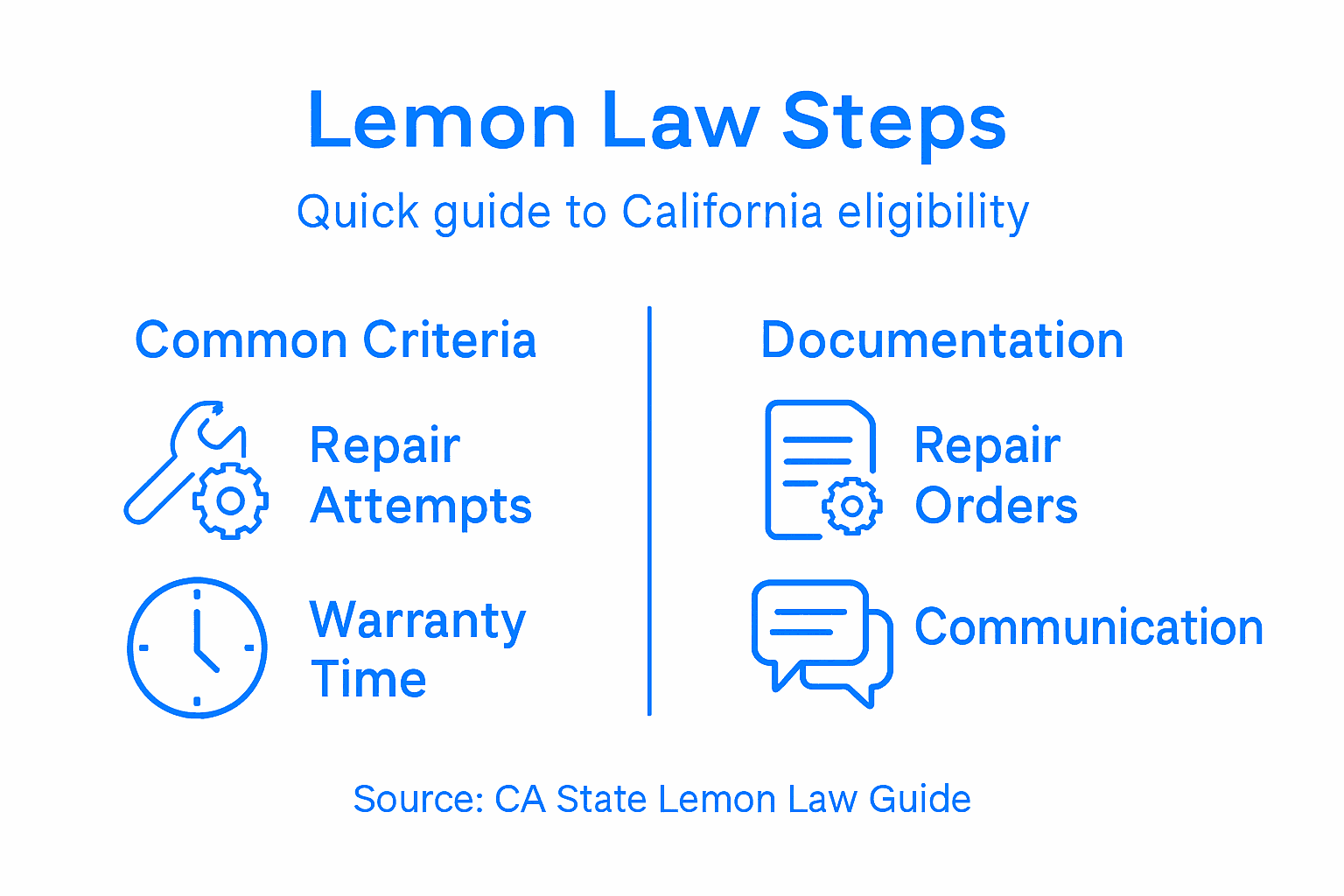
- The Repair Attempt Threshold: You must have provided the manufacturer or its authorized dealers a reasonable number of attempts to repair the vehicle. There is no specific "magic number" of visits, but the law suggests a presumption of a lemon if the same non-conformity has been subject to repair four or more times, or if the vehicle has been out of service for repair for more than 30 days cumulatively.
- Warranty Coverage: The problem must be covered by the manufacturer's express warranty.
- Notification: You must provide the manufacturer with written notice of the defect and give them a final opportunity to repair it, often through the manufacturer's own dispute resolution process (if applicable) or a direct demand letter.
Remedies Available to Consumers
If your vehicle is determined to be a lemon, the manufacturer is legally obligated to offer you one of two primary remedies: restitution (a refund) or a replacement.
- Refund (Repurchase): The manufacturer must refund the purchase price, including all collateral charges such as sales tax, license fees, registration fees, and other official charges. They are allowed to deduct a "usage fee"—a calculated amount based on the mileage driven before the first repair attempt—but the rest must be returned to the consumer.
- Replacement: The manufacturer may offer to replace the vehicle with a new one that is substantially identical to the original. You are responsible for any optional features or upgrades that increase the price, but the base vehicle should be of the same model and value.
Comparison of Lemon Law Remediation Options
| Feature | Refund (Repurchase) | Replacement Vehicle |
|---|---|---|
| Financial Impact | Returns cash; allows you to walk away. | Provides a new vehicle; keeps you in the brand. |
| Deductions | Yes, manufacturer deducts for usage. | No usage fee, but you pay for upgrades. |
| Complexity | Involves complex accounting/calculations. | Requires availability of specific inventory. |
| Timeline | Generally takes several months. | Depends on dealer stock and production. |
Steps to Take If You Suspect Your Car Is a Lemon
Navigating the lemon law process requires meticulous record-keeping. If you suspect your vehicle is a lemon, start by consolidating your documentation.
- Maintain a Paper Trail: Keep every single work order, repair invoice, and diagnostic report from the dealership. Ensure that each document explicitly lists the reported concern, the date, and the corrective action taken.
- Request Records: If you do not have copies of repair orders, visit the service department of your dealership and formally request a full history of your vehicle's service visits.
- Communicate in Writing: When reporting a problem, ensure it is documented on the repair order. Avoid relying solely on verbal communication with service advisors.
- Consult Legal Counsel: Because lemon law claims involve interactions with manufacturer legal departments, many consumers choose to hire a consumer protection attorney. Under California law, if you win your claim, the manufacturer is generally required to pay your attorney’s fees and costs.
Common Pitfalls and Misconceptions
One of the most frequent mistakes consumers make is waiting too long to act. While the statute of limitations for a breach of warranty claim in California is generally four years from the date the consumer knew or should have known of the breach, delaying action can weaken your evidence and cause repair records to be lost.
Another common misconception is that the "Lemon Law" only applies to cars that have been in the shop for 30 days. While the 30-day rule is a helpful guideline for the "presumption" of a lemon, it is not an absolute requirement. A vehicle can be considered a lemon even if it has been in the shop for fewer than 30 days, provided the number of repair attempts for a substantial defect is deemed unreasonable.
Frequently Asked Questions (FAQ)
Does the lemon law apply to used cars? Yes, if the used car is still covered by the manufacturer's original new-vehicle warranty. If you purchased a used car "as-is" without a manufacturer's warranty, it generally does not qualify for protection under the Song-Beverly Act.
What is the "usage fee" deduction? The manufacturer is entitled to offset the refund by the value of the use the consumer had of the vehicle before the first repair attempt. This is calculated using a formula: (Purchase Price × Miles at first repair) / 120,000 miles.
Do I need a lawyer to file a claim? You are not required by law to hire an attorney. You may choose to handle the claim yourself through the manufacturer’s informal dispute resolution process. However, because manufacturers use experienced legal counsel, having representation can help ensure you receive the full amount of compensation to which you are entitled.
Are there fees for the arbitration process? Some manufacturers provide a certified, informal dispute resolution program (arbitration). These are usually free for the consumer. However, the outcome of these programs may not always be as favorable as a court-mandated settlement.
What happens if I lose my service records? Your service records are the backbone of your claim. If you lose them, you may have difficulty proving the number of repair attempts. You should contact the dealership’s service manager immediately to see if they can reprint your service history from their internal database.
Can I pursue a claim if I traded in the car? It is significantly more difficult to pursue a lemon law claim once you have disposed of the vehicle. The law is designed to give the manufacturer the opportunity to replace or repurchase the vehicle; if you have already sold or traded it, that opportunity has been lost.
Next Steps for Consumers
If you believe your vehicle qualifies as a lemon, your first action should be to organize your service documentation chronologically. Verify that you have provided the manufacturer a fair opportunity to fix the defect. If the vehicle is still experiencing the same issue, stop relying on informal verbal assurances from the dealer. Consult with a qualified California consumer protection attorney to review your repair history and determine if you have a viable claim for a repurchase or replacement.
Image Gallery