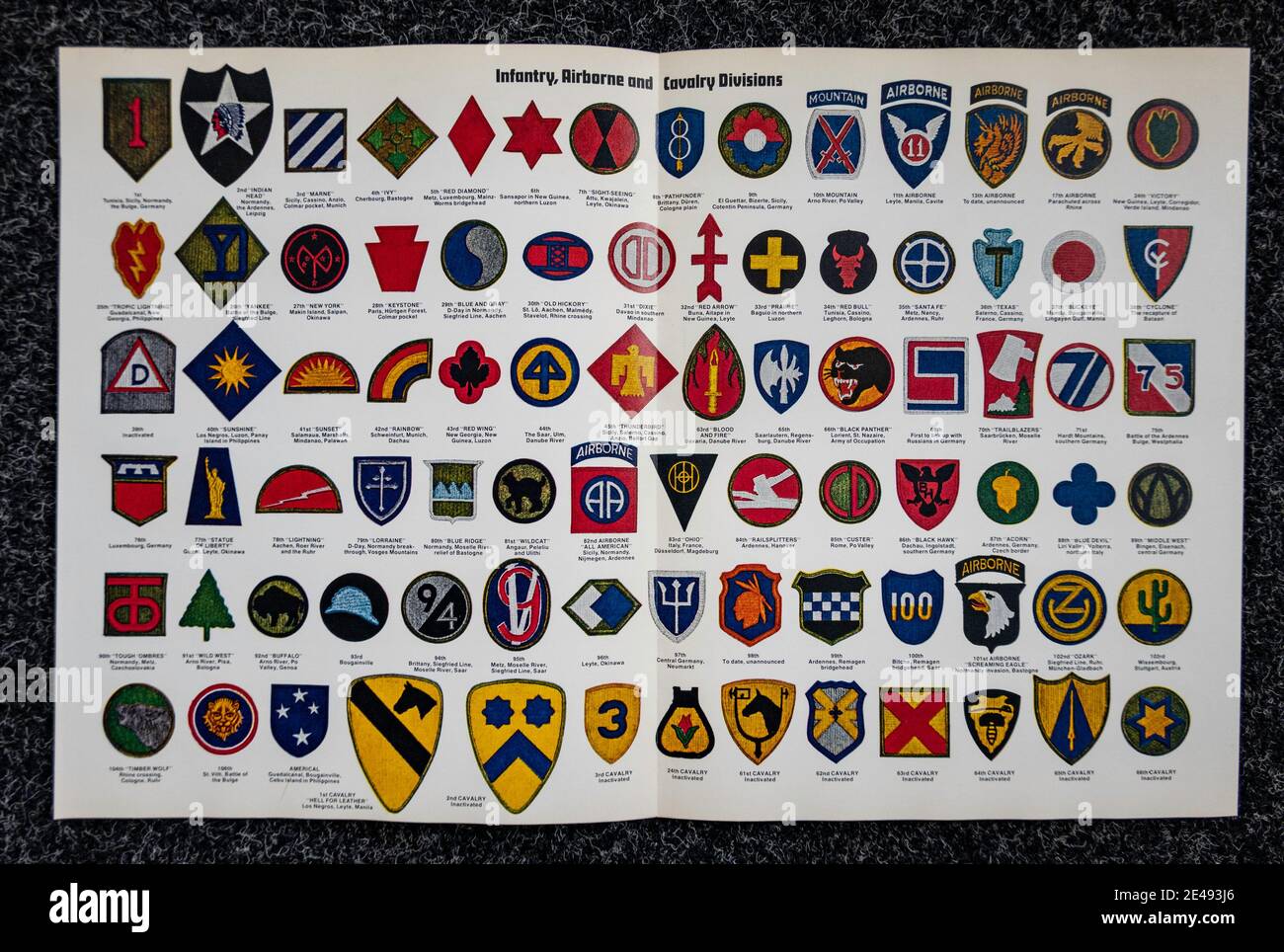
Comprehensive Guide to US Army Units in Germany
US Army units in Germany consist of major command structures, combat brigades, aviation assets, and logistical support elements primarily overseen by U.S. Army Europe and Africa (USAREUR-AF). Headquartered in Wiesbaden, Germany, these...
US Army units in Germany consist of major command structures, combat brigades, aviation assets, and logistical support elements primarily overseen by U.S. Army Europe and Africa (USAREUR-AF). Headquartered in Wiesbaden, Germany, these forces maintain continuous operational readiness, support NATO deterrence initiatives, and participate in multinational training exercises across Europe to reinforce regional security.
Contents
Historical Context and Strategic Evolution of US Forces in Germany
The presence of US Army units in Germany is rooted in the aftermath of World War II and the subsequent Cold War architecture. For decades, the footprint was characterized by massive heavy armored divisions, such as the V Corps and VII Corps, stationed near the inner-German border to deter Warsaw Pact aggression. Following the fall of the Berlin Wall and the collapse of the Soviet Union, a sustained drawdown transformed the footprint from a heavy defensive posture to a more agile, expeditionary capability.
Throughout the 1990s and 2000s, many units were deactivated or redeployed to support operations in the Middle East. However, the security landscape shifted significantly following geopolitical developments in Eastern Europe during the mid-2010s and the subsequent reinforcement phases under European deterrence initiatives. Today's posture balances permanent stationing with rotational deployments, ensuring that heavy combat power remains available while maintaining flexibility to respond to emerging security requirements across the European theater.
Major Command Structures and Headquarters
Understanding the hierarchy of US Army units in Germany requires examining the overarching command and control nodes that direct operational, logistical, and administrative functions. These headquarters bridge strategic directives from the Department of Defense and NATO with tactical execution on the ground.
U.S. Army Europe and Africa (USAREUR-AF)
Headquartered at Lucius D. Clay Kaserne in Wiesbaden, USAREUR-AF represents the primary service component command for U.S. European Command (USEUCOM) and U.S. Africa Command (USAFRICOM). The command exercises operational control over assigned and rotational Army forces, synchronizing land power operations, security cooperation, and multinational interoperability with NATO allies and partners.
V Corps ("Warriors")
Reactivated to provide an operational-level headquarters, V Corps operates from Fort Knox, Kentucky, with a forward command post—known as V Corps Forward—located at Camp Kościuszko in Poznań, Poland, and extensive operational links throughout Germany. V Corps provides command and control for assigned and rotational tactical units, enhances command capabilities in the eastern flank of the alliance, and oversees tactical planning and execution during major joint exercises.
Combat, Aviation, and Support Units
Tactical power in Germany is distributed across several key installations, housing maneuver, fires, aviation, and sustainment formations designed for rapid mobilization and high-intensity conflict deterrence.
2nd Cavalry Regiment
Based at Rose Barracks in Vilseck, the 2nd Cavalry Regiment is a highly mobile Stryker brigade combat team. Equipped with wheeled armored fighting vehicles, the unit provides rapid tactical deployment options across diverse terrain. Its primary mission involves maintaining high readiness, conducting reconnaissance, and engaging in routine multinational training alongside NATO partners to demonstrate collective defense commitments.
173rd Airborne Brigade
While headquartered in Vicenza, Italy, the 173rd Airborne Brigade frequently operates, trains, and stages out of various European installations, including facilities in Germany. As the conventional airborne strategic response force for the U.S. European Command area of responsibility, the brigade specializes in forcible entry operations, deploying rapidly via parachute to secure objectives under austere conditions.
Aviation and Support Formations
Aviation assets are heavily concentrated within the 12th Combat Aviation Brigade, headquartered at Lucius D. Clay Kaserne in Wiesbaden. Operating utility, cargo, and attack helicopters such as the UH-60 Black Hawk, CH-47 Chinook, and AH-64 Apache, this brigade provides critical air mobility, medevac, and close combat support.
Logistical and sustainment requirements are managed by the 21st Theater Sustainment Command, headquartered in Kaiserslautern. This command coordinates theater-wide distribution, maintenance, military police operations, and human resources support, ensuring that all deployed and stationed units maintain operational supply chains.
Key Installations and Geographic Footprint
US Army units in Germany are distributed across several major garrisons, each serving specific administrative, logistical, and operational functions.
| Installation Name | Primary Location | Key Units and Functions |
|---|---|---|
| Lucius D. Clay Kaserne | Wiesbaden | USAREUR-AF Headquarters, 12th Combat Aviation Brigade |
| Rose Barracks | Vilseck | 2nd Cavalry Regiment (Stryker Brigade Combat Team) |
| Tower Barracks | Grafenwöhr | Grafenwöhr Training Area, Combined Arms Training Center |
| Panzer Kaserne / Daenner Kaserne | Kaiserslautern | 21st Theater Sustainment Command, Logistics & Support |
| Stuttgart Military Community | Stuttgart | Joint Headquarters (USEUCOM and USAFRICOM) |
Training Infrastructure and Interoperability
The combat readiness of US Army units in Germany relies heavily on advanced training infrastructure. The Joint Multinational Training Command (JMTC), headquartered at Grafenwöhr and Hohenfels, operates world-class facilities capable of hosting complex live, virtual, and constructive exercises.
The Grafenwöhr Training Area features extensive live-fire ranges for armor, artillery, and infantry systems, accommodating advanced gunnery qualifications. Meanwhile, the Joint Multinational Readiness Center (JMRC) in Hohenfels provides realistic force-on-force combat training using laser engagement systems and observer, controller, trainer (OC/T) teams. These facilities enable US units to train alongside multinational allies, standardizing tactics, communications, and logistical protocols to ensure seamless joint operations during real-world contingencies.
Frequently Asked Questions
What is the main mission of US Army units in Germany?
The primary mission is to deter potential adversaries, assure NATO allies of U.S. commitment to Article 5 collective defense, maintain high combat readiness, and conduct multinational security cooperation exercises throughout Europe and Africa.
Are US soldiers stationed in Germany permanently or on rotation?
The footprint consists of both permanently stationed forces—such as the 2nd Cavalry Regiment and various headquarters and support elements—and rotational forces, including armored brigade combat teams and aviation units that deploy to Europe for set periods.
Which headquarters commands the US Army in Germany?
U.S. Army Europe and Africa (USAREUR-AF), headquartered in Wiesbaden, exercises command and control over assigned and rotational Army forces across the European and African areas of responsibility.
Where do US Army units conduct major live-fire training in Germany?
Major training exercises and live-fire qualifications are primarily conducted at the Grafenwöhr Training Area and the Joint Multinational Readiness Center in Hohenfels, both managed by the Joint Multinational Training Command.
How do families and civilian personnel support US Army units in Germany?
U.S. Army garrisons in Germany provide comprehensive infrastructure, including Department of Defense Education Activity (DoDEA) schools, military medical clinics, housing, and community support services, overseen locally by U.S. Army Garrison Rheinland-Pfalz, Bavaria, and Wiesbaden.
Practical Recommendations for Service Members and Contractors
Personnel receiving assignments to US Army units in Germany should prepare for unique administrative, legal, and cultural requirements. Incoming soldiers and civilian contractors must coordinate closely with their gaining unit sponsors regarding the Status of Forces Agreement (SOFA) regulations, international driver's license acquisition, command sponsorship approvals, and household goods shipping timelines. Engaging proactively with local garrison relocation readiness programs ensures a smooth transition into the European theater while maintaining operational focus.
Image Gallery