The Untold Story of McDonald's French Fries: History, Evolution, and Culinary Science
McDonald's french fries are a global cultural touchstone, recognized instantly by their golden hue, crisp exterior, and fluffy interior. Their journey from local potato fields to standardized mass production reflects a masterclass in a...
McDonald's french fries are a global cultural touchstone, recognized instantly by their golden hue, crisp exterior, and fluffy interior. Their journey from local potato fields to standardized mass production reflects a masterclass in agricultural engineering, supply chain logistics, and culinary consistency that transformed fast food worldwide.
Contents
The Origins: Brothers McDonald and Early Operations
When Richard and Maurice McDonald opened their drive-in restaurant in San Bernardino, California, in 1940, french fries were already a staple of American diners. However, the operational model of traditional restaurants did not align with the speed required for the McDonald brothers' nascent "Speedee Service System," introduced in 1948.
In the early days, the brothers peeled and cut potatoes by hand. The raw potatoes were sliced into shoestring strips, soaked in water to remove excess surface starch, and then fried. While popular locally, this method suffered from high labor costs, inconsistent potato quality throughout changing seasons, and uneven cooking times. The starch content of potatoes fluctuates significantly depending on the time of year, soil conditions, and storage duration, causing hand-cut fries to burn easily or turn soggy.
When Ray Kroc partnered with the brothers in 1954 to franchise the concept, standardizing the french fry emerged as a primary operational hurdle. Kroc envisioned a nationwide chain where a customer biting into a fry in California would experience the exact same taste and texture as someone in New York. Achieving this required moving away from local, unstandardized preparation toward industrial-scale processing and freezing.
The Industrial Revolution of the Golden Fry
The transformation of the McDonald's fry into a standardized global product is heavily credited to Louis Martino, an early franchisee, and later innovations by industrial food scientists. The critical breakthrough came with the adoption of flash-freezing technology and blanching processes that locked in sugar levels and moisture.
Instead of restaurants receiving raw, whole potatoes, suppliers began processing them off-site. The process involves several rigorous steps:
- Sourcing and Curation: Using specific potato varieties, primarily Russet Burbank, Shepody, and Ranger Russet, chosen for their high solid content and low sugar levels.
- Washing, Peeling, and Cutting: Potatoes are steam-peeled, inspected for defects, and forced through hydraulic cutter knives at high speeds to achieve the iconic uniform shoestring dimension.
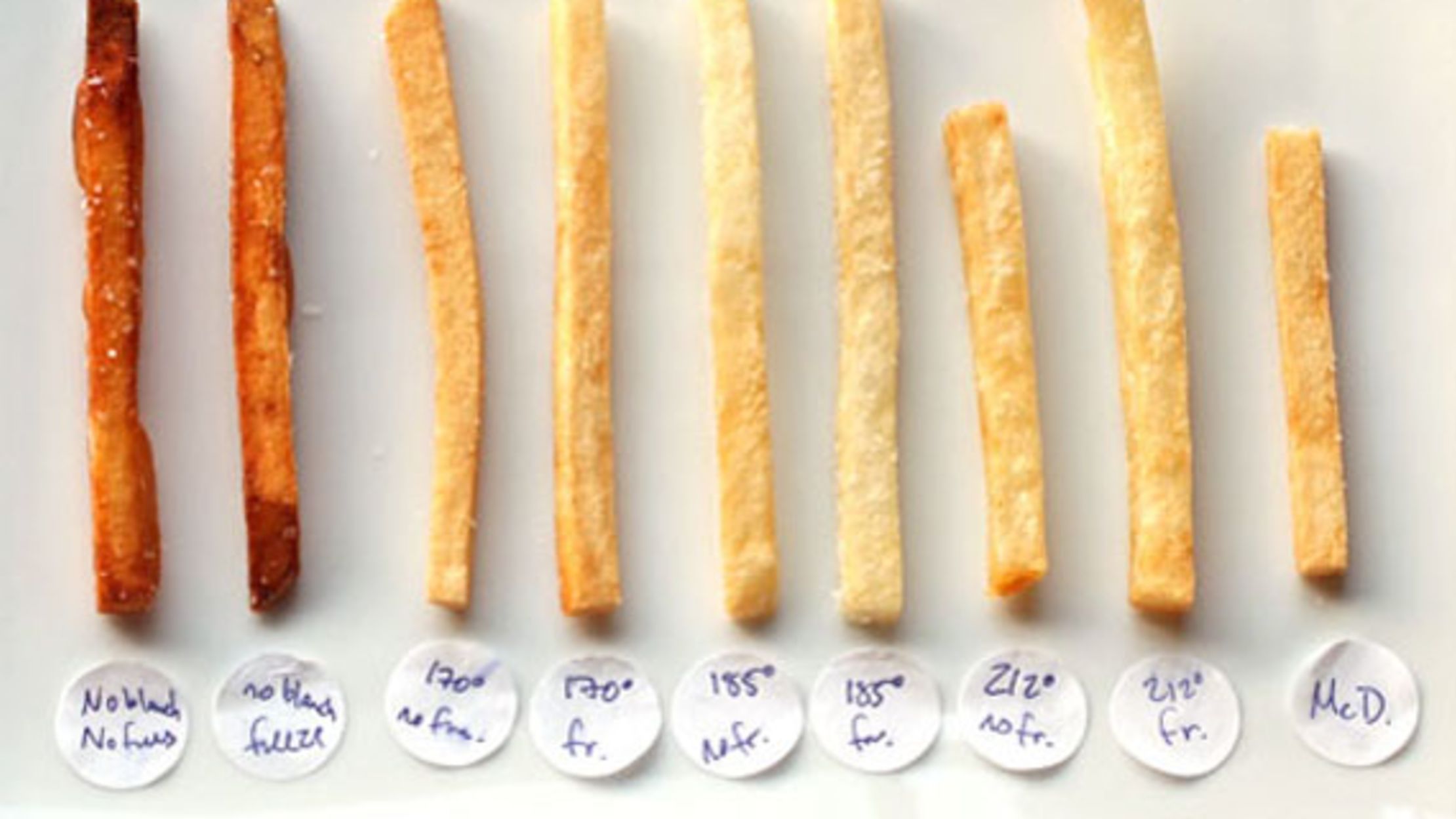
- Blanching: The cut strips are immersed in hot water or steam to leach out excess natural sugars. This prevents the exterior from caramelizing and turning dark or bitter before the interior is fully cooked.
- Partial Frying (Par-Frying): The blanched strips are briefly fried in oil to set their shape and partially cook the interior, followed by rapid freezing.
This shift meant that individual restaurant kitchens no longer had to manage the variable chemistry of raw potatoes. Instead, they received frozen cartons ready for final immersion in fry vats, drastically reducing preparation time, labor costs, and quality variance.
The Evolution of the Oil Blend and Flavor Profile
For decades, the distinct flavor of McDonald’s french fries was widely attributed to the specific frying medium used. From the chain’s early expansion until 1990, McDonald's fried its potatoes in a mixture primarily consisting of beef tallow (beef fat) and cottonseed oil.
This formulation gave the fries a savory, rich depth of flavor that is frequently cited by culinary historians and loyal customers as superior to modern alternatives. The beef tallow provided a high smoke point and a unique lipid profile that crisp-fried the exterior while maintaining a moist interior.
| Era | Frying Medium | Primary Characteristics |
|---|---|---|
| 1950s–1990 | Beef Tallow & Cottonseed Oil Blend | Rich, savory flavor profile; high saturated fat content; iconic traditional taste. |
| 1990–2002 | 100% Vegetable Oil (Initial Formulation) | Shifted due to health advocacy and consumer pressure regarding cholesterol; introduced natural beef flavoring to mimic original taste. |
| 2002–Present | Vegetable Oil (Updated Trans-Fat Reduction) | Refined vegetable oil blends (primarily soybean and corn oil) with modified processing to eliminate artificial trans fats. |
In 1990, amid rising public health concerns regarding dietary cholesterol and saturated fats—spearheaded by activist Phil Sokolof—McDonald's transitioned from beef tallow to 100% vegetable oil. To retain the nostalgic flavor profile requested by consumers, the company introduced a proprietary natural beef flavor additive into the processing phase before freezing.
Subsequent updates in the early 2000s further modified the oil blend to eliminate trans fats, adapting to modern nutritional guidelines while maintaining the familiar taste profile through strict adherence to frying times, salt application standards, and holding temperatures.
Culinary Science and Quality Control
The physical perfection of a McDonald's fry relies on precise thermodynamic control. The operational protocols established by Fred Turner, the company’s first grill man who later became CEO, set exact standards that remain foundational across global franchises today.
The Thermal Mechanics of Frying
When frozen fries enter oil maintained at approximately 325°F to 350°F (163°C to 177°C), a rapid vaporization of surface moisture occurs. This creates a microscopic crust that seals the interior moisture, allowing the potato starch inside to gelatinize and steam itself. If the oil temperature drops too low—often caused by overloading the frying basket—the fries absorb excess oil, becoming greasy and limp. Conversely, overly hot oil cooks the exterior too quickly, leaving the interior raw.
Salt Application Protocols
Salting is another highly regulated step. Fries must be removed from the fryer, allowed to drain for an exact number of seconds to shed surplus oil, and transferred immediately to a dumping station where fine-grain salt is applied. The heat of the freshly fried surface melts the fine salt crystals, ensuring uniform adherence. Waiting even a minute before salting causes the surface to cool, resulting in the salt bouncing off and landing on the collection tray rather than clinging to the potato.
Global Adaptations and Cultural Impact
While the classic shoestring fry remains largely uniform across North America, McDonald's tailors its menu items to regional palates worldwide. In international markets, the fry standard adapts to local agricultural regulations and dietary laws, such as ensuring Halal or Kosher certification where required. In India, where beef derivatives are strictly avoided due to cultural and religious norms, the natural beef flavoring used in the processing stage is omitted entirely, creating a vegetarian-certified fry.
Despite these localized variations, the core product remains a universally recognized symbol of American industrial food standardization. Pop culture references, culinary reviews, and academic studies routinely examine the french fry as an engineering marvel of modern agriculture and supply chain optimization.
Frequently Asked Questions
Why do McDonald's fries taste different today compared to the past?
The primary difference stems from the 1990 switch from beef tallow to vegetable oil for health reasons. While a natural beef flavoring was added to replicate the original taste, subsequent updates to eliminate trans fats and alter oil blends over the decades have subtly influenced the final flavor profile and texture.
Are McDonald's french fries vegan or vegetarian in the United States?
No. In the United States, the natural beef flavoring used during the processing of the potatoes contains derivatives derived from wheat and milk, and historically included trace amounts of beef extracts, making them neither strictly vegan nor universally vegetarian depending on individual dietary definitions. However, formulations vary by country.
What kind of potatoes are used to make McDonald's fries?
McDonald's exclusively uses specific high-solid, low-sugar potato cultivars, predominantly Russet Burbank, Shepody, and Ranger Russet. These varieties prevent the fries from turning dark brown or soggy during the high-heat frying process.
Why are McDonald's fries always the same length?
The uniform length is a result of industrial processing. The potatoes are sorted, peeled, and forced through hydraulic cutting grids at high speeds, and sub-standard pieces or ends that do not meet strict quality control length parameters are sorted out before freezing.
How are McDonald's fries kept warm and crisp at the restaurant?
Fries are held in specialized warming stations equipped with overhead infrared heat lamps and heated collection bins. They are held under strict time limits—typically no more than a few minutes—after which unsold batches are discarded to maintain optimal texture.
Conclusion and Operational Next Steps
The story of McDonald's french fries demonstrates how culinary consistency is achieved through rigorous agricultural science, standardized freezing technology, and strict operational discipline. For those studying food logistics or seeking to replicate commercial fast-food standards, understanding moisture control, blanching chemistry, and lipid profiles provides valuable insight into industrial food production. When evaluating fast-food side items or exploring food science history, always review primary corporate disclosures and agricultural sourcing reports for accurate technical data.
Image Gallery