Understanding NC Auto Insurance Laws for First-Time Drivers
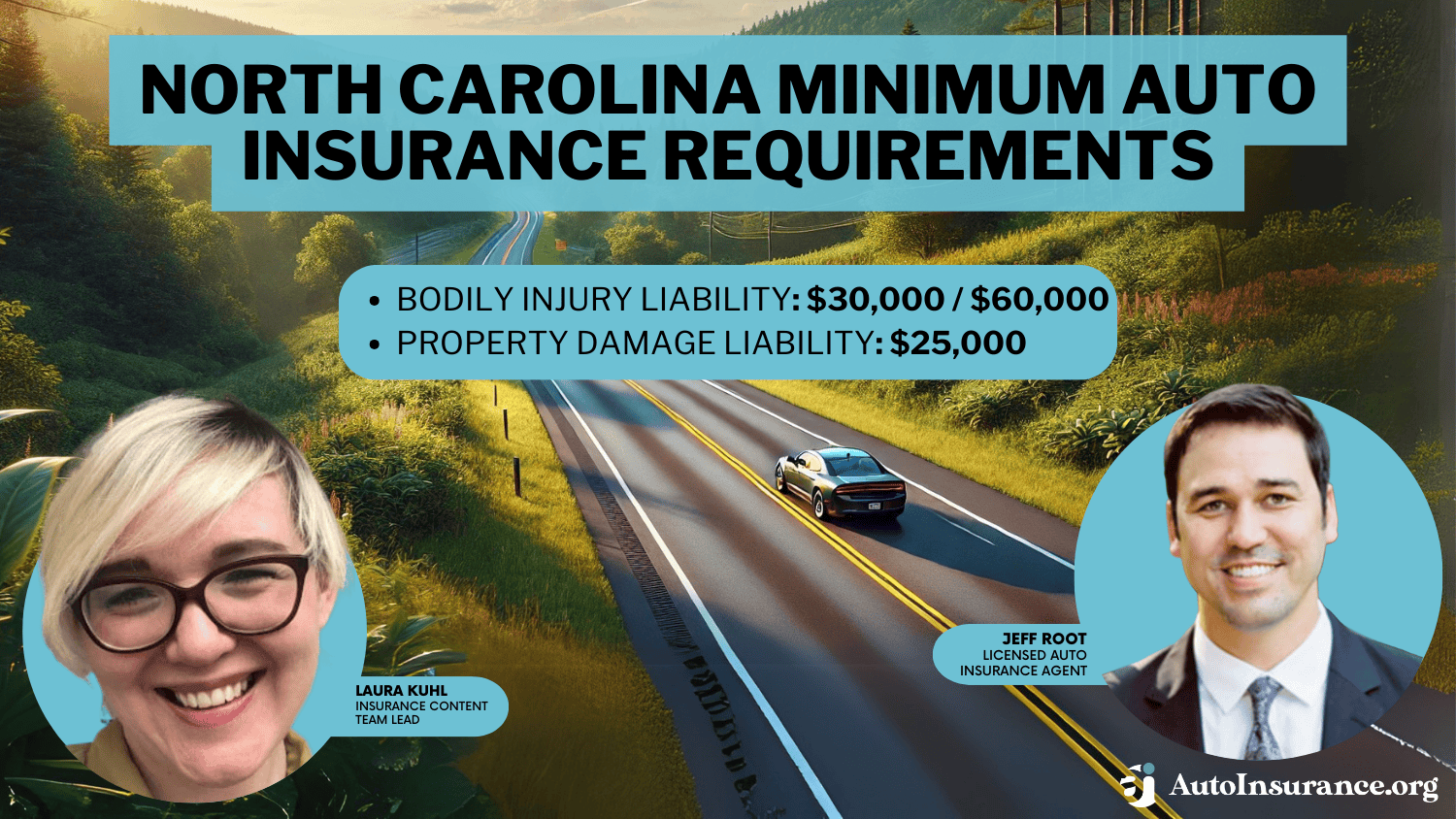
North Carolina law requires all first-time drivers to maintain continuous liability insurance with minimum coverage limits of $30,000 for bodily injury per person, $60,000 per accident, and $25,000 for property damage. You must provide...
North Carolina law requires all first-time drivers to maintain continuous liability insurance with minimum coverage limits of $30,000 for bodily injury per person, $60,000 per accident, and $25,000 for property damage. You must provide proof of this financial responsibility to the North Carolina Department of Motor Vehicles (NCDMV) before receiving a driver’s license.
Contents
Operating a vehicle in North Carolina involves navigating a unique regulatory environment. Unlike many other states, North Carolina uses a centralized system to determine insurance rates and maintains a strict electronic link between insurance providers and the DMV. For a first-time driver—whether a teenager or an adult getting their license for the first time—understanding these legal nuances is essential to avoid heavy fines, license suspension, or financial ruin in the event of an accident.
The Foundation: The North Carolina Financial Responsibility Act
The legal backbone of auto insurance in the state is the North Carolina Financial Responsibility Act. This law mandates that every owner of a motor vehicle registered in North Carolina must maintain "financial responsibility" continuously. For 99% of drivers, this means purchasing an auto insurance policy from a company licensed to do business in the state.
First-time drivers often mistake the "minimums" for "sufficient coverage." In 2026, the medical costs associated with a moderate multi-vehicle accident can easily exceed $60,000. If you carry only the state minimums and cause an accident resulting in $100,000 in medical bills, you are personally liable for the remaining $40,000. North Carolina's "30/60/25" requirements are the floor, not the ceiling.
Understanding the 30/60/25 Split
- $30,000 Bodily Injury (Per Person): This covers the medical expenses, lost wages, and pain and suffering for one person injured in an accident where you are at fault.
- $60,000 Bodily Injury (Per Accident): This is the total amount your insurance will pay for all people injured in a single accident, regardless of how many people are involved.
- $25,000 Property Damage: This covers repairs to the other person's vehicle, fences, buildings, or other structures you might hit.
Mandatory Uninsured Motorist Coverage
North Carolina is one of the states that mandates Uninsured Motorist (UM) coverage. This is a critical protection for first-time drivers. If you are involved in a "hit-and-run" or are struck by a driver who is illegally operating without insurance, your own UM coverage steps in to pay for your medical bills and property damage.
While the law requires UM coverage equal to the state minimum liability limits, many drivers choose to add Underinsured Motorist (UIM) coverage. This applies when the at-fault driver has insurance, but their limits are too low to cover your total damages. In North Carolina, UIM is generally required only if you purchase liability limits higher than the 30/60/25 minimums.
The North Carolina Rate Bureau (NCRB)
A unique aspect of North Carolina auto insurance is the North Carolina Rate Bureau. This organization was created by the General Assembly to ensure that insurance rates are not "excessive, inadequate, or unfairly discriminatory."
For first-time drivers, this means that insurance companies cannot arbitrarily charge whatever they want. The NCRB files proposed rates with the Commissioner of Insurance, and once approved, these become the standard. While companies can offer "deviations" (discounts) to attract safe drivers, the base rate for a first-time driver is heavily influenced by these state-mandated filings. This creates a more stable, albeit highly regulated, pricing environment compared to "wild west" states where premiums can fluctuate wildly between providers.
The Safe Driver Incentive Plan (SDIP)
North Carolina utilizes a specific point system called the Safe Driver Incentive Plan (SDIP). It is vital for first-time drivers to distinguish between "DMV points" (which affect your license) and "Insurance points" (which affect your premium).
The SDIP allows insurance companies to charge higher premiums for drivers with convictions for traffic violations or who are found at-fault in accidents. For a first-time driver, even a single "minor" ticket can lead to a massive percentage increase in premiums.
| Violation Type | SDIP Points | Potential Premium Increase (Approx.) |
|---|---|---|
| Speeding (10 mph or less over limit under 55 mph) | 1 Point | 30% |
| Illegal Passing / Following too closely | 2 Points | 45% |
| At-fault accident (Property damage > $2,300 but < $4,000) | 3 Points | 60% |
| Reckless Driving / Passing a stopped school bus | 4 Points | 80% |
| Driving While Impaired (DWI) | 12 Points | 340% |
Note: These percentages are based on standard NC Rate Bureau filings as of 2026. Specific carrier deviations may apply.
The "No-Gap" Policy and Electronic Reporting
North Carolina is notoriously strict regarding lapses in coverage. Under the North Carolina General Statutes Chapter 20, insurance companies are required by law to notify the NCDMV electronically the moment a policy is cancelled or lapses.
If you are a first-time driver and your policy is cancelled—even for just 24 hours—the DMV will send you a Form FS-5-7. You then have a limited window to prove you have new insurance or face a $50 civil penalty for the first lapse, $100 for the second, and $150 for subsequent lapses. Furthermore, the DMV can revoke your license plate and prohibit you from registering a vehicle until the fees are paid and proof of insurance (Form FS-1) is filed.
Insurance for Teenagers: The GDL Process
If the first-time driver is a minor, North Carolina’s Graduated Licensing Law dictates how insurance is handled.
- Limited Learner’s Permit: While a teen is driving with a supervisor (Level 1), they are typically covered under the parent’s policy at no additional cost, as they cannot drive alone. However, you must notify your agent when the permit is issued.
- Limited Provisional License: Once the driver reaches Level 2 (where they can drive unsupervised during certain hours), they must be added to the insurance policy.
- Full Provisional License: At Level 3, the driver has full privileges, and the insurance premium will reflect the increased risk associated with an unsupervised young driver.
For many families, adding a first-time driver to an existing multi-car policy is significantly cheaper than the driver purchasing a standalone policy. This is due to "multi-policy" discounts and the fact that the first-time driver benefits from the parents' established credit score and insurance history.
Getting a License Without Owning a Car
A common hurdle for first-time drivers in North Carolina is the requirement to show proof of insurance to get a license, even if they don't own a vehicle. If you are taking the driving test but do not own a car, you must obtain a Non-Owner’s Policy.
A non-owner’s policy provides the state-mandated liability coverage (30/60/25) that "follows" the driver rather than a specific vehicle. Without this proof of insurance, the NCDMV will not issue a license unless you qualify for a specific waiver (which usually involves a restriction on the license stating you can only drive certain fleet vehicles).
Common Mistakes for First-Time Drivers
Navigating the legalities of insurance often leads to avoidable errors. Here are the most frequent mistakes made by new drivers in North Carolina:
- Failing to Update the DMV on Address Changes: If you move, you must notify the DMV within 60 days. If your insurance company has one address and the DMV has another, it can cause "data mismatches" that trigger a false lapse-of-coverage notice.
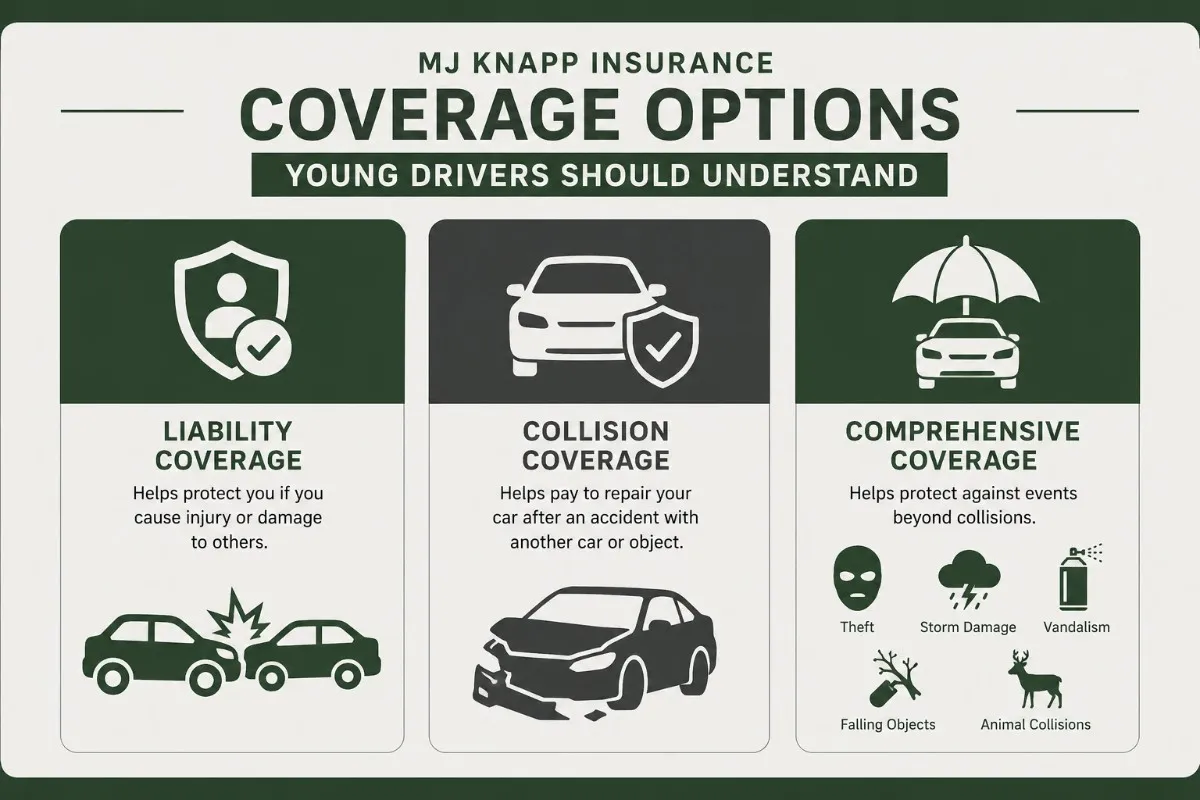
- Assuming "Full Coverage" is a Legal Term: There is no legal definition for "full coverage" in North Carolina. The law only requires liability. If you are financing a car, the lienholder (bank) will require Comprehensive and Collision coverage, but the state does not.
- Neglecting the "Consent to Rate" Form: In some cases, a company may want to charge more than the Rate Bureau’s standard rate due to the driver’s high-risk profile. They will ask you to sign a "Consent to Rate" form. If you refuse, they may refuse to insure you, forcing you into the "Reinsurance Facility" (the state's high-risk pool).
Frequently Asked Questions
Does North Carolina require insurance for a learner's permit?
While the law requires the vehicle being driven to be insured, the permit holder themselves typically does not need a separate policy until they move to a Limited Provisional License. However, the policyholder must inform the insurance company that a permit holder is in the household to ensure coverage is active during practice sessions.
How long do insurance points stay on my record in NC?
Under the SDIP, insurance points stay on your record for three years from the date of the conviction or the date the accident occurred. This is different from DMV points, which often have different durations for license suspension purposes.
What happens if I drive without insurance in North Carolina?
Beyond the civil penalties ($50-$150) and loss of license plate, driving without insurance is a Class 3 misdemeanor. If you are involved in an accident while uninsured, the NCDMV can suspend your driver's license for up to one year, and you may be required to file an SR-22 (proof of high-risk insurance) for several years.
Can I use a digital insurance card at the DMV?
Yes, as of 2026, the NCDMV accepts digital proof of insurance on a smartphone or tablet. However, the insurance company must be licensed to operate specifically within North Carolina; an out-of-state policy that has not been "converted" to NC standards will usually be rejected.
Is North Carolina a "No-Fault" state?
No, North Carolina is an at-fault state. This means the person who caused the accident is responsible for the damages. It also follows the doctrine of contributory negligence, which is a strict legal rule stating that if you are even 1% at fault for an accident, you may be legally barred from recovering damages from the other driver.
Practical Recommendation
For first-time drivers in North Carolina, the most effective path to legal compliance and financial safety is to request an FS-1 form from your agent immediately upon securing coverage. Do not rely solely on the paper "binder" or temporary ID card when visiting the NCDMV; the FS-1 is the gold standard for verifying financial responsibility. Additionally, consider opting for liability limits of at least 100/300/50. While this exceeds the legal minimum, the increase in monthly premium is often negligible compared to the protection it provides against the high costs of modern medical care and vehicle technology.
Image Gallery