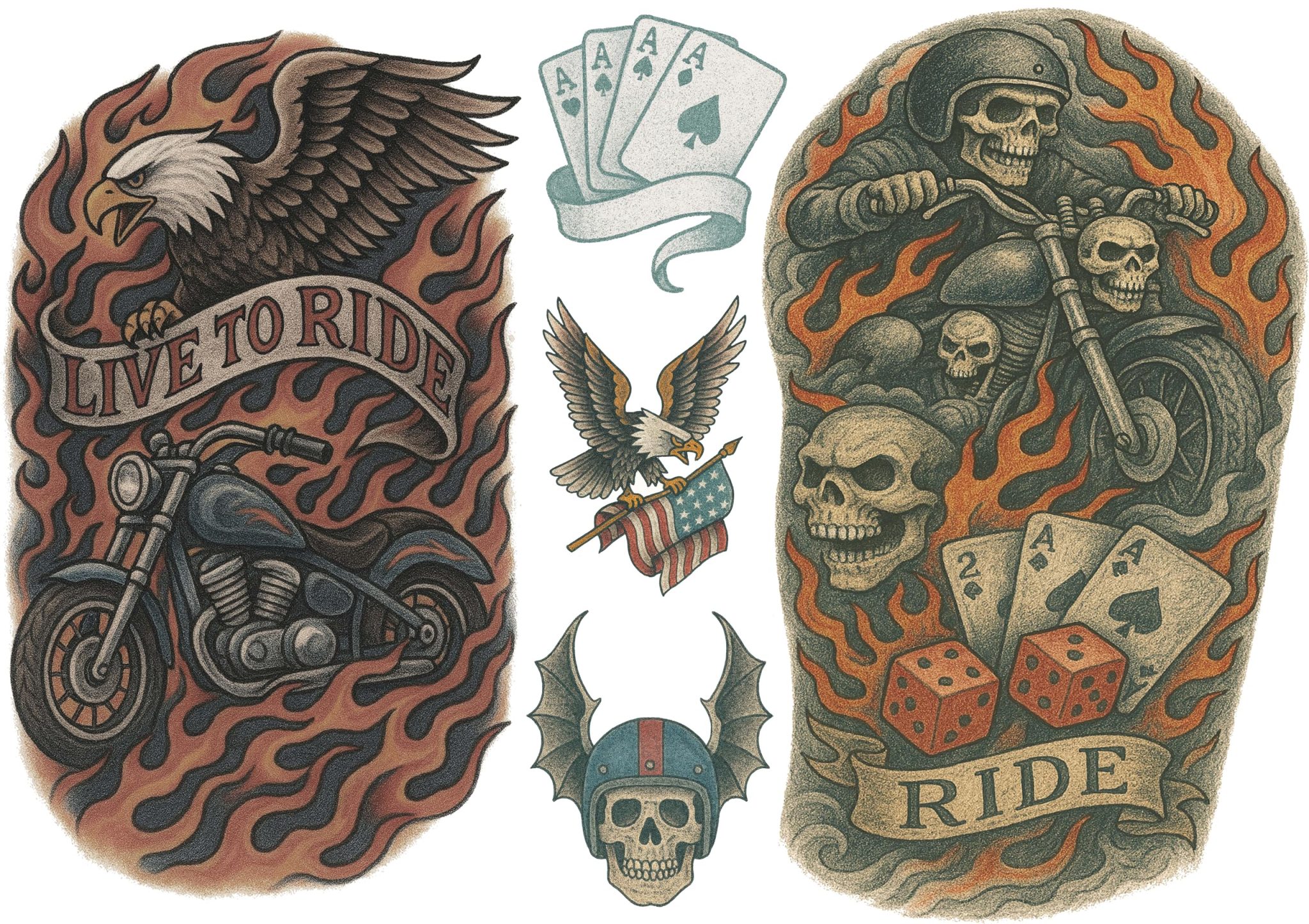
Female Biker Tattoos: Symbolism, Classic & Modern Designs, and Placement Guide
Female biker tattoos blend motorcycle heritage, personal freedom, and self-expression. They range from traditional emblems like V-twin engines, winged wheels, and roses to fine-line modern motorcycle outlines and detailed black-and-gre...
Female biker tattoos blend motorcycle heritage, personal freedom, and self-expression. They range from traditional emblems like V-twin engines, winged wheels, and roses to fine-line modern motorcycle outlines and detailed black-and-grey realism. Understanding visual styles, placement dynamics relative to riding gear, and cultural etiquette ensures your body art looks striking and holds deep personal meaning.
Contents
The Cultural Evolution of Women in Motorcycle Ink
Tattooing and motorcycle culture have shared a close relationship for over a century. Historically, motorcycle body art was predominantly associated with male riders returning from military service or participating in early motorcycle clubs. Early female imagery in biker tattoos often cast women as pin-up art or passenger figures painted on tanks and tattooed on male arms.
Over the past several decades, women have shifted from the passenger seat to the handlebars. Today, female riders represent a substantial portion of the global riding community. This cultural shift transformed female biker tattoos from passive symbols into expressions of autonomy, mechanical passion, and camaraderie.
Modern female biker ink honors classic motorcycle iconography—such as pistons, skulls, and winged insignias—while introducing versatile design aesthetics. Women riders frequently integrate botanical accents, custom typography, and fine-line detailing to create pieces that reflect both their love for the open road and their personal style.
Key Symbols and Imagery in Female Biker Tattoos
Biker iconography is rich with symbolism developed over decades on the highway. When designing a female biker tattoo, choosing elements that convey your specific journey as a rider adds depth to the visual art.
1. Mechanical Elements & Engine Motifs
- V-Twin Engines & Pistons: Represent raw power, mechanical appreciation, and the heartbeat of the motorcycle.
- Gears and Spark Plugs: Symbolize drive, technical competence, and internal spark.
- Handlebars & Spoke Wheels: Emphasize control, direction, and movement forward.
2. Freedom and Avian Imagery
- Eagles & Phoenixes: Traditional symbols of independence, resilience, and sovereignty on the road.
- Wings (Feathered or Mechanical): Often placed across the upper back or forearms, wings represent speed, transcendence, and protection during travel.
3. Floral & Botanical Contrasts
- Roses and Thorns: Combine beauty with toughness. A rose intertwined with a exhaust pipe or wrench represents the balance between delicacy and rugged endurance.
- Wildflowers & Vines: Frequently wrapped around mechanical elements like chains or frames to soften rigid geometry.
4. Skulls, Flames, and Asphalt Motifs
- Sugar Skulls & Classic Skulls: Skulls in biker culture are not inherently negative; they historically symbolize equality (death makes all equal), protection against dangerous spirits, and living life without fear.
- Flames & Speed Trails: Highlight velocity, intensity, and a passion for combustion engines.
Popular Tattoo Styles for Women Riders
The visual execution of a motorcycle tattoo dictates how it ages and how effectively it communicates its theme. Female riders select from several major tattoo traditions depending on their aesthetic goals.
| Traditional | Realism | Fine Line | Neo-Trad |
|---|---|---|---|
| (Bold lines, primary colors) | (Shaded chrome, photo details) | (Subtle geometry, delicate outlines) | (Illustrative, rich color) |
American Traditional (Old School)
Characterized by thick black outlines, a limited palette of primary colors (red, green, yellow, deep blue), and iconic imagery like daggers, eagles, and banners. American Traditional tattoos age exceptionally well under sun exposure, making them a practical choice for long-distance riders.
Black and Grey Realism
This style focuses on smooth shading, reflection capture, and three-dimensional depth. It is ideal for depicting polished chrome, engine casing texture, or lifelike motorcycle portraits. Realism requires an artist skilled in high-contrast shading to ensure the metal looks reflective rather than flat.
Neo-Traditional
Building on classic iconography, Neo-Traditional ink incorporates varied line weights, expanded color palettes (such as teal, magenta, and mustard), and intricate decorative borders. It works well for pairing mechanical components with stylized female faces or ornate floral arrangements.
Fine Line and Minimalist
For women seeking subtle or easily concealable ink, fine-line tattooing uses single needles to create delicate motorcycle outlines, small gear configurations, or single-word coordinates of memorable road trips. While elegant, fine line work requires diligent sun protection to prevent premature fading.
Strategic Placement and Riding Gear Considerations
Placement for a biker tattoo involves more than visual appeal. Active riders must consider how riding apparel—such as heavy leather jackets, Kevlar sleeves, tight gloves, and riding boots—interacts with healing and healed ink.
Collarbone / Chest: High visibility, low friction
Upper Arm / Bicep: Protected by sleeves, minimal wear
Outer Forearm: High sun exposure; requires UV protection
Thigh / Calf: Friction point from riding pants/leather chaps
Forearms and Wrists: Highly visible while gripping handlebars. However, forearms receive intense sun exposure during long rides, requiring diligent UV protection once healed.
Upper Arms and Shoulders: Offer a flat canvas for detailed engine portraits or winged pieces. Shoulders stay protected under riding jackets, reducing sun fading.
Thighs and Calves: Provide large areas for detailed artwork. Riders must ensure protective pants or chaps do not rub excessively during the initial 2-3 week healing window.
Upper Back and Spine: Excellent for wide designs like wings, handlebars, or eagle motifs. This area experiences minimal apparel friction while riding if cotton base layers are worn under protective gear.
Biker Tattoo Style, Placement, and Durability Comparison
The following table compares common tattoo styles, recommended body placements, and practical considerations for active female riders:
| Tattoo Style | Key Visual Traits | Recommended Placements | Resistance to Gear Friction & Sun | Ideal For |
|---|---|---|---|---|
| American Traditional | Heavy outlines, saturated primary colors, minimal shading | Forearms, calves, bicep | Very High: Bold lines hold up well against sun fade and friction. | Riders seeking classic heritage look and maximum durability. |
| Black & Grey Realism | Detailed shading, chrome reflections, photographic depth | Upper arm, thigh, back | Moderate: Soft shading requires sun protection to maintain contrast. | Detailed engine portraits, realistic skulls, and metallic textures. |
| Neo-Traditional | Varied line weights, rich custom color palettes, ornate borders | Outer thigh, shoulder blade, forearm | High: Strong outer structure protects inner color gradients. | Combining mechanical parts with flowers, animals, or portraits. |
| Fine Line / Minimalist | Micro-lines, subtle geometric shapes, light shading | Inner wrist, ankle, collarbone | Low to Moderate: Fine lines expand slightly over time and fade under UV. | Subtle, discreet symbols, small bike outlines, or road map coordinates. |
| Illustrative / Watercolor | Fluid color splatters, painterly brushwork, soft edges | Ribs, upper back, upper thigh | Moderate: Lacks heavy black framework; needs careful aftercare. | Expressive, artistic representations of speed and freedom. |
Cultural Etiquette: Avoiding Protected Biker Symbols
When designing a motorcycle-themed tattoo, riders must be aware of long-standing traditions within the motorcycle club (MC) community. Certain symbols carry specific operational meanings within organized clubs, and wearing them without earning them can lead to awkward or hostile interactions.
- Avoid Three-Piece Patch Outlines: Do not tattoo designs resembling a top rocker, main logo, and bottom rocker layout on your back.
- Steer Clear of "1%" Diamonds: The 1% symbol is reserved exclusively for specific outlaw motorcycle clubs.
- Skip Club-Specific Acronyms & Numbers: Avoid numbering systems associated with specific clubs (such as 81, 16, or 18) or proprietary acronyms unless you are an official member.
- Focus on Independent Motifs: Personalize your artwork with custom motorcycle specs, brand badges (if desired), personal dates, or independent freedom imagery.
Tattoo Aftercare Guidelines for Active Riders
Proper healing determines how your tattoo looks for years to come. For motorcycle riders, managing riding schedules around a new tattoo is critical.
The First 48 Hours
Keep the initial protective wrap or medical-grade adhesive bandage on as directed by your tattooer. Avoid wearing heavy leather gear directly over the fresh wound, as leather retains heat and harbors bacteria.
Days 3 through 14
Wash the tattoo twice daily with warm water and fragrance-free antibacterial soap. Apply a thin layer of recommended unscented ointment or lotion.
- Gear Friction: Wear loose, soft cotton base layers underneath your riding jacket or pants if you must ride. Avoid tight elastic bands directly over the fresh ink.
- No Soaking: Avoid submerging the tattoo in lakes, hot tubs, or pools after a long ride.
Long-Term Ink Maintenance for Riders
Sun exposure breaks down ink pigments beneath the skin, causing black lines to turn blue-green and colors to desaturate.
- UV Protection: Apply a broad-spectrum SPF 50 sunscreen to healed tattoos before every daytime ride.
- Riding Sleeves: Wear UPF-rated cooling sleeves over exposed arm tattoos during long summer tours to block direct ultraviolet rays without adding heat.
Frequently Asked Questions
What are the most popular symbols for female biker tattoos?
Popular designs include V-twin engines wrapped in roses, winged skulls, compasses, mechanical gears, eagle motifs, and minimalist outlines of favorite motorcycle models (such as cafe racers, cruisers, or adventure bikes).
How long should I wait to ride my motorcycle after getting a new tattoo?
It is best to take 3 to 7 days off from riding, especially if the tattoo is located in an area that flexes heavily or contacts tight protective gear (forearms, knees, thighs, shoulders). Direct friction from heavy leathers can damage scabs and pull pigment out of healing skin.
Can independent female riders get motorcycle-themed tattoos safely?
Yes. Independent riders can freely tattoo engine parts, flowers, motorcycles, skulls, and personal quotes. The only restriction involves avoiding proprietary motorcycle club (MC) insignias, 3-piece patch layouts, and specific club numeric codes.
Which tattoo placement hurts the least for motorcycle designs?
The outer arm (bicep and shoulder) and the outer thigh generally involve lower pain levels due to thicker skin and higher muscle density. High-friction areas like the ribs, collarbone, spine, and feet tend to be significantly more sensitive.
How do I stop my forearm tattoo from fading while riding in the sun?
Once your tattoo is completely healed (usually after 3 to 4 weeks), apply a high-SPF, water-resistant sunscreen before every ride. For long highway trips, wearing UV-blocking sun sleeves under your gloves provides physical protection against wind and UV rays.
Recommended Next Steps
If you are planning your next motorcycle-inspired tattoo:
- Gather Visual References: Collect photos of your specific motorcycle model, engine components, preferred botanical elements, or art styles.
- Consult an Experienced Artist: Look for a tattoo artist who specializes in the style you want (such as American Traditional or Black and Grey Realism) and has experience rendering clean mechanical proportions.
- Schedule Around Your Riding Season: Plan your tattoo session during a maintenance period or winter months when taking a few days off the bike will not disrupt your riding plans.
Image Gallery