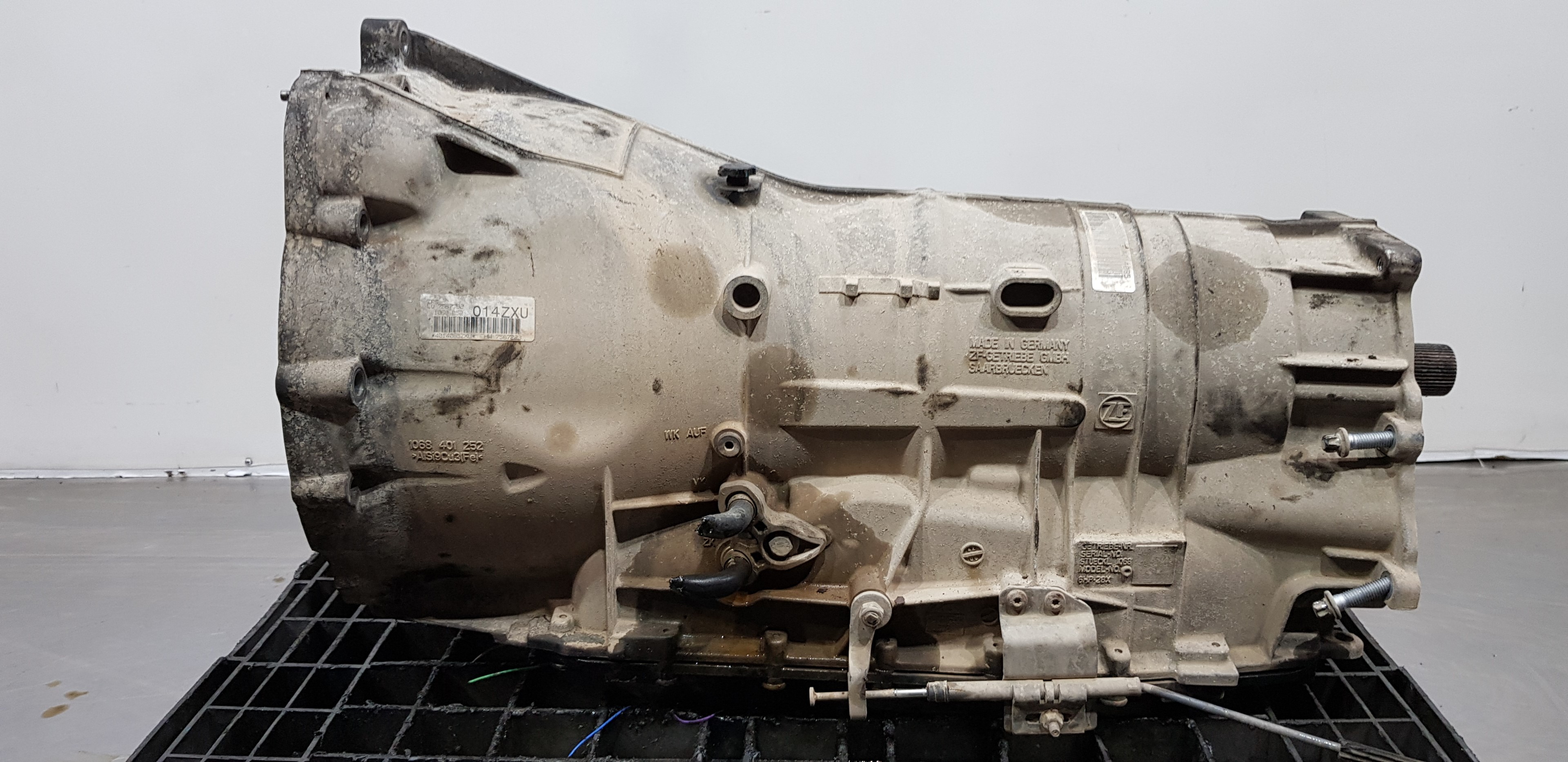
Comprehensive Overview of the BMW X5 Manual Gearbox
The BMW X5 (E53 and E70 generations) offered manual gearbox options primarily for the 3.0L inline-six petrol and diesel engines. While the 5-speed and 6-speed manuals provided superior driver engagement and long-term reliability compar...
The BMW X5 (E53 and E70 generations) offered manual gearbox options primarily for the 3.0L inline-six petrol and diesel engines. While the 5-speed and 6-speed manuals provided superior driver engagement and long-term reliability compared to early automatic units, they remain rare finds in the 2026 secondary market, particularly in North America where they were limited to the first generation.
Contents
The Legacy of the Manual Transmission in a Luxury SAV
When BMW launched the X5 in late 1999, it wasn't just another SUV; the brand marketed it as a "Sport Activity Vehicle" (SAV). To uphold the "Ultimate Driving Machine" ethos, BMW engineers insisted on offering a traditional row-your-own manual transmission. This decision was counter-cultural at the time, as most luxury competitors like the Mercedes-Benz M-Class or the Lexus RX were strictly automatic.
In 2026, the manual X5 has transitioned from a niche utility vehicle to a sought-after modern classic. Enthusiasts prize these gearboxes for their simplicity, the absence of complex mechatronic failures associated with early ZF and GM automatic transmissions, and the unique tactile experience of piloting a 4,500-pound vehicle with three pedals.
The E53 Generation (2000–2006): The Golden Era
The first-generation X5 (E53) represents the most common application of the manual gearbox in the X5 lineup. During this era, the manual was standard equipment on the entry-level 3.0i models, though the vast majority of buyers still opted for the automatic.
The 5-Speed Manual (S5D 280G)
From the 2000 to 2003 model years, the X5 3.0i was equipped with the Getrag S5D 280G 5-speed manual transmission. This unit was already well-proven in the E46 3 Series and E39 5 Series.
- Characteristics: It featured relatively short gearing to help the 225-hp M54 engine move the heavy X5 chassis.
- Driving Feel: While robust, the 5-speed is often criticized for high highway RPMs, as it lacks an overdrive gear comparable to the later 6-speed.
The 6-Speed Manual (GS6-37BZ)
With the "LCI" (Life Cycle Impulse) facelift in 2004, BMW upgraded the 3.0i to a 6-speed manual gearbox, the GS6-37BZ manufactured by ZF.
- Improvements: This gearbox added a crucial sixth gear, significantly improving fuel economy and reducing cabin noise at highway speeds.
- Durability: The GS6-37BZ is widely considered one of BMW’s most durable manual transmissions, capable of handling significantly more torque than the 5-speed Getrag.
The European Diesel (GS6-53DZ)
In European markets, the E53 3.0d (diesel) was also available with a heavy-duty 6-speed manual (GS6-53DZ). This gearbox is a "big-case" unit designed to withstand the massive low-end torque of the M57 diesel engine. Today, these are highly prized for towing applications and high-mileage endurance.
The E70 Generation (2007–2013): The Rarest Breed
As the X5 moved into its second generation (E70), the manual transmission began its exit from the lineup. In North America, the E70 was never offered with a manual gearbox. However, in Europe and other international markets, a manual option persisted for a few years.
The E70 3.0si (later called the xDrive30i) and the 3.0d were available with 6-speed manuals until approximately 2010. These vehicles are exceptionally rare. By the time the E70 received its mid-cycle refresh and moved toward the N55 turbocharged engines and 8-speed automatics, the manual option was permanently retired from the X5 global catalog.
Technical Specifications and Gear Ratios
Understanding the internal architecture of these gearboxes is vital for maintenance and performance tuning. The following table compares the primary manual units found in the X5.
| Specification | Getrag S5D 280G (5-Spd) | ZF GS6-37BZ (6-Spd) | ZF GS6-53DZ (6-Spd Diesel) |
|---|---|---|---|
| Generation | E53 (Pre-facelift) | E53 (Facelift) | E53 / E70 (Europe) |
| Max Torque Rating | ~280 Nm | ~370 Nm | ~530+ Nm |
| 1st Gear Ratio | 4.21 | 4.35 | 5.08 |
| 4th Gear Ratio | 1.00 | 1.23 | 1.24 |
| Direct/Overdrive | 5th is 1.00 (Direct) | 5th is 1.00 / 6th is 0.85 | 5th is 1.00 / 6th is 0.83 |
| Fluid Capacity | 1.1 Liters | 1.6 Liters | 1.9 Liters |
| Clutch Type | Single Plate (SAC) | Self-Adjusting (SAC) | Heavy Duty SAC |
Common Issues and Maintenance Guidelines
While manual transmissions are inherently more reliable than the "lifetime" automatic units of the early 2000s, they are not without maintenance requirements.
The "Lifetime Fluid" Myth
BMW famously claimed the manual transmission fluid was a "lifetime fill." By 2026, history has proven this incorrect. For longevity, the fluid should be changed every 60,000 to 80,000 miles. Most specialists recommend MTF-LT-2 or high-quality synthetic equivalents like Red Line MTL or Royal Purple MaxGear.
Dual-Mass Flywheel (DMF) Wear
The X5 uses a dual-mass flywheel to dampen vibrations from the engine. Over time, the internal springs in the DMF can weaken or snap.
- Symptoms: A "marbles in a tin can" sound at idle, excessive vibration through the gear lever, or shuddering when taking off in first gear.
- 2026 Status: Replacement DMFs from LUK (the original equipment manufacturer) remain available, though prices have risen as production volumes for these older parts decrease.
The Clutch Delay Valve (CDV)
To protect the drivetrain from aggressive shifts, BMW installed a Clutch Delay Valve. This orifice restricts fluid flow, often resulting in a "rubbery" or vague clutch feel. Many owners perform a "CDV delete" to restore a more direct, mechanical connection between the pedal and the pressure plate.
Shift Linkage Wear
Because the X5 is a tall vehicle, the shift linkage is relatively long. The plastic and rubber bushings in the shifter assembly eventually perish, leading to a "sloppy" shifter that feels like a wooden spoon in a bowl of oatmeal. Replacing these with refreshed OEM bushings or a short-shift kit is a common 2026-era restoration project.
The Enthusiast "Manual Swap" Phenomenon
A unique subculture within the BMW community involves swapping manual transmissions into X5 models that never had them from the factory—specifically the V8-powered 4.4i, 4.6is, and 4.8is.
Since the X5 shares much of its architecture with the E39 5 Series, tuners use the 6-speed Getrag 420G transmission from the E39 M5 or 540i. This conversion requires custom driveshafts, coding the Engine Control Unit (DME) to ignore the missing Automatic Transmission Controller (EGS), and installing the pedal box from a 3.0i manual model. In 2026, a manual-swapped X5 4.8is is considered one of the "holy grail" builds for BMW SAV enthusiasts.
Buying Guide for 2026: What to Look For
If you are in the market for a manual X5 today, your search will likely center on the E53 3.0i. Here is how to verify a potential purchase:
- Check for Fifth Gear "Lean": On the 5-speed models, the shifter may "lean" toward the right (toward 5th gear) even when in neutral. This is caused by a failed detent pin spring and requires dropping the transmission to fix properly.
- Synchronizer Health: Test for "crunching" when shifting quickly from 1st to 2nd gear. Manual X5s were often used as family haulers, and aggressive driving can wear the synchros prematurely.
- Transfer Case Integration: The manual gearbox is mated to an NV125 (pre-2004) or an ATC500 (post-2004) transfer case. Ensure there are no "clicking" sounds under hard acceleration, which indicates a stretched transfer case chain.
- Pedal Feel: A heavy or stiff clutch pedal often indicates that the pressure plate is nearing the end of its life, even if the clutch isn't slipping yet.
Frequently Asked Questions
Which BMW X5 models had a manual transmission?
The manual gearbox was available on the E53 generation (2000–2006) 3.0i and 3.0d models. In the E70 generation (2007–2013), it was available only in overseas markets for the 3.0si and 3.0d models. No V8 or M-branded X5 ever came with a manual transmission from the factory.
Is the manual X5 more reliable than the automatic?
Generally, yes. The early E53 automatics (GM 5L40-E and ZF 5HP24) were prone to valve body failures and torque converter issues. The manual transmissions (Getrag and ZF) are mechanically simpler and can easily last over 200,000 miles with basic fluid maintenance and occasional clutch replacements.
Can I tow with a manual BMW X5?
Yes, the manual X5 is excellent for towing, particularly the 6-speed versions. However, you must be mindful of the clutch when starting on steep inclines with a heavy trailer. The European diesel manual is the preferred choice for heavy-duty towing due to its higher torque capacity.
What fluid should I use in my X5 manual gearbox?
Most E53 and E70 manual gearboxes require a fluid meeting the BMW MTF-LT-2 specification. While BMW labeled these as "Lifetime," performance enthusiasts recommend high-quality synthetics like Pentosin FFL-4 or Red Line MTL to maintain shift quality in cold weather.
Why is the manual X5 so hard to find in the USA?
In the early 2000s, the American luxury SUV market shifted almost entirely to automatic transmissions. BMW North America offered the manual as a way to advertise a lower starting price, but very few were ordered by dealerships for inventory. Most manual X5s in the US were special-order vehicles.
Final Recommendation
For those seeking a durable, engaging, and mechanically transparent luxury SUV in 2026, the 2004–2006 BMW X5 3.0i with the 6-speed manual is the definitive choice. It offers the best balance of highway cruising capability, fuel efficiency, and the classic "facelift" styling. While you may have to search nationwide to find a well-maintained example, the lack of automatic transmission headaches makes it a superior long-term investment for the DIY-oriented owner.
Image Gallery