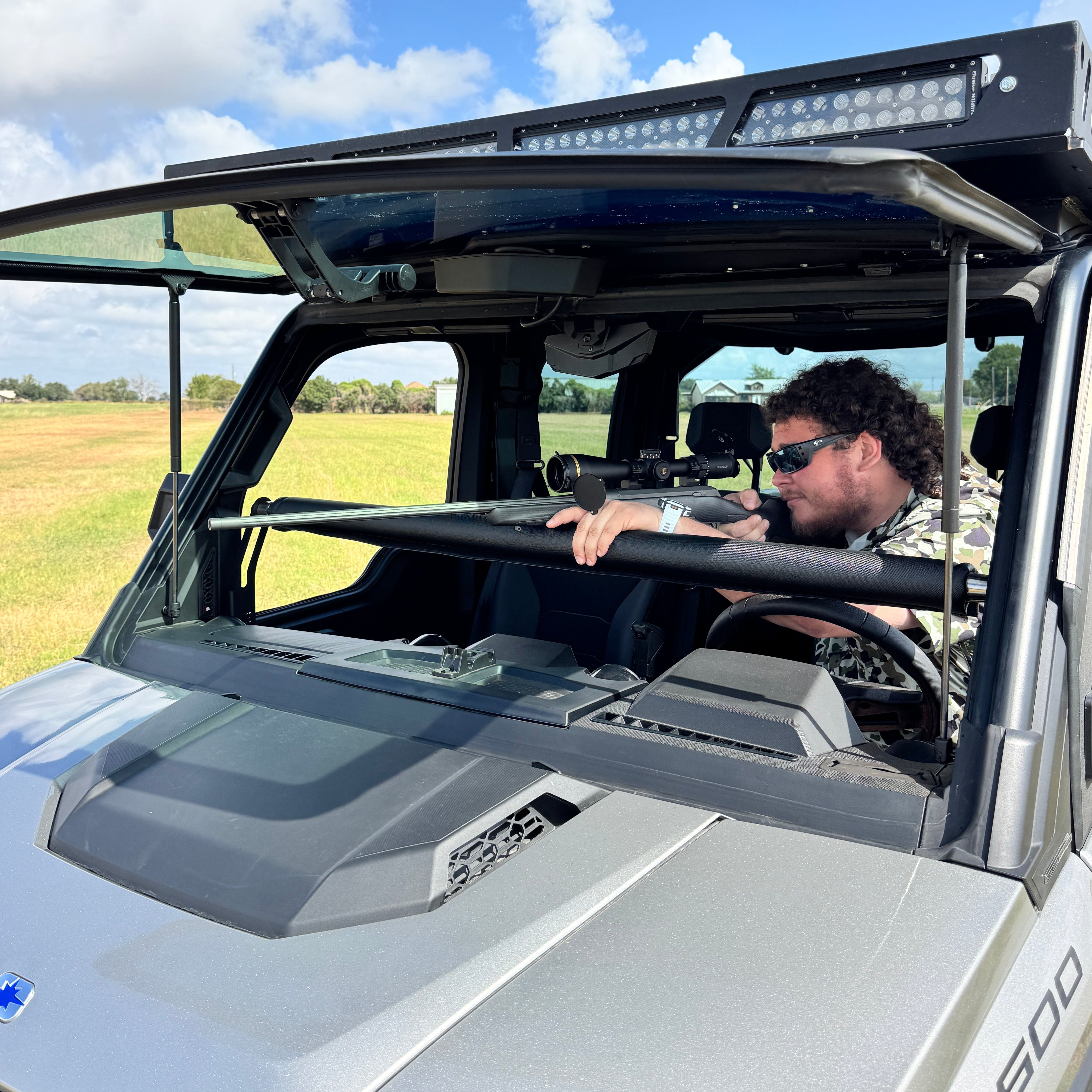
Why the Polaris Ranger XD 1500 Tops the Price Chart
The Polaris Ranger XD 1500 commands a premium price because it transitions the UTV category from recreational utility to automotive-grade industrial machinery. Its high cost is driven by the industry-first SteelDrive transmission, a hi...
The Polaris Ranger XD 1500 commands a premium price because it transitions the UTV category from recreational utility to automotive-grade industrial machinery. Its high cost is driven by the industry-first SteelDrive transmission, a high-torque 1500cc engine, and a reinforced high-strength steel chassis designed for 3,500-pound towing capacities and significantly extended maintenance intervals.
Contents
In the landscape of 2026, the Polaris Ranger XD 1500 remains the undisputed heavyweight champion of the utility side-by-side (UTV) market. Since its introduction, it has occupied a unique space where the lines between a traditional work UTV and a small pickup truck blur. While standard utility models often hover in the $15,000 to $25,000 range, the XD 1500—particularly in its NorthStar Ultimate trim—frequently exceeds the $45,000 mark.
This price point is not merely a result of brand prestige or "luxury" features. Instead, it reflects a fundamental shift in engineering philosophy. Polaris designed the XD (Extreme Duty) 1500 to address the primary failure points of traditional UTVs: belt wear, chassis fatigue, and limited torque. To understand why this machine tops the price chart, one must look beneath the plastic bodywork at the automotive-grade components that define the platform.
The Engineering Behind the "Extreme Duty" Label
The "XD" in the model name stands for Extreme Duty, a designation that Polaris uses to separate this machine from the standard Ranger 1000 series. The primary driver of the cost is the sheer scale of the components. Most UTVs are designed for intermittent work and trail riding; the XD 1500 is engineered for constant, high-stress commercial and agricultural applications.
The SteelDrive Transmission: A Game Changer
The single most expensive and significant component of the Ranger XD 1500 is the SteelDrive transmission. Traditional UTVs utilize a Continuously Variable Transmission (CVT) with a rubber belt. While effective for light to medium work, rubber belts are prone to heat-related failure, slipping under heavy loads, and requiring frequent replacement.
The SteelDrive system replaces the rubber belt with a 100% steel-constructed belt operating in a liquid-cooled oil bath. This is technology more commonly found in automotive CVTs. The inclusion of this system adds several thousand dollars to the manufacturing cost for several reasons:
- Thermal Management: Because the belt is steel and operates in oil, it requires a dedicated cooling system, including a pump and radiator, which increases complexity and parts count.
- Durability: The steel belt is designed to last the lifetime of the vehicle under normal operating conditions, eliminating the "belt anxiety" common when towing heavy loads up steep grades.
- Precision: The system uses electronic control to maintain optimal tension and gear ratios, providing smoother engagement than a centrifugal clutch system.
The 1500cc ProStar Engine: Power vs. Torque
While many high-performance UTVs focus on horsepower for speed, the Ranger XD 1500 utilizes its 1,500cc three-cylinder ProStar engine to generate massive low-end torque. Producing 110 horsepower and 105 lb-ft of torque, this engine is significantly larger than the 1,000cc units found in the rest of the Ranger lineup.
The cost of this engine is tied to its "overbuilt" nature. It features automotive-style components, including a high-output alternator to power accessories and a cooling system designed to handle the heat generated by hauling 3,500 pounds in mid-summer heat. The engine is tuned for longevity rather than peak RPM, meaning it operates at lower stress levels than smaller, high-revving engines, contributing to its "industrial" price tag.
Industrial-Grade Capability and Longevity
The XD 1500 is not just a standard Ranger with a bigger engine; it is built on a completely different frame. To justify the price, Polaris had to ensure the chassis could handle the increased power and weight without flexing or cracking over years of service.
Chassis and Suspension Strength
The frame of the XD 1500 is constructed from high-strength steel, featuring a one-piece design that is significantly more rigid than previous generations. This rigidity is necessary to support the 1,500-pound cargo box capacity and the 3,500-pound towing capacity.
When a vehicle's towing capacity increases by nearly 40% over the standard model (which typically tops out at 2,500 lbs), every supporting component must be upgraded:
- Wheel Bearings and Hubs: These are oversized to handle the increased unsprung weight and vertical load.
- Braking System: The XD 1500 utilizes larger rotors and calipers to provide the stopping power necessary for a fully loaded vehicle and trailer.
- Suspension Bushings: Polaris moved toward sealed bushings and high-clearance arched A-arms that are designed to resist wear in muddy or abrasive environments.
Redefining Maintenance Cycles and ROI
One of the strongest arguments Polaris makes for the XD 1500’s high MSRP is the Total Cost of Ownership (TCO). For a commercial farm or a construction site, the time a machine spends in the shop is lost revenue.
The XD 1500 features maintenance intervals that are four to five times longer than standard UTVs. By 2026, data from long-term fleet users has confirmed that the extended oil change intervals and the lack of belt replacements offset a portion of the initial purchase price. The machine is designed for 2,000-mile service intervals for the engine and even longer for the transmission. For a high-hour user, this reduces labor costs and downtime, making the "expensive" machine more economical over a five-year lifecycle.
Luxury Meets Utility: The NorthStar Experience
A significant portion of the XD 1500s sold are in the NorthStar Ultimate trim. This trim level pushes the price to the top of the chart by adding a fully enclosed, pressurized cab system.
In 2026, the NorthStar package remains the gold standard for operator comfort. It includes:
- HVAC Systems: A true automotive-style heating and air conditioning system that allows operators to work in 100-degree heat or sub-zero winters in a climate-controlled environment.
- Ride Command+: A 7-inch touchscreen infotainment system that provides GPS mapping, vehicle diagnostics, and remote monitoring (telematics). This technology is essential for large-scale operations to track vehicle location and health.
- Power Windows and Sound Deadening: The XD 1500 is remarkably quiet compared to its predecessors. Polaris used extensive sound-dampening materials in the cab to allow for normal conversation while the engine is under load.
The integration of these "car-like" features requires a more complex electrical system and higher-quality interior plastics and seals, all of which contribute to the final price.
Comparative Analysis: XD 1500 vs. The Competition
To visualize why the XD 1500 sits at the top, it is helpful to compare its core specifications against other premium utility models.
| Feature | Polaris Ranger XD 1500 | Can-Am Defender HD10 | Kawasaki Mule Pro-FXT |
|---|---|---|---|
| Engine Displacement | 1498cc | 976cc | 812cc |
| Transmission Type | SteelDrive (Steel Belt) | pDrive (Rubber Belt) | CVT (Rubber Belt) |
| Towing Capacity | 3,500 lbs | 2,500 lbs | 2,000 lbs |
| Cargo Box Capacity | 1,500 lbs | 1,000 lbs | 1,000 lbs |
| Standard Tech | Ride Command+ (NorthStar) | 7.6" Digital Display | Analog/Digital Mix |
| Base MSRP (Approx.) | $29,999 - $44,999 | $16,000 - $32,000 | $15,000 - $21,000 |
As the table illustrates, the XD 1500 isn't just slightly better; it exists in a different performance tier. The 1,000-pound advantage in towing capacity over the nearest competitor is a massive gap in the UTV world, equivalent to the difference between a half-ton and a three-quarter-ton pickup truck.
Is the Price Justified? A Value Assessment
The question of whether the Polaris Ranger XD 1500 is "overpriced" depends entirely on the user's requirements. For a recreational user who occasionally hauls firewood or rides trails, the XD 1500 is likely more machine than necessary. However, for specific demographics, the high price is a calculated investment.
Professional and Agricultural Use
In large-scale farming or ranching, the XD 1500 replaces the need for a full-sized pickup in many scenarios. It is more maneuverable than a truck, has a lower impact on soil compaction, and can access tight areas while still hauling heavy trailers. When viewed as a "mini-truck" rather than an "expensive ATV," the $40,000 price point becomes more competitive.
Commercial Fleets
Municipalities and construction firms value the XD 1500 for its durability. The steel belt transmission eliminates the most common cause of "stranded" vehicles on job sites. The ability to monitor the fleet via Ride Command+ telematics also provides a level of oversight that justifies the initial capital expenditure.
The "One-Machine" Solution
For many property owners, the XD 1500 serves as a tractor, a utility vehicle, and a winter snow-removal tool (when equipped with a plow). The heavy-duty frame and high-torque engine make it exceptionally good at pushing heavy snow, a task that often burns out the belts on lesser machines.
Frequently Asked Questions
Does the steel belt in the XD 1500 ever need to be replaced?
Unlike traditional rubber belts that are considered wear items with 50-to-100-hour lifespans under heavy load, the SteelDrive belt is designed to be a lifetime component. While "lifetime" depends on proper maintenance of the transmission fluid and cooling system, it does not have a scheduled replacement interval in the same way a Ranger 1000 does. This significantly reduces long-term maintenance costs.
Can I tow a standard car trailer with the XD 1500?
With a 3,500-pound towing capacity, the XD 1500 can technically tow a small car trailer or a loaded utility trailer. However, it is important to remember that the vehicle's own weight is around 2,500–2,900 lbs. Users should ensure the trailer is equipped with independent brakes if the total weight exceeds the vehicle's weight to ensure safe stopping distances, despite the XD’s upgraded braking system.
Why is the XD 1500 so much heavier than a standard Ranger?
The increased weight is a direct result of the heavy-duty components. The 1500cc engine, the steel-belt transmission with its oil-bath housing, and the reinforced high-strength steel chassis all add mass. This weight is actually an advantage in work scenarios, as it provide better traction and stability when towing heavy loads.
Is the XD 1500 too wide for standard trails?
The Ranger XD 1500 has a width of approximately 64 inches. While this fits on most "side-by-side" designated trails, it is wider than the 50-inch or 60-inch trails found in some state parks. It is primarily designed for work environments and open-range riding rather than tight, technical woods trails.
What is the fuel economy like on a 1500cc UTV?
The XD 1500 is not designed for fuel economy, but its efficiency is improved by the SteelDrive transmission, which reduces power loss compared to rubber belt systems. While it consumes more fuel than a 570 or 1000cc model due to its displacement and weight, its large fuel tank (approx. 13.6 gallons) ensures it can handle a full day of work without refueling.
Practical Recommendation
If you are a commercial operator, a large-property owner, or someone who frequently pushes a UTV to its mechanical limits (towing heavy, plowing deep snow, or running high hours), the Polaris Ranger XD 1500 is the most cost-effective choice in the long run. The high entry price is a trade-off for significantly lower downtime and the elimination of belt-related failures.
However, if your primary goal is trail riding or light yard work, the standard Ranger 1000 or even the Ranger XP 1000 offers better maneuverability and a more digestible price point. The XD 1500 is a specialized tool; it tops the price chart because it offers a level of industrial capability that, until its release, required moving up to a road-legal truck or a sub-compact tractor.
Image Gallery