Core Advantages of Agile Software Development for Modern Enterprises in 2026
Agile software development provides a flexible, iterative framework that prioritizes customer value, rapid delivery, and continuous improvement. By breaking projects into manageable increments, organizations reduce risk, enhance produc...
Agile software development provides a flexible, iterative framework that prioritizes customer value, rapid delivery, and continuous improvement. By breaking projects into manageable increments, organizations reduce risk, enhance product quality through constant testing, and foster a collaborative environment that adapts to shifting market demands more effectively than traditional linear models.
Contents
The Strategic Shift to Iterative Value Delivery
By 2026, the debate between traditional Waterfall methodologies and Agile frameworks has largely been settled in favor of the latter for most software-centric projects. The core philosophy of Agile, rooted in the 2001 Agile Manifesto, emphasizes individuals and interactions over processes and tools. In the current enterprise landscape, this shift is not merely a preference but a strategic necessity. Linear development models often struggle with the "cone of uncertainty"—the reality that software requirements are frequently misunderstood or changed during the long development cycles inherent in Waterfall.
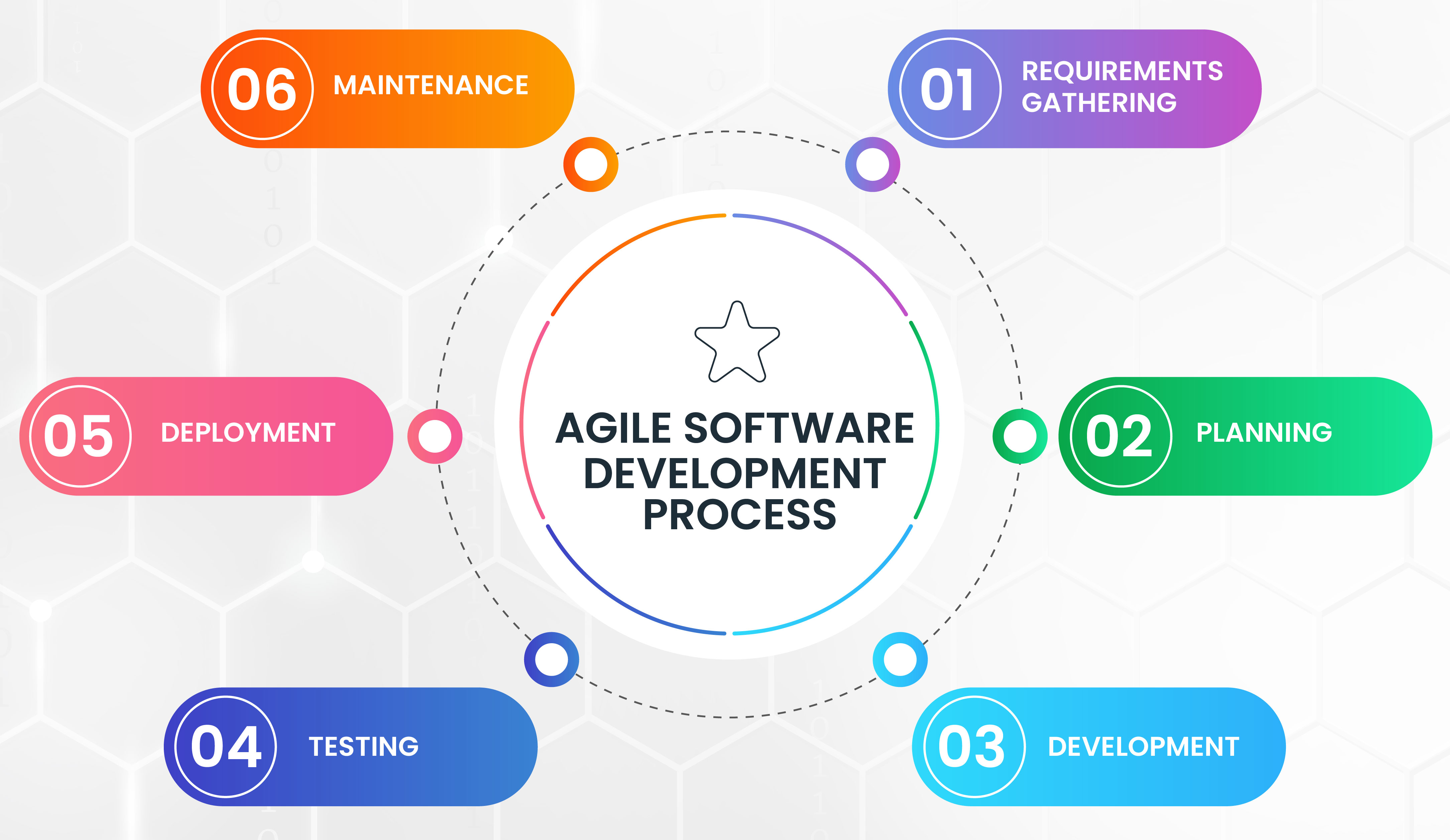
Agile addresses this by utilizing iterative cycles, commonly known as Sprints or iterations, which typically last between one and four weeks. This structure allows teams to produce a "shippable" increment of the product at the end of every cycle. The primary advantage here is the ability to pivot. If a market shift occurs or a specific feature proves less valuable than anticipated, the organization can change direction with minimal wasted effort, rather than waiting for a months-long project completion to realize the error.
Enhanced Product Quality Through Technical Excellence
One of the most significant advantages of Agile software development is the consistent focus on high-quality output. Unlike traditional models where testing often occurs as a final, rushed phase before release, Agile integrates quality assurance into every stage of the lifecycle.
The Role of Continuous Integration and Automated Testing
In an Agile environment, technical practices such as Test-Driven Development (TDD) and Continuous Integration (CI) are standard. TDD requires developers to write a test for a functional requirement before writing the code itself. This ensures that the code is designed for testability and meets the specific criteria defined by the user story.
Continuous Integration, supported by modern DevOps pipelines, allows developers to merge their code into a shared repository several times a day. Automated builds and tests then verify each merge, identifying bugs or integration issues within minutes. By 2026, these pipelines have become increasingly sophisticated, often utilizing AI-driven regression testing to ensure that new features do not break existing functionality. This relentless focus on quality reduces the accumulation of "technical debt"—the long-term cost of choosing an easy, suboptimal solution today over a better approach that takes longer.
Refactoring and Sustainable Development
Agile encourages regular "refactoring," which is the process of clarifying and simplifying the design of existing code without changing its behavior. Because Agile teams work in small increments, they have the bandwidth to maintain the health of the codebase. This leads to a more robust, scalable, and maintainable software product that can support future growth without requiring a complete rewrite.
Accelerated ROI and Faster Time-to-Market
In a competitive global economy, the speed at which a product reaches the consumer can determine its commercial success. Agile software development significantly reduces the time-to-market by focusing on the delivery of the Minimum Viable Product (MVP) or the Minimum Lovable Product (MLP).
Maximizing Value via Incremental Releases
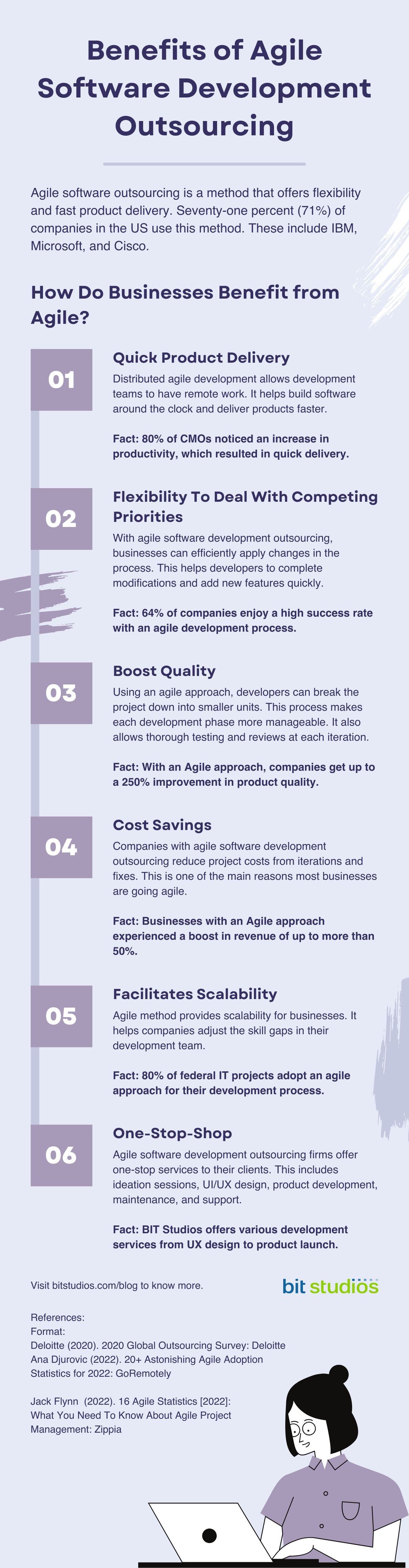
Traditional development often requires a 100% completion rate before any value is delivered to the customer. Agile flips this logic. By identifying the highest-priority features—those that provide the most value with the least effort—teams can release a functional version of the software much earlier. This early release allows the business to begin generating revenue or gathering user data while the remaining features are still under development.
The incremental approach also improves Return on Investment (ROI) by ensuring that the most expensive development hours are spent on the most impactful features. If a project budget is suddenly cut, an Agile team will have already delivered the most critical components of the software, whereas a Waterfall project might be left with a 70% complete system that does not function at all.
Heightened Transparency and Stakeholder Alignment
Agile frameworks, such as Scrum and Kanban, are built on the pillars of transparency, inspection, and adaptation. This visibility is a major advantage for stakeholders who need to understand the progress and health of a project without deciphering complex, often inaccurate, Gantt charts.
The Power of Ceremonies and Visual Management
Agile utilizes specific "ceremonies" to maintain alignment:
- Daily Standups: Brief meetings where the team synchronizes activities and identifies "blockers" or impediments.
- Sprint Reviews: Demonstrations of the completed work to stakeholders at the end of every iteration.
- Sprint Retrospectives: Internal team meetings focused on improving the development process itself.
Furthermore, visual management tools like Kanban boards provide a real-time view of the workflow. Stakeholders can see exactly which features are in the "Backlog," which are "In Progress," and which are "Done." This level of transparency builds trust between the development team and the business, as expectations are managed through visible progress rather than abstract status reports.
Risk Reduction and Financial Predictability
Risk is inherent in software development, but Agile provides the tools to manage it proactively. By breaking a large, complex project into small, manageable pieces, the impact of any single failure is localized and minimized.
Early Detection of Issues
In a linear model, a fundamental architectural flaw might not be discovered until the integration phase, months into the project. In Agile, because the software is built and tested incrementally, such flaws are typically identified within the first few weeks. This "fail fast" mentality is actually a cost-saving measure; the earlier a problem is found, the cheaper it is to fix.
Budgetary Control
Agile offers a unique form of financial predictability. While the exact scope of the final product may evolve, the "cost per Sprint" is usually stable because the team size remains constant. Organizations can decide to stop development once the product has reached a point of diminishing returns, providing a level of fiscal control that is difficult to achieve with fixed-scope, fixed-price contracts that often lead to expensive "change orders."
Comparative Analysis: Agile vs. Waterfall in 2026
The following table compares the two primary development paradigms across key operational metrics.
| Metric | Agile Methodology | Waterfall Methodology |
|---|---|---|
| Requirements | Evolving; captured in a dynamic backlog. | Fixed; defined upfront in detail. |
| User Involvement | High; continuous feedback loops. | Low; primarily at the start and end. |
| Delivery Frequency | Frequent; every 1–4 weeks. | Single; at the end of the project. |
| Cost of Change | Low; changes are expected and integrated. | High; requires significant rework. |
| Primary Goal | Business value and customer satisfaction. | Adherence to the initial plan and scope. |
| Testing Phase | Continuous; integrated into development. | Discrete; occurs after development. |
| Risk Profile | Low; risks identified and mitigated early. | High; risks often surface during integration. |
Psychological and Cultural Benefits for Teams
Beyond technical and financial metrics, Agile offers profound advantages for the people building the software. Software development is a creative, high-cognitive-load activity, and Agile environments are designed to support this.
Autonomy and Empowerment
Agile teams are typically self-organizing. Instead of being told exactly how to do their jobs by a project manager, the team is given a goal (the "What") and empowered to determine the best technical path to reach it (the "How"). This autonomy is a primary driver of job satisfaction and is crucial for retaining top-tier engineering talent in 2026.
Reducing Burnout through Sustainable Pace
The Agile Manifesto explicitly mentions "sustainable development." By working in fixed-length iterations and carefully managing the "velocity" (the amount of work a team can realistically complete), Agile helps prevent the "crunch culture" that leads to developer burnout. A rested, motivated team is more productive and produces fewer errors than a team working under the constant pressure of unrealistic, long-term deadlines.
Challenges and Considerations for Successful Adoption
While the advantages are clear, Agile is not a "silver bullet." Its success depends on several factors:
- Cultural Buy-in: Agile requires a shift in mindset from command-and-control to trust and collaboration. Without executive support, Agile often becomes "Agile in name only."
- Active Stakeholder Participation: For Agile to work, product owners and business stakeholders must be available to provide feedback and clarify requirements regularly.
- Technical Discipline: Agile without strong technical practices (like automated testing) can lead to a "code and fix" cycle that eventually collapses under its own weight.
Organizations transitioning to Agile should consider starting with a single pilot team to refine their processes before scaling the methodology across the entire enterprise.
Frequently Asked Questions
Does Agile work for small teams?
Yes, Agile is highly effective for small teams. In fact, most Agile frameworks suggest a team size of five to nine members. Small teams benefit from the reduced communication overhead and the ability to move quickly through the iterative cycles. For very small teams (2–3 people), a lightweight Kanban approach is often more effective than the more structured Scrum framework.
How does Agile improve ROI compared to Waterfall?
Agile improves ROI by delivering functional value earlier and more frequently. By releasing an MVP early, companies can start recouping their investment while development continues. Additionally, Agile ensures that the budget is spent on the most valuable features first, preventing the common Waterfall pitfall of spending 20% of the budget on features that are rarely or never used.
Can Agile be used for fixed-price contracts?
While challenging, it is possible. "Agile Fixed-Price" contracts usually fix the price and the timeframe but allow for flexibility in the scope. This is often managed through a "Money for Nothing, Change for Free" clause, which allows the client to swap features of equal effort or end the project early for a portion of the remaining contract value if they are satisfied with the current state of the product.
Is Agile development more expensive than traditional methods?
Initially, Agile may seem more expensive because it requires dedicated roles (like a Scrum Master or Product Owner) and an investment in automated testing infrastructure. However, when considering the total cost of ownership (TCO), Agile is often cheaper. It significantly reduces the cost of fixing bugs late in the lifecycle and prevents the development of features that provide no business value.
What are the disadvantages of Agile?
The primary disadvantages include the lack of a fixed final "end date" (which can be difficult for long-term corporate budgeting), the high demand for stakeholder time, and the potential for "scope creep" if the Product Owner does not strictly prioritize the backlog. Additionally, Agile requires high-quality, experienced team members who can work autonomously, which can be a recruitment challenge.
Final Recommendation
For organizations aiming to remain competitive in 2026, adopting Agile software development is no longer optional; it is a foundational requirement for operational excellence. To maximize the advantages of Agile, leadership should focus on fostering a culture of transparency and investing in the technical automation necessary to support rapid, high-quality releases. Start by identifying a high-value, moderate-risk project to serve as an Agile pilot, and use the insights gained from those early retrospectives to guide your broader organizational transformation.
Image Gallery