How Table Salt Is Formed from Seawater Evaporation: The Complete Process
Table salt is formed when solar energy or heat causes the water molecules in seawater to transition into a gaseous state, leaving behind increasingly concentrated brine. Once the solution reaches a state of supersaturation, sodium and...
Table salt is formed when solar energy or heat causes the water molecules in seawater to transition into a gaseous state, leaving behind increasingly concentrated brine. Once the solution reaches a state of supersaturation, sodium and chloride ions bond to form solid sodium chloride crystals, which are then harvested and refined.
Contents
The journey from a crashing ocean wave to the fine white grains in a salt shaker is a complex interplay of chemistry, thermodynamics, and industrial engineering. While the fundamental concept of evaporation is simple, the production of high-purity table salt requires precise management of brine density and mineral precipitation sequences. As of 2026, solar salt production remains one of the most energy-efficient methods of mineral extraction, utilizing the natural power of the sun and wind to drive the crystallization process.
The Chemical Composition of Seawater
To understand how table salt forms, one must first look at the raw material: seawater. On average, seawater has a salinity of approximately 3.5%, meaning every kilogram of water contains about 35 grams of dissolved salts. However, this is not purely sodium chloride ($NaCl$). Instead, seawater is a "soup" of various ions.
The most prevalent ions in seawater include:
- Chloride ($Cl^-$): Approximately 18.98 g/kg
- Sodium ($Na^+$): Approximately 10.56 g/kg
- Sulfate ($SO_4^{2-}$): Approximately 2.65 g/kg
- Magnesium ($Mg^{2+}$): Approximately 1.27 g/kg
- Calcium ($Ca^{2+}$): Approximately 0.40 g/kg
- Potassium ($K^+$): Approximately 0.38 g/kg
While sodium and chloride are the primary components, they are not bonded while dissolved. They exist as free-floating ions surrounded by water molecules (hydration shells). The process of evaporation removes these water molecules, eventually forcing the ions to interact and form the ionic bonds that create solid crystals.
The Physics of Evaporation and Saturation
Evaporation is a surface phenomenon where liquid molecules gain enough kinetic energy to escape into the air as vapor. In a salt pan or solar pond, this process is influenced by temperature, surface area, wind speed, and relative humidity.
As water molecules leave the brine, the ratio of dissolved solids to liquid water increases. This is known as the concentration phase. In the context of salt production, salinity is often measured in degrees Baumé (°Bé), a scale used to track the density of liquids. Seawater enters the system at roughly 3.5 °Bé. For table salt to begin forming, the brine must be concentrated until it reaches approximately 25 to 26 °Bé, the point at which sodium chloride reaches its saturation limit.
The Sequence of Mineral Precipitation
One of the most critical technical aspects of forming table salt from seawater is managing the "evaporite sequence." Different minerals reach their saturation points at different stages of evaporation. If a producer simply evaporated a bucket of seawater to dryness, the resulting salt would be bitter and potentially unsafe for consumption due to the high concentration of magnesium and calcium salts.
The precipitation sequence generally follows this order:
- Calcium Carbonate ($CaCO_3$): This begins to settle out when the brine is concentrated to about half its original volume.
- Calcium Sulfate (Gypsum, $CaSO_4 \cdot 2H_2O$): This precipitates when the brine reaches a density of about 15 °Bé.
- Sodium Chloride (Halite, $NaCl$): The primary component of table salt begins to crystallize when the density hits 25–26 °Bé.
- Magnesium and Potassium Salts: These remain in the solution (now called "bitterns") and only begin to precipitate when the density exceeds 30 °Bé.
To ensure the purity of table salt, experienced producers move the brine through a series of "evaporation ponds" and then into "crystallizer ponds." The goal is to let the gypsum settle in the preliminary ponds so that only high-purity $NaCl$ precipitates in the final crystallizers.
Industrial Solar Salt Production Phases
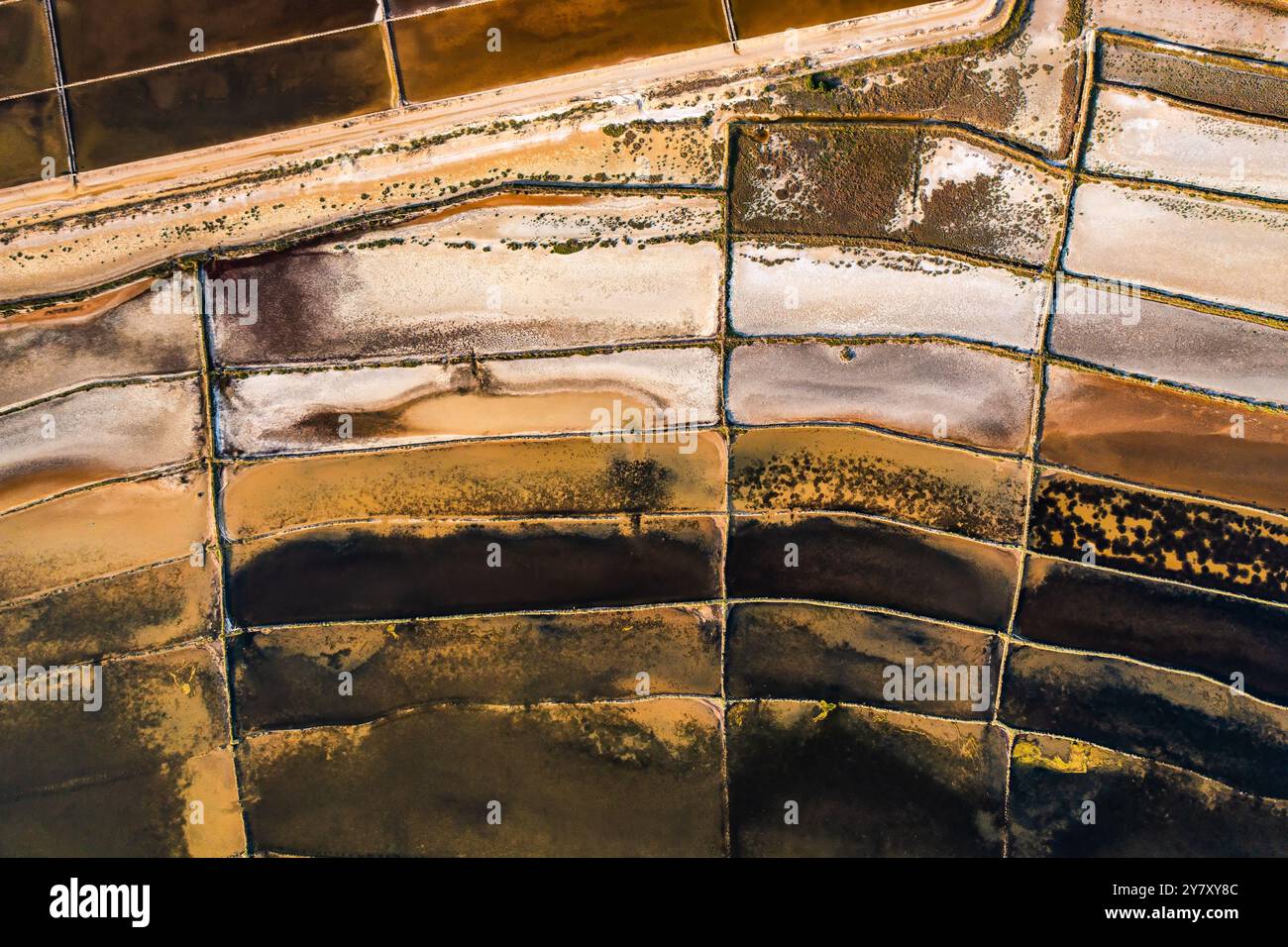
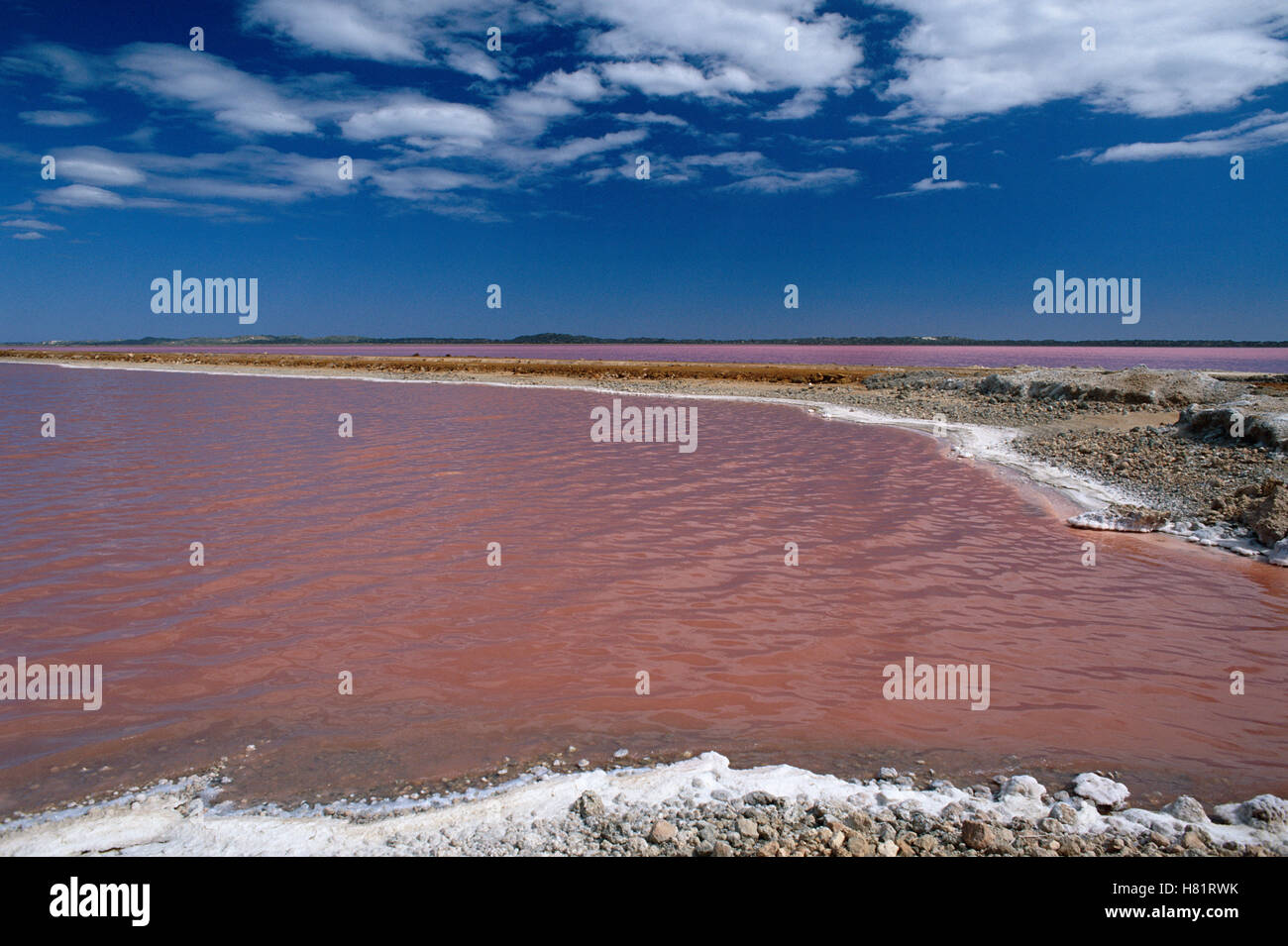
In 2026, large-scale solar salt facilities utilize massive, shallow pond systems to manage this transition. This method is common in regions with high evaporation rates and low rainfall, such as parts of Australia, Mexico, and the Mediterranean.
1. Concentration Ponds
Seawater is pumped into large, shallow basins. Over several months, the sun and wind evaporate the water. As the brine moves through successive ponds, its density increases. Iron oxides and calcium carbonates are the first to drop out of the solution, often coating the bottom of these early ponds with a hard, light-colored crust.
2. The Lime or Gypsum Ponds
As the brine reaches approximately 15 °Bé, it is moved to the next stage. Here, the calcium sulfate (gypsum) precipitates. Removing gypsum is vital because it affects the texture and "mouthfeel" of the final salt product. If too much gypsum remains, the table salt will feel gritty and won't dissolve properly.
3. Crystallization Ponds
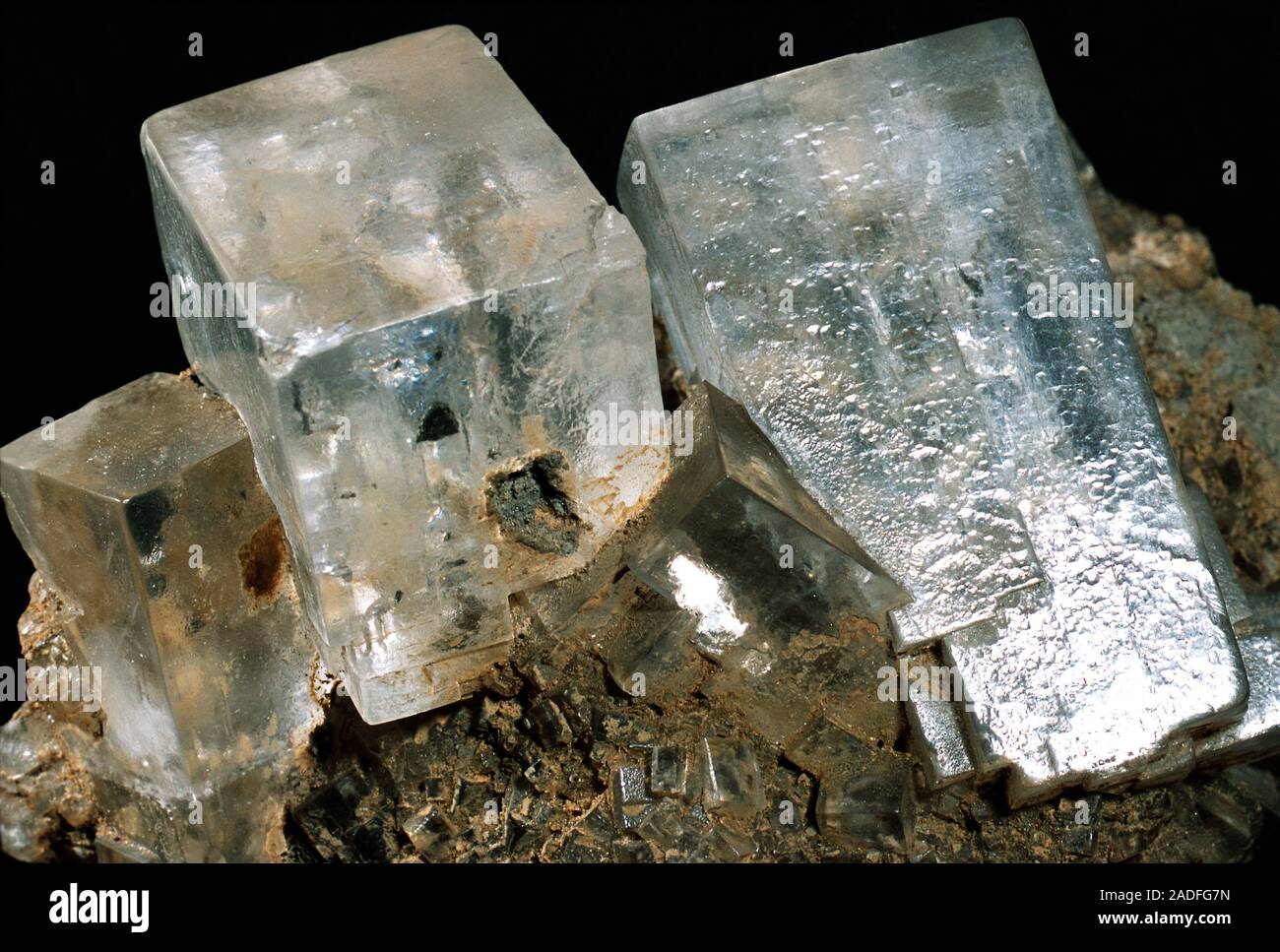
The highly concentrated brine, now called "saturated brine," is moved into the crystallizers. This is where the actual table salt forms. As the concentration stays between 26 °Bé and 29 °Bé, beautiful cubic crystals of sodium chloride begin to grow and settle on the floor of the pond.
4. Harvesting
Once a layer of salt has reached the desired thickness (often several inches), the remaining liquid—the bitterns—is drained away. The bitterns contain the magnesium and potassium salts that would otherwise make the salt taste metallic or bitter. Mechanical harvesters then scoop up the salt crust.
Refining Raw Sea Salt into Table Salt
The salt harvested from evaporation ponds is "raw salt." While it is mostly sodium chloride, it still contains some surface impurities, trapped brine, and trace minerals. To become the uniform, free-flowing table salt found in 2026 kitchens, it must undergo refining.
Washing and Centrifuging
The raw salt is washed with a saturated brine solution. This may seem counterintuitive, but saturated brine will not dissolve the salt crystals; instead, it washes away surface impurities and dust. The salt is then spun in a centrifuge to remove moisture.
Drying and Kilning
The salt is dried in large rotary kilns at high temperatures. This ensures that all remaining moisture is evaporated, which is essential for preventing the salt from clumping.
Screening and Grinding
Table salt requires a specific grain size for consistent seasoning. The dried salt is passed through industrial sieves (screens) to separate it into different grades. The finest grains are typically reserved for table salt, while coarser grains might be sold as "kosher salt" or industrial salt.
Additives for Functionality
Pure sodium chloride is hygroscopic, meaning it absorbs moisture from the air, which causes the grains to stick together. To ensure "free-flowing" salt, manufacturers add anti-caking agents such as sodium aluminosilicate or magnesium carbonate. Additionally, since the mid-20th century, potassium iodide has been added to table salt in many regions to prevent iodine deficiency disorders.
Comparing Salt Production Methods
While solar evaporation of seawater is a primary source, it is not the only way table salt is formed. Understanding the alternatives provides context for why seawater evaporation is unique.
| Feature | Solar Sea Salt | Vacuum Evaporated (Mined Brine) | Rock Salt (Halite) |
|---|---|---|---|
| Primary Source | Modern Oceans | Underground Salt Deposits | Underground Salt Deposits |
| Energy Source | Solar & Wind | Steam/Mechanical Heat | Mechanical Mining |
| Common Purity | 99.0% - 99.7% | 99.8% - 99.9% | 95.0% - 99.0% |
| Environmental Impact | Low (uses natural energy) | High (requires fossil fuels/electricity) | Moderate (land disturbance) |
| Trace Minerals | Present (Magnesium, Calcium) | Very Low | Variable (often includes clay/shale) |
Factors Affecting Salt Formation in 2026
By 2026, climate patterns have become an increasingly important factor in salt formation. Changes in humidity levels and rainfall frequency can disrupt the evaporation cycle. If an unseasonal rain occurs, it dilutes the brine in the crystallizers, halting the formation of salt and requiring the producer to restart the concentration process.
Furthermore, the design of the ponds has evolved. Modern facilities use specialized liners to prevent the brine from seeping into the ground and to ensure that no soil contaminants mix with the salt crystals. High-tech sensors now monitor the Baumé levels in real-time, allowing for automated gates to move brine between ponds at the exact moment of peak saturation.
Frequently Asked Questions
Is sea salt formed by evaporation different from regular table salt?
Chemically, both are primarily sodium chloride. However, table salt is usually refined more heavily to remove all trace minerals and then supplemented with iodine and anti-caking agents. Sea salt, if minimally processed, may retain trace amounts of magnesium, potassium, and calcium, which can subtly affect flavor and color.
Why doesn't the salt form as soon as the water starts evaporating?
Salt only forms when the solution becomes supersaturated. At lower concentrations, the water molecules are numerous enough to keep the sodium and chloride ions separated. Only when about 90% of the water has evaporated do the ions become crowded enough to collide and bond into solid structures.
What are "bitterns" and why are they removed?
Bitterns are the concentrated fluids left over after the sodium chloride has crystallized. They are rich in magnesium chloride, magnesium sulfate, and potassium chloride. If these were not drained away, they would precipitate onto the salt, making it taste extremely bitter and causing it to absorb moisture from the air even faster.
Can table salt be made from seawater at home?
Yes, it is possible to boil seawater to create salt, but it is difficult to achieve the purity of commercial table salt. Without the ability to separate the "evaporite sequence" (gypsum and bitterns), homemade sea salt often has a stronger, more complex, and sometimes bitter flavor compared to refined table salt.
How long does the natural evaporation process take?
In a commercial solar salt works, the transition from seawater to harvestable salt crystals can take anywhere from several months to a year, depending on the local climate, wind speeds, and the depth of the ponds.
Practical Recommendations
For those interested in the culinary or technical aspects of salt formation:
- For Culinary Use: When choosing salt, consider that "sea salt" produced via evaporation often has a different crystal structure (like flakes or pyramids) that dissolves differently on the tongue compared to the uniform cubes of standard table salt.
- Environmental Awareness: Solar salt is generally the most environmentally friendly option because it relies on renewable solar energy for the heavy lifting of evaporation.
- Storage: Because all salt formed through evaporation is naturally prone to clumping, store your salt in a cool, dry place in a non-reactive container (glass or ceramic) to maintain its texture.
Image Gallery