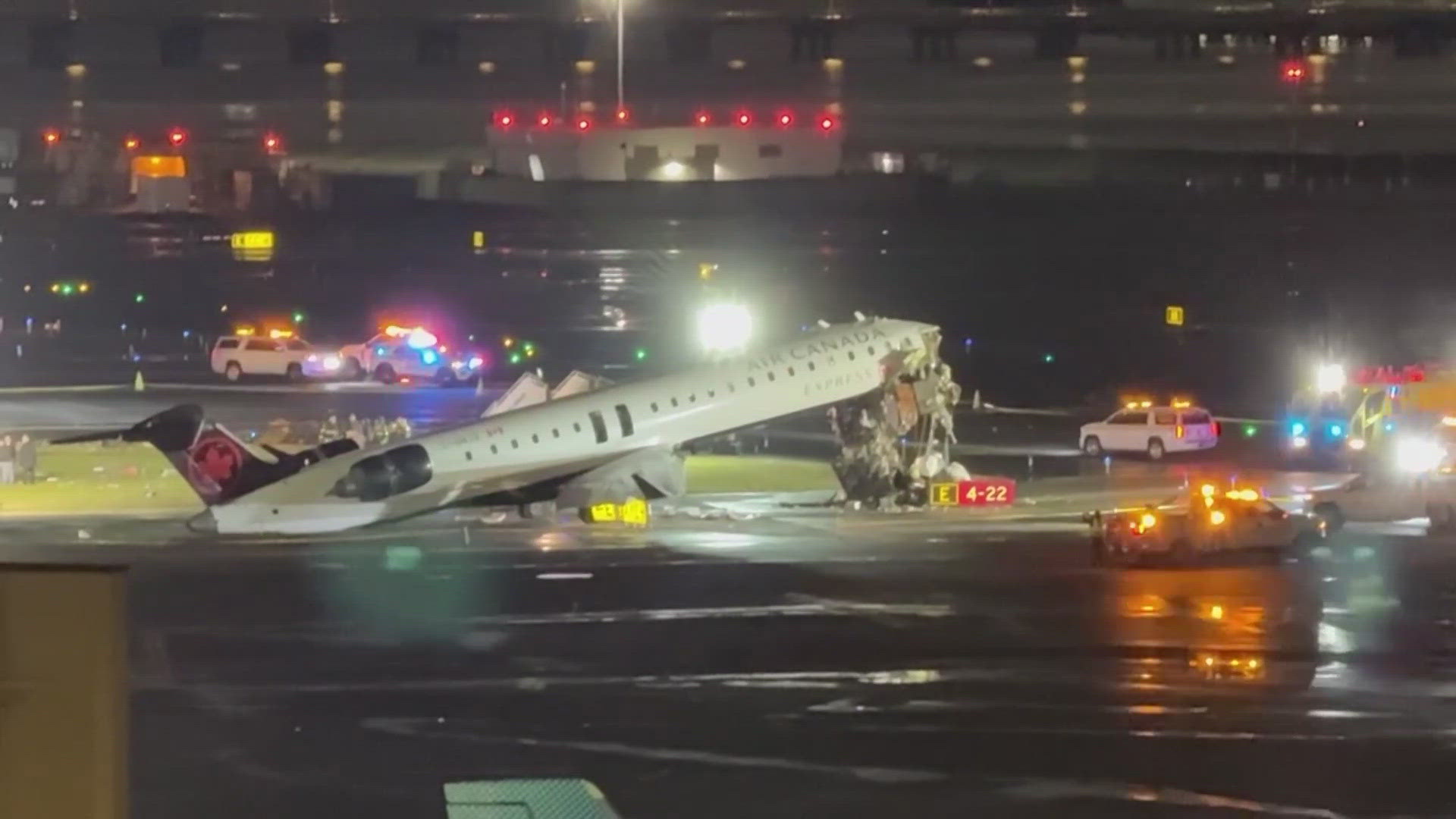
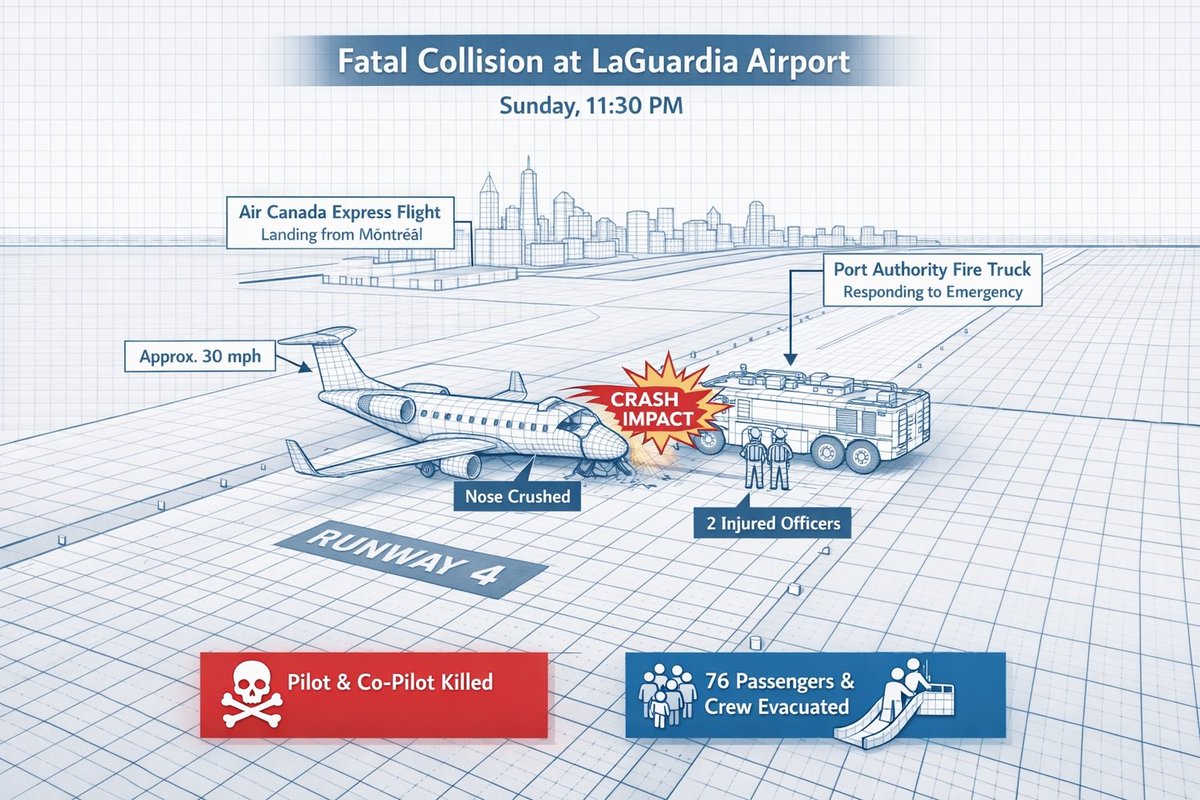
The LaGuardia Firetruck Incident Examined: Emergency Response and Airport Safety
The LaGuardia firetruck incident examined involves a high-profile runway incursion and subsequent emergency response collision at New York's LaGuardia Airport, highlighting complex aviation safety protocols, airfield navigation challen...
The LaGuardia firetruck incident examined involves a high-profile runway incursion and subsequent emergency response collision at New York's LaGuardia Airport, highlighting complex aviation safety protocols, airfield navigation challenges, and the vital operational dynamics between air traffic controllers and emergency response crews.
Contents
Aviation safety depends on the precise coordination of every vehicle, aircraft, and personnel member operating within an airfield environment. When unexpected incidents occur on active runways or taxiways, they prompt rigorous federal investigations, operational reviews, and technical upgrades to prevent recurrence. Examining the details of the LaGuardia firetruck incident offers vital insight into how major commercial airports manage emergency vehicle deployment, low-visibility operations, and surface movement safety systems. This comprehensive analysis breaks down the event's background, regulatory frameworks, operational impacts, and long-term safety enhancements.
Background and Context of Airfield Operations at LaGuardia
LaGuardia Airport (LGA), situated in Queens, New York, handles millions of passengers annually within a geographically constrained footprint. Operated by the Port Authority of New York and New Jersey, the airport features closely spaced runways and complex taxiway geometries that demand heightened situational awareness from both flight crews and ground personnel.
Airfield safety relies heavily on a multi-layered defense model. This model includes physical signage, surface markings, lighting systems, radar surveillance, and strict adherence to standard operating procedures. Aircraft Rescue and Fire Fighting (ARFF) units stationed at the airport maintain constant readiness to respond to aircraft emergencies, structural fires, and hazardous material spills. However, moving heavy emergency apparatus across an active airfield introduces inherent risks, particularly during adverse weather conditions or periods of heavy congestion.
When emergency vehicles must cross active runways to reach an incident site, standard protocols require explicit clearance from the Air Traffic Control Tower (ATCT). The intersection of routine ground movement, emergency response urgency, and complex spatial layouts forms the primary operational context for examining runway-related incidents at major commercial transport hubs.
Chronology and Investigatory Findings
Investigating an airfield incident involving emergency equipment requires a coordinated effort among federal agencies, notably the National Transportation Safety Board (NTSB) and the Federal Aviation Administration (FAA). While specific historical incidents vary in their exact timelines, investigations into runway incursions involving ARFF vehicles consistently focus on several core elements:
- Communications Verification: Reviewing radio transcripts between ground control, local control, and the firetruck operator to determine whether clearance was explicitly requested, granted, and read back correctly.
- Positional Awareness: Analyzing surface detection equipment data, such as the Airport Surface Detection Equipment, Model X (ASDE-X), to track the precise geographic coordinates and trajectories of both the aircraft and the emergency vehicle.
- Environmental Factors: Assessing visibility conditions, time of day, precipitation, and glare that might have impaired visual line-of-sight identification.
- Human Factors: Evaluating crew resource management, fatigue levels, and adherence to established standard operating procedures during high-stress emergency response mobilization.
Investigatory findings typically culminate in public safety reports detailing the chain of events. These documents outline contributing factors ranging from procedural ambiguities in phraseology to technical limitations in surface radar coverage during blind spots.
Regulatory Frameworks and Surface Safety Standards
The operation of emergency vehicles on airport movement areas is governed by strict federal regulations, primarily outlined in Federal Aviation Regulation (FAR) Part 139 and FAA Advisory Circulars. These standards dictate how ARFF personnel must navigate the airfield, requiring specialized training, airport familiarization, and continuous radio monitoring.
| Regulatory Aspect | Standard Requirement | Operational Purpose |
|---|---|---|
| Movement Area Access | Mandatory ATCT clearance before entering any active runway or designated taxiway. | Prevents unauthorized vehicle incursions into paths of landing or departing aircraft. |
| Phraseology Compliance | Use of standard aviation terminology without conversational abbreviations during readbacks. | Eliminates ambiguity between controllers and vehicle operators. |
| Low Visibility Procedures (LVP) | Implementation of surface movement guidance systems when visibility drops below specific thresholds. | Reduces reliance on visual separation by utilizing advanced radar and lighting aids. |
| ARFF Response Protocols | Maintenance of designated staging areas and pre-planned primary/secondary response routes. | Minimizes transit time while maintaining predictable routing patterns across the airfield. |
Compliance with these standards is mandatory for all certificated Part 139 airports. When deviations occur, regulatory bodies issue safety alerts and mandate corrective action plans to reinforce compliance across all operational shifts.
Technological Mitigations and Modern Airfield Protections
To minimize the likelihood of surface collisions involving emergency vehicles, airports like LaGuardia utilize advanced technological safeguards. These systems provide redundant warnings to both air traffic controllers and vehicle operators, bridging the gap when human visual scanning falls short.
Surface Surveillance and Alert Systems
ASDE-X and its successor, Airport Surface Surveillance Capability (ASSC), integrate radar, multilateration, and satellite data to track all surface traffic in real time. If a potential conflict arises—such as an emergency vehicle entering an active runway while an aircraft is on final approach—the system triggers visual and audible alerts in the control tower, prompting immediate controller intervention.
Transponder-Equipped Ground Vehicles
Modern ARFF apparatus are frequently equipped with vehicle-tracking transponders. These transponders interface directly with surface radar systems, allowing air traffic controllers to view the exact identity and position of the firetruck on their radar displays, mirroring how they track commercial aircraft.
Runway Status Lights (RWSL)
RWSL systems utilize automated, in-pavement red lights that illuminate directly when it is unsafe for aircraft or vehicles to enter or cross a runway. These lights operate independently of air traffic control clearances, providing a direct, unmissable visual warning based on live sensor data.
Operational Impacts and Mitigation Strategies for Airports
Incidents involving emergency vehicles prompt immediate operational evaluations, temporary procedural adjustments, and long-term strategic reviews. Airport operators, in collaboration with airline partners and labor unions representing controllers and firefighters, analyze the systemic gaps revealed by each investigation.
- Enhanced Training Curriculums: ARFF personnel undergo recurring practical evaluations on airfield geography, low-visibility navigation, and radio protocol.
- Controller-Driver Coordination Exercises: Joint briefings between airport rescue crews and tower controllers improve interpersonal familiarity and operational synchronization.
- Infrastructure Modifications: Adjustments to taxiway geometry, holding bay locations, and signage clarity help eliminate historical confusion points across complex airfield layouts.
Comparative Overview of Airfield Safety Protocols
| Safety Domain | Traditional Approach | Modern Automated Approach |
|---|---|---|
| Vehicle Tracking | Visual monitoring and voice position reporting. | Real-time multilateration via ASDE-X/ASSC transponders. |
| Runway Entry Control | Verbal clearance issued by local control. | Verbal clearance backed by automated Runway Status Lights. |
| Low-Visibility Guidance | Reliance on surface markings and slow taxi speeds. | Surface movement radar and certified electronic guidance aids. |
| Post-Incident Review | Paper-based reporting and internal debriefs. | Digital flight data reconstruction and mandatory safety management system (SMS) audits. |
Frequently Asked Questions
What is a runway incursion in the context of emergency vehicles?
A runway incursion occurs when an unauthorized aircraft, vehicle, or person enters the protected area of a surface designated for the landing and takeoff of aircraft. When an ARFF vehicle enters an active runway without proper air traffic control clearance, it is classified as a vehicle deviation runway incursion.
How do air traffic controllers manage emergency vehicle movements?
Controllers treat emergency vehicles with high priority while maintaining strict separation standards. They issue specific clearance limits, route instructions, and hold-short commands, ensuring that no aircraft is cleared for takeoff or landing on the intersecting runway until the vehicle has safely cleared the movement area.
What role does the NTSB play following an airfield safety incident?
The NTSB investigates civil aviation accidents and significant incidents in the United States. It determines the probable cause of the event and issues safety recommendations to the FAA, airport operators, and aviation stakeholders to prevent future occurrences.
Are fire trucks equipped with tracking devices at major airports?
Yes. Modern commercial service airports utilize surface detection transponders and GPS-enabled tracking units on all designated ARFF apparatus, allowing air traffic control to monitor vehicle positions continuously on radar screens.
How have safety protocols changed for ground vehicles in recent years?
Safety protocols have evolved to incorporate mandatory electronic tracking, standardized phraseology training, joint operational briefings between firefighters and controllers, and automated lighting systems that physically signal when a runway is unsafe to cross.
Conclusion and Next Actions
Examining incidents involving emergency vehicles at major airports underscores the critical balance between rapid emergency response times and absolute surface safety. For aviation professionals, municipal planners, and safety researchers, maintaining vigilance requires continuous adherence to strict regulatory standards, integration of advanced surface radar technology, and rigorous inter-agency communication. Stakeholders should regularly review updated FAA advisory circulars and airport-specific safety management systems to ensure compliance with current operational requirements.
Image Gallery