Understanding Guardian Whole Life Insurance Dividend History and Payout Structures
Guardian Whole Life Insurance dividend history is a reflection of the company’s long-standing financial strength as a mutual insurer, where policyholders may receive annual distributions based on the company's surplus earnings. These d...
Guardian Whole Life Insurance dividend history is a reflection of the company’s long-standing financial strength as a mutual insurer, where policyholders may receive annual distributions based on the company's surplus earnings. These dividends are not guaranteed; however, Guardian has paid a dividend to eligible participating whole life insurance policyholders every year since 1868, serving as a key component of the product's long-term cash value growth and death benefit potential.
Contents
The Mechanism of Mutual Insurance Dividends
To understand how Guardian Life Insurance Company of America issues dividends, it is necessary to first understand the structure of a mutual insurance company. Unlike stock insurance companies, which are owned by shareholders and prioritize short-term returns for those investors, a mutual company is owned by its participating policyholders. When the company collects premiums, it sets aside a portion to cover expected claims and operating expenses, while keeping a contingency reserve.
If the company performs better than expected in three key areas—mortality (fewer death claims than projected), expenses (lower operational costs than projected), and interest (higher returns on the company’s general account investments)—it generates a surplus. The board of directors then determines what portion of this surplus is returned to policyholders in the form of a dividend. Because this is a return of premium rather than corporate profit in the traditional sense, these dividends are generally not taxable until they exceed the total amount of premiums paid into the policy.
Historical Consistency and Financial Stability
Guardian’s ability to maintain a continuous dividend payout record since 1868 is frequently cited as a measure of its conservative financial management. This timeframe includes major global economic events, such as the Great Depression, the 2008 financial crisis, and various interest rate cycles.
It is important for policyholders to note that while the streak is impressive, the amount of the dividend is adjusted annually. In periods of low interest rates, insurance companies often find it more difficult to generate excess investment income, which can lead to smaller dividend payouts. Conversely, during periods of higher interest rates, the general account—where the insurer invests premiums—tends to perform better, potentially leading to higher dividend scales. The "dividend scale" is the set of assumptions the company uses to determine how much money will be distributed in a given year.
How Dividends Are Paid Out and Utilized
When a dividend is declared on a Guardian whole life policy, the policyholder has several options for how that money can be applied. Choosing the right option is a critical component of personal financial planning, as it dictates how the cash value of the policy compounds over time.
- Paid-Up Additions (PUA): This is the most common choice for those looking to maximize the long-term death benefit and cash value. Dividends are used to purchase small increments of "paid-up" insurance. These additions increase both the total death benefit and the cash value of the policy, which in turn can generate future dividends.
- Premium Reduction: Policyholders can elect to use dividends to offset the annual premium due. While this reduces the out-of-pocket cost, it slows the growth of the policy’s cash value compared to the PUA option.
- Cash Payments: Dividends can be sent directly to the policyholder via check or electronic transfer. This provides liquidity but results in zero growth of the policy’s internal cash value.
- Interest Accumulation: Dividends can be left on deposit with the company, where they earn interest at a rate determined by the insurer. This acts similarly to a savings account.
Factors Influencing Dividend Variability
While Guardian’s history suggests consistency, dividend payouts are inherently variable. The dividend scale is recalculated annually by the company’s actuaries. Several factors directly influence the likelihood and size of a payout:
- General Account Performance: This is the primary driver. Guardian invests the premiums of its whole life policyholders in a conservative portfolio, primarily consisting of high-quality corporate bonds and government securities. If these investments earn more than the guaranteed interest rate used to calculate the policy's minimum cash value, the excess helps fund the dividend.
- Mortality Experience: If fewer policyholders pass away in a given year than the actuarial tables predicted, the company saves on claim payouts. These savings contribute to the surplus pool.
- Operating Expenses: Administrative costs, agent commissions, and overhead impact the surplus. Efficiency gains can lead to higher potential dividends for policyholders.
- Taxes: Changes in corporate tax law or the taxation of life insurance companies can alter the amount of surplus available for distribution.
Comparison Table: Dividend Usage Options
| Option | Primary Benefit | Effect on Cash Value |
|---|---|---|
| Paid-Up Additions | Maximize long-term growth | Increases significantly |
| Premium Reduction | Immediate liquidity/cost relief | Neutral |
| Cash Payout | Immediate income | No effect |
| Interest Deposit | Safe asset accumulation | Increases by dividend amount |
The Role of the "Guaranteed" vs. "Non-Guaranteed" Elements
A common point of confusion for consumers is the distinction between the guaranteed cash value and the non-guaranteed dividend. When you purchase a whole life policy from Guardian, the contract specifies a guaranteed growth schedule. This is the minimum amount the policy will be worth, regardless of how the company performs.
The dividend represents the "upside." It is the non-guaranteed portion of the policy. When projections or "illustrations" are shown by an agent, they will typically display a "guaranteed" column and a "non-guaranteed" column. The non-guaranteed column includes the projected dividends based on the current dividend scale. Because the scale can change, it is vital to view these illustrations as projections rather than promises.
Common Questions Regarding Guardian Dividend Payouts
Can a dividend payout be negative? No. A dividend is a distribution of surplus. If the company does not have a surplus, it simply does not declare a dividend for that year. It does not charge the policyholder extra money.
Are dividends taxable? Generally, dividends are considered a return of premium by the IRS. Therefore, they are usually tax-free until they exceed the total premiums paid into the policy. However, if the policy is surrendered, any gains above the cost basis may be subject to income tax.
Does my policy type affect my dividend? Yes. Only "participating" whole life insurance policies are eligible for dividends. Other products, such as term life insurance or certain universal life products, typically do not receive dividends because they do not share in the company’s surplus in the same way.
Can I change how my dividends are applied? Yes. Most policies allow you to change your dividend option through the company’s online portal or by contacting customer service. It is advisable to review your selection periodically as your financial goals change.
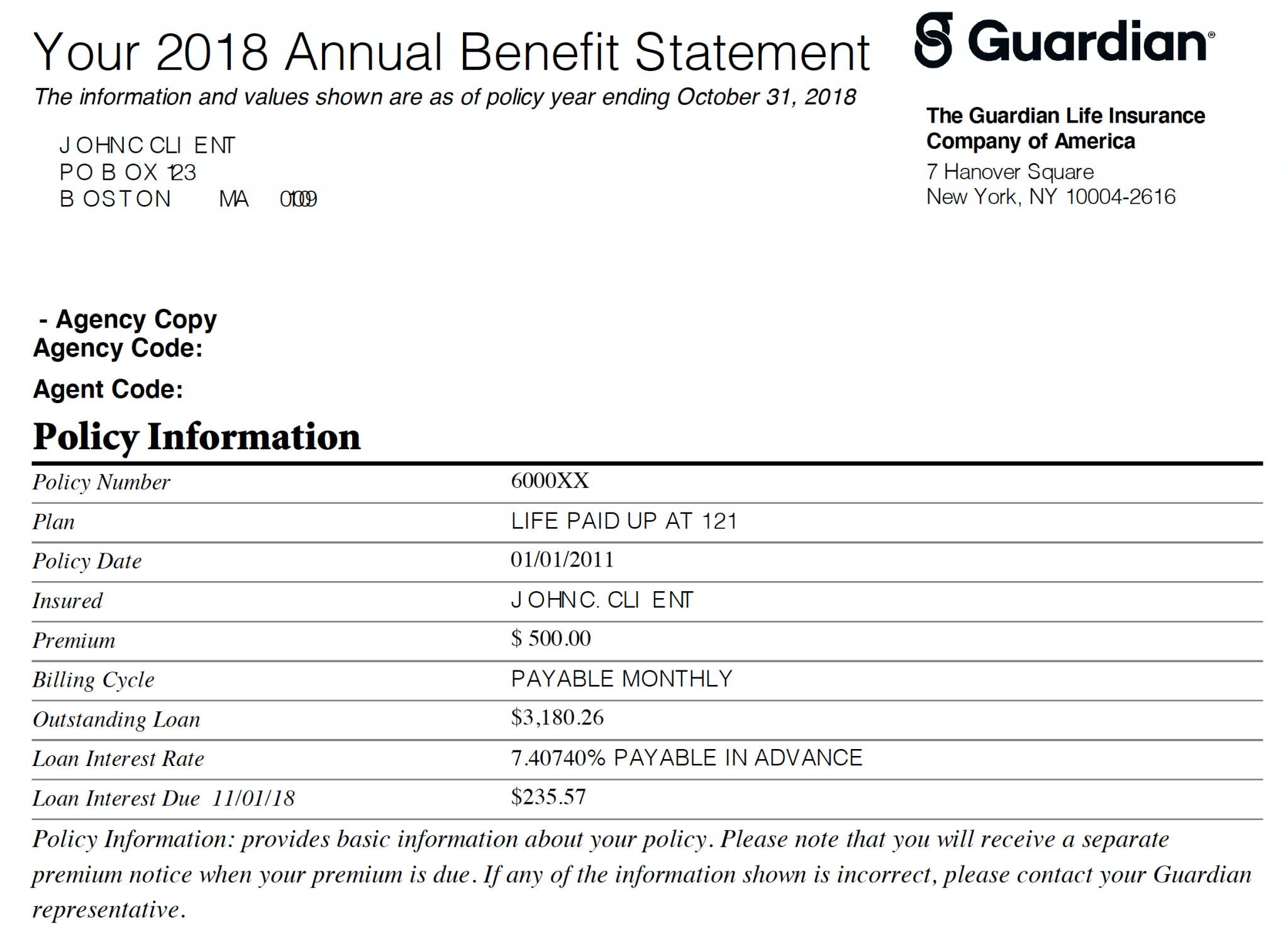
How do I verify the current dividend scale? Guardian publishes its dividend scale updates annually. You can find this information on the official Guardian Life website or by logging into your policyholder account to view your specific annual statement, which details the dividends allocated to your policy.
Professional Considerations and Next Steps
Before relying on dividend projections for retirement planning or estate goals, it is prudent to consult with a financial advisor or the licensed insurance agent who facilitated your policy. Because dividend scales are subject to change, stress-testing your financial plan against scenarios where dividends are lower than projected is a responsible way to manage risk.
If you are a current policyholder, ensure your beneficiary information is updated and that you have registered for the online policy portal to receive your annual dividend statements. These statements contain the most accurate data regarding your specific policy's performance. For those considering a new policy, request a "ledger" or "illustration" that shows the policy performance under both the current dividend scale and a more conservative (lower) interest rate environment to understand the potential range of outcomes.
Image Gallery