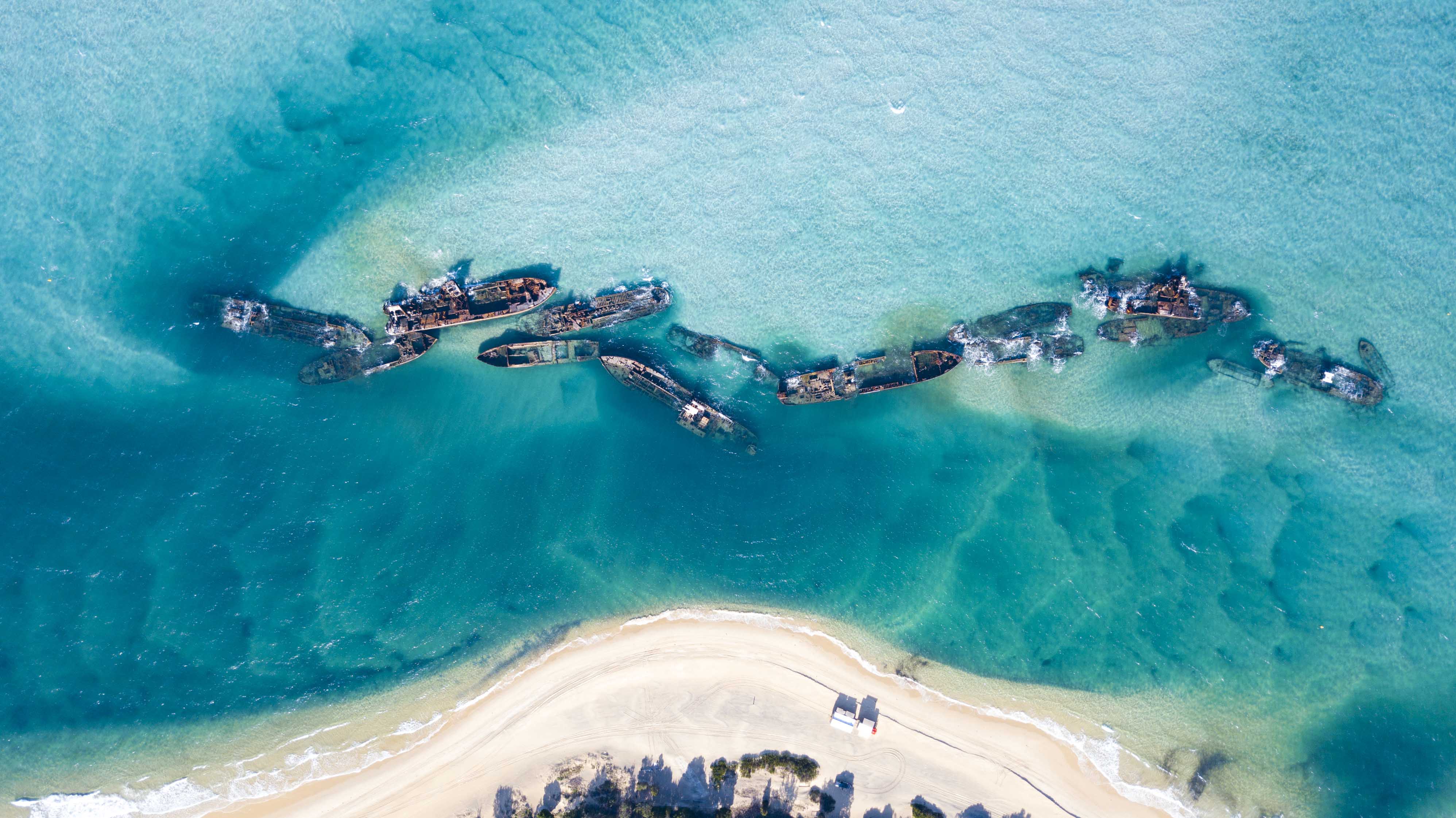
The History of the Tangalooma Wrecks in Queensland: From Industrial Salvage to Ecological Haven
The Tangalooma Wrecks consist of 15 decommissioned vessels scuttled between 1963 and 1999 off the coast of Moreton Island (Mulgumpin), Queensland. Originally commissioned to create a safe anchorage for recreational boaties, this artifi...
The Tangalooma Wrecks consist of 15 decommissioned vessels scuttled between 1963 and 1999 off the coast of Moreton Island (Mulgumpin), Queensland. Originally commissioned to create a safe anchorage for recreational boaties, this artificial breakwater has transformed into a world-class marine sanctuary, supporting over 175 species of fish and diverse coral formations.
Contents
The Strategic Origins of the Tangalooma Breakwater
The story of the Tangalooma Wrecks began not as a conservation effort, but as a practical solution to a maritime safety problem. Moreton Island, the third-largest sand island in the world, serves as a natural barrier for Moreton Bay. However, the western coastline of the island—where the Tangalooma Island Resort is situated—lacks natural deep-water harbors or significant protective coves.
In the early 1960s, local boat owners and the management of the then-nascent Tangalooma Resort petitioned the Queensland Department of Harbours and Marine for a solution. The goal was to provide a sheltered spot where small craft could anchor safely without being battered by the swells and unpredictable weather of the bay. The decision was made to create an artificial breakwater by scuttling old, decommissioned service vessels.
This method was both cost-effective and efficient for the government, as it solved the problem of disposing of redundant maritime hardware while simultaneously providing the desired infrastructure. The first ship, the Maryborough, was scuttled in 1963, marking the beginning of a project that would span nearly four decades and involve fifteen different hulls.
A Chronology of Scuttling: The Fifteen Vessels
The assembly of the Tangalooma Wrecks was a staggered process. Each vessel brought to the site was meticulously stripped of hazardous materials, including oils and fuels, before being positioned and intentionally sunk. The result is a line of rusted steel that sits approximately 200 to 300 meters from the shoreline.
The Pioneers (1963–1970s)
The initial phase of construction focused on large-capacity vessels to establish the core of the breakwater. The Maryborough and the Morwong were among the first to be placed. These were largely steam-driven suction dredges that had spent their working lives maintaining the shipping channels of the Brisbane River. Following these, several barges were added to fill the gaps, creating a more continuous wall against the tide.
The Expansion (1980s)
During the 1980s, the popularity of Moreton Island as a tourist destination surged. To accommodate more vessels and further strengthen the breakwater, additional hulls like the Seal and the Umpie were added. These ships were primarily "flattop punts" and hopper barges. Their boxy shapes provided excellent resistance against the currents, though their flat surfaces also meant they were prone to faster corrosion due to the constant pounding of the Pacific tides.
The Final Additions (1990s)
The last vessel to join the cluster was the Bernie in 1999. By this time, the environmental value of the wrecks was already well-recognized. The scuttling of the Bernie was managed with strict adherence to modern environmental standards, ensuring the site remained a viable habitat for the marine life that had begun to claim the older wrecks.
| Vessel Name | Scuttle Year | Vessel Type | Primary Use |
|---|---|---|---|
| Maryborough | 1963 | Suction Dredge | Brisbane River Maintenance |
| Morwong | 1963 | Suction Dredge | Industrial Dredging |
| Ewen | 1963 | Hopper Barge | Transport of Dredged Material |
| Seal | 1974 | Flat-top Punt | General Cargo/Logistics |
| Umpie | 1974 | Hopper Barge | Marine Construction Support |
| Groper | 1976 | Suction Dredge | Channel Clearing |
| Barge 1 & 2 | 1970s/80s | Barges | Generic Industrial Use |
| Bernie | 1999 | Barge | Last vessel scuttled at the site |
Engineering an Artificial Reef: Marine Biodiversity
While the primary intent was maritime safety, the Tangalooma Wrecks have become a case study in accidental ecological success. The introduction of large steel structures into a predominantly sandy environment provided the necessary substrate for sessile organisms to attach and grow.
The Colonization Process
Within years of the first scuttling, the steel hulls were covered in algae and small sponges. These attracted herbivorous fish, which in turn attracted larger predators. Over the decades, hard and soft corals began to take hold on the more stable parts of the wrecks. Because the wrecks are located in a high-current area, they are constantly fed with nutrient-rich water, which has accelerated the growth of the reef ecosystem.
Key Species Found at the Wrecks
In 2026, the biodiversity at the site remains a major draw for researchers and tourists alike. Common sightings include:
- Wobbegong Sharks: Often found resting on the sandy floor inside the hulls.
- Trevally and Kingfish: Large schools often circle the outer edges of the wrecks.
- Sea Turtles: Green, Loggerhead, and Hawksbill turtles frequent the area to feed on the sponges and seagrass nearby.
- Tropical Fish: Species such as Parrotfish, Angelfish, and Sergeant Majors are year-round residents.
Navigating the Wrecks: Practical Visitor Guidance
Accessing the Tangalooma Wrecks requires careful planning due to their location and the environmental conditions of Moreton Bay. As of 2026, visitors must adhere to strict safety and conservation guidelines to protect both themselves and the fragile marine environment.
Getting There
Most visitors arrive via the Micat Ferry, which departs from the Port of Brisbane and lands directly on the beach near the wrecks. Alternatively, private vessels can anchor on the western side of the wrecks, provided they stay outside the designated "no-anchor" zones that protect the reef structures.
Snorkeling and Diving Conditions
The wrecks are suitable for both snorkeling and scuba diving, but the experience is highly dependent on the tide.
- Currents: The "Tangalooma Gutter" experiences very strong tidal currents. It is highly recommended to snorkel during slack tide (the window between high and low tide when the water is stillest). Attempting to swim against the current can be exhausting and dangerous.
- Visibility: Visibility is typically best on an incoming tide, which brings clear ocean water into the bay.
Safety Requirements
The hulls are now over 60 years old in some cases. The metal is heavily corroded, creating sharp edges and unstable overhead environments.
- Do not enter the wrecks: Penetrating the hulls is extremely dangerous due to the risk of collapse or getting snagged on rusted metal.
- Wear protection: Fins and a rash guard or wetsuit are essential to protect against stings and minor abrasions from the rusted steel.
- Supervision: Children and inexperienced swimmers should always use a flotation device and be accompanied by a guide.
Preservation and Environmental Management
The Tangalooma Wrecks are located within the Moreton Bay Marine Park, which is managed by the Queensland Parks and Wildlife Service (QPWS). The historical significance of the wrecks is balanced against the need for modern conservation.
Corrosion and Longevity
In 2026, the physical state of the wrecks is a point of ongoing monitoring. Decades of salt-water immersion have thinned the steel significantly. Several of the shallower barges have partially collapsed, changing the underwater topography. While this creates new nooks for marine life, it also means the "skyline" of the wrecks above the water is slowly disappearing.
Conservation Rules
To maintain the health of the site, certain activities are strictly prohibited:
- Fishing: The area immediately surrounding the wrecks is a protected zone. Fishing or taking any marine life is a serious offense.
- Touching Coral: Visitors are reminded that oils from human skin and physical contact can kill coral polyps that have taken decades to grow.
- Littering: Moreton Island is a high-wind area; all waste must be secured to prevent it from entering the marine park.
Frequently Asked Questions
Do I need to pay a fee to visit the Tangalooma Wrecks?
There is no direct "entry fee" to the water around the wrecks themselves, as they are part of a public marine park. However, you will incur costs for the ferry transfer (Micat) or private boat permits. If you are staying at the Tangalooma Island Resort, use of their facilities and organized tours will involve separate charges.
Is it safe for children to snorkel at the wrecks?
Yes, but only under close supervision and preferably during slack tide. The currents can be quite powerful, and the distance from the beach to the wrecks is approximately 100-200 meters. For younger children, a guided tour with a life ring or a transparent kayak is a much safer alternative.
Can I see dolphins at the Tangalooma Wrecks?
While wild dolphins are famously fed at the nearby Tangalooma Island Resort every evening, they are less commonly seen inside the wreck structures during the day. However, they are frequently spotted in the deeper waters just off the breakwater as they travel along the coast.
What is the best time of year to visit?
In South East Queensland, the months from September to November and March to May offer the best balance of clear water and mild weather. During the peak of summer (December–February), visibility can drop due to storm runoff, and the heat can be intense on the unshaded sands of Moreton Island.
Can I fly a drone over the wrecks?
As of 2026, drone usage on Moreton Island (Mulgumpin) is subject to Civil Aviation Safety Authority (CASA) regulations and Queensland Parks and Wildlife Service (QPWS) permits. Generally, recreational drone use is restricted near the resort and over certain protected bird nesting sites. Always check current signage on the island before launching.
Final Recommendation for Visitors
To experience the Tangalooma Wrecks safely and comprehensively, aim to arrive at least one hour before the scheduled slack tide. If you are an inexperienced snorkeler, booking a guided tour through a reputable operator is the best way to navigate the currents and identify the various ship parts and marine species. Always bring a waterproof camera; the juxtaposition of rusted industrial steel and vibrant tropical life is one of the most unique photographic opportunities in Australia.
Disclaimer: Maritime environments are inherently unpredictable. Always consult local tide charts and weather warnings from the Bureau of Meteorology (BOM) before departing for Moreton Island.
Image Gallery