How the Recipe P Approach is Reshaping Classroom Cooking
The Recipe P approach is transforming culinary education by shifting the focus from rote imitation to a framework of Process, Principle, and Personalization. Instead of strictly following static instructions, students learn the underly...
The Recipe P approach is transforming culinary education by shifting the focus from rote imitation to a framework of Process, Principle, and Personalization. Instead of strictly following static instructions, students learn the underlying science and techniques of cooking. This method empowers learners to adapt recipes based on available ingredients, dietary requirements, and cultural preferences, fostering genuine culinary literacy and independence.
Contents
The Shift from Mimicry to Mastery
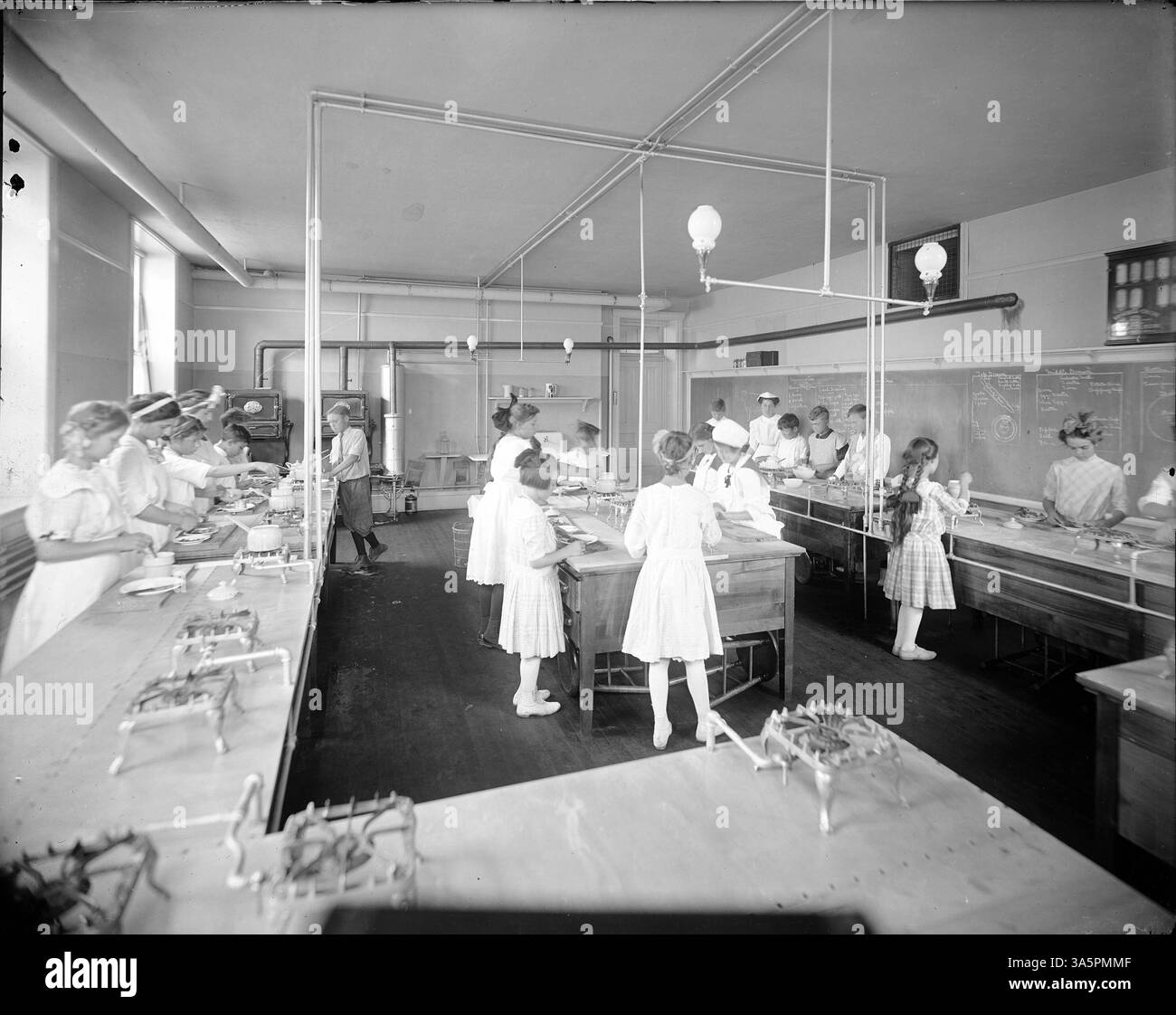
For decades, classroom cooking—often referred to as Home Economics or Family and Consumer Sciences (FCS)—functioned on a "follow-the-leader" model. Students were given a printed sheet of instructions and tasked with recreating a specific dish. Success was measured by how closely the final product resembled the teacher’s example. However, as we move through 2026, this traditional model is being replaced by the Recipe P approach.
The core limitation of the traditional method was its rigidity. If a student lacked a specific ingredient or faced a different heat source, they were often unequipped to pivot. The Recipe P approach addresses this by treating the recipe not as a set of rules, but as a laboratory guide. By focusing on the "P" pillars—Process, Principle, and Personalization—educators are preparing students for the realities of modern kitchens where flexibility, sustainability, and health are paramount.
Pillar 1: Process Over Product
In the Recipe P framework, the "Process" refers to the mechanical and technical skills required to manipulate food. In 2026, classroom instruction prioritizes the mastery of techniques such as emulsification, fermentation, and dry-heat versus moist-heat cooking, rather than the completion of a specific menu item.
The Importance of Technique Mastery
When a student understands the process of a "sauté," they can apply that knowledge to mushrooms, chicken, or tofu interchangeably. Educators now use "scaffolded learning" to build these skills. For example, a freshman might focus solely on knife safety and uniform dicing (the process), while a senior might focus on the "Process" of reduction to create complex sauces.
By isolating the process, teachers can provide more targeted feedback. Instead of grading a soup on its overall saltiness, a teacher can assess whether the student correctly executed the "sweating" process for the aromatic vegetables. This granular approach reduces student anxiety and builds a foundation of technical confidence that persists long after they leave the classroom.
Pillar 2: Principles of Culinary Science
The second "P" stands for Principle. This involves the "Why" behind the cooking. Why does meat brown? Why does bread rise? Why does acid cut through fat? By integrating food science into the curriculum, the Recipe P approach aligns culinary arts with STEM (Science, Technology, Engineering, and Mathematics) standards.
Understanding the Chemistry of Food
In 2026, the classroom kitchen is as much a lab as it is a dining hall. Students explore principles such as:
- The Maillard Reaction: Understanding how heat affects proteins and sugars to create flavor and color.
- Denaturation: Learning how acids or heat change the structure of proteins in eggs or fish.
- Emulsification: The physics of combining polar and non-polar liquids, such as oil and vinegar.
When students grasp these principles, they stop asking, "What do I do next?" and start asking, "What is happening to the molecules in this pan?" This transition from passive follower to active investigator is the hallmark of the Recipe P approach. It allows students to troubleshoot in real-time. If a sauce breaks, a student who understands the principle of emulsification knows how to fix it, whereas a student following a traditional recipe would likely start over.
Pillar 3: Personalization and Agency
The final "P" is Personalization. In the diverse classrooms of 2026, a one-size-fits-all recipe is often culturally or nutritionally insensitive. The Recipe P approach encourages students to modify recipes to reflect their heritage, health needs, or ethical choices (such as plant-based or low-carbon-footprint diets).
Fostering Culinary Identity
Personalization is not just about changing ingredients; it is about "culinary agency." Students are given a "base recipe" (the Principle and Process) and then tasked with personalizing the flavor profile. This might involve:
- Substitution: Replacing dairy with plant-based alternatives while maintaining the structural integrity of the dish.
- Cultural Infusion: Using a traditional French "Process" (like a braise) but applying flavor "Principles" from Korean or Mexican cuisine.
- Nutritional Optimization: Adjusting sodium or sugar levels without sacrificing the chemical "Process" required for the dish to succeed.
This pillar is particularly effective at increasing student engagement. When students are given the autonomy to make choices about their food, they take greater ownership of the learning process.
Comparative Analysis: Traditional vs. Recipe P
The following table highlights the fundamental differences in how classroom cooking is managed under these two distinct educational philosophies as of 2026.
| Feature | Traditional Cooking Approach | Recipe P Approach (2026) |
|---|---|---|
| Primary Goal | Replicating a specific dish | Mastering universal techniques |
| Teacher Role | Demonstrator and "Expert" | Facilitator and Lab Supervisor |
| Student Agency | Low (Follow instructions) | High (Modify and Adapt) |
| Scientific Focus | Minimal/Incidental | Core (STEM-integrated) |
| Assessment | Grading the final taste/look | Grading the technical execution |
| Resource Use | Standardized ingredient kits | Variable/Upcycled ingredients |
| Failure Result | Discouragement/Wasted food | Learning opportunity/Troubleshooting |
Impact on Resource Management and Sustainability
A significant byproduct of the Recipe P approach is its impact on school budgets and environmental goals. Because the focus is on Process and Principle, teachers are no longer beholden to expensive, specific ingredient lists.
In 2026, many schools are utilizing "pantry-based" cooking. If a lesson is about the "Process" of roasting root vegetables, it doesn't matter if the school received a donation of carrots or parsnips that morning. The "Principle" of caramelization remains the same. This flexibility allows schools to reduce food waste by using whatever is in season or available through local agricultural programs.
Furthermore, by teaching students how to personalize recipes based on what they have in their own cupboards at home, the Recipe P approach directly addresses the issue of food insecurity. It teaches students how to create nutritious meals from disparate ingredients rather than relying on pre-packaged, processed meal kits.
Implementing Recipe P: A Guide for Educators
Transitioning to a Recipe P framework requires a shift in both curriculum design and kitchen management. Educators must move away from the "Recipe of the Day" mentality and toward "The Technique of the Week."
Step 1: Curriculum Mapping
Instead of organizing units by meal type (Breakfast, Lunch, Dinner), organize them by Principle. A unit might be titled "The Science of Leavening." Within this unit, students study the "Process" of using yeast, baking soda, and steam. Only then do they "Personalize" their own breads or pastries.
Step 2: Assessment Redesign
Grading must reflect the pillars. A "Recipe P Rubric" often includes categories for:
- Technique Execution: Did the student demonstrate proper knife grip and safety?
- Scientific Understanding: Can the student explain why the liquid thickened?
- Creative Adaptation: Did the student make a logical substitution for a missing ingredient?
Step 3: Technology Integration
In 2026, digital tools are essential to the Recipe P approach. Many classrooms use AI-driven "substitution engines" that help students understand which ingredients share chemical properties. For instance, if a student wants to personalize a recipe to be vegan, they can use these tools to find a substitute that mimics the binding "Principle" of an egg.
Frequently Asked Questions
Is the Recipe P approach more expensive to implement than traditional cooking classes?
Actually, it is often more cost-effective. While there is an initial investment in training and perhaps some scientific equipment (like digital scales or pH strips), the long-term costs are lower because the curriculum is not dependent on specific, often expensive, name-brand ingredients. It allows for the use of seasonal, bulk, or even "ugly" produce.
Can younger students (elementary/middle school) handle this approach?
Yes, but the complexity of the "Principles" is scaled. For younger children, the "Process" might be simple stirring or tearing, and the "Principle" might be as basic as "heat makes things soft." The "Personalization" pillar is often the most popular with younger students, as it allows them to express their preferences.
How does this approach accommodate students with severe food allergies?
The Recipe P approach is inherently safer for students with allergies. Because the focus is on Personalization, the curriculum is designed to be modified. Students are taught from day one how to identify the function of an allergen (e.g., flour as a thickener) and how to substitute it with a safe alternative (e.g., cornstarch or arrowroot) while maintaining the same "Process."
Does this mean students never learn to follow a standard recipe?
Not at all. Following a recipe is still a valuable "Process." However, in the Recipe P framework, following a recipe is seen as a baseline skill, not the end goal. Students learn to read a recipe critically, identifying the "Principles" involved before they even start cooking.
What kind of certification do teachers need for this?
In 2026, many states have updated their FCS (Family and Consumer Sciences) certifications to include "Culinary Science and Pedagogy." Educators often take professional development courses focusing on inquiry-based learning and food chemistry to effectively facilitate the Recipe P approach.
Next Steps for Schools and Districts
For schools looking to modernize their culinary programs, the transition to Recipe P should be iterative. Start by selecting one unit—such as "Acids and Bases in the Kitchen"—and applying the three pillars. Invest in professional development that focuses on the science of food rather than just new recipes. By 2027, the goal for most forward-thinking districts is to have a fully integrated Recipe P curriculum that not only teaches students how to cook but how to think like chefs, scientists, and sustainable consumers.
Image Gallery