What Is a Game Fighter? Understanding Video Game Fighters and Fighting Genres
In video games, a "game fighter" refers either to a video game within the fighting game genre—where players control combatants in direct, one-on-one or team-based close combat—or to a character archetype specializing in melee martial e...
In video games, a "game fighter" refers either to a video game within the fighting game genre—where players control combatants in direct, one-on-one or team-based close combat—or to a character archetype specializing in melee martial engagement across fighting games, role-playing games (RPGs), and action titles. Fighting games prioritize spatial positioning, precise timing, player reaction speed, and frame-level execution.
Contents
Disambiguating the Term "Game Fighter"
When players, developers, and commentators use the phrase "game fighter," the context determines whether they are discussing a software genre, a specific playable character within a fighting roster, or a character class in broader gaming systems. Resolving these distinct uses clarifies how the term operates across the video game industry.
1. The Fighting Game Genre
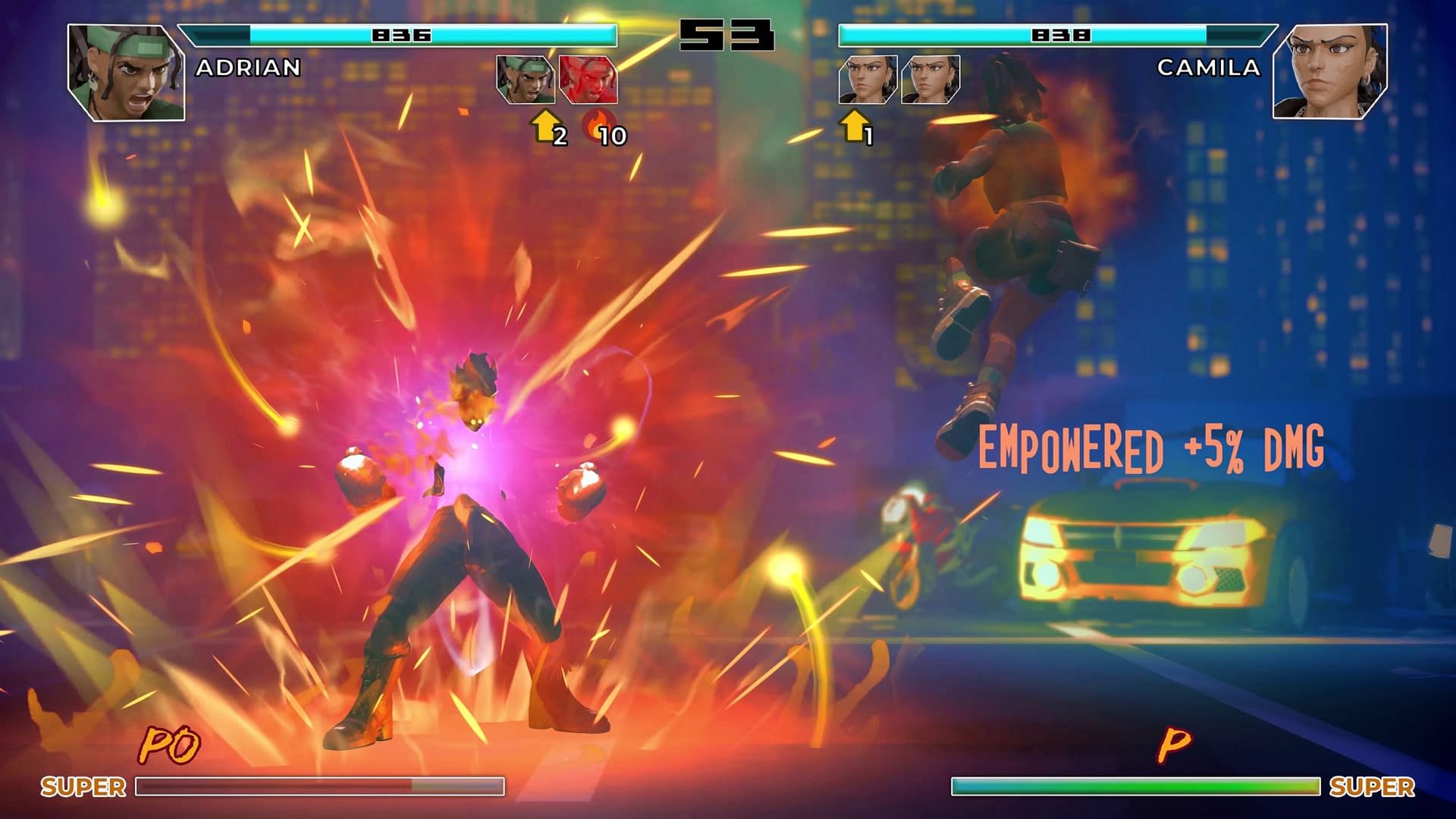
Most commonly, a game fighter refers to a video game belonging to the fighting game genre. In these titles, two or more players (or a player against an artificial intelligence opponent) select individual characters from a roster to duel inside a bounded stage. The primary objective is to deplete the opponent's health bar or fulfill victory conditions—such as knocking the opponent off a platform—across a series of timed rounds.
2. The "Fighter" Character Class
In multiplayer online battle arenas (MOBAs), role-playing games (RPGs), and action-adventure games, a "fighter" describes a class or role. These characters excel in physical, close-quarters combat. Unlike fragile glass-cannon damage dealers or pure defensive tanks, the fighter class balances moderate-to-high damage output with sufficient durability to sustain front-line engagements.
3. Fighter Aircraft in Combat Simulators
In military simulation and arcade flight games (such as Ace Combat or IL-2 Sturmovik), a "fighter" denotes a fighter jet or combat airplane. While this usage represents a separate genre entirely, it shares the common thread of competitive, tactical dogfighting against rival units.
Fundamental Mechanics of Fighting Games
To understand how fighting games function, one must examine the underlying mechanics that govern movement, combat interactions, and competitive strategy. Modern fighting games rely on deterministic physics engines and rigid time intervals measured in animation frames.
- Startup Frames (Move initiated)
- Active Frames (Hitbox connects)
- Recovery Frames (Vulnerable)
Frame Data and Execution Timing
Fighting games typically run at 60 frames per second (FPS), meaning every individual frame of animation lasts roughly 16.67 milliseconds. Player actions are broken down into three distinct frame phases:
- Startup Frames: The initial frames of an attack before it becomes capable of dealing damage. Faster moves have lower startup numbers (e.g., a 3-frame jab versus a 15-frame heavy strike).
- Active Frames: The frames during which the attack's damage-dealing collision area is live and capable of hitting an opponent.
- Recovery Frames: The cool-down frames following active frames during which the character cannot perform another action and remains vulnerable to counterattacks.
When an attack connects with an opponent—whether blocked or cleanly landed—it induces hitstun or blockstun. The mathematical difference between the defender's recovery time and the attacker's recovery time determines frame advantage. If an attacker recovers +3 frames earlier than the defender, the attacker can act first in the next sequence.
Spatial Control: Neutral Game and Footsies
The neutral game describes the state where neither player has a clear positional advantage, locked down the opponent, or initiated a combo. During neutral, players engage in footsies—a tactical back-and-forth maneuvering process where combatants use mid-range attacks (pokes) to establish territorial control, bait enemy mistakes, and punish missed attacks (whiff punishing).
Collision Volumes: Hitboxes, Hurtboxes, and Pushboxes
Combat resolution relies on invisible geometrical shapes assigned to character animations:
- Hitbox: The invisible zone generated by an attack that inflicts damage or hitstun upon touching an opponent.
- Hurtbox: The collision area mapped to a character's body that receives damage when touched by an opponent's hitbox.
- Pushbox: The physical boundary preventing characters from walking through each other during movement.
Superior combat moves often feature "disjointed hitboxes," where the attack's hitbox extends significantly beyond the character's physical hurtbox, allowing safe engagement from a distance.
Offensive Pressure and Okizeme
Once a combatant scores a knockdown, they gain a positional advantage called okizeme (often shortened to "oki"). This involves setting up offensive pressure as the opponent gets back up. Defenders are forced into high-risk guessing situations—known as mixups—where they must choose between guarding high attacks, crouching against low attacks, or teching incoming throws.
Playstyle Archetypes in Fighting Games
Rosters in fighting games feature diverse characters tailored to distinct strategy types. Understanding these archetypes allows players to select combatants matching their preferred playstyle.
| Archetype | Primary Combat Objective |
|---|---|
| All-Rounder/Shoto | Adapt to any situation with versatile toolkits |
| Rushdown | Smother opponents with non-stop close-up pressure |
| Zoner | Control distance and keep opponents at range |
| Grappler | Infiltrate mid-range to execute high-damage throws |
| Puppet/Setplay | Overwhelm opponents by controlling multiple units |
All-Rounders (Shotos)
Derived historically from Street Fighter's Ryu and Ken (who practice Shotokan Karate in early lore), shoto or all-rounder characters possess well-balanced toolkits. They typically feature a long-range projectile (fireball), an ascending anti-air attack (dragon punch), and a forward-moving physical strike (tatsu/spin kick). This flexibility lets them adapt to defensive and offensive scenarios alike.
Rushdown Combatants
Rushdown fighters prioritize rapid mobility, fast frame startup times, and overwhelming close-range pressure. Their objective is to breach the opponent's defensive spacing, force them into the corner of the stage, and apply relentless mixups that prevent counterattacks. Examples include Cammy (Street Fighter) and Chipp Zanuff (Guilty Gear).
Zoners
Zoners focus on distance control. Using long-range projectiles, extended melee weapons, or spatial traps, zoners force opponents to navigate an obstacle course to get close. Their goal is to frustrate aggression and drain health from safety. Examples include Dhalsim (Street Fighter) and Axminster/Guile-style defensive characters.
Grapplers
Grapplers trade high movement speed and ranged attacks for high health pools and devastating, unblockable command throws. Because command throws bypass standard blocking mechanisms, grapplers force opponents to jump or backstep, opening up psychological mind games (conditioning). Zangief (Street Fighter) and Potemkin (Guilty Gear) represent classic grappler designs.
Puppet and Setplay Fighters
Puppet fighters require controlling two entities simultaneously—such as a primary fighter and a minion, mechanical drone, or spirit companion (e.g., Zato-1 in Guilty Gear or Rosalina & Luma in Super Smash Bros.). Setplay characters focus on laying traps or executing pre-calculated string setups after knockdowns to render defensive options nearly impossible.
Sub-Genres of Fighting Games: A Comparative Breakdown
Fighting games have branched into several distinct sub-genres, each featuring unique camera perspectives, movement axes, and structural rules.
| Sub-Genre | Camera Perspective | Movement Axis | Core Victory Condition | Representative Examples |
|---|---|---|---|---|
| 2D Fighting Games | Side-view plane | 2D (X and Y axis) | Deplete opponent's health bar | Street Fighter 6, Guilty Gear Strive |
| 3D Fighting Games | Dynamic tracking | 3D (Includes side-stepping) | Deplete opponent's health bar | Tekken 8, Virtua Fighter 5 |
| Platform Fighters | Wide stage view | Free 2D platforming | Knock opponent off-stage boundaries | Super Smash Bros. Ultimate, Brawlhalla |
| Arena Fighters | Third-person over-the-shoulder | Full 3D free-roam arena | Deplete opponent's health bar | Dragon Ball: Sparking! ZERO, Naruto Storm |
| Tag-Team Fighters | Side-view or 3D | 2D/3D with character swaps | Eliminate all incoming team members | Marvel vs. Capcom, Dragon Ball FighterZ |
Key Distinctions Between Sub-Genres
2D Fighting Games
2D fighters constrain movement to a single plane (forward/backward and jump/crouch). This strict axis makes spatial awareness and ground-based spacing extremely precise. Blocking is typically executed by holding the direction away from the opponent.
3D Fighting Games
3D fighters introduce a sidestepping dimension along the Z-axis, allowing players to dodge straight projectiles or linear attacks by stepping into the background or foreground. Limb-specific attack buttons (e.g., Left Punch, Right Punch, Left Kick, Right Kick) are standard in 3D systems like Tekken.
Platform Fighters
Unlike traditional fighters with static health bars, platform fighters feature damage percentages. As a character takes damage, their percentage increases, causing them to fly further when hit by knockback attacks. Victory requires knocking opponents beyond the outer blast zones of the stage.
The Fighter Class in RPGs and Tactical Action Games
Outside the competitive fighting game genre, the "Fighter" class represents a foundational archetype in role-playing systems (derived originally from tabletop rulesets like Dungeons & Dragons).
- Pure Tank (High Defense/Low DMG)
- Fighter Class (Balanced Durability & Sustained DMG)
- Pure DPS (High DMG/Low HP)
Core Characteristics of the RPG Fighter
In action-RPGs, massively multiplayer online games (MMOs), and tactical strategy games, the Fighter class fulfills distinct operational functions:
- Frontline Engagement: Fighters occupy the vanguard position, drawing enemy attack focus (aggro) away from vulnerable spellcasters and ranged damage units.
- Weapon Mastery: Fighters typically possess the widest gear versatility, capable of wielding swords, axes, maces, polearms, and shields.
- Sustained Damage Output: While rogues or assassins focus on burst damage from stealth, fighters deliver reliable, sustained physical damage throughout prolonged encounters.
- Resource Management: RPG fighters often manage specialized martial resources—such as Stamina, Rage, Focus, or Energy—that build up through physical attacks and drain when executing special martial maneuvers.
Hardware and Control Scheme Considerations
Playing game fighters at a proficient level requires selecting input controllers that fit individual preference and execution demands.
| Input Hardware | Primary Advantage | Primary Trade-off |
|---|---|---|
| Standard Gamepad | High accessibility | D-pad wear over time |
| Arcade Stick | Tactile wrist control | Larger physical footprint |
| Leverless | Frame-exact inputs | Steep learning curve |
| Keyboard | No hardware cost | Key-ghosting risks |
1. Gamepads (Standard Controllers)
Modern console gamepads (such as PlayStation or Xbox controllers) are widely used by professional competitors. Players typically utilize the directional pad (D-pad) rather than the analog stick to ensure crisp, discrete directional inputs (such as quarter-circle forward or dragon-punch motions).
2. Fight Sticks (Arcade Sticks)
Arcade sticks replicate traditional arcade cabinet layouts, featuring a Japanese or American-style joystick paired with six to eight large face buttons. They allow players to use their entire hand and wrist for movement inputs and finger taps for complex multi-button combinations.
3. Leverless Controllers
Leverless controllers replace the traditional analog or arcade joystick with four individual directional buttons (Left, Down, Right, and Up/Jump). By eliminating the physical transit time required to swing a joystick across an axis, leverless devices allow ultra-fast, frame-precise directional inputs. Modern fighting game tournament rules strictly regulate leverless input cleaning (Simultaneous Opposite Direction Cardinal Input, or SOCD cleaning) to prevent unfair directional shortcuts.
Frequently Asked Questions
What is the difference between a fighting game and a brawler/beat 'em up?
A fighting game focuses on direct, balanced combat between individual opponents (usually 1v1 or team tag matches) within a contained stage. A beat 'em up (or brawler, such as Streets of Rage or Final Fight) features players moving through scrolling stages fighting waves of computerized minor enemies and bosses.
What does "rollback netcode" mean in modern game fighters?
Rollback netcode is an online networking infrastructure used in competitive fighting games. Instead of delaying player inputs until both online clients synchronize (delay-based netcode), rollback immediately executes local inputs and predicts the remote player's actions. If a prediction mismatch occurs, the netcode retroactively "rolls back" the game state to the correct frame seamlessly, providing a near-lagless online experience.
What is a "shoto" in fighting game terminology?
A "shoto" refers to any fighting game character whose move set is modeled after classic all-rounders like Ryu and Ken from Street Fighter. A standard shoto toolkit includes a straight projectile (fireball), an invincible rising anti-air attack (dragon punch), and a forward-advancing physical strike.
Do I need an arcade stick to play fighting games competitively?
No. Many top-level professional fighting game competitors win world championships using standard console gamepads or leverless controllers. Controller choice comes down to personal comfort, ergonomics, and input preference rather than inherent competitive advantage.
What is frame data, and why do competitive players study it?
Frame data measures the exact animation duration of every character move in 1/60th-of-a-second increments. Competitive players study frame data to determine which moves are safe from punishment on block, which attacks allow follow-up combinations, and how to maximize defensive options during combat sequences.
Practical Recommendations for Beginners
For players interested in learning fighting games or mastering combat systems:
- Pick for Design, Not Tier Lists: Choose a combatant whose visual design, narrative, and general playstyle appeal to you. Learning complex mechanics is easier when you enjoy playing the character.
- Focus on Neutral and Defense First: Beginners often rush to learn complex 20-hit combos. Prioritize fundamental skills first: blocking high/low, anti-airing jumping opponents, and managing distance.
- Learn Your Character's Anti-Air Move: In almost every 2D fighting game, stopping airborne attacks yields immediate win-rate improvements. Identify your character's primary anti-air button or special move early on.
- Utilize Built-In Training Features: Modern fighting games feature extensive tutorial modes, frame data visualizations, replay takeover features, and combo trials designed to ease the learning curve.
Image Gallery